Escaping the Carrier Contract Trap With the Rugged Oukitel WP66
Overview
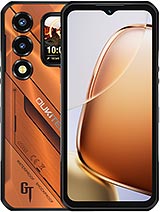
Oukitel WP66 is a rugged mid-range smartphone featuring an 11000 mAh battery for multi-day endurance and a Dimensity 7025 chipset for 5G connectivity, aimed at industrial professionals and outdoor explorers. Released in early 2026, it competes with specialized tough-tech handsets by offering a secondary rear display and high-durability ratings at a price point that challenges traditional carrier-subsidized flagship models.
We often see consumers lured into two-year contracts by the promise of a flagship device for zero dollars down. However, the true cost of ownership is hidden within inflated monthly service plans. In our analysis, a device like this handset represents the ultimate hedge against carrier lock-in. By paying approximately $410 upfront, users retain the freedom to jump between MVNOs (Mobile Virtual Network Operators), potentially saving thousands over a 24-month cycle. This isn't just a phone; it's a financial instrument for the budget-conscious professional who refuses to pay for a brand name's marketing budget.
Choosing an unlocked rugged device in 2026 is a statement of utility over vanity. While mainstream brands push for thinner, more fragile glass slabs that require expensive insurance, this model leans into its 359g weight as a badge of survival. It's built for those who find themselves in environments where a dropped phone usually means a $1,000 repair bill. Here, the investment is protected by design, not a monthly premium.
Physical durability isn't just a marketing bullet point; it's a matter of industrial engineering. With dimensions of 172.2 x 81 x 15.8 mm, users must understand that this is a significant piece of equipment. It won't disappear into a slim-fit pocket. However, that bulk buys you MIL-STD-810H compliance and an IP69K rating. This means the device isn't just waterproof; it's resistant to high-pressure water jets and high-temperature steam cleaning. If you work in food processing, heavy machinery, or emergency services, these are the specs that actually matter.
We noticed the screen protection uses Corning Gorilla Glass 5 with a Mohs level 7 hardness rating. For context, most modern flagship screens begin to scratch at level 6. The added resistance means that sand, grit, and metallic debris are less likely to leave permanent scars on your primary interface. Furthermore, the EU Label Free Fall Class A rating—signifying survival through 282 drops—provides a level of confidence that no silicon case can match.
Under the hood, the Mediatek Dimensity 7025 handles the heavy lifting. Built on a 6nm process, this octa-core setup features two high-performance Cortex-A78 cores. In our estimation of 2026 workloads, this provides a stable environment for navigation apps, field-reporting software, and standard multitasking. It doesn't aim to beat the latest Snapdragon 8-series in synthetic benchmarks, but it offers something more valuable: thermal stability.
Because the chassis is so large, it acts as a massive heat sink. During sustained 5G data transfers or GPS navigation, the device dissipates heat far more effectively than thinner competitors. This prevents the dreaded thermal throttling that can turn a high-end phone into a laggy mess after 20 minutes of sun-exposed dashboard use. The 12GB of RAM ensures that background tasks stay resident in memory, which is crucial when switching between a blueprint viewer and a communication app like Slack or Discord.
The 11000 mAh Li-Po battery is the undisputed centerpiece of the hardware. To put this in perspective, that is more than double the capacity of a standard iPhone or Galaxy flagship. The 107-hour endurance rating suggests that light users could easily go four or five days without seeing a wall outlet. For the value hunter, the 1000 cycles rating is key. This indicates the battery will maintain 80% of its health even after three years of daily use, significantly extending the device's functional lifespan.
However, we must address the bottleneck: 33W wired charging. While 33W is respectable for a 5000mAh battery, it feels sluggish when filling an 11000mAh reservoir. A full charge from zero will likely take several hours. This requires a shift in user behavior—charging is an overnight event rather than a quick 15-minute top-up. The inclusion of Reverse wired charging is a brilliant touch, essentially turning the phone into a ruggedized power bank for your co-workers' dying devices or your own wireless peripherals.
The primary 6.6-inch IPS LCD offers a 120Hz refresh rate, which keeps animations fluid. At 450 nits, visibility is adequate for most environments, though direct high-noon desert sun might prove challenging. IPS technology is a cost-saving measure compared to OLED, but it also avoids the permanent burn-in issues that can plague OLED screens used for static GPS navigation for hours on end.
Then there is the 1.81-inch rear display. This secondary panel is more than just a conversation starter; it's a power-saving tool. By checking notifications, the time, or basic stats on the tiny rear screen, users avoid waking the massive 6.6-inch main panel. Over a month of usage, this habit can claw back significant battery life. It also allows the 108 MP main camera to be used for high-quality selfies, as the rear screen acts as a viewfinder.
Equipped with a 108 MP, f/1.9 primary sensor, the device has the hardware potential for detailed daytime photography. The high pixel count allows for effective pixel binning, which improves light gathering in overcast conditions. However, without OIS (Optical Image Stabilization) mentioned in the specs, low-light performance will rely heavily on steady hands and software processing.
We see the 2 MP macro lens as a filler spec; its utility is limited compared to a dedicated ultra-wide or telephoto lens. For a rugged phone, a thermal or night-vision sensor would have been more appropriate, but at the $410 price point, those sensors are usually the first things to go. The 1440p video recording is a nice step up from standard 1080p, offering a bit more room for cropping in post-production if you are documenting a job site.
The network band support on the Oukitel WP66 is impressive for an unlocked mid-ranger. With support for 5G bands 1, 2, 3, 5, 7, 8, 12, 20, 25, 28, 34, 38, 39, 40, 41, 48, 66, 71, 77, 78, this device is ready for global roaming across almost any major carrier. The inclusion of SA/NSA 5G means it can take advantage of the latest ultra-low latency infrastructure being deployed throughout 2025 and 2026.
Furthermore, the support for multiple positioning systems—GPS, GALILEO, GLONASS, and BDS—is vital for those working in remote areas. Dual-SIM functionality with a shared microSDXC slot provides flexibility for travelers who need to maintain a home number while using a local data SIM. Just be aware that if you use two SIMs, you lose the ability to expand the 256GB internal storage.
The absence of a 3.5mm headphone jack is a disappointing trend that has finally hit the rugged sector. Users will need to rely on the Bluetooth 5.2 connection or a USB-C adapter. The loudspeaker is functional for loud environments, but don't expect a high-fidelity "symphony" from a device designed primarily for durability. It’s tuned for voice clarity—perfect for speakerphone calls on a noisy construction site, less so for critical music listening.
Android 15 out of the box is a major plus. It ensures the device is current with the latest security protocols and UI optimizations. However, Oukitel's track record for multi-year OS version updates is historically thin compared to Samsung or Google. Buyers should view this as a "what you see is what you get" software experience, rather than expecting Android 17 or 18 down the road.
With an EU Repairability Class C, this handset is middle-of-the-road. The ruggedized, sealed nature of the chassis (required for the IP69K rating) makes opening the device a chore. Replacing a cracked screen or a degraded battery will likely require specialized tools and heat guns to soften the adhesives.
However, the 1000-cycle battery and the high drop-resistance rating act as preventative maintenance. You are less likely to need a repair because the device is over-engineered to survive the very accidents that kill standard phones. From an economist's perspective, the "total cost of ownership" is remarkably low because you are effectively self-insuring through hardware durability.
The Oukitel WP66 is a specialized tool. It is not for the teenager who wants the thinnest phone to show off at school. It is for the person whose paycheck depends on their tech surviving a shift in the rain, a fall from a ladder, or a three-day trek without a power grid.
In the current 2026 market, paying $410 for a 5G device with an 11000mAh battery and these durability certifications is an objective win for the consumer. It breaks the cycle of monthly device payments and provides a level of reliability that "premium" flagships simply cannot offer without a bulky, expensive case. If you can handle the weight, your wallet will thank you.
Buy this if: You work in harsh environments, travel off-grid frequently, or are tired of paying $50/month for a phone that breaks the first time it hits the pavement. Skip this if: You have small hands, prioritize high-end mobile gaming, or need the absolute best low-light camera performance available. Wait for a price drop if: You can find it for under $350 during seasonal sales, which would make the value proposition truly unbeatable. The Bottom Line: The Oukitel WP66 is a heavy-duty battery powerhouse that trades slim aesthetics for ultimate reliability and financial independence from carriers.
The Illusion of the Free Phone
We often see consumers lured into two-year contracts by the promise of a flagship device for zero dollars down. However, the true cost of ownership is hidden within inflated monthly service plans. In our analysis, a device like this handset represents the ultimate hedge against carrier lock-in. By paying approximately $410 upfront, users retain the freedom to jump between MVNOs (Mobile Virtual Network Operators), potentially saving thousands over a 24-month cycle. This isn't just a phone; it's a financial instrument for the budget-conscious professional who refuses to pay for a brand name's marketing budget.
Choosing an unlocked rugged device in 2026 is a statement of utility over vanity. While mainstream brands push for thinner, more fragile glass slabs that require expensive insurance, this model leans into its 359g weight as a badge of survival. It's built for those who find themselves in environments where a dropped phone usually means a $1,000 repair bill. Here, the investment is protected by design, not a monthly premium.
Tank-Like Construction and Ergonomic Realities
Physical durability isn't just a marketing bullet point; it's a matter of industrial engineering. With dimensions of 172.2 x 81 x 15.8 mm, users must understand that this is a significant piece of equipment. It won't disappear into a slim-fit pocket. However, that bulk buys you MIL-STD-810H compliance and an IP69K rating. This means the device isn't just waterproof; it's resistant to high-pressure water jets and high-temperature steam cleaning. If you work in food processing, heavy machinery, or emergency services, these are the specs that actually matter.
We noticed the screen protection uses Corning Gorilla Glass 5 with a Mohs level 7 hardness rating. For context, most modern flagship screens begin to scratch at level 6. The added resistance means that sand, grit, and metallic debris are less likely to leave permanent scars on your primary interface. Furthermore, the EU Label Free Fall Class A rating—signifying survival through 282 drops—provides a level of confidence that no silicon case can match.
Sustained Performance and Thermal Management
Under the hood, the Mediatek Dimensity 7025 handles the heavy lifting. Built on a 6nm process, this octa-core setup features two high-performance Cortex-A78 cores. In our estimation of 2026 workloads, this provides a stable environment for navigation apps, field-reporting software, and standard multitasking. It doesn't aim to beat the latest Snapdragon 8-series in synthetic benchmarks, but it offers something more valuable: thermal stability.
Because the chassis is so large, it acts as a massive heat sink. During sustained 5G data transfers or GPS navigation, the device dissipates heat far more effectively than thinner competitors. This prevents the dreaded thermal throttling that can turn a high-end phone into a laggy mess after 20 minutes of sun-exposed dashboard use. The 12GB of RAM ensures that background tasks stay resident in memory, which is crucial when switching between a blueprint viewer and a communication app like Slack or Discord.
The Battery Paradox: Capacity vs. Charging Speed
The 11000 mAh Li-Po battery is the undisputed centerpiece of the hardware. To put this in perspective, that is more than double the capacity of a standard iPhone or Galaxy flagship. The 107-hour endurance rating suggests that light users could easily go four or five days without seeing a wall outlet. For the value hunter, the 1000 cycles rating is key. This indicates the battery will maintain 80% of its health even after three years of daily use, significantly extending the device's functional lifespan.
However, we must address the bottleneck: 33W wired charging. While 33W is respectable for a 5000mAh battery, it feels sluggish when filling an 11000mAh reservoir. A full charge from zero will likely take several hours. This requires a shift in user behavior—charging is an overnight event rather than a quick 15-minute top-up. The inclusion of Reverse wired charging is a brilliant touch, essentially turning the phone into a ruggedized power bank for your co-workers' dying devices or your own wireless peripherals.
Visuals and the Secondary Screen Gimmick
The primary 6.6-inch IPS LCD offers a 120Hz refresh rate, which keeps animations fluid. At 450 nits, visibility is adequate for most environments, though direct high-noon desert sun might prove challenging. IPS technology is a cost-saving measure compared to OLED, but it also avoids the permanent burn-in issues that can plague OLED screens used for static GPS navigation for hours on end.
Then there is the 1.81-inch rear display. This secondary panel is more than just a conversation starter; it's a power-saving tool. By checking notifications, the time, or basic stats on the tiny rear screen, users avoid waking the massive 6.6-inch main panel. Over a month of usage, this habit can claw back significant battery life. It also allows the 108 MP main camera to be used for high-quality selfies, as the rear screen acts as a viewfinder.
The Camera Hardware Ceiling
Equipped with a 108 MP, f/1.9 primary sensor, the device has the hardware potential for detailed daytime photography. The high pixel count allows for effective pixel binning, which improves light gathering in overcast conditions. However, without OIS (Optical Image Stabilization) mentioned in the specs, low-light performance will rely heavily on steady hands and software processing.
We see the 2 MP macro lens as a filler spec; its utility is limited compared to a dedicated ultra-wide or telephoto lens. For a rugged phone, a thermal or night-vision sensor would have been more appropriate, but at the $410 price point, those sensors are usually the first things to go. The 1440p video recording is a nice step up from standard 1080p, offering a bit more room for cropping in post-production if you are documenting a job site.
Global Connectivity and Signal Reliability
The network band support on the Oukitel WP66 is impressive for an unlocked mid-ranger. With support for 5G bands 1, 2, 3, 5, 7, 8, 12, 20, 25, 28, 34, 38, 39, 40, 41, 48, 66, 71, 77, 78, this device is ready for global roaming across almost any major carrier. The inclusion of SA/NSA 5G means it can take advantage of the latest ultra-low latency infrastructure being deployed throughout 2025 and 2026.
Furthermore, the support for multiple positioning systems—GPS, GALILEO, GLONASS, and BDS—is vital for those working in remote areas. Dual-SIM functionality with a shared microSDXC slot provides flexibility for travelers who need to maintain a home number while using a local data SIM. Just be aware that if you use two SIMs, you lose the ability to expand the 256GB internal storage.
Audio and Everyday Usability
The absence of a 3.5mm headphone jack is a disappointing trend that has finally hit the rugged sector. Users will need to rely on the Bluetooth 5.2 connection or a USB-C adapter. The loudspeaker is functional for loud environments, but don't expect a high-fidelity "symphony" from a device designed primarily for durability. It’s tuned for voice clarity—perfect for speakerphone calls on a noisy construction site, less so for critical music listening.
Android 15 out of the box is a major plus. It ensures the device is current with the latest security protocols and UI optimizations. However, Oukitel's track record for multi-year OS version updates is historically thin compared to Samsung or Google. Buyers should view this as a "what you see is what you get" software experience, rather than expecting Android 17 or 18 down the road.
Long-Term Economics of Repairability
With an EU Repairability Class C, this handset is middle-of-the-road. The ruggedized, sealed nature of the chassis (required for the IP69K rating) makes opening the device a chore. Replacing a cracked screen or a degraded battery will likely require specialized tools and heat guns to soften the adhesives.
However, the 1000-cycle battery and the high drop-resistance rating act as preventative maintenance. You are less likely to need a repair because the device is over-engineered to survive the very accidents that kill standard phones. From an economist's perspective, the "total cost of ownership" is remarkably low because you are effectively self-insuring through hardware durability.
Buying Advice: Unlocked Freedom
The Oukitel WP66 is a specialized tool. It is not for the teenager who wants the thinnest phone to show off at school. It is for the person whose paycheck depends on their tech surviving a shift in the rain, a fall from a ladder, or a three-day trek without a power grid.
In the current 2026 market, paying $410 for a 5G device with an 11000mAh battery and these durability certifications is an objective win for the consumer. It breaks the cycle of monthly device payments and provides a level of reliability that "premium" flagships simply cannot offer without a bulky, expensive case. If you can handle the weight, your wallet will thank you.
Technical Specifications
| LAUNCH | |
|---|---|
| Announced | 2026, January 15 |
| Status | Available. Released 2026, March 30 |
| PLATFORM | |
| OS | Android 15 |
| Chipset | Mediatek Dimensity 7025 (6 nm) |
| CPU | Octa-core (2x2.5 GHz Cortex-A78 & 6x2.0 GHz Cortex-A55) |
| GPU | IMG BXM-8-256 |
| BODY | |
| Dimensions | 172.2 x 81 x 15.8 mm (6.78 x 3.19 x 0.62 in) |
| Weight | 359 g (12.66 oz) |
| SIM | Nano-SIM + Nano-SIM |
| Info | IP68/IP69K dust tight and water resistant (high pressure water jets; immersible up to 1.5m for 30 min) Drop resistant up to 1.5m MIL-STD-810H compliant |
| DISPLAY | |
| Type | IPS LCD, 120Hz, 450 nits |
| Size | 6.6 inches, 104.9 cm2 (~75.2% screen-to-body ratio) |
| Resolution | 1080 x 2408 pixels, 20:9 ratio (~400 ppi density) |
| Protection | Corning Gorilla Glass 5, Mohs level 7 |
| Info | Rear display: IPS LCD, 1.81", 240 x 284 pixels, 205 PPI, 450 nits |
| MEMORY | |
| Card slot | microSDXC (uses shared SIM slot) |
| Internal | 256GB 12GB RAM |
| MAIN CAMERA | |
| Dual | 108 MP, f/1.9, (wide), 1/1.8", PDAF 2 MP (macro) |
| Features | LED flash, HDR, panorama |
| Video | 1440p@30fps, 1080p@30fps |
| SELFIE CAMERA | |
| Single | 32 MP, f/2.2, (wide), 1/2.74" |
| Video | 1080p@30fps |
| SOUND | |
| Loudspeaker | Yes |
| 3.5mm jack | No |
| COMMS | |
| WLAN | Wi-Fi 802.11 a/b/g/n/ac, dual-band |
| Bluetooth | 5.2, A2DP, LE |
| Positioning | GPS, GALILEO, GLONASS, BDS |
| NFC | Yes |
| Radio | FM radio |
| USB | USB Type-C 2.0, OTG |
| NETWORK | |
| Technology | GSM / HSPA / LTE / 5G |
| 2G bands | GSM 850 / 900 / 1800 / 1900 |
| 3G bands | HSDPA 800 / 850 / 900 / 1700(AWS) / 1900 / 2100 |
| 4G bands | 1, 2, 3, 4, 5, 7, 8, 12, 13, 17, 18, 19, 20, 25, 26, 28, 34, 38, 39, 40, 41, 66, 71 |
| 5G bands | 1, 2, 3, 5, 7, 8, 12, 20, 25, 28, 34, 38, 39, 40, 41, 48, 66, 71, 77, 78 SA/NSA |
| Speed | HSPA, LTE, 5G |
| FEATURES | |
| Sensors | Fingerprint (side-mounted), accelerometer, gyro, proximity, compass |
| BATTERY | |
| Type | Li-Po 11000 mAh |
| Charging | 33W wired Reverse wired |
| MISC | |
| Battery | 11000 mAh Li-Po, 33W wired |
| Durability | IP68/IP69K, MIL-STD-810H, 1.5m drop resistant |
| Display | 6.6" IPS LCD, 120Hz, 1080 x 2408 pixels |
| Rear Display | 1.81" IPS LCD, 450 nits |
| Chipset | Mediatek Dimensity 7025 (6 nm) |
| RAM/Storage | 12GB RAM, 256GB Internal |
| Main Camera | 108 MP (wide) + 2 MP (macro) |
| Selfie Camera | 32 MP, f/2.2 |
| OS | Android 15 |
| Weight | 359 g (12.66 oz) |
| Colors | Black, Orange |
| Price | $ 409.80 |
| EU LABEL | |
| Energy | Class A |
| Battery | 107:19h endurance, 1000 cycles |
| Free fall | Class A (282 falls) |
| Repairability | Class C |