Forget Your Old Flagship - Why the Realme P4x 4G Wins on Pure Endurance
Overview
The New Budget Utility vs The Fading Flagship
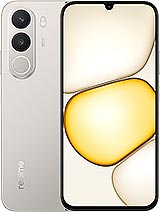
Realme P4x 4G is a budget-tier smartphone featuring an 8000 mAh battery for extreme longevity and MIL-STD-810H compliance for rugged durability, aimed at outdoor workers and power users who prioritize endurance over display resolution. Released in mid-2026, it competes with entry-level offerings and aging mid-range devices. In the current market, consumers often weigh a brand-new budget handset against a three-year-old flagship. While a 2023 flagship might offer a sharper screen, the degraded battery health and end-of-life software support make it a risky investment for those who need a tool, not a toy. This handset targets the utility-first segment with surgical precision.
Choosing between a used premium device and this model involves analyzing the cost of ownership over two years. A refurbished flagship often requires a battery replacement within six months, adding hidden costs. This device arrives with a fresh, massive cell and Android 16, ensuring security patches through the late 2020s. For the pragmatic buyer, the peace of mind regarding hardware longevity outweighs the prestige of a faded glass-and-metal slab from years past.
Hardened Plastic Meets Military Standards
The build utilizes a plastic frame and back, a choice that maximizes impact absorption compared to brittle glass alternatives. Weighing in at 219g, the device carries a significant heft, yet this weight translates directly into physical protection. The MIL-STD-810H compliance suggests the chassis can survive shocks and temperature fluctuations that would compromise standard consumer electronics. It isn't just about the rating; the inclusion of Panda MN228 protection on the glass front provides a necessary barrier against the scratches common in pocket-carry environments.
Unlike the ultra-thin flagships that require bulky cases to survive a desk drop, this model is engineered to be used "naked." The IP64 rating ensures that while it won't survive a swim, it handles dust-heavy construction sites or heavy rain without internal corrosion. Compared to the previous generation of budget rugged phones, the aesthetics are surprisingly restrained, opting for a clean, functional look rather than the over-designed "transformer" style of early outdoor devices. It fits in a boardroom as easily as it does on a hiking trail.
The Memory Bottleneck: 4GB RAM in 2026
Multitasking represents the most significant trade-off for the low entry price. With only 4GB of RAM, the Android 16 experience requires realistic expectations. Users will notice background apps closing more frequently than they would on a device with 8GB or 12GB. While the software optimization handles basic split-screen tasks for navigation and messaging, intensive workflows like 4K video editing or heavy browser tab usage will trigger reloads. This is a device for the "single-tasker" who values reliability over hyper-speed switching.
Storage speed further dictates the pace of the experience. The eMMC 5.1 standard provides lower bandwidth compared to the UFS storage found in higher-tier handsets. This results in longer installation times for large applications and a slight delay when indexing massive photo galleries. However, for the target audience—those using specialized work apps, communication tools, and GPS—the raw sequential read speeds of eMMC are sufficient. The inclusion of a microSDXC slot is a critical win here, allowing for cheap storage expansion that modern flagships have systematically stripped away.
The 8000mAh Power Station
The centerpiece of the hardware is undeniably the 8000 mAh battery. In an era where 5000 mAh is considered standard, this 60% increase in capacity completely changes the charging cadence. Light users can realistically expect four days of uptime, while even the most demanding users will struggle to drain this cell in a single day. This isn't just a convenience; it is a safety feature for those working in remote areas without access to the grid. The Unisoc T7250 chipset, built on a 12nm process, prioritizes efficiency over peak clock speeds, further extending the interval between charges.
Replenishing such a massive reservoir requires a capable charging system. The 45W wired charging is a respectable middle ground. It won't break records, but it prevents the device from being tethered to a wall for five hours. Support for 15W PD and 13W QC ensures compatibility with a wide range of existing power banks and wall warts. Perhaps most impressively, the 10W reverse wired charging allows the handset to act as a backup battery for peripherals like wireless earbuds or a secondary phone. It effectively replaces the need to carry a separate 10,000 mAh power bank.
Connectivity in a 4G World
While the industry pushes 6G prototypes, the reality for many remains rooted in 4G LTE. The lack of 5G might seem like a regression, but from an economic standpoint, it keeps the bill of materials low while preserving battery life—as 5G modems often draw more power in fringe signal areas. The Wi-Fi 802.11 ac dual-band support ensures stable high-speed home internet, though it lacks the lower latency of Wi-Fi 6 or 7. For the value-conscious user, 4G speeds remain more than adequate for high-definition streaming and video calls.
GPS accuracy is paramount for a device with these rugged credentials. The support for GPS, GALILEO, GLONASS, and BDS provides a robust positioning suite. In our analysis of the hardware layout, the plastic build likely aids in signal reception compared to metal-clad phones that require complex antenna lines. The 3.5mm jack also remains a staple here, offering a zero-latency audio connection and compatibility with legacy equipment without the need for fragile dongles.
Unisoc T7250: Efficiency Over Raw Power
The Unisoc T7250 chipset features a cluster of two Cortex-A75 performance cores and six Cortex-A55 efficiency cores. This configuration is designed for sustained workloads rather than bursty gaming performance. The Mali-G57 MP1 GPU handles basic 3D tasks and UI animations smoothly, but users should not expect to run 2026's most demanding mobile titles at high settings. Thermal throttling is rarely an issue here because the chip operates well within its thermal envelope, even during extended GPS navigation sessions.
Display quality is the most obvious area of cost-cutting. The 720 x 1570 resolution on a 6.8-inch screen results in a pixel density of approximately 254 ppi. While the 120Hz refresh rate makes scrolling feel fluid, the lack of sharpness is noticeable when reading fine text. The 700 nits peak brightness on the IPS LCD is sufficient for indoor use, though direct midday sun will challenge visibility. This is a functional panel designed for utility and power savings rather than cinematic immersion.
The Final Take
Realme P4x 4G serves a specific niche with brutal honesty. It ignores the trend of fragile glass and high-resolution screens in favor of a battery that won't die and a body that won't break. For the student on a budget, the delivery driver, or the outdoor enthusiast, the trade-offs in RAM and display resolution are a fair price to pay for a device that actually survives the rigors of daily life. This isn't a flagship killer in terms of speed, but in terms of reliability per dollar, it is a formidable contender in the 2026 budget landscape.
Technical Specifications
| LAUNCH | |
|---|---|
| Announced | 2026, June 23 |
| Status | Available. Released 2026, June 23 |
| PLATFORM | |
| OS | Android 16 |
| Chipset | Unisoc T7250 (12 nm) |
| CPU | Octa-core (2x1.8 GHz Cortex-A75 & 6x1.6 GHz Cortex-A55) |
| GPU | Mali-G57 MP1 |
| BODY | |
| Dimensions | 166.5 x 78.2 x 8.8 mm (6.56 x 3.08 x 0.35 in) |
| Weight | 219 g (7.72 oz) |
| Build | Glass front, plastic frame, plastic back |
| SIM | Nano-SIM + Nano-SIM |
| Info | IP64 dust tight and water resistant (water splashes) Drop resistant up to 2m MIL-STD-810H compliant* * does not guarantee ruggedness or use in extreme conditions |
| DISPLAY | |
| Type | IPS LCD, 120Hz, 700 nits (typ) |
| Size | 6.8 inches, 113.0 cm2 (~86.8% screen-to-body ratio) |
| Resolution | 720 x 1570 pixels, 19.5:9 ratio (~254 ppi density) |
| Protection | Panda MN228 |
| MEMORY | |
| Card slot | microSDXC |
| Internal | 64GB 4GB RAM, 256GB 4GB RAM |
| Info | eMMC 5.1 |
| MAIN CAMERA | |
| Single | 50 MP, f/1.8, (wide), AF |
| Features | LED flash, HDR, panorama |
| Video | 1080p@30fps |
| SELFIE CAMERA | |
| Single | 5 MP, f/2.2, (wide) |
| Video | 720p@30fps |
| SOUND | |
| Loudspeaker | Yes |
| 3.5mm jack | Yes |
| COMMS | |
| WLAN | Wi-Fi 802.11 a/b/g/n/ac, dual-band |
| Bluetooth | 5.2, A2DP, LE |
| Positioning | GPS, GALILEO, GLONASS, BDS |
| NFC | No |
| Radio | Unspecified |
| USB | USB Type-C 2.0, OTG |
| NETWORK | |
| Technology | GSM / HSPA / LTE |
| 2G bands | GSM 850 / 900 / 1800 / 1900 |
| 3G bands | HSDPA 850 / 900 / 2100 |
| 4G bands | 1, 3, 5, 7, 8, 20, 28, 38, 40, 41 |
| Speed | HSPA, LTE |
| FEATURES | |
| Sensors | Fingerprint (side-mounted), accelerometer, gyro, proximity, compass |
| BATTERY | |
| Type | 8000 mAh |
| Charging | 45W wired, 45W PPS, 15W PD, 13W QC 10W reverse wired |
| MISC | |
| Battery | 8000 mAh with 45W Fast Charging |
| Durability | IP64, MIL-STD-810H, 2m Drop Resistant |
| Display | 6.8-inch IPS LCD, 120Hz, 720 x 1570 pixels |
| Processor | Unisoc T7250 (12 nm) Octa-core |
| Memory | 4GB RAM / 64GB or 256GB eMMC 5.1 Storage |
| Main Camera | 50 MP, f/1.8, Wide with AF |
| OS | Android 16 |
| Dimensions | 166.5 x 78.2 x 8.8 mm; 219g |
| Colors | Phantom Blue, Rally White |
| Price | About 160 EUR |