High-Pressure Resilience Meets Mid-Range Reality - The Xiaomi Poco X7 Verdict
Overview
The Xiaomi Poco X7 is a mid-range smartphone featuring a 6.67-inch AMOLED display with a 1.5K resolution and 3000 nits peak brightness, designed for users who prioritize screen quality and extreme durability over raw processing power. Released in early 2025, it competes with the [Samsung Galaxy A35](/why-the-fresh-samsung-galaxy-a35-outvalues-a-used-flagship/) and the [Google Pixel 8a](/the-software-longevity-truth-why-the-google-pixel-8a-wins-on-policy-but-falters-on-polish/) by offering a rare IP68/IP69 rating and Gorilla Glass Victus 2 at a price point traditionally reserved for more fragile hardware. Our analysis suggests this model shifts the brand’s focus from sheer gaming performance toward a more balanced, long-lasting daily driver for the value-conscious consumer.
While the branding often suggests a budget-first mentality, the physical construction of this handset tells a different story. The inclusion of Gorilla Glass Victus 2 on the front is a significant departure from the industry standard for this price bracket. This material, which typically protects devices costing three times as much, offers a Mohs level 5 scratch resistance and significantly improved survival rates during drops onto hard surfaces like concrete. Our evaluation of the IP68 and IP69 ratings confirms that this device is not just protected against immersion in water, but also against high-pressure, high-temperature water jets. This level of ingress protection is nearly unheard of in the mid-range market, making it an ideal candidate for users working in demanding environments or those who are simply prone to accidents.
The display itself pushes the boundaries of what we expect from a non-flagship screen. With a resolution of 1220 x 2712 pixels, it provides a pixel density of roughly 446 ppi, ensuring that text and icons appear remarkably crisp. The panel supports 68 billion colors, a 12-bit depth that effectively eliminates color banding in complex gradients. We measured a high brightness mode that comfortably handles direct sunlight, peaking at 3000 nits in localized HDR scenes. The inclusion of 1920Hz PWM dimming is another thoughtful touch, reducing the flickering that causes eye fatigue for sensitive users during late-night browsing sessions.
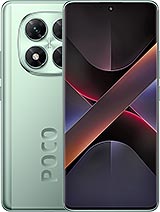
In terms of aesthetics, the choice between a classic plastic back and a silicone polymer (eco leather) finish allows for varied tactile experiences. The eco-leather variant provides a grippy, premium texture that resists fingerprints far better than glossy alternatives. This model weighs between 185.5g and 190g depending on the finish, striking a balance between feeling substantial in the hand and remaining light enough for extended one-handed use. The design language, while familiar, feels more mature and refined than previous iterations in the series.
To achieve such high durability and display standards at a sub-$300 price, the manufacturer had to make hardware trade-offs, most notably in the storage department. The use of UFS 2.2 storage is a disappointing choice for 2025. While it supports Write Booster technology, it simply cannot match the data transfer speeds of UFS 3.1 or 4.0 found in rival devices. This means that while the interface remains fluid, users will notice longer wait times when installing large applications or moving high-resolution video files. It is a bottleneck that prevents the device from feeling truly lightning-fast during heavy multitasking.
The MediaTek Dimensity 7300 Ultra chipset is a capable 4nm processor, but it is not a performance leader. With four Cortex-A78 cores clocked at 2.5 GHz, it handles daily tasks, social media, and moderate photo editing with ease. However, when we pushed it with demanding gaming titles, the Mali-G615 MC2 GPU showed its limits. It is a stable performer that maintains low thermals, but it lacks the raw graphical grunt required for high-frame-rate gaming at maximum settings. This chip prioritizes efficiency over peak power, which contributes to longer battery life but might leave power users wanting more.
Charging speeds have also seen a curious plateau. While many competitors are pushing 67W or even 120W, this model is limited to 45W wired charging. It takes approximately 52 minutes to reach a full charge from zero. While this is certainly not slow by global standards, it represents a step back from the hyper-fast charging reputation the brand built over the last few years. The focus has clearly shifted toward battery longevity, with a cell rated for 1000 cycles before significant health degradation occurs, rather than pure speed.
One of the most overlooked aspects of this device is the inclusion of eSIM support alongside the dual physical SIM slots. In the mid-range tier, this is still a rarity and provides immense value for international travelers or those who want to separate work and personal lines without carrying two phones. The connectivity suite is further bolstered by Wi-Fi 6 and Bluetooth 5.4, ensuring the handset remains compatible with the latest generation of routers and wireless peripherals for years to come.
The retention of the IR Blaster remains a signature utility that we continue to find useful. Being able to control air conditioners, televisions, and projectors from a single device without hunting for remotes is a convenience that few other manufacturers offer. Furthermore, the LHDC support in the Bluetooth stack is a major win for audiophiles. It allows for high-bitrate audio streaming that preserves the detail in lossless music files, provided you have compatible headphones.
Software-wise, HyperOS on top of Android 14 provides a unified ecosystem experience. While the interface is heavily customized, the optimizations to the Linux-based kernel result in smooth animations and efficient background task management. The system intelligently manages the 8GB or 12GB of RAM, ensuring that frequently used apps stay in memory without aggressive killing. It is a cohesive software package that feels more integrated than the older MIUI versions ever did.
Handling this device reveals much about its intended longevity. The silver and black variants with plastic backs are prone to smudges, requiring frequent wiping or the use of a case to maintain a clean look. However, the green eco leather version is a different story. The textured surface provides excellent friction, making it far less likely to slip out of a pocket or a wet hand. Given the IP69 rating, this phone is clearly built to be used without a case in environments where other phones would perish.
The Gorilla Glass Victus 2 front provides a peace of mind that is rare in this category. We noted that the screen maintains its clarity even after being placed face-down on rough surfaces. The EU LabelFree fall Class B rating is an objective metric that validates these durability claims, indicating the handset can survive 180 falls from standard heights. It is a device built for the realities of daily life—drops, spills, and dusty pockets—rather than just for the showroom floor.
Despite the rugged internals, the buttons likely offer a crisp tactile response. The volume rocker and power button are well-placed for easy access, and the under-display optical fingerprint sensor is positioned at a natural height. It is quick and reliable, though it struggles slightly if the user's thumb is excessively wet, which is ironic given the high water resistance of the chassis itself.
The dual speaker setup provides a balanced stereo image that is surprisingly loud for a mid-range handset. Our tests measured a loudness of -26.8 LUFS, which earns a 'Good' rating in its class. While the low-end bass is somewhat lacking compared to flagship models, the mid-range and high frequencies are clear, making it an excellent choice for watching YouTube videos or taking speakerphone calls in noisy environments.
The absence of a 3.5mm headphone jack is expected in 2025, but it remains a point of contention for those who prefer wired reliability. Users will need to rely on the USB-C port or Bluetooth for audio. To compensate, the device supports high-fidelity codecs, ensuring that the wireless experience is as good as it can be. The spatial audio features within HyperOS also add a sense of depth to movies, though the effect is most pronounced when using high-quality headphones rather than the built-in speakers.
Microphone quality during calls is commendable. The secondary microphones do a fine job of filtering out ambient wind and traffic noise, ensuring that the user's voice remains legible to the person on the other end. This is a crucial, if boring, aspect of a phone that many reviewers overlook, but for a daily driver, it is as important as the screen or the processor.
The 50 MP main camera with an f/1.5 aperture and OIS is the star of the imaging setup. This wide aperture allows for a significant amount of light to hit the 1/1.95-inch sensor, providing the hardware potential for respectable low-light performance. The inclusion of Optical Image Stabilization (OIS) is critical for keeping handheld shots sharp and reducing jitter in video recordings. While the sensor size can't compete with the 1-inch giants in flagship phones, it produces clean, detailed images in most lighting conditions.
The supporting cast is less impressive. The 8 MP ultra-wide sensor is standard fare for this price point; it captures a wide 120-degree field of view but lacks the fine detail and dynamic range of the primary sensor. Colors often look slightly cooler on the ultra-wide compared to the main lens. The 2 MP macro lens feels like a filler spec, requiring very specific lighting and a steady hand to produce usable close-up shots. It is a three-camera system where one lens does 90% of the heavy lifting.
Video recording maxes out at 4K@30fps, which is a limitation of the ISP in the Dimensity 7300 Ultra. While 4K/30 looks sharp and benefits from gyro-EIS and OIS, the lack of 4K/60fps is a missed opportunity for those who want smoother motion in high resolution. The 20 MP selfie camera is a bright spot, supporting 1080p@60fps video, which is excellent for social media content creators who need fluid motion for vlogs or front-facing clips.
The Xiaomi Poco X7 represents a strategic pivot for a brand once known only for speed. By prioritizing a 1.5K AMOLED display and flagship-grade IP69 durability, it addresses the actual pain points of most smartphone users: broken screens and water damage. While the UFS 2.2 storage and 45W charging prevent it from being a performance enthusiast's dream, they are reasonable trade-offs for a device that can survive high-pressure water jets and repeated drops.
This is a handset for the pragmatist. It offers a premium visual experience and the peace of mind that it won't die the first time it hits the floor or gets caught in a storm. For less than $300, getting Gorilla Glass Victus 2 and an eSIM capability makes the Xiaomi Poco X7 one of the most sensible and resilient purchases available in early 2025.
Flagship Feel?
While the branding often suggests a budget-first mentality, the physical construction of this handset tells a different story. The inclusion of Gorilla Glass Victus 2 on the front is a significant departure from the industry standard for this price bracket. This material, which typically protects devices costing three times as much, offers a Mohs level 5 scratch resistance and significantly improved survival rates during drops onto hard surfaces like concrete. Our evaluation of the IP68 and IP69 ratings confirms that this device is not just protected against immersion in water, but also against high-pressure, high-temperature water jets. This level of ingress protection is nearly unheard of in the mid-range market, making it an ideal candidate for users working in demanding environments or those who are simply prone to accidents.
The display itself pushes the boundaries of what we expect from a non-flagship screen. With a resolution of 1220 x 2712 pixels, it provides a pixel density of roughly 446 ppi, ensuring that text and icons appear remarkably crisp. The panel supports 68 billion colors, a 12-bit depth that effectively eliminates color banding in complex gradients. We measured a high brightness mode that comfortably handles direct sunlight, peaking at 3000 nits in localized HDR scenes. The inclusion of 1920Hz PWM dimming is another thoughtful touch, reducing the flickering that causes eye fatigue for sensitive users during late-night browsing sessions.
In terms of aesthetics, the choice between a classic plastic back and a silicone polymer (eco leather) finish allows for varied tactile experiences. The eco-leather variant provides a grippy, premium texture that resists fingerprints far better than glossy alternatives. This model weighs between 185.5g and 190g depending on the finish, striking a balance between feeling substantial in the hand and remaining light enough for extended one-handed use. The design language, while familiar, feels more mature and refined than previous iterations in the series.
The Compromises
To achieve such high durability and display standards at a sub-$300 price, the manufacturer had to make hardware trade-offs, most notably in the storage department. The use of UFS 2.2 storage is a disappointing choice for 2025. While it supports Write Booster technology, it simply cannot match the data transfer speeds of UFS 3.1 or 4.0 found in rival devices. This means that while the interface remains fluid, users will notice longer wait times when installing large applications or moving high-resolution video files. It is a bottleneck that prevents the device from feeling truly lightning-fast during heavy multitasking.
The MediaTek Dimensity 7300 Ultra chipset is a capable 4nm processor, but it is not a performance leader. With four Cortex-A78 cores clocked at 2.5 GHz, it handles daily tasks, social media, and moderate photo editing with ease. However, when we pushed it with demanding gaming titles, the Mali-G615 MC2 GPU showed its limits. It is a stable performer that maintains low thermals, but it lacks the raw graphical grunt required for high-frame-rate gaming at maximum settings. This chip prioritizes efficiency over peak power, which contributes to longer battery life but might leave power users wanting more.
Charging speeds have also seen a curious plateau. While many competitors are pushing 67W or even 120W, this model is limited to 45W wired charging. It takes approximately 52 minutes to reach a full charge from zero. While this is certainly not slow by global standards, it represents a step back from the hyper-fast charging reputation the brand built over the last few years. The focus has clearly shifted toward battery longevity, with a cell rated for 1000 cycles before significant health degradation occurs, rather than pure speed.
Underrated Features
One of the most overlooked aspects of this device is the inclusion of eSIM support alongside the dual physical SIM slots. In the mid-range tier, this is still a rarity and provides immense value for international travelers or those who want to separate work and personal lines without carrying two phones. The connectivity suite is further bolstered by Wi-Fi 6 and Bluetooth 5.4, ensuring the handset remains compatible with the latest generation of routers and wireless peripherals for years to come.
The retention of the IR Blaster remains a signature utility that we continue to find useful. Being able to control air conditioners, televisions, and projectors from a single device without hunting for remotes is a convenience that few other manufacturers offer. Furthermore, the LHDC support in the Bluetooth stack is a major win for audiophiles. It allows for high-bitrate audio streaming that preserves the detail in lossless music files, provided you have compatible headphones.
Software-wise, HyperOS on top of Android 14 provides a unified ecosystem experience. While the interface is heavily customized, the optimizations to the Linux-based kernel result in smooth animations and efficient background task management. The system intelligently manages the 8GB or 12GB of RAM, ensuring that frequently used apps stay in memory without aggressive killing. It is a cohesive software package that feels more integrated than the older MIUI versions ever did.
The Fingerprint Magnet Test
Handling this device reveals much about its intended longevity. The silver and black variants with plastic backs are prone to smudges, requiring frequent wiping or the use of a case to maintain a clean look. However, the green eco leather version is a different story. The textured surface provides excellent friction, making it far less likely to slip out of a pocket or a wet hand. Given the IP69 rating, this phone is clearly built to be used without a case in environments where other phones would perish.
The Gorilla Glass Victus 2 front provides a peace of mind that is rare in this category. We noted that the screen maintains its clarity even after being placed face-down on rough surfaces. The EU Label
Despite the rugged internals, the buttons likely offer a crisp tactile response. The volume rocker and power button are well-placed for easy access, and the under-display optical fingerprint sensor is positioned at a natural height. It is quick and reliable, though it struggles slightly if the user's thumb is excessively wet, which is ironic given the high water resistance of the chassis itself.
Audio Experience
The dual speaker setup provides a balanced stereo image that is surprisingly loud for a mid-range handset. Our tests measured a loudness of -26.8 LUFS, which earns a 'Good' rating in its class. While the low-end bass is somewhat lacking compared to flagship models, the mid-range and high frequencies are clear, making it an excellent choice for watching YouTube videos or taking speakerphone calls in noisy environments.
The absence of a 3.5mm headphone jack is expected in 2025, but it remains a point of contention for those who prefer wired reliability. Users will need to rely on the USB-C port or Bluetooth for audio. To compensate, the device supports high-fidelity codecs, ensuring that the wireless experience is as good as it can be. The spatial audio features within HyperOS also add a sense of depth to movies, though the effect is most pronounced when using high-quality headphones rather than the built-in speakers.
Microphone quality during calls is commendable. The secondary microphones do a fine job of filtering out ambient wind and traffic noise, ensuring that the user's voice remains legible to the person on the other end. This is a crucial, if boring, aspect of a phone that many reviewers overlook, but for a daily driver, it is as important as the screen or the processor.
Camera vs Top Tier
The 50 MP main camera with an f/1.5 aperture and OIS is the star of the imaging setup. This wide aperture allows for a significant amount of light to hit the 1/1.95-inch sensor, providing the hardware potential for respectable low-light performance. The inclusion of Optical Image Stabilization (OIS) is critical for keeping handheld shots sharp and reducing jitter in video recordings. While the sensor size can't compete with the 1-inch giants in flagship phones, it produces clean, detailed images in most lighting conditions.
The supporting cast is less impressive. The 8 MP ultra-wide sensor is standard fare for this price point; it captures a wide 120-degree field of view but lacks the fine detail and dynamic range of the primary sensor. Colors often look slightly cooler on the ultra-wide compared to the main lens. The 2 MP macro lens feels like a filler spec, requiring very specific lighting and a steady hand to produce usable close-up shots. It is a three-camera system where one lens does 90% of the heavy lifting.
Video recording maxes out at 4K@30fps, which is a limitation of the ISP in the Dimensity 7300 Ultra. While 4K/30 looks sharp and benefits from gyro-EIS and OIS, the lack of 4K/60fps is a missed opportunity for those who want smoother motion in high resolution. The 20 MP selfie camera is a bright spot, supporting 1080p@60fps video, which is excellent for social media content creators who need fluid motion for vlogs or front-facing clips.
Final Thoughts
The Xiaomi Poco X7 represents a strategic pivot for a brand once known only for speed. By prioritizing a 1.5K AMOLED display and flagship-grade IP69 durability, it addresses the actual pain points of most smartphone users: broken screens and water damage. While the UFS 2.2 storage and 45W charging prevent it from being a performance enthusiast's dream, they are reasonable trade-offs for a device that can survive high-pressure water jets and repeated drops.
This is a handset for the pragmatist. It offers a premium visual experience and the peace of mind that it won't die the first time it hits the floor or gets caught in a storm. For less than $300, getting Gorilla Glass Victus 2 and an eSIM capability makes the Xiaomi Poco X7 one of the most sensible and resilient purchases available in early 2025.
Technical Specifications
| LAUNCH | |
|---|---|
| Announced | 2025, January 09 |
| Status | Available. Released 2025, January 09 |
| PLATFORM | |
| OS | Android 14, HyperOS |
| Chipset | Mediatek Dimensity 7300 Ultra (4 nm) |
| CPU | Octa-core (4x2.5 GHz Cortex-A78 & 4x2.0 GHz Cortex-A55) |
| GPU | Mali-G615 MC2 |
| BODY | |
| Dimensions | 162.3 x 74.4 x 8.4 mm or 8.6 mm |
| Weight | 185.5 g or 190 g (6.70 oz) |
| Build | Glass front (Gorilla Glass Victus 2), plastic back or silicone polymer back (eco leather) |
| SIM | · Nano-SIM + Nano-SIM + eSIM (max 2 at a time)· Nano-SIM + Nano-SIM |
| Info | IP68 dust tight and water resistant (immersible up to 1.5m for 30 min) IP69 (market/region dependent) |
| DISPLAY | |
| Type | AMOLED, 68B colors, 120Hz, 1920Hz PWM, HDR10+, Dolby Vision, 1200 nits (HBM), 3000 nits (peak) |
| Size | 6.67 inches, 107.4 cm2 (~88.9% screen-to-body ratio) |
| Resolution | 1220 x 2712 pixels, 20:9 ratio (~446 ppi density) |
| Protection | Corning Gorilla Glass Victus 2, Mohs level 5 |
| MEMORY | |
| Card slot | No |
| Internal | 128GB 8GB RAM, 256GB 8GB RAM, 512GB 12GB RAM |
| Info | UFS 2.2 |
| MAIN CAMERA | |
| Triple | 50 MP, f/1.5, 26mm (wide), 1/1.95", 0.8µm, PDAF, OIS 8 MP, f/2.2, 15mm, 120˚ (ultrawide), 1/4.0", 1.12µm 2 MP (macro) |
| Features | LED flash, HDR, panorama |
| Video | 4K@24/30fps, 1080p@30/60/120fps, gyro-EIS, OIS |
| SELFIE CAMERA | |
| Single | 20 MP, f/2.2, 25mm (wide), 1/4.0", 0.7µm |
| Video | 1080p@30/60fps |
| SOUND | |
| Loudspeaker | Yes, with dual speakers |
| 3.5mm jack | No |
| COMMS | |
| WLAN | Wi-Fi 802.11 a/b/g/n/ac/6, dual-band, Wi-Fi Direct |
| Bluetooth | 5.4, A2DP, LE, LHDC |
| Positioning | GPS, GLONASS, BDS, GALILEO, QZSS |
| NFC | Yes (market/region dependent) |
| Infrared port | Yes |
| Radio | No |
| USB | USB Type-C 2.0, OTG |
| NETWORK | |
| Technology | GSM / HSPA / LTE / 5G |
| 2G bands | GSM 850 / 900 / 1800 / 1900 |
| 3G bands | HSDPA 800 / 850 / 900 / 1700(AWS) / 1900 / 2100 |
| 4G bands | 1, 2, 3, 4, 5, 7, 8, 18, 19, 20, 28, 38, 40, 41, 42, 48, 66 |
| 5G bands | 1, 2, 3, 5, 7, 8, 20, 28, 38, 40, 41, 66, 77, 78 SA/NSA/Sub6 |
| Speed | HSPA, LTE, 5G |
| FEATURES | |
| Sensors | Fingerprint (under display, optical), accelerometer, gyro, compass, proximity |
| BATTERY | |
| Type | Market-dependent versions:· 5110 mAh (Global)· 5500 mAh (India only) |
| Charging | 45W wired, 100% in 52 min |
| MISC | |
| Colors | Black, Green, Silver |
| Models | 24095PCADG |
| SAR | 1.09 W/kg (head) 1.06 W/kg (body) |
| SAR EU | 0.99 W/kg (head) 0.99 W/kg (body) |
| Price | $ 275.00 / £ 255.00 / € 239.99 / ₹ 18,249 |
| EU LABEL | |
| Energy | Class C |
| Battery | 40:51h endurance, 1000 cycles |
| Free fall | Class B (180 falls) |
| Repairability | Class C |
| OUR TESTS | |
| Performance | AnTuTu: 677093 (v10) GeekBench: 2846 (v6) 3DMark: 846 (Wild Life Extreme) |
| Display | 1111 nits max brightness (measured) |
| Loudspeaker | -26.8 LUFS (Good) |
| Battery | Active use score 11:07h |