Huge Battery Meets High Value - Why the Honor X5d Dominates the Entry Level Market
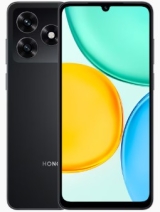
Overview
The Standout Feature
We recognize a deliberate choice here. Instead of chasing paper-thin designs, this handset embraces a 7.9mm profile to house that massive cell. The logic is sound: for a user spending about 90 EUR, the most frustrating experience isn't the lack of a telephoto lens, but a dead phone by 4 PM. By opting for a Mediatek Helio G81 chipset, the engineers have balanced performance with extreme efficiency. This 12nm silicon uses a cluster of two Cortex-A75 performance cores and six Cortex-A55 efficiency cores. This setup ensures that background tasks don't chew through your percentage while you're simply idling.
The Compromises
Then there is the charging speed. A 15W wired limit on a battery this large is a bottleneck. We are talking about a total refill time that likely stretches well over two hours. If you are the type of user who forgets to charge at night and hopes for a quick 15-minute top-up before leaving the house, this model will disappoint. However, the economist's perspective is different: if the battery lasts two full days, the frequency of charging drops, making the slow overnight refill a minor inconvenience rather than a daily struggle.
A Day in the Life
Throughout the workday, the device handles light multitasking with its 4GB of RAM. You are switching between emails, WhatsApp, and a browser with five or six tabs open. This model doesn't stutter under these light workloads, though you might notice the MagicOS 9 software occasionally aggressive in closing background apps to keep the system snappy. By mid-afternoon, after several voice calls and heavy GPS usage for a lunch meeting, the battery sits comfortably at 75%.
Evening arrives, and you use the device for an hour of YouTube streaming at 720p. The TFT LCD provides decent colors, though the viewing angles won't match a high-end OLED. By 10:00 PM, after a full day of mixed-to-heavy use, the handset still shows 55% battery remaining. This is the power of the Helio G81 and a 5260 mAh battery working in tandem. You don't even feel the need to reach for the charger before going to sleep.
The Deal Breakers
Second, the camera system is strictly for utility. The 13 MP main sensor lacks the hardware potential for anything beyond basic daylight photography. In low light, expect significant noise and a lack of detail as the software struggles to compensate for the small f/2.2 aperture. If you are a parent trying to capture sharp photos of moving children indoors, or a content creator looking for cinematic video, this device is not for you. It is a tool for scanning QR codes, taking reference photos of documents, or the occasional casual outdoor snap.
Biometrics and Security
Privacy-wise, the inclusion of Android 15 brings modern permission controls, allowing you to limit which apps have access to your location or microphone. However, the lack of NFC is a stinging omission for 2026. You cannot use this phone for contactless payments at grocery stores or transit terminals. If you have moved entirely to a digital wallet, this handset will force you to carry physical cards again.
Who is this for?
We see three distinct groups who will benefit most from this specific hardware configuration. First are students or young professionals on a strict budget who need a reliable communication tool that won't die during a long day on campus. Second are gig economy workers—drivers and couriers—who require a massive battery and a large screen for navigation but don't want to risk a 1000-euro flagship in a high-wear environment.
Finally, the Honor X5d is an excellent secondary device. If you travel frequently or need a dedicated work phone that stays on for days without attention, this is a low-cost, high-reliability option. It lacks the bells and whistles of the flagship class, but it executes its primary mission—staying powered and connected—with more competence than many phones twice its price.
Value Conclusion
At a price point of approximately 90 EUR, the Honor X5d offers a pragmatic set of features that prioritize longevity over luxury. While the 720p display and slow 15W charging are clear reminders of its entry-level status, the combination of a 5260 mAh battery and Android 15 ensures that the device remains useful and relevant for several years. It doesn't try to be a powerhouse; it tries to be a reliable partner, and for the right buyer, that is a winning formula.
Technical Specifications
| LAUNCH | |
|---|---|
| Announced | 2026, April 09 |
| Status | Available. Released 2026, April 09 |
| PLATFORM | |
| OS | Android 15, MagicOS 9 |
| Chipset | Mediatek Helio G81 (12 nm) |
| CPU | Octa-core (2x2.0 GHz Cortex-A75 & 6x1.7 GHz Cortex-A55) |
| GPU | Mali-G52 MC2 |
| BODY | |
| Dimensions | 167 x 77 x 7.9 mm (6.57 x 3.03 x 0.31 in) |
| Weight | 186 g (6.56 oz) |
| SIM | Nano-SIM + Nano-SIM |
| DISPLAY | |
| Type | TFT LCD, 90Hz |
| Size | 6.74 inches, 109.7 cm2 (~85.3% screen-to-body ratio) |
| Resolution | 720 x 1600 pixels, 20:9 ratio (~260 ppi density) |
| MEMORY | |
| Card slot | microSDXC (uses shared SIM slot) |
| Internal | 64GB 4GB RAM |
| MAIN CAMERA | |
| Single | 13 MP, f/2.2, (wide), AF Auxiliary lens |
| Features | LED flash, HDR, panorama |
| Video | 1080p@30fps |
| SELFIE CAMERA | |
| Single | 5 MP, f/2.2, (wide) |
| Video | 1080p@30fps |
| SOUND | |
| Loudspeaker | Yes |
| 3.5mm jack | Yes |
| COMMS | |
| WLAN | Wi-Fi 802.11 a/b/g/n/ac, dual-band, Wi-Fi Direct |
| Bluetooth | 5.1, A2DP, LE, aptX HD |
| Positioning | GPS, GLONASS, GALILEO, BDS |
| NFC | No |
| Radio | FM radio |
| USB | USB Type-C 2.0, OTG |
| NETWORK | |
| Technology | GSM / HSPA / LTE |
| 2G bands | GSM 850 / 900 / 1800 / 1900 |
| 3G bands | HSDPA 850 / 900 / 1900 / 2100 |
| 4G bands | LTE |
| Speed | HSPA, LTE |
| FEATURES | |
| Sensors | Fingerprint (side-mounted), accelerometer, proximity, gravity |
| BATTERY | |
| Type | Li-Po 5260 mAh |
| Charging | 15W wired |
| MISC | |
| Display | 6.74-inch TFT LCD, 90Hz, 720 x 1600 pixels |
| Processor | Mediatek Helio G81 (12 nm) Octa-core |
| Memory | 4GB RAM, 64GB Internal Storage |
| Battery | 5260 mAh Li-Po, 15W Wired Charging |
| Main Camera | 13 MP, f/2.2, wide + Auxiliary lens |
| Selfie Camera | 5 MP, f/2.2 |
| OS | Android 15, MagicOS 9 |
| Weight | 186 g |
| Audio | 3.5mm jack, aptX HD support, FM radio |
| Colors | Tidal Blue, Midnight Black |
| Price | About 90 EUR |