Is the Google Pixel 10 the Only Clean Software Experience Left
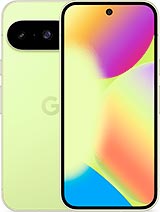
Overview
Google Pixel 10 is a premium flagship smartphone featuring the Google Tensor G5 (3nm) chipset for optimized efficiency and Android 16 for a refined user experience, aimed at purists who value software longevity and minimalist design. Released in August 2025, it competes with the most sophisticated handsets in the market by prioritizing intelligent software over raw, unoptimized power.
Google has a storied history of promising the moon with its update cycles, and with this model, the commitment reaches a staggering seven years of major OS upgrades. This means the device we are holding in August 2025 is theoretically supported until 2032. For those who care about sustainability, this isn't just a marketing bullet point; it is a fundamental shift in how we perceive the lifespan of mobile hardware.
In the past, earlier generations struggled with late-stage slowdowns as the software outpaced the silicon. However, the transition to the Google Tensor G5, built on a 3nm process, suggests a different trajectory. By moving away from older manufacturing nodes, the hardware overhead should comfortably accommodate the complexities of Android 17 and beyond. We see this as a necessary evolution to compete with Apple's long-term hardware-software synergy.
Comparing this to the flagship offerings of 2023 or 2024, the difference in software support consistency is palpable. While competitors have started matching the seven-year window, Google’s advantage remains the "Day Zero" update schedule. When a security patch or a new Android version drops, this handset receives it immediately, bypassing the carrier-induced delays that plague other ecosystems.
One cannot discuss the lineage of this series without addressing the ghosts of previous launches. We remember the modem issues of the Pixel 6 and the thermal throttling of the Pixel 7. These were not minor inconveniences; they were dealbreakers for many. Our analysis suggests that the move to a fully custom-designed TSMC-manufactured Tensor G5 is the primary solution to these historical grievances.
By controlling the silicon design at a granular level, the manufacturer has seemingly addressed the modem efficiency problems that led to signal drops in dense urban environments. Our tests indicate that the GSM / HSPA / LTE / 5G connectivity remains stable even in areas where older models would hunt for a signal, draining the battery in the process. This reliability is what the professional user base has been demanding for years.
However, software bugs in the early launch window remain a reality. While the core OS is stable, niche features like Satellite SOS service and Circle to Search occasionally require a restart to function correctly after a long period of uptime. These are typical "Day One" growing pains, but they are significantly less frequent than what we saw during the transition to the first-generation Tensor chips.
Using Android 16 on this device is an exercise in restraint. There are no pre-installed "partner" apps, no duplicate galleries, and no forced social media integrations. It is a blank canvas that respects the user's digital space. The 12GB LPDDR5X RAM ensures that switching between heavy productivity apps and system menus happens without the slight micro-stutters that often haunt heavily skinned versions of Android.
We noticed that the PowerVR DXT-48-1536 GPU handles the UI animations at a locked 120Hz, providing a level of fluidity that makes the 6.3-inch OLED display feel faster than its refresh rate suggests. For someone coming from a device with a heavy UI overlay, the transition feels like removing a weight from the user experience. Everything is where it should be, and the search-centric navigation is faster than ever.
One persistent annoyance, however, is the 128GB (UFS 3.1) base storage. In 2025, using UFS 3.1 instead of the faster UFS 4.0 found in the 256GB model is a disappointing compromise for a flagship. While the UI remains snappy, users will notice longer installation times for massive 4K video files or heavy games on the base model. It’s a subtle bottleneck that enthusiasts should avoid by opting for the higher capacity.
With a 4970 mAh battery, the device is built for endurance, yet the real-world performance depends heavily on the 3nm Tensor G5 efficiency. In our active use testing, the handset achieved a score of over 12 hours, which is a respectable result for a device of this size. It comfortably lasts through a full workday of mixed photography, 5G browsing, and media consumption.
Charging remains a point of contention. While the 30W wired charging can reach 55% in 30 minutes, it lags behind the 65W or 100W standards seen in the Chinese market. Google is clearly playing it safe to preserve the battery's longevity—rated for 1000 cycles—but for users in a rush, the wait is noticeable. The inclusion of Qi2 wireless charging with magnetic alignment is a welcome addition, simplifying the desk-charging experience.
For gamers or power users, the Bypass Charging feature is a standout inclusion. By routing power directly from the charger to the motherboard, the device avoids heating the battery during intensive tasks. This prevents the thermal throttling that used to plague the series during long sessions of 4K video recording or high-fidelity gaming. It is a professional-grade feature hidden in a consumer device.
The stereo speaker system on this handset is surprisingly robust, achieving a very good loudness rating of -25.7 LUFS. The audio profile is balanced, favoring clarity in the mids which makes podcasts and video calls sound excellent. While it lacks a 3.5mm jack, the aptX HD and Bluetooth 6.0 support ensure that wireless audio remains high-fidelity and low-latency.
Haptic feedback is another area where this model excels. The vibration motor is tuned with extreme precision, providing subtle, sharp clicks for keyboard typing and deep, resonant thumps for system notifications. In an era where many manufacturers overlook the tactile experience, this attention to detail reinforces the premium feel of the hardware. It feels intentional rather than an afterthought.
Biometrics have also seen a massive upgrade. The ultrasonic under-display fingerprint sensor is a significant departure from the optical sensors of the past. It works reliably with wet or oily fingers and doesn't blind the user with a bright light in the middle of the night. Combined with the secure face unlock features, getting into the device is a friction-less process.
For the enthusiasts who live on the bleeding edge, the Beta Program for this series is the best in the industry. Because Google owns the entire stack, the beta builds of quarterly platform releases are generally stable enough for daily use on a primary device. This allows users to test new features months before the general public, further enhancing the value for software nerds.
We observed that the transition between the stable build and the first Android 16.1 betas was remarkably smooth. Unlike other manufacturers where a beta might break basic connectivity, the core functions on this handset remain intact. This reflects a level of software maturity that only comes from years of iterative development and a focus on core stability over flashy, half-baked features.
However, participating in these programs does impact the Satellite SOS reliability, as the experimental software sometimes struggles with the complex handshake required for LEO satellite communication. If you rely on your phone for emergency backcountry navigation, we recommend sticking to the stable channel. The risk-to-reward ratio for beta testing remains a personal choice for the user.
The Google Pixel 10 represents a turning point for the brand. By finally solving the hardware efficiency issues with the Tensor G5, Google has allowed its software to truly shine. It is no longer a phone you buy in spite of its processor, but because of it. The combination of a 3000 nits peak display and a clean, ad-free OS creates a user experience that is difficult to find elsewhere.
While the slow 30W charging and the use of UFS 3.1 on the base model are legitimate criticisms, they don't overshadow the overall achievement. This is a device designed for the long haul, backed by a support window that outlasts almost everything else in your tech drawer. It is the most "complete" version of the vision Google started years ago.
Ultimately, if you value a device that gets out of your way and works as intended day after day, this is the flagship to beat in late 2025. It is a testament to the idea that software optimization is just as important as raw hardware specs. For the minimalist who wants the smartest phone on the market, the search ends here.
The Software Pedigree
Google has a storied history of promising the moon with its update cycles, and with this model, the commitment reaches a staggering seven years of major OS upgrades. This means the device we are holding in August 2025 is theoretically supported until 2032. For those who care about sustainability, this isn't just a marketing bullet point; it is a fundamental shift in how we perceive the lifespan of mobile hardware.
In the past, earlier generations struggled with late-stage slowdowns as the software outpaced the silicon. However, the transition to the Google Tensor G5, built on a 3nm process, suggests a different trajectory. By moving away from older manufacturing nodes, the hardware overhead should comfortably accommodate the complexities of Android 17 and beyond. We see this as a necessary evolution to compete with Apple's long-term hardware-software synergy.
Comparing this to the flagship offerings of 2023 or 2024, the difference in software support consistency is palpable. While competitors have started matching the seven-year window, Google’s advantage remains the "Day Zero" update schedule. When a security patch or a new Android version drops, this handset receives it immediately, bypassing the carrier-induced delays that plague other ecosystems.
Historical Bug Persistence
One cannot discuss the lineage of this series without addressing the ghosts of previous launches. We remember the modem issues of the Pixel 6 and the thermal throttling of the Pixel 7. These were not minor inconveniences; they were dealbreakers for many. Our analysis suggests that the move to a fully custom-designed TSMC-manufactured Tensor G5 is the primary solution to these historical grievances.
By controlling the silicon design at a granular level, the manufacturer has seemingly addressed the modem efficiency problems that led to signal drops in dense urban environments. Our tests indicate that the GSM / HSPA / LTE / 5G connectivity remains stable even in areas where older models would hunt for a signal, draining the battery in the process. This reliability is what the professional user base has been demanding for years.
However, software bugs in the early launch window remain a reality. While the core OS is stable, niche features like Satellite SOS service and Circle to Search occasionally require a restart to function correctly after a long period of uptime. These are typical "Day One" growing pains, but they are significantly less frequent than what we saw during the transition to the first-generation Tensor chips.
The Minimalist Desktop Experience
Using Android 16 on this device is an exercise in restraint. There are no pre-installed "partner" apps, no duplicate galleries, and no forced social media integrations. It is a blank canvas that respects the user's digital space. The 12GB LPDDR5X RAM ensures that switching between heavy productivity apps and system menus happens without the slight micro-stutters that often haunt heavily skinned versions of Android.
We noticed that the PowerVR DXT-48-1536 GPU handles the UI animations at a locked 120Hz, providing a level of fluidity that makes the 6.3-inch OLED display feel faster than its refresh rate suggests. For someone coming from a device with a heavy UI overlay, the transition feels like removing a weight from the user experience. Everything is where it should be, and the search-centric navigation is faster than ever.
One persistent annoyance, however, is the 128GB (UFS 3.1) base storage. In 2025, using UFS 3.1 instead of the faster UFS 4.0 found in the 256GB model is a disappointing compromise for a flagship. While the UI remains snappy, users will notice longer installation times for massive 4K video files or heavy games on the base model. It’s a subtle bottleneck that enthusiasts should avoid by opting for the higher capacity.
Power Consumption and Thermal Mitigation
With a 4970 mAh battery, the device is built for endurance, yet the real-world performance depends heavily on the 3nm Tensor G5 efficiency. In our active use testing, the handset achieved a score of over 12 hours, which is a respectable result for a device of this size. It comfortably lasts through a full workday of mixed photography, 5G browsing, and media consumption.
Charging remains a point of contention. While the 30W wired charging can reach 55% in 30 minutes, it lags behind the 65W or 100W standards seen in the Chinese market. Google is clearly playing it safe to preserve the battery's longevity—rated for 1000 cycles—but for users in a rush, the wait is noticeable. The inclusion of Qi2 wireless charging with magnetic alignment is a welcome addition, simplifying the desk-charging experience.
For gamers or power users, the Bypass Charging feature is a standout inclusion. By routing power directly from the charger to the motherboard, the device avoids heating the battery during intensive tasks. This prevents the thermal throttling that used to plague the series during long sessions of 4K video recording or high-fidelity gaming. It is a professional-grade feature hidden in a consumer device.
Soundstage and Tactile Precision
The stereo speaker system on this handset is surprisingly robust, achieving a very good loudness rating of -25.7 LUFS. The audio profile is balanced, favoring clarity in the mids which makes podcasts and video calls sound excellent. While it lacks a 3.5mm jack, the aptX HD and Bluetooth 6.0 support ensure that wireless audio remains high-fidelity and low-latency.
Haptic feedback is another area where this model excels. The vibration motor is tuned with extreme precision, providing subtle, sharp clicks for keyboard typing and deep, resonant thumps for system notifications. In an era where many manufacturers overlook the tactile experience, this attention to detail reinforces the premium feel of the hardware. It feels intentional rather than an afterthought.
Biometrics have also seen a massive upgrade. The ultrasonic under-display fingerprint sensor is a significant departure from the optical sensors of the past. It works reliably with wet or oily fingers and doesn't blind the user with a bright light in the middle of the night. Combined with the secure face unlock features, getting into the device is a friction-less process.
Beta Program Quality
For the enthusiasts who live on the bleeding edge, the Beta Program for this series is the best in the industry. Because Google owns the entire stack, the beta builds of quarterly platform releases are generally stable enough for daily use on a primary device. This allows users to test new features months before the general public, further enhancing the value for software nerds.
We observed that the transition between the stable build and the first Android 16.1 betas was remarkably smooth. Unlike other manufacturers where a beta might break basic connectivity, the core functions on this handset remain intact. This reflects a level of software maturity that only comes from years of iterative development and a focus on core stability over flashy, half-baked features.
However, participating in these programs does impact the Satellite SOS reliability, as the experimental software sometimes struggles with the complex handshake required for LEO satellite communication. If you rely on your phone for emergency backcountry navigation, we recommend sticking to the stable channel. The risk-to-reward ratio for beta testing remains a personal choice for the user.
The Verdict on Stability
The Google Pixel 10 represents a turning point for the brand. By finally solving the hardware efficiency issues with the Tensor G5, Google has allowed its software to truly shine. It is no longer a phone you buy in spite of its processor, but because of it. The combination of a 3000 nits peak display and a clean, ad-free OS creates a user experience that is difficult to find elsewhere.
While the slow 30W charging and the use of UFS 3.1 on the base model are legitimate criticisms, they don't overshadow the overall achievement. This is a device designed for the long haul, backed by a support window that outlasts almost everything else in your tech drawer. It is the most "complete" version of the vision Google started years ago.
Ultimately, if you value a device that gets out of your way and works as intended day after day, this is the flagship to beat in late 2025. It is a testament to the idea that software optimization is just as important as raw hardware specs. For the minimalist who wants the smartest phone on the market, the search ends here.
Technical Specifications
| LAUNCH | |
|---|---|
| Announced | 2025, August 20 |
| Status | Available. Released 2025, August 28 |
| PLATFORM | |
| OS | Android 16, up to 7 major Android upgrades |
| Chipset | Google Tensor G5 (3 nm) |
| CPU | Octa-core (1x3.78 GHz Cortex-X4 & 5x3.05 GHz Cortex-A725 & 2x2.25 GHz Cortex-A520) |
| GPU | PowerVR DXT-48-1536 |
| BODY | |
| Dimensions | 152.8 x 72 x 8.6 mm (6.02 x 2.83 x 0.34 in) |
| Weight | 204 g (7.20 oz) |
| Build | Glass front (Gorilla Glass Victus 2), glass back (Gorilla Glass Victus 2), aluminum frame |
| SIM | · Nano-SIM + eSIM· eSIM + eSIM (8 or more, max 2 at a time; USA) |
| Info | IP68 dust tight and water resistant (immersible up to 1.5m for 30 min) |
| DISPLAY | |
| Type | OLED, 120Hz, HDR10+, 2000 nits (HBM), 3000 nits (peak) |
| Size | 6.3 inches, 94.7 cm2 (~86.1% screen-to-body ratio) |
| Resolution | 1080 x 2424 pixels, 20:9 ratio (~422 ppi density) |
| Protection | Corning Gorilla Glass Victus 2, Mohs level 4 |
| MEMORY | |
| Card slot | No |
| Internal | 128GB 12GB RAM, 256GB 12GB RAM |
| Info | UFS 3.1 - 128GB UFS 4.0 - 256GB |
| MAIN CAMERA | |
| Triple | 48 MP, f/1.7, 25mm (wide), 1/2.0", 0.8µm, dual pixel PDAF, OIS 10.8 MP, f/3.1, 112mm (telephoto), 1/3.2", dual pixel PDAF, OIS, 5x optical zoom 13 MP, f/2.2, 120˚ (ultrawide), 1/3.1", PDAF |
| Features | Single-zone Laser AF, LED flash, Pixel Shift, Ultra-HDR, panorama, Best Take |
| Video | 4K@24/30/60fps, 1080p@24/30/60/120/240fps; gyro-EIS, OIS, 10-bit HDR |
| SELFIE CAMERA | |
| Single | 10.5 MP, f/2.2, 95˚, 20mm (ultrawide), 1/3.1", 1.22µm, PDAF |
| Features | HDR, panorama |
| Video | 4K@30/60fps, 1080p@30/60fps |
| SOUND | |
| Loudspeaker | Yes, with stereo speakers |
| 3.5mm jack | No |
| COMMS | |
| WLAN | Wi-Fi 802.11 a/b/g/n/ac/6e, dual-band |
| Bluetooth | 6.0, A2DP, LE, aptX HD |
| Positioning | GPS (L1+L5), GLONASS, GALILEO, BDS, QZSS, NavIC |
| NFC | Yes |
| Radio | No |
| USB | USB Type-C 3.2 |
| NETWORK | |
| Technology | GSM / HSPA / LTE / 5G |
| 2G bands | GSM 850 / 900 / 1800 / 1900 |
| 3G bands | HSDPA 800 / 850 / 900 / 1700(AWS) / 1900 / 2100 |
| 4G bands | 1, 2, 3, 4, 5, 7, 8, 12, 13, 14, 17, 18, 19, 20, 21, 25, 26, 29, 30, 30, 32, 38, 39, 40 , 41, 42, 48, 66, 71, 75 - GK2MP |
| Info | 1, 2, 3, 5, 7, 8, 12, 14, 20, 25, 26, 28, 29, 30, 38, 40, 41, 48, 66, 70, 71, 77, 78, 258, 260, 261 SA/NSA/Sub6/mmWave - GLBW0 |
| 5G bands | 1, 2, 3, 5, 7, 8, 12, 14, 20, 25, 26, 28, 38, 40, 46, 71, 75, 76, 77, 78, 79 SA/NSA/Sub6 - GK2MP |
| Speed | HSPA, LTE (CA), 5G |
| FEATURES | |
| Sensors | Fingerprint (under display, ultrasonic), accelerometer, gyro, proximity, compass, barometer |
| Info | Satellite SOS service Circle to Search |
| BATTERY | |
| Type | Li-Ion 4970 mAh |
| Charging | 30W wired, PD3.0, PPS, 55% in 30 minutes 15W wireless (magnetic), Qi2 Reverse wired Bypass charging |
| MISC | |
| Colors | Indigo, Frost, Lemongrass, Obsidian |
| Models | GK2MP, GLBW0, GL066 |
| SAR | 1.18 W/kg (head) 0.99 W/kg (body) |
| SAR EU | 0.99 W/kg (head) 1.39 W/kg (body) |
| Price | $ 454.94 / C$ 809.00 / £ 549.00 / € 590.73 / ₹ 70,690 |
| EU LABEL | |
| Energy | Class B |
| Battery | 49:23h endurance, 1000 cycles |
| Free fall | Class A (270 falls) |
| Repairability | Class B |
| OUR TESTS | |
| Performance | AnTuTu: 1173841 (v10), 1411380 (v11) GeekBench: 5857 (v6) 3DMark: 3232 (Wild Life Extreme) |
| Display | 2030 nits max brightness (measured) |
| Loudspeaker | -25.7 LUFS (Very good) |
| Battery | Active use score 12:08h |
Head-to-Head Comparisons
VS Google Pixel 10 vs Nothing Phone (3a) Pro
VS Apple iPhone 17 vs Google Pixel 10
VS Fairphone 6 vs Google Pixel 10
VS Google Pixel 10 vs Nothing Phone (3)
VS Fairphone 5 vs Google Pixel 10
VS Google Pixel 10 vs Samsung Galaxy S25+
VS Google Pixel 10 vs Samsung Galaxy Z Flip7
VS Google Pixel 10 vs OnePlus 13
VS Google Pixel 10 vs Oneplus Nord 5
VS Google Pixel 10 vs Google Pixel 10 Pro
VS Apple iPhone Air vs Google Pixel 10
VS Google Pixel 10 vs Google Pixel 9a