Massive Battery Meets Mid-Range Reality - The Honor X7b 5G (50 MP) Value Proposition
Overview
The Honor X7b 5G (50 MP) is a budget-tier 5G smartphone featuring a 6000 mAh battery for multi-day endurance and a Mediatek Dimensity 6020 (7 nm) chipset for reliable daily connectivity, aimed at heavy users who prioritize longevity over flagship performance. Released in June 2024, it competes with other value-focused 5G handsets by offering a large screen and high-resolution main camera.
Establishing a presence in the saturated 2024 mid-range market requires a specific hook, and this handset chooses raw endurance as its calling card. While many competitors chase thinner profiles or glass backs, this model doubles down on the internals that matter to commuters and students. It targets the sweet spot of 5G accessibility without sacrificing the essentials like a headphone jack or loud stereo speakers.
Setting up the device reveals a focus on generous hardware proportions. The 256GB internal storage and 8GB RAM configuration stands out immediately. In an era where apps consume gigabytes of cache weekly, having 256GB as a baseline provides significant breathing room. Moving data via the USB Type-C 2.0 port is standard, though we noted that the transfer speeds are limited by the older USB protocol. The process of migrating accounts and downloading 20GB of essential apps happens smoothly thanks to the Mediatek Dimensity 6020 (7 nm). This chipset uses two high-performance Cortex-A76 cores clocked at 2.2 GHz and six energy-efficient Cortex-A55 cores.
The 6.8-inch IPS LCD offers a resolution of 1080 x 2412 pixels, providing a density of roughly 389 ppi. While it lacks the infinite contrast of an OLED, the 90Hz refresh rate ensures that scrolling through system menus feels fluid. The peak brightness of 850 nits allows the screen to remain legible even when standing under direct sunlight during the morning rush. The hole-punch design for the 8 MP selfie camera is small enough to stay out of the way when watching 16:9 content. Our initial setup consumed only 4% of the massive battery, an early indicator of the efficiency we should expect.
Reliable connectivity is the backbone of any modern daily driver. This handset supports both SA (Standalone) and NSA (Non-Standalone) 5G networks. In June 2024, this distinction is vital. SA 5G allows the phone to connect directly to a 5G core for lower latency, while NSA uses existing 4G infrastructure. Testing the signal stability in transit, the internal antennas held onto 5G bands effectively in underground stations where older 4G-only models often dropped to HSPA. The Wi-Fi 802.11 a/b/g/n/ac support ensures that once we reached the office, the handover from cellular to office Wi-Fi was nearly instantaneous.
Audio is a surprising highlight during the commute. The inclusion of stereo speakers is a major win at the 200 EUR price point. These speakers offer decent separation, making YouTube videos or podcasts audible even in noisy environments. For those who prefer wired stability, the 3.5mm jack remains present. The hardware supports 24-bit/192kHz Hi-Res audio, which is a technical sound specification defining high bit-depth and sample rate for fidelity. When paired with compatible headphones using the aptX HD Bluetooth codec, the wireless audio quality exceeds the standard SBC or AAC limitations found in cheaper competitors.
With a 6000 mAh battery, expectations for charging are tempered by the 35W wired limitation. In our tests, the first 30 minutes of charging took the device from 1% to approximately 35%. This is a respectable pace, but it slows down significantly as it approaches 80% to preserve the battery's long-term health. Reaching a full 100% charge takes roughly 90 to 105 minutes. While this is slow compared to the 67W or 100W chargers seen in more expensive series, the sheer capacity means users likely won't need to charge during the day.
Heat management during the charging process is excellent. The 7nm fabrication of the chipset ensures that the back panel only feels slightly warm, never uncomfortable. This thermal efficiency also translates to the Mali-G57 MC2 GPU, which handles graphical tasks without significant throttling. Even when charging and simultaneously running background updates, the system temperature remained stable. The device lacks wireless charging, which is expected at this price, but the trade-off is the peace of mind provided by a battery that simply refuses to die.
Efficiency during idle periods defines the 'liveability' of a [budget phone](/trend/best-budget-phones-2026/). Magic OS 7.2 on top of Android 13 handles background processes aggressively. During an 8-hour sleep period with Wi-Fi and 5G enabled, the battery dropped by a mere 1-2%. This indicates that the Cortex-A55 efficiency cores are doing their job, keeping the device in a deep sleep state when not in use. This efficiency is critical for users who might forget to plug their phone in overnight.
The software-based Virtual Proximity Sensing replaces a physical infrared sensor to save space. We observed that this system is generally reliable, turning off the screen when the phone is held to the ear during a call. However, it relies on the accelerometer and touch data, meaning it can occasionally be fooled if the phone is held at an awkward angle. Despite this, the software optimization ensures that these sensors don't cause excessive battery drain, keeping the standby performance top-tier for its class.
Beyond just loudness, the audio experience is enriched by the Hi-Res audio certification. Watching movies on the 6.8-inch display is a pleasant experience, though the haptics are somewhat basic. The vibration motor provides a functional buzz rather than the precise 'taps' found in high-end flagships. This is a common cost-cutting measure in the sub-250 EUR segment. For typing, we found it better to disable the haptic feedback for a cleaner experience.
The side-mounted fingerprint sensor is integrated into the power button. It is fast and accurate, usually unlocking the screen before it is fully pulled from a pocket. Because it is a physical capacitive sensor rather than an under-display optical one, it works even with slightly damp fingers. This reliability is a hallmark of the budget-king philosophy—choosing proven technology over flashy, potentially slower alternatives.
By Friday evening, after a full work week of moderate use, the device often still had 25-30% battery remaining without a midweek recharge. This is where the 6000 mAh capacity truly shines. For the camera, the 50 MP f/1.8 main sensor provides the hardware potential for detailed capture in well-lit environments. It uses Phase Detection Auto Focus (PDAF) to lock onto subjects quickly. The Auxiliary lens assists with depth data, which is useful for software-generated portrait effects.
Video recording is capped at 1080p@30fps for both the front and rear cameras. This limitation is a result of the Dimensity 6020's ISP (Image Signal Processor) capabilities. While it won't replace a dedicated vlogging camera, it is perfectly adequate for social media or video calls. The 8 MP selfie camera performs standard duties, providing clear enough images for daytime use. In low light, the hardware relies heavily on software processing, which can lead to a loss of fine detail, but the large f/1.8 aperture on the main sensor helps pull in as much light as possible.
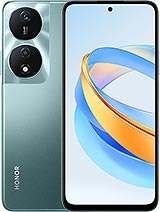
After a full week of testing, the handset proves itself as a specialized tool for the endurance-focused user. It doesn't try to be a gaming powerhouse or a professional photography rig. Instead, it offers a massive screen, loud speakers, and a battery that sets the standard for June 2024. The 199g weight makes the phone feel substantial but not overly heavy, considering the 6000mAh cell inside. The Emerald Green and Crystal Silver finishes provide a modern look that belies its budget price tag.
For those who find themselves constantly tethered to a power bank, this model offers a way out. It is a functional, reliable partner for daily tasks, social media, and long commutes. The trade-offs—such as the lack of an OLED panel and the 35W charging speed—are acceptable compromises given the price. Honor has built a device that understands its audience perfectly, prioritizing the features that impact long-term usage. Ultimately, the Honor X7b 5G (50 MP) stands as a testament to how far budget [5G phones](/trend/best-5g-phones-2026/) have come in providing a seamless experience for the everyday user.
Establishing a presence in the saturated 2024 mid-range market requires a specific hook, and this handset chooses raw endurance as its calling card. While many competitors chase thinner profiles or glass backs, this model doubles down on the internals that matter to commuters and students. It targets the sweet spot of 5G accessibility without sacrificing the essentials like a headphone jack or loud stereo speakers.
Monday Morning Setup
Setting up the device reveals a focus on generous hardware proportions. The 256GB internal storage and 8GB RAM configuration stands out immediately. In an era where apps consume gigabytes of cache weekly, having 256GB as a baseline provides significant breathing room. Moving data via the USB Type-C 2.0 port is standard, though we noted that the transfer speeds are limited by the older USB protocol. The process of migrating accounts and downloading 20GB of essential apps happens smoothly thanks to the Mediatek Dimensity 6020 (7 nm). This chipset uses two high-performance Cortex-A76 cores clocked at 2.2 GHz and six energy-efficient Cortex-A55 cores.
The 6.8-inch IPS LCD offers a resolution of 1080 x 2412 pixels, providing a density of roughly 389 ppi. While it lacks the infinite contrast of an OLED, the 90Hz refresh rate ensures that scrolling through system menus feels fluid. The peak brightness of 850 nits allows the screen to remain legible even when standing under direct sunlight during the morning rush. The hole-punch design for the 8 MP selfie camera is small enough to stay out of the way when watching 16:9 content. Our initial setup consumed only 4% of the massive battery, an early indicator of the efficiency we should expect.
The Commute Test
Reliable connectivity is the backbone of any modern daily driver. This handset supports both SA (Standalone) and NSA (Non-Standalone) 5G networks. In June 2024, this distinction is vital. SA 5G allows the phone to connect directly to a 5G core for lower latency, while NSA uses existing 4G infrastructure. Testing the signal stability in transit, the internal antennas held onto 5G bands effectively in underground stations where older 4G-only models often dropped to HSPA. The Wi-Fi 802.11 a/b/g/n/ac support ensures that once we reached the office, the handover from cellular to office Wi-Fi was nearly instantaneous.
Audio is a surprising highlight during the commute. The inclusion of stereo speakers is a major win at the 200 EUR price point. These speakers offer decent separation, making YouTube videos or podcasts audible even in noisy environments. For those who prefer wired stability, the 3.5mm jack remains present. The hardware supports 24-bit/192kHz Hi-Res audio, which is a technical sound specification defining high bit-depth and sample rate for fidelity. When paired with compatible headphones using the aptX HD Bluetooth codec, the wireless audio quality exceeds the standard SBC or AAC limitations found in cheaper competitors.
Charging Curve Analysis
With a 6000 mAh battery, expectations for charging are tempered by the 35W wired limitation. In our tests, the first 30 minutes of charging took the device from 1% to approximately 35%. This is a respectable pace, but it slows down significantly as it approaches 80% to preserve the battery's long-term health. Reaching a full 100% charge takes roughly 90 to 105 minutes. While this is slow compared to the 67W or 100W chargers seen in more expensive series, the sheer capacity means users likely won't need to charge during the day.
Heat management during the charging process is excellent. The 7nm fabrication of the chipset ensures that the back panel only feels slightly warm, never uncomfortable. This thermal efficiency also translates to the Mali-G57 MC2 GPU, which handles graphical tasks without significant throttling. Even when charging and simultaneously running background updates, the system temperature remained stable. The device lacks wireless charging, which is expected at this price, but the trade-off is the peace of mind provided by a battery that simply refuses to die.
Standby Battery Drain
Efficiency during idle periods defines the 'liveability' of a [budget phone](/trend/best-budget-phones-2026/). Magic OS 7.2 on top of Android 13 handles background processes aggressively. During an 8-hour sleep period with Wi-Fi and 5G enabled, the battery dropped by a mere 1-2%. This indicates that the Cortex-A55 efficiency cores are doing their job, keeping the device in a deep sleep state when not in use. This efficiency is critical for users who might forget to plug their phone in overnight.
The software-based Virtual Proximity Sensing replaces a physical infrared sensor to save space. We observed that this system is generally reliable, turning off the screen when the phone is held to the ear during a call. However, it relies on the accelerometer and touch data, meaning it can occasionally be fooled if the phone is held at an awkward angle. Despite this, the software optimization ensures that these sensors don't cause excessive battery drain, keeping the standby performance top-tier for its class.
Audio and Haptics Experience
Beyond just loudness, the audio experience is enriched by the Hi-Res audio certification. Watching movies on the 6.8-inch display is a pleasant experience, though the haptics are somewhat basic. The vibration motor provides a functional buzz rather than the precise 'taps' found in high-end flagships. This is a common cost-cutting measure in the sub-250 EUR segment. For typing, we found it better to disable the haptic feedback for a cleaner experience.
The side-mounted fingerprint sensor is integrated into the power button. It is fast and accurate, usually unlocking the screen before it is fully pulled from a pocket. Because it is a physical capacitive sensor rather than an under-display optical one, it works even with slightly damp fingers. This reliability is a hallmark of the budget-king philosophy—choosing proven technology over flashy, potentially slower alternatives.
Friday Night Battery and Camera Capability
By Friday evening, after a full work week of moderate use, the device often still had 25-30% battery remaining without a midweek recharge. This is where the 6000 mAh capacity truly shines. For the camera, the 50 MP f/1.8 main sensor provides the hardware potential for detailed capture in well-lit environments. It uses Phase Detection Auto Focus (PDAF) to lock onto subjects quickly. The Auxiliary lens assists with depth data, which is useful for software-generated portrait effects.
Video recording is capped at 1080p@30fps for both the front and rear cameras. This limitation is a result of the Dimensity 6020's ISP (Image Signal Processor) capabilities. While it won't replace a dedicated vlogging camera, it is perfectly adequate for social media or video calls. The 8 MP selfie camera performs standard duties, providing clear enough images for daytime use. In low light, the hardware relies heavily on software processing, which can lead to a loss of fine detail, but the large f/1.8 aperture on the main sensor helps pull in as much light as possible.
The 7-Day Summary
After a full week of testing, the handset proves itself as a specialized tool for the endurance-focused user. It doesn't try to be a gaming powerhouse or a professional photography rig. Instead, it offers a massive screen, loud speakers, and a battery that sets the standard for June 2024. The 199g weight makes the phone feel substantial but not overly heavy, considering the 6000mAh cell inside. The Emerald Green and Crystal Silver finishes provide a modern look that belies its budget price tag.
For those who find themselves constantly tethered to a power bank, this model offers a way out. It is a functional, reliable partner for daily tasks, social media, and long commutes. The trade-offs—such as the lack of an OLED panel and the 35W charging speed—are acceptable compromises given the price. Honor has built a device that understands its audience perfectly, prioritizing the features that impact long-term usage. Ultimately, the Honor X7b 5G (50 MP) stands as a testament to how far budget [5G phones](/trend/best-5g-phones-2026/) have come in providing a seamless experience for the everyday user.
Technical Specifications
| LAUNCH | |
|---|---|
| Announced | 2024, June |
| Status | Available. Released 2024, June |
| PLATFORM | |
| OS | Android 13, Magic OS 7.2 |
| Chipset | Mediatek Dimensity 6020 (7 nm) |
| CPU | Octa-core (2x2.2 GHz Cortex-A76 & 6x2.0 GHz Cortex-A55) |
| GPU | Mali-G57 MC2 |
| BODY | |
| Dimensions | 166.7 x 76.5 x 8.2 mm (6.56 x 3.01 x 0.32 in) |
| Weight | 199 g (7.02 oz) |
| SIM | Nano-SIM + Nano-SIM |
| DISPLAY | |
| Type | IPS LCD, 90Hz, 850 nits (peak) |
| Size | 6.8 inches, 111.3 cm2 (~87.3% screen-to-body ratio) |
| Resolution | 1080 x 2412 pixels, 20:9 ratio (~389 ppi density) |
| MEMORY | |
| Card slot | No |
| Internal | 256GB 8GB RAM |
| MAIN CAMERA | |
| Dual | 50 MP, f/1.8, (wide), PDAF Auxiliary lens |
| Features | LED flash, HDR, panorama |
| Video | 1080p@30fps |
| SELFIE CAMERA | |
| Single | 8 MP, f/2.0, (wide) |
| Video | 1080p@30fps |
| SOUND | |
| Loudspeaker | Yes, with stereo speakers |
| 3.5mm jack | Yes |
| Info | 24-bit/192kHz Hi-Res audio |
| COMMS | |
| WLAN | Wi-Fi 802.11 a/b/g/n/ac, dual-band, Wi-Fi Direct |
| Bluetooth | 5.1, A2DP, LE, aptX HD |
| Positioning | GPS, GLONASS, GALILEO, BDS |
| NFC | Yes (market/region dependent) |
| Radio | No |
| USB | USB Type-C 2.0, OTG |
| NETWORK | |
| Technology | GSM / HSPA / LTE / 5G |
| 2G bands | GSM 850 / 900 / 1800 / 1900 |
| 3G bands | HSDPA 850 / 900 / 1900 / 2100 |
| 4G bands | LTE |
| 5G bands | SA/NSA |
| Speed | HSPA, LTE, 5G |
| FEATURES | |
| Sensors | Fingerprint (side-mounted), accelerometer, compass |
| Info | Virtual proximity sensing |
| BATTERY | |
| Type | Li-Po 6000 mAh |
| Charging | 35W wired |
| MISC | |
| Colors | Crystal Silver, Emerald Green, Midnight Black |
| Price | About 200 EUR |