Maximum Real Estate for Minimal Spend – Why the Umidigi G9x Wins the Entry Tier Battle
Overview
The Economic Reality of Entry-Level Mobile Hardware
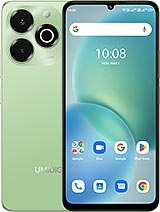
The Umidigi G9x is a budget-tier smartphone featuring a 6.75-inch IPS LCD with a 90Hz refresh rate and a 5000 mAh battery, aimed at users who prioritize screen size and endurance over high-end processing. Released in June 2025, it competes in the sub-$120 market, offering a modern software experience with Android 14 (Go edition) while maintaining a highly competitive price point for the essential features required by students or secondary device users.
From a value-hunting perspective, we look at this device not through the lens of flagship luxury, but through the hard math of utility per dollar. In mid-2025, inflation has pushed many reliable brands out of the $100 bracket. The fact that Umidigi manages to include a 90Hz panel at this price is an aggressive move. It suggests a focus on perceived smoothness during daily navigation—a smart play when the underlying processor isn't a speed demon.
Price vs. Specs: The Calculated Compromise
When we analyze the internal components, the Unisoc SC9863A1 chipset stands out. This is a 22nm octa-core processor that relies on Cortex-A55 efficiency cores. By 2025 standards, 22nm is a legacy node, but for a $109 device, it serves a specific purpose: keeping the cost low while providing enough power for WhatsApp, YouTube, and basic web browsing. We see this as a pragmatic choice for the target audience who isn't interested in the latest AAA mobile games.
Matching this with 4GB of RAM and Android 14 (Go edition) is the only way to ensure the UI remains responsive. The Go edition of Android is specifically stripped of heavy background processes, which is vital here. Without this optimization, the handset would likely struggle with memory management. Instead, we see a device that prioritizes the 'now'—the app you are currently using—over aggressive multi-tasking.
Where Did They Cut Corners?
To hit a $109 price point, engineering teams have to make tough calls. The first major bottleneck is the 10W wired charging. Filling a massive 5000 mAh battery at 10W is a slow process, likely taking over three hours from empty. We view this as the primary trade-off; you get all-day endurance, but you must be disciplined about overnight charging. It is a 'slow fuel' approach that might frustrate users accustomed to the 33W or 67W standards seen in higher tiers.
Connectivity is another area where cost-saving is evident. The inclusion of Wi-Fi 4 (802.11 b/g/n) and Bluetooth 4.2 feels like a step back in time. In a world moving toward Wi-Fi 7, sticking to the 2.4GHz band (mostly) means you won't get the fastest local network speeds. However, for a device intended for basic streaming and messaging, these legacy standards still provide functional service, provided the user isn't expecting to download 50GB files on a regular basis.
Resale Value Prediction
Historically, Umidigi devices do not hold their value well on the secondary market. This is an investment in utility, not an asset. Within twelve months, we expect the resale value to drop by at least 50-60%. Unlike iPhones or high-end Samsung units, there is no 'prestige' tax here. This is a 'run it into the ground' device. You buy it for its immediate utility, and you likely won't see a significant return when it is time to upgrade.
That said, the low entry price mitigates this risk. If you spend $110 today and the phone lasts two years, your cost of ownership is less than $5 a month. That is a winning equation for any budget economist. The plastic frame and back, while durable against drops, will show scratches over time, further impacting the secondary market appeal. We recommend keeping it in the provided case to preserve whatever cosmetic value remains.
Unboxing Experience and Accessory Compatibility
Umidigi generally remains generous with the 'basics' in the box. You can expect a pre-applied screen protector and a simple TPU case. For a budget user, this is a saving of another $15-$20 right out of the gate. The inclusion of a USB Type-C port is a welcome update for the G-series, ensuring compatibility with most modern chargers, even if the charging speed is limited by the phone's internal controller.
Finding third-party rugged cases might be a challenge compared to mainstream brands. You are largely reliant on what the manufacturer provides or generic universal pouches. The side-mounted fingerprint sensor is well-placed for a 6.75-inch device, allowing for a natural grip that facilitates easy unlocking. It is these small ergonomic wins that make the device feel more expensive than the receipt suggests.
Performance for the Price
We must be clear: the IMG8322 GPU is designed for UI rendering and video decoding, not for complex shaders. This model is a tool for the digital essentials. It will handle high-definition video playback smoothly thanks to the 720p screen resolution matching the bitrate of most mobile streams efficiently. The 90Hz refresh rate makes the Go edition interface feel surprisingly fluid, hiding some of the chipset's inherent latency.
In our assessment, the 13 MP Main Camera is a daylight performer. The hardware potential is there for decent social media snaps under bright sun, but the 0.3 MP depth sensor is more of a design choice than a functional tool. The 5 MP selfie camera is adequate for video calls but lacks the dynamic range for high-quality vlogging. Again, it is about functional sufficiency—doing just enough to get the job done without inflating the price with unnecessary sensors.
Is It Worth It?
The Umidigi G9x is a testament to how far the bottom of the market has come. In the 2025 landscape, getting a 90Hz large-format screen and a massive battery for nearly $100 is a feat of supply chain management. It isn't for the power user, the gamer, or the mobile photographer. It is for the person who needs a phone that works, lasts all day, and doesn't require a payment plan. For that specific audience, the Umidigi G9x is a smart, calculated purchase.
Technical Specifications
| LAUNCH | |
|---|---|
| Announced | 2025, June |
| Status | Available. Released 2025, June |
| PLATFORM | |
| OS | Android 14 (Go edition) |
| Chipset | Unisoc SC9863A1 (22 nm) |
| CPU | Octa-core (4x1.6 GHz Cortex-A55 & 4x1.2 GHz Cortex-A55) |
| GPU | IMG8322 |
| BODY | |
| Dimensions | 168.3 x 78 x 8.1 mm (6.63 x 3.07 x 0.32 in) |
| Weight | 190 g (6.70 oz) |
| Build | Glass front, plastic frame, plastic back |
| SIM | Nano-SIM + Nano-SIM |
| DISPLAY | |
| Type | IPS LCD, 90Hz |
| Size | 6.75 inches, 110.0 cm2 (~83.8% screen-to-body ratio) |
| Resolution | 720 x 1600 pixels, 20:9 ratio (~260 ppi density) |
| MEMORY | |
| Card slot | microSDXC (uses shared SIM slot) |
| Internal | 64GB 4GB RAM, 128GB 4GB RAM |
| MAIN CAMERA | |
| Dual | 13 MP, (wide) 0.3 MP |
| Features | LED flash |
| Video | Yes |
| SELFIE CAMERA | |
| Single | 5 MP, (wide) |
| Video | Yes |
| SOUND | |
| Loudspeaker | Yes |
| 3.5mm jack | Unspecified |
| COMMS | |
| WLAN | Wi-Fi 802.11 b/g/n |
| Bluetooth | 4.2, A2DP |
| Positioning | GPS, GLONASS, GALILEO, BDS |
| NFC | No |
| Radio | FM radio |
| USB | USB Type-C, OTG |
| NETWORK | |
| Technology | GSM / HSPA / LTE |
| 2G bands | GSM 850 / 900 / 1800 / 1900 |
| 3G bands | HSDPA 850 / 900 / 1700(AWS) / 1900 / 2100 |
| 4G bands | LTE |
| Speed | HSPA, LTE |
| FEATURES | |
| Sensors | Fingerprint (side-mounted), accelerometer, proximity |
| BATTERY | |
| Type | 5000 mAh |
| Charging | 10W wired |
| MISC | |
| Colors | Sand Black, Sand Silver, Sand Green |
| Price | About 100 EUR |