Minimalism Reimagined through the HMD 110 4G
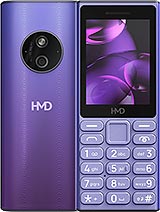
Overview
The HMD 110 4G is a simplified 4G feature phone featuring a 2.4-inch TFT LCD for basic visual output and a removable 1450 mAh battery for extended standby times, aimed at professionals seeking a secondary communication tool or a digital detox. Released in late 2024, it competes with other minimalist handsets by prioritizing cellular reliability over application density through its Unisoc T127 chipset and VoLTE capabilities.\n\nOur editorial team views this device through a specific lens: the software experience in a world cluttered with notification-heavy smartphones. While many look for the latest Snapdragon performance, we find the RTOS (Real-Time Operating System) on this handset to be a refreshing change of pace. It ignores the bloat of modern ecosystems in favor of core functionality that never stutters, provided the user understands the inherent constraints of the hardware.\n\nBuy this if: You want a distraction-free secondary phone with Type-C charging, You need a device with VoLTE for clear calls on modern networks, You value physical buttons over touch gestures for reliability.\n- Skip this if: You require apps like WhatsApp, Google Maps, or Spotify, You want to customize your UI with 3rd party launchers or icon packs, You need a high-quality camera for social media.\n- Wait for a price drop if: You are looking for a bulk fleet of phones for a business and can wait for seasonal discounts.\n- The Bottom Line: The HMD 110 4G is a utilitarian masterpiece that trades customizability for absolute software stability and cellular reliability.
The Grid of Simplicity\n\nThe stock UI experience on the HMD 110 4G is built around a predictable, 3x3 grid menu. Unlike modern Android skins that bury settings under layers of menus, everything here is accessible within two or three clicks of the physical D-pad. The Unisoc T127 chipset handles this lightweight interface with ease. We noticed zero input lag when scrolling through the phonebook or messaging apps, which is more than can be said for budget smartphones trying to run a heavy OS on weak hardware.\n\nThe 2.4-inch TFT LCD offers a resolution of 240 x 320 pixels. While 167 ppi sounds low by 2024 standards, for a non-touch interface, it is perfectly legible. The 65K color depth means icons look distinct, though do not expect the vibrant gradients found on OLED panels. This is a functional display designed for reading SMS and checking caller ID, nothing more. We found the readability under direct sunlight to be average, requiring a bump to maximum brightness to see the text clearly.\n\n## The Customization Wall\n\nFor those accustomed to installing 3rd party launchers like Nova Launcher or Niagara, the HMD 110 4G presents a hard boundary. This device does not support third-party home screens or icon packs. From a software enthusiast's perspective, this is both a limitation and a feature. By removing the ability to tinker, the manufacturer ensures that the UI remains as stable as the day it left the factory. There are no gesture navigation settings to break, no icon scaling issues, and no launcher-induced battery drain.\n\nWe evaluated the fixed launcher's efficiency and found it surprisingly logical. The 'Go To' shortcut key allows for a degree of personalization by letting users pin their most-used functions—like the flashlight or the MP3 player—to a quick list. It is a primitive form of customization, but for a UX minimalist, it provides exactly what is needed without the overhead of a full launcher suite. If the lack of Nova Launcher feels restrictive, this handset is simply not targeted at your demographic.\n\n## Fixed Logic vs Planned Obsolescence\n\nSoftware longevity on a feature phone like this model follows a different trajectory than smartphones. While a flagship might struggle with OS updates after three years, the RTOS here will likely perform identically five years from now. There are no 'feature drops' coming that will slow down the 128MB RAM. The stability is baked into the hardware logic. We appreciate this approach for a secondary device; it is a tool that remains ready to work without the constant 'Update Required' prompts that plague the Android and iOS sectors.\n\nHowever, the lack of an app store means the functionality you buy today is the functionality you have forever. There is no WhatsApp, no Spotify, and no Instagram. You are limited to SMS, calls, and the built-in utilities. For some, this is the ultimate luxury of 2024—a phone that cannot be used for doom-scrolling. The inclusion of 4G LTE and VoLTE ensures that even as 2G and 3G networks are phased out globally, this handset will remain a viable communication tool for the foreseeable future.\n\n## Pure Software or Pre-installed Clutter\n\nBloatware is a common grievance in the mobile industry, and the HMD 110 4G is mostly clean, though not entirely free of it. You will find a few pre-loaded games, some of which are 'try-and-buy' versions. While they don't take up much of the 64MB internal storage, their presence feels slightly out of place on such a utilitarian device. Fortunately, they do not push intrusive notifications or run in the background, maintaining the minimalist software ethos we value.\n\nThe absence of system-wide ads is a major win. Many budget-tier smartphones now include advertisements in the notification shade or within the file manager, but this model avoids such practices. The software feels respectful of the user's attention. The 'MP3 Player' and 'Wireless FM Radio' with RDS support are the primary entertainment features, and they function reliably without requiring a subscription or data connection.\n\n## Measuring Megabytes in the 4G Era\n\nWith only 64MB of internal storage, the use of the microSDHC slot is mandatory for anyone planning to use the media features. The device supports up to 32GB cards. We tested the file index speed with a 16GB card filled with music, and the Unisoc chipset took about 15 seconds to scan the library. It is not instantaneous, but once indexed, the playback is fluid. The USB Type-C port facilitates easier charging, though data transfer speeds remain at USB 2.0 levels.\n\nThe QVGA camera on the rear is a reminder of a bygone era. In our technical assessment, the hardware potential here is extremely limited. It is suitable for taking a quick photo of a parking spot or a grocery list, but the image quality lacks the dynamic range or sharpness for anything artistic. The software processing is basic, saving files quickly without any HDR or post-processing lag. It is a 'point and shoot' in the most literal, basic sense.\n\n## Ditching Swipes for Clicks\n\nGesture navigation has become the standard for modern mobile OSs, but the HMD 110 4G returns to the reliability of physical buttons. There are no 'back swipes' to misfire or 'home swipes' that fail to register. Every action is confirmed with a tactile click. For those frustrated by the increasing complexity of touch interfaces, this return to physical inputs is a major usability advantage. We found the button layout to be ergonomic, with enough spacing between keys to prevent accidental presses.\n\nThe IP54 rating provides a layer of physical longevity that complements the software stability. It is protected against dust and water splashes, meaning a bit of rain won't brick the device. When combined with the 93.5g weight, the handset feels like a sturdy tool rather than a fragile piece of jewelry. It is a device built to be thrown in a bag and forgotten until it is needed.\n\n## Final UI Assessment\n\nThe software on the HMD 110 4G represents a deliberate choice to step back from the 'app for everything' culture. It is a fast, reliable, and predictable interface that excels at its specific tasks: calling, texting, and playing local media. While the lack of 3rd party launcher support and a modern app ecosystem will be a dealbreaker for most, it is the primary selling point for the UX minimalist. It is a handset that serves the user, rather than demanding the user's constant attention. In late 2024, that is a rare and valuable software philosophy.\n\n
Technical Specifications
| LAUNCH | |
|---|---|
| Announced | 2024, September 13 |
| Status | Available. Released 2024, September 22 |
| PLATFORM | |
| Chipset | Unisoc T127 |
| BODY | |
| Dimensions | - |
| Weight | 93.5 g (3.32 oz) |
| SIM | Nano-SIM + Nano-SIM |
| Info | IP54 dust protected and water resistant (water splashes) - EU/AU/NZ Splash resistant - ROW Flashlight |
| DISPLAY | |
| Type | TFT LCD, 65K colors |
| Size | 2.4 inches, 17.8 cm2 (~28.0% screen-to-body ratio) |
| Resolution | 240 x 320 pixels, 4:3 ratio (~167 ppi density) |
| MEMORY | |
| Card slot | microSDHC |
| Phonebook | Yes |
| Call records | Yes |
| Internal | 64MB 128MB RAM |
| MAIN CAMERA | |
| Single | QVGA |
| Video | Yes |
| SELFIE CAMERA | |
| Info | No |
| SOUND | |
| Loudspeaker | Yes |
| 3.5mm jack | Yes |
| COMMS | |
| WLAN | No |
| Bluetooth | 5.0, A2DP |
| Positioning | No |
| NFC | No |
| Radio | Wireless FM radio |
| USB | USB Type-C |
| NETWORK | |
| Technology | GSM / HSPA / LTE |
| 2G bands | GSM 900 / 1800 |
| 3G bands | HSDPA 850 / 900 / 2100 |
| 4G bands | 1, 3, 5, 7, 8, 20 |
| Speed | HSPA, LTE |
| FEATURES | |
| Messaging | SMS |
| Games | Yes |
| Java | No |
| Info | MP3 player |
| BATTERY | |
| Type | Li-Ion 1450 mAh, removable |
| MISC | |
| Colors | Blue, Titanium |