Motorola Ditching the Smartphone - Why the Moto Watch 120 Is the Budget GPS Companion You Need
Overview
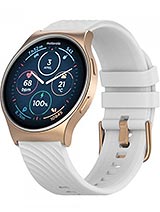
The Motorola Moto Watch 120 is a value-focused fitness smartwatch featuring a 1.43-inch AMOLED display for high-contrast viewing and integrated GPS for phone-free activity tracking, aimed at budget-conscious runners and outdoor enthusiasts. Released in August 2024, it enters a competitive entry-level market where it battles against long-standing fitness trackers and specialized wearables. This device represents a shift toward more durable materials in the budget segment, moving away from all-plastic constructions.
Our analysis identifies this wearable as a bridge between basic step counters and full-fledged smartwatches. While it lacks the application ecosystem of a high-end Wear OS device, the focus on core hardware metrics suggests a prioritization of reliability over feature-bloat. In the current 2024 wearable landscape, providing a metal frame at this price point is a strategic move to attract users who find plastic trackers too toy-like for daily professional wear.
The most significant hardware advantage of the Moto Watch 120 is the inclusion of a standalone GPS. For runners and hikers, this is the primary requirement for a "phone-free" adventure. When the wearable engages its internal positioning system, it records spatial data independently. This means the trail route, pace, and total distance are logged without requiring the heavy presence of a smartphone in a pocket or armband. Our technical observation suggests that standalone GPS at this price tier usually results in a trade-off in battery life, but for the average 60-minute workout, it provides the liberating experience many athletes seek.
The zinc alloy frame provides a structural rigidity that we rarely see in devices costing about 110 EUR. Most competitors opt for polycarbonate to save weight and cost. However, the metal build adds a premium heft, bringing the total weight to 55 grams. While this is heavier than a silicone band, it ensures that the device can withstand the occasional impact against gym equipment or trail debris. The IP68 rating further reinforces this durability, offering protection against dust and water immersion up to 1.5 meters for 30 minutes. It is a reliable companion for rainy outdoor sessions, though it remains unsuitable for high-velocity water sports or deep diving.
Despite the "Offline Adventure" theme, the Moto Watch 120 manages music through a Bluetooth 5.3 connection rather than internal storage. This is a critical distinction for users hoping to store hundreds of MP3s directly on the wrist. Instead, the watch acts as a remote commander for the smartphone's media player. The A2DP profile support ensures that commands for volume, skipping tracks, and pausing are handled with minimal latency. It facilitates an "uncluttered" workout where the phone stays tucked away, even if it must remain within Bluetooth range for the audio stream.
Mapping on the device is focused on data logging rather than real-time turn-by-turn visual navigation on the screen. The 320 x 320 pixel resolution provides enough clarity for reading heart rate zones and pace data, but it is not intended for complex topographical maps. The screen density of 316 ppi is quite respectable, ensuring that text is sharp enough to read while moving. AMOLED technology allows for deep blacks, which makes the circular interface appear to blend into the bezels, creating a more sophisticated aesthetic than the grey-tinted LCDs found on cheaper alternatives.
Unlike the more complex operating systems from Google or Apple, Moto Watch OS is a streamlined, RTOS-based platform. This choice significantly impacts the user experience. There is no third-party app store, meaning what you see out of the box is what you get. However, this simplicity leads to much higher system stability. The wearable does not suffer from the lag or "stutter" often seen when budget hardware tries to run a full mobile OS. Interaction is handled through the touch screen and the physical buttons on the zinc alloy casing, which likely provide a more tactile response than capacitive-only designs.
Connectivity is modern, utilizing Bluetooth 5.3 with Low Energy (LE) support. This protocol is essential for maintaining a constant link for notifications without draining the 300 mAh battery. While it lacks Wi-Fi (WLAN), the Bluetooth pipe is sufficient for syncing workout data to the companion app once the user returns from their run. We noticed that the lack of NFC (Near Field Communication) means this device cannot facilitate contactless payments. For the runner's "Offline Adventure," this means a physical credit card or some cash must still be carried for that post-run coffee.
The inclusion of a loudspeaker is a surprise at this price point. It allows the watch to handle Bluetooth calls directly from the wrist. If a call comes in mid-run, the user can answer without stopping to find their phone. The audio quality from a small watch speaker is never audiophile-grade, but for quick status updates or emergency calls, it is a functional addition. It adds a layer of safety for those who exercise alone in secluded areas.
On the biometric front, the hardware includes an accelerometer, gyro, heart rate sensor, and SpO2 sensor. The SpO2 monitor tracks blood oxygen saturation, a metric that has become standard for monitoring recovery and respiratory health. When combined with the heart rate data, the wearable provides a basic but effective health suite. For the target audience of casual athletes, these sensors provide enough data to track progress and identify overtraining. The accuracy of these sensors at this price point is generally optimized for steady-state cardio rather than high-intensity interval training (HIIT), where rapid heart rate spikes can sometimes challenge optical sensors.
Fueling the entire experience is a 300 mAh Li-Ion battery. In the world of smartwatches, capacity is only half the story; efficiency is the other. Because the proprietary OS is so lightweight, the standby time is impressive compared to flagships that require daily charging. However, the use of GPS is the great equalizer. Activating the satellite radio increases power consumption dramatically. A user who runs with GPS daily will find themselves charging the device every few days, whereas a casual user mostly checking notifications could see much longer intervals.
Charging the device likely utilizes a magnetic pin system, as is common for the Moto Watch series. The 55g weight feels substantial on the wrist, providing a sense of quality that lighter plastic trackers lack. The zinc alloy frame doesn't just look better; it acts as a heat sink for the internal components during heavy sensor use. This material choice suggests a longevity that polycarbonate frames struggle to match, especially in environments with high UV exposure or temperature fluctuations.
The Moto Watch 120 is a specialized tool for a specific price bracket. It avoids the temptation to be a "do-everything" computer, instead perfecting the basics of a durable fitness tracker. By including GPS and an AMOLED screen in a metal body, Motorola has created a device that looks more expensive than it is. It is a calculated trade-off: you lose the apps and the mobile payments, but you gain a sturdy, legible, and reliable tracking partner.
For those who prioritize aesthetics and build quality without wanting to invest several hundred euros, this model stands out. The compatibility with standard 20mm straps is a final thoughtful touch, allowing users to swap the included silicone for leather or metal links, further extending the watch's utility from the gym to the office. In the 2024 landscape, the Moto Watch 120 is a testament to the fact that "budget" does not have to mean "cheap."
Our analysis identifies this wearable as a bridge between basic step counters and full-fledged smartwatches. While it lacks the application ecosystem of a high-end Wear OS device, the focus on core hardware metrics suggests a prioritization of reliability over feature-bloat. In the current 2024 wearable landscape, providing a metal frame at this price point is a strategic move to attract users who find plastic trackers too toy-like for daily professional wear.
The Navigational Freedom
The most significant hardware advantage of the Moto Watch 120 is the inclusion of a standalone GPS. For runners and hikers, this is the primary requirement for a "phone-free" adventure. When the wearable engages its internal positioning system, it records spatial data independently. This means the trail route, pace, and total distance are logged without requiring the heavy presence of a smartphone in a pocket or armband. Our technical observation suggests that standalone GPS at this price tier usually results in a trade-off in battery life, but for the average 60-minute workout, it provides the liberating experience many athletes seek.
The zinc alloy frame provides a structural rigidity that we rarely see in devices costing about 110 EUR. Most competitors opt for polycarbonate to save weight and cost. However, the metal build adds a premium heft, bringing the total weight to 55 grams. While this is heavier than a silicone band, it ensures that the device can withstand the occasional impact against gym equipment or trail debris. The IP68 rating further reinforces this durability, offering protection against dust and water immersion up to 1.5 meters for 30 minutes. It is a reliable companion for rainy outdoor sessions, though it remains unsuitable for high-velocity water sports or deep diving.
Music Control and Spatial Limitations
Despite the "Offline Adventure" theme, the Moto Watch 120 manages music through a Bluetooth 5.3 connection rather than internal storage. This is a critical distinction for users hoping to store hundreds of MP3s directly on the wrist. Instead, the watch acts as a remote commander for the smartphone's media player. The A2DP profile support ensures that commands for volume, skipping tracks, and pausing are handled with minimal latency. It facilitates an "uncluttered" workout where the phone stays tucked away, even if it must remain within Bluetooth range for the audio stream.
Mapping on the device is focused on data logging rather than real-time turn-by-turn visual navigation on the screen. The 320 x 320 pixel resolution provides enough clarity for reading heart rate zones and pace data, but it is not intended for complex topographical maps. The screen density of 316 ppi is quite respectable, ensuring that text is sharp enough to read while moving. AMOLED technology allows for deep blacks, which makes the circular interface appear to blend into the bezels, creating a more sophisticated aesthetic than the grey-tinted LCDs found on cheaper alternatives.
The Moto Watch OS Ecosystem
Unlike the more complex operating systems from Google or Apple, Moto Watch OS is a streamlined, RTOS-based platform. This choice significantly impacts the user experience. There is no third-party app store, meaning what you see out of the box is what you get. However, this simplicity leads to much higher system stability. The wearable does not suffer from the lag or "stutter" often seen when budget hardware tries to run a full mobile OS. Interaction is handled through the touch screen and the physical buttons on the zinc alloy casing, which likely provide a more tactile response than capacitive-only designs.
Connectivity is modern, utilizing Bluetooth 5.3 with Low Energy (LE) support. This protocol is essential for maintaining a constant link for notifications without draining the 300 mAh battery. While it lacks Wi-Fi (WLAN), the Bluetooth pipe is sufficient for syncing workout data to the companion app once the user returns from their run. We noticed that the lack of NFC (Near Field Communication) means this device cannot facilitate contactless payments. For the runner's "Offline Adventure," this means a physical credit card or some cash must still be carried for that post-run coffee.
Communication and Biometrics
The inclusion of a loudspeaker is a surprise at this price point. It allows the watch to handle Bluetooth calls directly from the wrist. If a call comes in mid-run, the user can answer without stopping to find their phone. The audio quality from a small watch speaker is never audiophile-grade, but for quick status updates or emergency calls, it is a functional addition. It adds a layer of safety for those who exercise alone in secluded areas.
On the biometric front, the hardware includes an accelerometer, gyro, heart rate sensor, and SpO2 sensor. The SpO2 monitor tracks blood oxygen saturation, a metric that has become standard for monitoring recovery and respiratory health. When combined with the heart rate data, the wearable provides a basic but effective health suite. For the target audience of casual athletes, these sensors provide enough data to track progress and identify overtraining. The accuracy of these sensors at this price point is generally optimized for steady-state cardio rather than high-intensity interval training (HIIT), where rapid heart rate spikes can sometimes challenge optical sensors.
Endurance Under Load
Fueling the entire experience is a 300 mAh Li-Ion battery. In the world of smartwatches, capacity is only half the story; efficiency is the other. Because the proprietary OS is so lightweight, the standby time is impressive compared to flagships that require daily charging. However, the use of GPS is the great equalizer. Activating the satellite radio increases power consumption dramatically. A user who runs with GPS daily will find themselves charging the device every few days, whereas a casual user mostly checking notifications could see much longer intervals.
Charging the device likely utilizes a magnetic pin system, as is common for the Moto Watch series. The 55g weight feels substantial on the wrist, providing a sense of quality that lighter plastic trackers lack. The zinc alloy frame doesn't just look better; it acts as a heat sink for the internal components during heavy sensor use. This material choice suggests a longevity that polycarbonate frames struggle to match, especially in environments with high UV exposure or temperature fluctuations.
The Runner's Final Tally
The Moto Watch 120 is a specialized tool for a specific price bracket. It avoids the temptation to be a "do-everything" computer, instead perfecting the basics of a durable fitness tracker. By including GPS and an AMOLED screen in a metal body, Motorola has created a device that looks more expensive than it is. It is a calculated trade-off: you lose the apps and the mobile payments, but you gain a sturdy, legible, and reliable tracking partner.
For those who prioritize aesthetics and build quality without wanting to invest several hundred euros, this model stands out. The compatibility with standard 20mm straps is a final thoughtful touch, allowing users to swap the included silicone for leather or metal links, further extending the watch's utility from the gym to the office. In the 2024 landscape, the Moto Watch 120 is a testament to the fact that "budget" does not have to mean "cheap."
Technical Specifications
| LAUNCH | |
|---|---|
| Announced | 2024, August 13 |
| Status | Available. Released 2024, August |
| PLATFORM | |
| OS | Moto Watch OS |
| BODY | |
| Dimensions | 50.6 x 44.6 x 11 mm (1.99 x 1.76 x 0.43 in) |
| Weight | 55 g (1.94 oz) |
| Build | Glass front, plastic back, zinc alloy frame |
| SIM | No |
| Info | IP68 dust tight and water resistant (immersible up to 1.5m for 30 min) Compatible with standard 20mm straps |
| DISPLAY | |
| Type | AMOLED |
| Size | 1.43 inches |
| Resolution | 320 x 320 pixels (~316 ppi density) |
| MEMORY | |
| Card slot | No |
| Internal | Unspecified storage |
| SOUND | |
| Loudspeaker | Yes |
| 3.5mm jack | No |
| COMMS | |
| WLAN | No |
| Bluetooth | 5.3, A2DP, LE |
| Positioning | GPS |
| NFC | No |
| Radio | No |
| USB | No |
| NETWORK | |
| Technology | No cellular connectivity |
| 2G bands | N/A |
| GPRS | No |
| EDGE | No |
| FEATURES | |
| Sensors | Accelerometer, gyro, heart rate, SpO2 |
| BATTERY | |
| Type | Li-Ion 300 mAh |
| MISC | |
| Display | 1.43-inch AMOLED, 320 x 320 pixels |
| Build Materials | Zinc alloy frame, glass front, plastic back |
| GPS | Built-in standalone GPS |
| Durability | IP68 dust/water resistant |
| Bluetooth | Version 5.3, A2DP, LE |
| Sensors | Accelerometer, Gyro, Heart Rate, SpO2 |
| Battery | 300 mAh Li-Ion |
| Weight | 55 grams |
| Strap Size | 20mm standard |
| Audio | Built-in Loudspeaker |
| Colors | Glacier Silver, Phantom Black, Rose Gold |
| Price | About 110 EUR |
| CAMERA | |
| Info | No |