Motorola The Hidden Economic Genius of the Moto G Stylus (2023) and Its Low Cost Productivity
Overview
The Economic Evaluation of Productivity
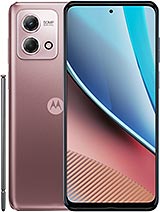
The Moto G Stylus (2023) is a budget-tier productivity handset featuring an integrated passive stylus for annotation and a 5000 mAh battery for multi-day endurance, aimed at students and value-seeking professionals. Released in early May 2023, it competes in the crowded sub-$200 market by offering a specialized input tool that is typically reserved for much more expensive hardware. We view this device through the lens of strict return on investment, where every dollar spent must be justified by utility rather than brand prestige.
While the market is flooded with generic slabs, the inclusion of a writing implement sets the Moto G Stylus (2023) apart as a functional tool. The device doesn't aim to compete with the silicon powerhouses from California or South Korea. Instead, it targets a niche where users need to sign documents, take quick notes during lectures, or edit photos with more precision than a finger allows. In the current economic climate of May 2023, where inflation is squeezing consumer tech budgets, this handset represents a pragmatic compromise. It prioritizes a specific physical feature over the pursuit of high-end specifications like 5G or high-resolution displays.
The Cost of Compromise: Where Corners Were Cut
Maintaining a price point around 200 EUR requires significant trade-offs, and the first major casualty is the display resolution. The handset utilizes a 6.5-inch IPS LCD with a resolution of 720 x 1600 pixels. At roughly 270 pixels per inch, the screen lacks the crispness we expect from modern devices. When using the stylus for fine-line sketching or reading small text in a spreadsheet, the individual pixels are occasionally visible. This is a bottleneck for users who demand high visual fidelity. However, the 90Hz refresh rate is a welcome inclusion. It makes the UI feel more responsive during scrolling, partially masking the lower resolution with fluid motion.
Another significant omission is NFC. In a world increasingly moving toward contactless payments, the lack of an NFC chip means this model cannot use Google Pay. For a device marketed as a productivity tool, this is a glaring economic oversight. Users who rely on their phones to replace their wallets will find this a dealbreaker. We also see a reliance on plastic for the frame and back. While this makes the phone more durable against drops compared to glass, it lacks the premium density of more expensive rivals. The water-repellent design is a nice touch, but it does not provide the peace of mind that a full IP68 rating would offer.
Staying Cool: Thermals and Sustained Load
Under the hood, the Helio G85 chipset handles the heavy lifting. This is an older 12nm octa-core processor that focuses on efficiency rather than raw speed. During our analysis of sustained workloads, such as a 30-minute session of multitasking between note-taking apps and a web browser, the device remains relatively cool. The 12nm process is not as thermally efficient as the newer 6nm or 4nm chips found in flagship models, but because the Helio G85 isn't pushing a high-resolution display, it doesn't overtax itself during standard productivity tasks.
If you push the Mali-G52 MC2 GPU with intensive gaming, such as high-end 3D titles available in early 2023, you will notice some warmth near the camera module. Frame rates will drop after about 20 minutes as the system manages heat. This isn't a gaming machine. It is a digital notepad. For its intended purpose—light office work, emails, and social media—the thermal management is perfectly adequate. The 4GB of RAM is the real limiting factor here; it struggles to keep more than three or four demanding apps in memory simultaneously, which can lead to some stutter when switching back to a document you were editing ten minutes ago.
Long-Term Viability and the Software Debt
When calculating the total cost of ownership, software support is a critical variable. Motorola has committed to an upgrade to Android 14, but beyond that, the future is murky. For a device released in May 2023, having a short update cycle diminishes its long-term value. We expect most users will get two to three years of functional use before the hardware feels significantly outdated. On the hardware front, the repairability outlook is decent. The plastic construction is easier to disassemble than modern glass-sandwiched flagships, meaning screen or battery replacements shouldn't be prohibitively expensive.
Storage is another area where users need to be disciplined. With 64GB of internal memory, the phone will fill up quickly with high-resolution photos and videos. Fortunately, the inclusion of a dedicated microSDXC slot allows for cheap expansion. We highly recommend purchasing a 128GB or 256GB card immediately to avoid the performance degradation that occurs when internal storage hits 90% capacity. This is a classic [budget phone](/trend/best-budget-phones-2026/) strategy: pay less upfront for storage and expand it yourself for much less than the manufacturer would charge for a 128GB model.
The Stereo Advantage: Audio Quality for the Masses
One area where the device punches above its weight is the audio setup. It features stereo speakers, which is a rarity at this price point. Most competitors still rely on a single, easily muffled bottom-firing speaker. These dual speakers provide a much better experience for watching video tutorials or participating in speakerphone calls. While they lack the deep bass of a premium device, the clarity at mid-range volumes is impressive. This makes it a viable tool for media consumption when you don't have headphones handy.
Speaking of headphones, the 3.5mm jack remains a standard feature here. From an economist's perspective, this is a value win. It allows users to use existing wired headsets without buying expensive wireless earbuds or dongles. In 2023, the industry's push toward removing the jack is largely a profit-driven move to sell accessories. Motorola's decision to keep it reinforces this phone's status as a pragmatic, cost-saving choice.
Performance for the Price: The ROI Analysis
The 50MP main camera sensor is the centerpiece of the imaging system. Using pixel binning, it takes 12.5MP photos that perform surprisingly well in daylight. The f/1.8 aperture allows for decent light intake, though the lack of optical image stabilization (OIS) means you need a steady hand. The hardware potential for good photography is there, provided the lighting is optimal. In low light, however, the small 0.64µm pixels struggle, resulting in increased noise as the software tries to compensate for the lack of light.
The 2MP macro sensor is essentially a filler spec to make the camera module look more impressive. It rarely produces usable photos and shouldn't be a factor in your buying decision. On the front, the 8MP selfie camera is adequate for Zoom calls or basic social media posts but won't win any awards for dynamic range. When you weigh the camera performance against the $200 price tag, the main 50MP sensor provides enough value to justify the purchase for casual users, but photographers should look elsewhere.
The Final Audit: Is It Worth It?
The Moto G Stylus (2023) is a masterclass in targeted compromise. It takes the expensive concept of a stylus-equipped smartphone and strips away everything non-essential to hit a rock-bottom price. You lose 5G, you lose high-resolution graphics, and you lose the ability to tap-to-pay. What you gain is a reliable battery that easily lasts two days, a smooth 90Hz interface, and a built-in tool that makes digital interaction more precise. For the student on a budget or the contractor who needs to mark up blueprints on-site without spending $1,200, this is a calculated, effective purchase.
In the final assessment, the value proposition of the Moto G Stylus (2023) depends entirely on your need for that pen. If you don't use the stylus, there are other phones in this price range with better screens or faster charging. But if the stylus is your primary requirement, this device sits in a category of one. It is the most affordable way to get a pen-enabled experience in May 2023 without resorting to the used market. It is a utilitarian tool designed for the budget-conscious era.
Technical Specifications
| LAUNCH | |
|---|---|
| Announced | 2023, May 02 |
| Status | Available. Released 2023, May 05 |
| PLATFORM | |
| OS | Android 13, planned upgrade to Android 14 |
| Chipset | Mediatek MT6769 Helio G85 (12 nm) |
| CPU | Octa-core (2x2.0 GHz Cortex-A75 & 6x1.8 GHz Cortex-A55) |
| GPU | Mali-G52 MC2 |
| BODY | |
| Dimensions | 162.9 x 74.1 x 9.2 mm (6.41 x 2.92 x 0.36 in) |
| Weight | 195 g (6.88 oz) |
| Build | Glass front, plastic frame, plastic back |
| SIM | Nano-SIM |
| Info | Stylus Water-repellent design |
| DISPLAY | |
| Type | IPS LCD, 90Hz |
| Size | 6.5 inches, 102.0 cm2 (~84.5% screen-to-body ratio) |
| Resolution | 720 x 1600 pixels, 20:9 ratio (~270 ppi density) |
| MEMORY | |
| Card slot | microSDXC (dedicated slot) |
| Internal | 64GB 4GB RAM |
| MAIN CAMERA | |
| Dual | 50 MP, f/1.8, (wide), 0.64µm, PDAF 2 MP (macro) |
| Features | LED flash, HDR, panorama |
| Video | 1080p@30/60fps |
| SELFIE CAMERA | |
| Single | 8 MP, f/2.0, (wide), 1/4.0", 1.12µm |
| Features | HDR |
| Video | 1080p@30fps |
| SOUND | |
| Loudspeaker | Yes, with stereo speakers |
| 3.5mm jack | Yes |
| COMMS | |
| WLAN | Wi-Fi 802.11 a/b/g/n/ac, dual-band, Wi-Fi Direct |
| Bluetooth | 5.0, A2DP, LE |
| Positioning | GPS, GLONASS, GALILEO |
| NFC | No |
| Radio | No |
| USB | USB Type-C 2.0 |
| NETWORK | |
| Technology | GSM / HSPA / LTE |
| 2G bands | GSM 850 / 900 / 1800 / 1900 |
| 3G bands | HSDPA 850 / 900 / 1700(AWS) / 1900 / 2100 |
| 4G bands | 1, 2, 3, 4, 5, 7, 8, 12, 13, 14, 17, 25, 26, 29, 30, 38, 41, 66, 71 |
| Speed | HSPA, LTE |
| FEATURES | |
| Sensors | Fingerprint (side-mounted), accelerometer, gyro, proximity, compass, barometer |
| BATTERY | |
| Type | Li-Po 5000 mAh |
| Charging | 15W wired |
| MISC | |
| Colors | Blue, Rose Gold |
| Price | About 200 EUR |