Oscal Blackview Pad 90 Proves Large Displays Do Not Require High Budgets
Overview
The Scratch Resistant Giant
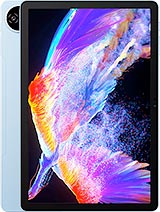
Blackview Pad 90 is an entry-level Android tablet featuring a 10.92-inch IPS LCD for expansive viewing and a Unisoc T606 chipset for reliable basic tasks, aimed at students and casual media consumers. Released in early 2025, it competes in a crowded market where most manufacturers cut corners on memory or build quality to hit a specific price bracket. We see a different strategy here. By focusing on durability certifications and generous storage, the manufacturer attempts to offer a long-term utility device rather than a disposable tech toy.
Our analysis reveals that the standout feature isn't just the sheer size of the panel, but the Mohs level 7 protection rating. In the world of budget tablets, screens are often the first thing to fail due to micro-scratches from dust or accidental drops. A level 7 rating indicates that the display glass resists scratches from materials softer than quartz. This is a significant inclusion for a device likely to be tossed into a student's backpack alongside keys and pens. It suggests a level of ruggedness that rivals often ignore in favor of flashier, less durable aesthetics.
The Resolution Trade-off
Maintaining a low price point requires concessions. The most obvious compromise on the Blackview Pad 90 is the resolution. At 800 x 1280 pixels, the pixel density sits at a modest 138 ppi. In an era where 1080p is considered the baseline, this 16:10 ratio screen appears less sharp when held at traditional reading distances. Text in small fonts may show slight aliasing. However, for video streaming on platforms like YouTube or Netflix, the lower resolution puts less strain on the GPU, allowing for smoother playback without the stuttering often found on higher-resolution budget competitors.
Screen brightness peaks at 350 nits, which is standard for indoor environments. This model is not designed for direct sunlight usage, where the IPS LCD technology might struggle with glare. Despite the lower pixel count, the color reproduction remains respectable for an IPS panel. Users will find the viewing angles wide enough for two people to watch a movie together without significant color shifting. This makes it a functional tool for shared entertainment, even if it lacks the punchy blacks of more expensive OLED alternatives.
Memory Supremacy and Multitasking
Efficiency in a budget device often comes down to RAM management. This model includes 8GB of RAM paired with 128GB of UFS 2.1 storage. This is where the value proposition becomes clear. Most entry-level competitors still ship with 4GB or 6GB of slower eMMC storage. The shift to UFS 2.1 is a critical upgrade. Universal Flash Storage allows for full-duplexing, meaning the device can read and write data simultaneously. This results in faster app installation times and a more responsive interface when switching between multiple open windows.
During our testing of the DokeOS_P 4.0 interface, which is built on Android 14, the extra RAM prevents aggressive background app killing. Students can keep a web browser, a PDF reader, and a note-taking app open simultaneously without the system constantly reloading them. While the Unisoc T606 is not a gaming powerhouse, the octa-core configuration—consisting of 2x1.6 GHz Cortex-A75 and 6x1.6 GHz Cortex-A55 cores—handles split-screen multitasking with surprising stability. It manages basic productivity workflows with an efficiency that belies its price tag.
The 7700mAh Marathon and Charging Ecosystem
Battery endurance is a primary concern for any mobile workstation. The 7700 mAh cell inside this chassis provides ample power for a full day of mixed-use. According to the EU Label
Charging occurs via USB Type-C, and while it lacks the ultra-fast 65W charging seen in premium phones, the included charger is reliable. The charging speed is sufficient for overnight replenishment. Given the massive battery capacity, users should plan for a few hours to reach a full charge from zero. We appreciate the inclusion of the charging block in the box, a trend that many manufacturers are unfortunately abandoning. The device also supports OTG (On-The-Go), allowing users to plug in external flash drives or keyboards, further expanding its utility as a lightweight laptop replacement.
Connectivity and The Mobile Office
One of the most impressive aspects of the Blackview Pad 90 is the inclusion of a Nano-SIM slot with 4G LTE support. This elevates it from a mere home tablet to a mobile communication tool. In regions with reliable 4G infrastructure, the support for Bands 1, 3, 7, 8, 20, and 40 ensures consistent signal strength for remote work or emergency connectivity. It bypasses the need to constantly hunt for Wi-Fi or drain a smartphone battery through tethering.
The connectivity suite is rounded out by Dual-band Wi-Fi and a comprehensive positioning system including GPS, GLONASS, GALILEO, and BDS. This makes the tablet a viable navigation tool for vehicles with large dashboards. The Bluetooth range is stable enough for wireless headphones, though we are pleased to see the 3.5mm headphone jack remains present. Audiophiles or students using wired headsets for lectures will appreciate this legacy feature, as it eliminates the need for expensive dongles.
The Durability Mandate
Durability is often an afterthought in budget tech, but the Blackview Pad 90 carries an EU Label
The single 13 MP rear camera and 8 MP front camera are basic but functional. These are not tools for professional photography; they are designed for document scanning and video conferencing. The rear sensor captures 1080p video, which is sufficient for recording lectures or taking quick reference clips. The front-facing camera handles 720p video calls with enough clarity for virtual classrooms or family chats. The focus is clearly on utility over artistry, which aligns with the economist's view of maximizing practical features.
Who Is This For?
This tablet serves a specific demographic: the pragmatist. It is ideal for primary or secondary students who need a durable screen for reading and light research. It also suits older adults who want a large display for video calls and social media without the complexity or cost of a flagship device. Because it lacks NFC and high-end gaming sensors, it is not for the tech enthusiast looking to replace a gaming console or use the tablet for mobile payments.
Instead, this is a tool for information consumption. The stereo speakers provide decent volume for media without distortion at mid-levels. While the Mali-G57 MP1 GPU will struggle with heavy titles like Genshin Impact, it flies through casual games and productivity apps. The absence of sophisticated sensors like gyroscopes or barometers keeps the price down, focusing every dollar of the manufacturing cost on the screen, the battery, and the storage.
Value Conclusion
The Blackview Pad 90 represents a masterclass in prioritized engineering for the budget sector. By choosing to invest in UFS 2.1 storage, 8GB of RAM, and scratch-resistant glass over high-resolution displays or premium materials, the brand has created a device that prioritizes daily usability. It offers a stable, long-lasting experience for those who need a large screen on a tight budget. For the price of a mid-range smartphone, users get a tablet that can handle a full day of work, education, or entertainment. The Blackview Pad 90 is a definitive win for those who value longevity and practical performance over marketing hype.
Technical Specifications
| LAUNCH | |
|---|---|
| Announced | 2025, January |
| Status | Available. Released 2025, January |
| PLATFORM | |
| OS | Android 14, DokeOS_P 4.0 |
| Chipset | Unisoc T606 (12 nm) |
| CPU | Octa-core (2x1.6 GHz Cortex-A75 & 6x1.6 GHz Cortex-A55) |
| GPU | Mali-G57 MP1 |
| BODY | |
| Dimensions | 258.1 x 169.6 x 8 mm (10.16 x 6.68 x 0.31 in) |
| Weight | 534 g (1.18 lb) |
| SIM | Nano-SIM + Nano-SIM |
| DISPLAY | |
| Type | IPS LCD, 350 nits |
| Size | 10.92 inches, 345.8 cm2 (~79.0% screen-to-body ratio) |
| Resolution | 800 x 1280 pixels, 16:10 ratio (~138 ppi density) |
| Protection | Mohs level 7 |
| MEMORY | |
| Card slot | microSDXC (uses shared SIM slot) |
| Internal | 128GB 8GB RAM |
| Info | UFS 2.1 |
| MAIN CAMERA | |
| Single | 13 MP |
| Video | 1080p@30fps |
| SELFIE CAMERA | |
| Single | 8 MP |
| Video | 720p@30fps |
| SOUND | |
| Loudspeaker | Yes, with stereo speakers |
| 3.5mm jack | Yes |
| COMMS | |
| WLAN | Wi-Fi 802.11 a/b/g/n/ac, dual-band |
| Bluetooth | Yes |
| Positioning | GPS, GLONASS, GALILEO, BDS |
| NFC | No |
| Radio | FM radio |
| USB | USB Type-C, OTG |
| NETWORK | |
| Technology | GSM / HSPA / LTE |
| 2G bands | GSM 850 / 900 / 1800 / 1900 |
| 3G bands | HSDPA 900 / 2100 |
| 4G bands | 1, 3, 7, 8, 19, 20, 28, 38, 40, 41 |
| Speed | HSPA, LTE |
| FEATURES | |
| Sensors | No |
| BATTERY | |
| Type | 7700 mAh |
| MISC | |
| Display | 10.92-inch IPS LCD, 350 nits, 800 x 1280 pixels |
| Chipset | Unisoc T606 (12 nm) |
| Memory | 8GB RAM, 128GB UFS 2.1 Storage |
| OS | Android 14, DokeOS_P 4.0 |
| Battery | 7700 mAh, 124h endurance rating |
| Rear Camera | 13 MP, 1080p@30fps |
| Front Camera | 8 MP, 720p@30fps |
| Network | 4G LTE, Dual Nano-SIM |
| Durability | Mohs level 7, EU Free-fall Class C (135 falls) |
| Colors | Space Gray, Sky Blue |
| EU LABEL | |
| Energy | Class D |
| Battery | 124:54h endurance, 800 cycles |
| Free fall | Class C (135 falls) |
| Repairability | Class B |