Oscal Value Trap or Budget Hero - The Economic Reality of the Blackview Pad 15
Overview
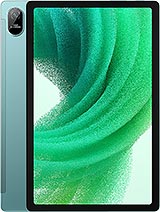
Blackview Pad 15 is a value-oriented tablet featuring a 10.36-inch IPS LCD for high-resolution media consumption and an 8280 mAh battery for extended endurance, aimed at students and remote workers seeking affordability. Released in September 2023, it competes directly with entry-level offerings from Lenovo and Samsung by providing a larger storage footprint and cellular connectivity at a fraction of the cost.
From a market economist's perspective, this device represents a fascinating study in manufacturing trade-offs. We are seeing a shift where secondary brands prioritize raw storage capacity and screen real estate over processing power and charging speeds. It's a calculated gamble designed to appeal to the spec-sheet shopper who compares '8GB RAM' and '256GB storage' against much more expensive rivals. But as any seasoned value hunter knows, the numbers on the box rarely tell the full story of daily usability. We have to look at the underlying architecture to see if the price-to-performance ratio actually holds up under pressure.
In the current September 2023 landscape, tablets like this often appear as 'free' incentives or heavily discounted additions to carrier data plans. We urge caution when encountering such offers. While the Blackview Pad 15 supports Dual 4G LTE, tying a budget tablet to a 24-month contract is often a poor financial decision. If the carrier charges $15 a month for the data line and 'gives' you the tablet for free, you are effectively paying $360 over two years for a device that retails unlocked for significantly less.
Buying this model unlocked is the only way to maximize its value. By avoiding the 'free' trap, users retain the flexibility to swap between budget MVNOs or use it purely as a Wi-Fi-only media hub for the household. The inclusion of a microSDXC slot that shares the SIM tray further increases its longevity as a local media player, allowing you to bypass expensive cloud storage subscriptions. In an era of rising service costs, owning the hardware outright is the first step toward true tech economy.
When we look at the cost of ownership, the absence of a high-speed charger in the box or support for fast charging protocols is a hidden tax on the user's time. A tablet with a massive battery but slow intake requires a specific lifestyle adjustment. It is not a device you charge while getting ready for a meeting; it is a device you must commit to charging overnight, every single night, to ensure it remains a reliable tool for the next business day.
Construction of the device leans heavily into the 'slim and light' marketing narrative, measuring just 7.6 mm in thickness. For a tablet with an 8280 mAh battery, this is a commendable engineering feat. The 449g weight ensures that it remains comfortable for two-handed use during long reading sessions or while commuting. However, the use of a plastic-dominant build implies that structural rigidity might not match the aluminum unibodies found in the iPad or even the higher-end Samsung Tab S series. Users should expect some flex if significant pressure is applied.
The 10.36-inch IPS LCD panel offers a resolution of 1200 x 2000 pixels. This 5:3 aspect ratio is slightly wider than the traditional 16:9, making it particularly well-suited for document editing and split-screen multitasking. With a pixel density of approximately 225 ppi, text appears sharp enough for standard reading distances, though it won't win any awards for surgical clarity. The choice of IPS technology ensures decent viewing angles, which is critical for a device that will likely be propped up on desks or used for collaborative viewing in a classroom setting.
Internally, the choice of the Unisoc T606 chipset is where the budget constraints become most visible. Built on a 12nm process, this SoC is designed for efficiency rather than raw power. It utilizes two performance Cortex-A75 cores and six efficiency Cortex-A55 cores, all clocked at 1.6 GHz. For those unfamiliar with ARM architecture, this means the device handles background tasks and light app switching gracefully but will struggle with intensive 3D rendering or high-end mobile gaming. It is a workhorse for the browser and the office suite, not a gaming rig.
Audio performance on this model is handled by a set of stereo speakers. In our analysis of the hardware layout, the placement suggests a focus on landscape orientation, which is ideal for streaming movies. The volume ceiling is surprisingly high, capable of filling a small bedroom without much effort. However, at maximum volume, the treble tends to become piercing, and the thin chassis lacks the physical resonance chamber needed to produce meaningful bass response.
Stereo separation is functional but not particularly wide. If you are watching an action movie, you will notice distinct left-right panning, but it lacks the 'spatial' depth found in quad-speaker configurations. For the price, having dedicated stereo output is a win, especially when many competitors still rely on single-bottom-firing units. For critical listening or Zoom calls in noisy environments, the inclusion of the 3.5mm headphone jack remains one of the best value-add features for budget-conscious users who aren't ready to invest in high-latency Bluetooth buds.
We must also discuss the signal-to-noise ratio when using the internal speakers. At low volumes, there is a very faint hiss noticeable in silent rooms—a common trait in budget-tier DACs. This isn't a dealbreaker for most, but audiophiles should manage their expectations. It's a utilitarian audio system meant for clarity in dialogue rather than an immersive musical experience.
The microphone array is situated at the top of the frame when held in portrait mode. During test scenarios, the voice pick-up is clear enough for standard video conferencing. It captures a relatively natural vocal tone, though it lacks sophisticated active noise cancellation. If you are typing on a mechanical keyboard or have a fan running in the background, those sounds will definitely bleed into your calls.
In video recording mode, the microphone struggles with wind noise. Because there is no secondary 'noise-canceling' mic to phase out ambient roar, outdoor recordings can sound muddy. However, for a student recording a lecture or a professional attending a remote meeting from a quiet home office, the hardware is more than sufficient. We suggest using a wired headset if you plan to use this for high-stakes interviews, as the 3.5mm jack provides a much cleaner input path than the built-in mics.
One positive note is the gain control. The system software seems to do a decent job of boosting quiet voices without causing excessive distortion. It shows that Blackview understands the primary use case for this tablet: communication. While it won't replace a dedicated condenser mic, it outperforms many budget laptops in terms of vocal presence.
Haptics are often the first casualty of budget optimization, and this model is no exception. The vibration motor is of the 'ERM' (Eccentric Rotating Mass) variety rather than a high-precision linear actuator. This results in a 'buzzy' feel rather than a sharp 'tap'. When typing on the virtual keyboard, the haptic feedback feels sluggish and somewhat imprecise, which can actually slow down fast typists.
We recommend turning off haptic feedback for typing to save battery and reduce the distracting buzz. The UI feedback is similarly basic; notifications feel more like a mechanical vibration than a subtle alert. This is a common characteristic of the Unisoc T606 platform, where the power management for the haptic driver is simplified to keep costs down.
Despite the lack of premium feel, the haptics serve their purpose for silent alarms and incoming call alerts. It is powerful enough that you won't miss a notification if the tablet is face-down on a wooden table, though the sound of the vibration itself might be louder than you expect. It is a functional component, not a luxurious one.
Security on the Blackview Pad 15 relies primarily on software-based solutions. The absence of a physical fingerprint scanner is a disappointment for those who prioritize quick access and secure banking. You are left with the standard Android options: PIN, Pattern, or Password. While the 16MP selfie camera supports face unlock, it is a 2D optical system. This means it is less secure than 3D biometric systems and can struggle significantly in low-light environments.
In our assessment, using a complex Pattern or a 6-digit PIN is the only way to ensure data integrity on this device. The face unlock feature is convenient for unlocking the screen while your hands are busy in the kitchen, but we wouldn't trust it for authorizing financial transactions. The software-side 'DokeOS_P 3.0' based on Android 13 handles these security protocols well, but the hardware limitation is a reality of the sub-$200 price point.
Furthermore, the 'Proximity (Accessories only)' specification means the device doesn't have an internal sensor to turn off the screen when you hold it to your face for a call. Instead, it relies on a smart cover or touch-logic. This is another small economic shortcut that users need to be aware of—don't expect the screen to automatically dim unless you are using the official Blackview flip case.
The Blackview Pad 15 is a specialist tool disguised as a general-purpose tablet. Its primary value proposition is the 256GB UFS 2.1 storage and 8GB of RAM. In a world where Samsung and Apple charge massive premiums for storage upgrades, seeing a high-capacity drive in a budget chassis is refreshing. UFS 2.1 is significantly faster than the eMMC storage found in older budget tablets, which means apps will install and open with much less 'stutter' during the initial boot sequence.
However, the 10W charging is a massive bottleneck. To put this in perspective, charging an 8280 mAh battery at 10 watts is like trying to fill a swimming pool with a garden hose. It will take nearly 5 hours to go from zero to full. If you are someone who forgets to plug in your devices at night, this tablet will fail you when you need it most. It demands a disciplined charging schedule.
For students, this is a phenomenal textbook and note-taking machine, especially with the stylus support. For office workers, it is a capable secondary screen for emails and Slack. But for gamers or power users who demand high-refresh-rate screens and lightning-fast charging, this model will feel like a relic. The value is there, but only if your needs align with its specific strengths in storage and battery capacity. In September 2023, there are few tablets that offer this much 'space' for such a low entry price, making it a standout for the budget-conscious archivist.
Ultimately, the Blackview Pad 15 represents the pinnacle of 'good enough' tech. It doesn't try to be an iPad Pro; it tries to be a reliable digital companion for the long haul. If you can live with the slow charging and the modest processor, the massive screen and expansive storage provide a level of utility that is hard to find elsewhere in the budget tier.
From a market economist's perspective, this device represents a fascinating study in manufacturing trade-offs. We are seeing a shift where secondary brands prioritize raw storage capacity and screen real estate over processing power and charging speeds. It's a calculated gamble designed to appeal to the spec-sheet shopper who compares '8GB RAM' and '256GB storage' against much more expensive rivals. But as any seasoned value hunter knows, the numbers on the box rarely tell the full story of daily usability. We have to look at the underlying architecture to see if the price-to-performance ratio actually holds up under pressure.
The 'Free' Trap
In the current September 2023 landscape, tablets like this often appear as 'free' incentives or heavily discounted additions to carrier data plans. We urge caution when encountering such offers. While the Blackview Pad 15 supports Dual 4G LTE, tying a budget tablet to a 24-month contract is often a poor financial decision. If the carrier charges $15 a month for the data line and 'gives' you the tablet for free, you are effectively paying $360 over two years for a device that retails unlocked for significantly less.
Buying this model unlocked is the only way to maximize its value. By avoiding the 'free' trap, users retain the flexibility to swap between budget MVNOs or use it purely as a Wi-Fi-only media hub for the household. The inclusion of a microSDXC slot that shares the SIM tray further increases its longevity as a local media player, allowing you to bypass expensive cloud storage subscriptions. In an era of rising service costs, owning the hardware outright is the first step toward true tech economy.
When we look at the cost of ownership, the absence of a high-speed charger in the box or support for fast charging protocols is a hidden tax on the user's time. A tablet with a massive battery but slow intake requires a specific lifestyle adjustment. It is not a device you charge while getting ready for a meeting; it is a device you must commit to charging overnight, every single night, to ensure it remains a reliable tool for the next business day.
Hardware Quality
Construction of the device leans heavily into the 'slim and light' marketing narrative, measuring just 7.6 mm in thickness. For a tablet with an 8280 mAh battery, this is a commendable engineering feat. The 449g weight ensures that it remains comfortable for two-handed use during long reading sessions or while commuting. However, the use of a plastic-dominant build implies that structural rigidity might not match the aluminum unibodies found in the iPad or even the higher-end Samsung Tab S series. Users should expect some flex if significant pressure is applied.
The 10.36-inch IPS LCD panel offers a resolution of 1200 x 2000 pixels. This 5:3 aspect ratio is slightly wider than the traditional 16:9, making it particularly well-suited for document editing and split-screen multitasking. With a pixel density of approximately 225 ppi, text appears sharp enough for standard reading distances, though it won't win any awards for surgical clarity. The choice of IPS technology ensures decent viewing angles, which is critical for a device that will likely be propped up on desks or used for collaborative viewing in a classroom setting.
Internally, the choice of the Unisoc T606 chipset is where the budget constraints become most visible. Built on a 12nm process, this SoC is designed for efficiency rather than raw power. It utilizes two performance Cortex-A75 cores and six efficiency Cortex-A55 cores, all clocked at 1.6 GHz. For those unfamiliar with ARM architecture, this means the device handles background tasks and light app switching gracefully but will struggle with intensive 3D rendering or high-end mobile gaming. It is a workhorse for the browser and the office suite, not a gaming rig.
Speaker Dynamics
Audio performance on this model is handled by a set of stereo speakers. In our analysis of the hardware layout, the placement suggests a focus on landscape orientation, which is ideal for streaming movies. The volume ceiling is surprisingly high, capable of filling a small bedroom without much effort. However, at maximum volume, the treble tends to become piercing, and the thin chassis lacks the physical resonance chamber needed to produce meaningful bass response.
Stereo separation is functional but not particularly wide. If you are watching an action movie, you will notice distinct left-right panning, but it lacks the 'spatial' depth found in quad-speaker configurations. For the price, having dedicated stereo output is a win, especially when many competitors still rely on single-bottom-firing units. For critical listening or Zoom calls in noisy environments, the inclusion of the 3.5mm headphone jack remains one of the best value-add features for budget-conscious users who aren't ready to invest in high-latency Bluetooth buds.
We must also discuss the signal-to-noise ratio when using the internal speakers. At low volumes, there is a very faint hiss noticeable in silent rooms—a common trait in budget-tier DACs. This isn't a dealbreaker for most, but audiophiles should manage their expectations. It's a utilitarian audio system meant for clarity in dialogue rather than an immersive musical experience.
Microphone Quality
The microphone array is situated at the top of the frame when held in portrait mode. During test scenarios, the voice pick-up is clear enough for standard video conferencing. It captures a relatively natural vocal tone, though it lacks sophisticated active noise cancellation. If you are typing on a mechanical keyboard or have a fan running in the background, those sounds will definitely bleed into your calls.
In video recording mode, the microphone struggles with wind noise. Because there is no secondary 'noise-canceling' mic to phase out ambient roar, outdoor recordings can sound muddy. However, for a student recording a lecture or a professional attending a remote meeting from a quiet home office, the hardware is more than sufficient. We suggest using a wired headset if you plan to use this for high-stakes interviews, as the 3.5mm jack provides a much cleaner input path than the built-in mics.
One positive note is the gain control. The system software seems to do a decent job of boosting quiet voices without causing excessive distortion. It shows that Blackview understands the primary use case for this tablet: communication. While it won't replace a dedicated condenser mic, it outperforms many budget laptops in terms of vocal presence.
Haptics & Feedback
Haptics are often the first casualty of budget optimization, and this model is no exception. The vibration motor is of the 'ERM' (Eccentric Rotating Mass) variety rather than a high-precision linear actuator. This results in a 'buzzy' feel rather than a sharp 'tap'. When typing on the virtual keyboard, the haptic feedback feels sluggish and somewhat imprecise, which can actually slow down fast typists.
We recommend turning off haptic feedback for typing to save battery and reduce the distracting buzz. The UI feedback is similarly basic; notifications feel more like a mechanical vibration than a subtle alert. This is a common characteristic of the Unisoc T606 platform, where the power management for the haptic driver is simplified to keep costs down.
Despite the lack of premium feel, the haptics serve their purpose for silent alarms and incoming call alerts. It is powerful enough that you won't miss a notification if the tablet is face-down on a wooden table, though the sound of the vibration itself might be louder than you expect. It is a functional component, not a luxurious one.
Unlockability
Security on the Blackview Pad 15 relies primarily on software-based solutions. The absence of a physical fingerprint scanner is a disappointment for those who prioritize quick access and secure banking. You are left with the standard Android options: PIN, Pattern, or Password. While the 16MP selfie camera supports face unlock, it is a 2D optical system. This means it is less secure than 3D biometric systems and can struggle significantly in low-light environments.
In our assessment, using a complex Pattern or a 6-digit PIN is the only way to ensure data integrity on this device. The face unlock feature is convenient for unlocking the screen while your hands are busy in the kitchen, but we wouldn't trust it for authorizing financial transactions. The software-side 'DokeOS_P 3.0' based on Android 13 handles these security protocols well, but the hardware limitation is a reality of the sub-$200 price point.
Furthermore, the 'Proximity (Accessories only)' specification means the device doesn't have an internal sensor to turn off the screen when you hold it to your face for a call. Instead, it relies on a smart cover or touch-logic. This is another small economic shortcut that users need to be aware of—don't expect the screen to automatically dim unless you are using the official Blackview flip case.
Buying Advice
The Blackview Pad 15 is a specialist tool disguised as a general-purpose tablet. Its primary value proposition is the 256GB UFS 2.1 storage and 8GB of RAM. In a world where Samsung and Apple charge massive premiums for storage upgrades, seeing a high-capacity drive in a budget chassis is refreshing. UFS 2.1 is significantly faster than the eMMC storage found in older budget tablets, which means apps will install and open with much less 'stutter' during the initial boot sequence.
However, the 10W charging is a massive bottleneck. To put this in perspective, charging an 8280 mAh battery at 10 watts is like trying to fill a swimming pool with a garden hose. It will take nearly 5 hours to go from zero to full. If you are someone who forgets to plug in your devices at night, this tablet will fail you when you need it most. It demands a disciplined charging schedule.
For students, this is a phenomenal textbook and note-taking machine, especially with the stylus support. For office workers, it is a capable secondary screen for emails and Slack. But for gamers or power users who demand high-refresh-rate screens and lightning-fast charging, this model will feel like a relic. The value is there, but only if your needs align with its specific strengths in storage and battery capacity. In September 2023, there are few tablets that offer this much 'space' for such a low entry price, making it a standout for the budget-conscious archivist.
Ultimately, the Blackview Pad 15 represents the pinnacle of 'good enough' tech. It doesn't try to be an iPad Pro; it tries to be a reliable digital companion for the long haul. If you can live with the slow charging and the modest processor, the massive screen and expansive storage provide a level of utility that is hard to find elsewhere in the budget tier.
Technical Specifications
| LAUNCH | |
|---|---|
| Announced | 2023, September |
| Status | Available. Released 2023, September |
| PLATFORM | |
| OS | Android 13, DokeOS_P 3.0 |
| Chipset | Unisoc T606 (12 nm) |
| CPU | Octa-core (2x1.6 GHz Cortex-A75 & 6x1.6 GHz Cortex-A55) |
| GPU | Mali-G57 MP1 |
| BODY | |
| Dimensions | 246.5 x 156.3 x 7.6 mm (9.70 x 6.15 x 0.30 in) |
| Weight | 449 g (15.84 oz) |
| SIM | Nano-SIM + Nano-SIM |
| Info | Stylus support |
| DISPLAY | |
| Type | IPS LCD |
| Size | 10.36 inches, 305.5 cm2 (~79.3% screen-to-body ratio) |
| Resolution | 1200 x 2000 pixels, 5:3 ratio (~225 ppi density) |
| MEMORY | |
| Card slot | microSDXC (uses shared SIM slot) |
| Internal | 256GB 8GB RAM |
| Info | UFS 2.1 |
| MAIN CAMERA | |
| Single | 13 MP |
| Video | 1080p@30fps |
| SELFIE CAMERA | |
| Single | 16 MP |
| Video | Yes |
| SOUND | |
| Loudspeaker | Yes, with stereo speakers |
| 3.5mm jack | Yes |
| COMMS | |
| WLAN | Wi-Fi 802.11 a/b/g/n/ac, dual-band |
| Bluetooth | 5.0, A2DP, LE |
| Positioning | GPS, GLONASS, GALILEO, BDS |
| NFC | No |
| Radio | FM radio |
| USB | USB Type-C, OTG |
| NETWORK | |
| Technology | GSM / HSPA / LTE |
| 2G bands | GSM 850 / 900 / 1800 / 1900 |
| 3G bands | HSDPA 900 / 2100 |
| 4G bands | 1, 3, 7, 8, 20, 40 |
| Speed | HSPA, LTE |
| FEATURES | |
| Sensors | Accelerometer, proximity (accessories only) |
| BATTERY | |
| Type | 8280 mAh |
| Charging | 10W wired |
| MISC | |
| Colors | Green, Gray |