Rugged Powerhouse - Why the Ulefone Armor 28 Pro Dominates Industrial Field Work
Overview
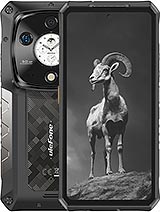
The Ulefone Armor 28 Pro is a heavy-duty rugged smartphone built for extreme durability and high-performance field operations, featuring an massive 10600 mAh battery and a specialized accessory connector for industrial tools. Released in May 2025, it competes with dedicated enterprise handhelds and high-end rugged devices by offering a flagship-grade 1.0-inch main camera sensor and 120W hyper-fast charging.
When hardware enters a high-risk environment like a construction site or a manufacturing floor, the standard definition of 'build quality' shifts from aesthetics to survival. The handset arrives with a staggering weight of 450 grams, making it nearly double the weight of a standard consumer flagship. This heft is a direct result of the reinforced chassis designed to meet MIL-STD-810H standards. Unlike consumer devices that claim water resistance, this model supports immersion up to 2 meters for 30 minutes, exceeding the standard IP68 depth.
We noted the presence of the Corning Gorilla Glass Victus on the front, further reinforced to a Mohs level 4 scratch resistance. This level of protection is essential in environments where abrasive dust and metal shavings are common. The device isn't just designed to survive a single drop; it is rated for 270 falls under the EU Class A label, surviving impacts from 2 meters onto hard surfaces. This structural redundancy makes it a viable alternative to specialized scanners from brands like Zebra, which often cost significantly more for similar durability.
On the rear, a 1.04-inch secondary AMOLED display provides a high-utility interface for checking notifications, time, or battery levels while the phone is placed face-down on a workbench. This avoids exposing the main 6.67-inch panel to potential falling debris or tools. The dedicated accessory connector pins on the side allow for the integration of specialized hardware, such as industrial endoscopes and digital microscopes, effectively transforming the smartphone into a diagnostic workstation.
In a noisy factory or an active quarry, standard smartphone speakers are effectively useless. The loudspeaker on this model is tuned for high-decibel output, ensuring that ringtones and emergency alerts pierce through ambient noise. For field teams relying on legacy communication methods, the inclusion of a wireless FM radio is a critical redundancy. It functions without a headset acting as an antenna, which is vital during cellular outages or in remote topography where 5G signals fail to penetrate.
Connectivity is handled by a robust suite including 5G Sub6 support across a wide array of bands (including Bands 1, 3, 8, and 40). This ensures that the device maintains stable data links in both urban industrial zones and rural infrastructure projects. The infrared port adds another layer of utility, allowing technicians to control legacy HVAC systems or media equipment without needing specialized remotes. Furthermore, the inclusion of a 3.5mm headphone jack is a welcome sight for those using high-fidelity wired headsets or specialized audio diagnostic tools that cannot tolerate the latency of Bluetooth.
Running modern logistics software like SAP, Oracle, or complex BIM (Building Information Modeling) viewers requires significant memory overhead. This device is equipped with 16GB of LPDDR RAM, which provides a massive buffer for background processes. In our assessment of the multitasking capabilities, the Android 15 operating system leverages this RAM to prevent aggressive app-killing. You can switch between a high-resolution camera feed and a dense inventory spreadsheet without the apps reloading, a common frustration on devices with 8GB or less.
Driving the experience is the Mediatek Dimensity 7300, a 4nm chipset that prioritizes thermal efficiency over raw peak benchmarks. While it won't outscore a [gaming phone](/trend/best-gaming-phones-2026/) in synthetic tests, the octa-core architecture (featuring four 2.5 GHz Cortex-A78 cores) ensures that performance remains stable during prolonged use. The 512GB of UFS 3.1 storage offers rapid read and write speeds, which is essential when the 50 MP 1.0-inch sensor is generating large image files during site inspections. If the internal half-terabyte isn't enough, the dedicated microSDXC slot allows for easy expansion without sacrificing dual-SIM functionality.
A tool is only useful if it’s powered, and the charging capabilities here are industry-leading. The 120W wired charging can push the massive 10600 mAh battery to 40% in just 10 minutes. In a professional context, this means a worker can gain a full shift’s worth of power during a brief lunch break. It also supports 50W wireless charging, which is ideal for vehicle-mounted cradles where plugging in a cable is inconvenient.
One of the most valuable features for field operations is the 10W reverse wired and 5W reverse wireless charging. This allows the phone to serve as a power bank for smaller critical gear, such as thermal cameras, laser measurers, or communication headsets. The battery itself is rated for 1000 cycles, meaning it maintains 80% capacity far longer than standard consumer batteries, which typically degrade after 500-800 cycles. This longevity directly translates to a lower total cost of ownership for enterprises.
For surveyors and logistics professionals, GPS accuracy isn't a luxury; it's a requirement. The inclusion of NavIC (Navigation with Indian Constellation) alongside GPS, GLONASS, GALILEO, and BDS provides a multi-constellation safety net. In deep urban canyons or heavily forested sites, the tri-band Wi-Fi 7 and high-precision positioning sensors ensure the handset accurately tracks its location.
The hardware barometer is another standout feature, providing real-time atmospheric pressure data. This is used to calculate relative altitude, a feature that is indispensable for technicians working on multi-story building projects or inspecting telecommunications towers. With Bluetooth 5.4, the device maintains a stable connection to low-energy IoT sensors and wearables, ensuring that telemetry data from the field reaches the device without interruption.
Standard smartphones often struggle to last a full 12-hour shift under heavy GPS and camera use. The 10600 mAh Li-Ion cell in this series provides an endurance rating of over 111 hours. In practice, this means 2 to 3 days of intensive professional use without needing a wall outlet. Because the Dimensity 7300 is built on a 4nm process, it generates very little waste heat during standard tasks, preventing the thermal throttling that often plagues [rugged phones](/trend/best-rugged-phones-2026/) in hot outdoor environments.
Even when pushing the device with 4K video recording via the main 50 MP sensor, the heat dissipation across the large 174.2mm body is efficient. The 6.67-inch AMOLED display also contributes to efficiency; with a 120Hz refresh rate, it provides smooth UI navigation, but it can also hit a 2200 nits peak brightness. This ensures that even under direct, high-altitude sunlight, maps and blueprints remain perfectly legible, a task where LCD-based rugged phones often fail.
The Ulefone Armor 28 Pro is less of a phone and more of a multi-purpose industrial instrument. It successfully bridges the gap between consumer technology and professional-grade field equipment. By combining a top-tier 1.0-inch sensor for high-fidelity forensic photography with a 64 MP Night Vision camera, it covers every lighting scenario a technician might face. While the 450g weight and nearly 20mm thickness make it unsuitable for the average consumer, it is exactly what the industrial sector has been demanding: a device that doesn't need a case, doesn't need a mid-day charge, and can survive the harshest environments on Earth.
Industrial Design and Structural Integrity
When hardware enters a high-risk environment like a construction site or a manufacturing floor, the standard definition of 'build quality' shifts from aesthetics to survival. The handset arrives with a staggering weight of 450 grams, making it nearly double the weight of a standard consumer flagship. This heft is a direct result of the reinforced chassis designed to meet MIL-STD-810H standards. Unlike consumer devices that claim water resistance, this model supports immersion up to 2 meters for 30 minutes, exceeding the standard IP68 depth.
We noted the presence of the Corning Gorilla Glass Victus on the front, further reinforced to a Mohs level 4 scratch resistance. This level of protection is essential in environments where abrasive dust and metal shavings are common. The device isn't just designed to survive a single drop; it is rated for 270 falls under the EU Class A label, surviving impacts from 2 meters onto hard surfaces. This structural redundancy makes it a viable alternative to specialized scanners from brands like Zebra, which often cost significantly more for similar durability.
On the rear, a 1.04-inch secondary AMOLED display provides a high-utility interface for checking notifications, time, or battery levels while the phone is placed face-down on a workbench. This avoids exposing the main 6.67-inch panel to potential falling debris or tools. The dedicated accessory connector pins on the side allow for the integration of specialized hardware, such as industrial endoscopes and digital microscopes, effectively transforming the smartphone into a diagnostic workstation.
Loudspeaker Performance and Field Communications
In a noisy factory or an active quarry, standard smartphone speakers are effectively useless. The loudspeaker on this model is tuned for high-decibel output, ensuring that ringtones and emergency alerts pierce through ambient noise. For field teams relying on legacy communication methods, the inclusion of a wireless FM radio is a critical redundancy. It functions without a headset acting as an antenna, which is vital during cellular outages or in remote topography where 5G signals fail to penetrate.
Connectivity is handled by a robust suite including 5G Sub6 support across a wide array of bands (including Bands 1, 3, 8, and 40). This ensures that the device maintains stable data links in both urban industrial zones and rural infrastructure projects. The infrared port adds another layer of utility, allowing technicians to control legacy HVAC systems or media equipment without needing specialized remotes. Furthermore, the inclusion of a 3.5mm headphone jack is a welcome sight for those using high-fidelity wired headsets or specialized audio diagnostic tools that cannot tolerate the latency of Bluetooth.
Multitasking and Ram Management
Running modern logistics software like SAP, Oracle, or complex BIM (Building Information Modeling) viewers requires significant memory overhead. This device is equipped with 16GB of LPDDR RAM, which provides a massive buffer for background processes. In our assessment of the multitasking capabilities, the Android 15 operating system leverages this RAM to prevent aggressive app-killing. You can switch between a high-resolution camera feed and a dense inventory spreadsheet without the apps reloading, a common frustration on devices with 8GB or less.
Driving the experience is the Mediatek Dimensity 7300, a 4nm chipset that prioritizes thermal efficiency over raw peak benchmarks. While it won't outscore a [gaming phone](/trend/best-gaming-phones-2026/) in synthetic tests, the octa-core architecture (featuring four 2.5 GHz Cortex-A78 cores) ensures that performance remains stable during prolonged use. The 512GB of UFS 3.1 storage offers rapid read and write speeds, which is essential when the 50 MP 1.0-inch sensor is generating large image files during site inspections. If the internal half-terabyte isn't enough, the dedicated microSDXC slot allows for easy expansion without sacrificing dual-SIM functionality.
Charging Ecosystem and Energy Transfer
A tool is only useful if it’s powered, and the charging capabilities here are industry-leading. The 120W wired charging can push the massive 10600 mAh battery to 40% in just 10 minutes. In a professional context, this means a worker can gain a full shift’s worth of power during a brief lunch break. It also supports 50W wireless charging, which is ideal for vehicle-mounted cradles where plugging in a cable is inconvenient.
One of the most valuable features for field operations is the 10W reverse wired and 5W reverse wireless charging. This allows the phone to serve as a power bank for smaller critical gear, such as thermal cameras, laser measurers, or communication headsets. The battery itself is rated for 1000 cycles, meaning it maintains 80% capacity far longer than standard consumer batteries, which typically degrade after 500-800 cycles. This longevity directly translates to a lower total cost of ownership for enterprises.
Connectivity Suite and Navigation Accuracy
For surveyors and logistics professionals, GPS accuracy isn't a luxury; it's a requirement. The inclusion of NavIC (Navigation with Indian Constellation) alongside GPS, GLONASS, GALILEO, and BDS provides a multi-constellation safety net. In deep urban canyons or heavily forested sites, the tri-band Wi-Fi 7 and high-precision positioning sensors ensure the handset accurately tracks its location.
The hardware barometer is another standout feature, providing real-time atmospheric pressure data. This is used to calculate relative altitude, a feature that is indispensable for technicians working on multi-story building projects or inspecting telecommunications towers. With Bluetooth 5.4, the device maintains a stable connection to low-energy IoT sensors and wearables, ensuring that telemetry data from the field reaches the device without interruption.
Battery Shift Life and Thermal Endurance
Standard smartphones often struggle to last a full 12-hour shift under heavy GPS and camera use. The 10600 mAh Li-Ion cell in this series provides an endurance rating of over 111 hours. In practice, this means 2 to 3 days of intensive professional use without needing a wall outlet. Because the Dimensity 7300 is built on a 4nm process, it generates very little waste heat during standard tasks, preventing the thermal throttling that often plagues [rugged phones](/trend/best-rugged-phones-2026/) in hot outdoor environments.
Even when pushing the device with 4K video recording via the main 50 MP sensor, the heat dissipation across the large 174.2mm body is efficient. The 6.67-inch AMOLED display also contributes to efficiency; with a 120Hz refresh rate, it provides smooth UI navigation, but it can also hit a 2200 nits peak brightness. This ensures that even under direct, high-altitude sunlight, maps and blueprints remain perfectly legible, a task where LCD-based rugged phones often fail.
Worksite Conclusion
The Ulefone Armor 28 Pro is less of a phone and more of a multi-purpose industrial instrument. It successfully bridges the gap between consumer technology and professional-grade field equipment. By combining a top-tier 1.0-inch sensor for high-fidelity forensic photography with a 64 MP Night Vision camera, it covers every lighting scenario a technician might face. While the 450g weight and nearly 20mm thickness make it unsuitable for the average consumer, it is exactly what the industrial sector has been demanding: a device that doesn't need a case, doesn't need a mid-day charge, and can survive the harshest environments on Earth.
Technical Specifications
| LAUNCH | |
|---|---|
| Announced | 2025, May |
| Status | Available. Released 2025, May 12 |
| PLATFORM | |
| OS | Android 15 |
| Chipset | Mediatek Dimensity 7300 (4 nm) |
| CPU | Octa-core (4x2.5 GHz Cortex-A78 & 4x2.0 GHz Cortex-A55) |
| GPU | Mali-G615 MC2 |
| BODY | |
| Dimensions | 174.2 x 83.6 x 19.4 mm (6.86 x 3.29 x 0.76 in) |
| Weight | 450 g (0.99 lb) |
| SIM | Nano-SIM + Nano-SIM |
| Info | IP68 dust tight and water resistant (immersible up to 2m for 30 min) Drop resistant up to 2m MIL-STD-810H compliant Accessory connector (ulefone endoscope, microscope) |
| DISPLAY | |
| Type | AMOLED, 1B colors, 120Hz, 2200 nits (peak) |
| Size | 6.67 inches, 107.4 cm2 (~73.8% screen-to-body ratio) |
| Resolution | 1080 x 2400 pixels, 20:9 ratio (~395 ppi density) |
| Protection | Corning Gorilla Glass Victus, Mohs level 4 |
| Info | Secondary display on the back: AMOLED, 1.04 inches, 340 x 340 pixels, 600 nits (peak) |
| MEMORY | |
| Card slot | microSDXC (dedicated slot) |
| Internal | 512GB 16GB RAM |
| Info | UFS 3.1 |
| MAIN CAMERA | |
| Triple | 50 MP, f/1.9, (wide), 1.0"-type, 1.6µm, dual pixel PDAF 64 MP, f/1.8, (night vision), 1/2.0", 0.7µm, 4 infrared lights 50 MP, f/2.2, 117˚ (ultrawide), 1/2.76", 0.64µm |
| Features | Quad-LED flash, HDR, panorama |
| Video | 4K@30fps, 1080p@30/60fps |
| SELFIE CAMERA | |
| Single | 50 MP, f/2.5, (wide), 1/2.76", 0.64µm |
| Video | 1080p@30fps |
| SOUND | |
| Loudspeaker | Yes |
| 3.5mm jack | Yes |
| COMMS | |
| WLAN | Wi-Fi 802.11 a/b/g/n/ac/6/7, tri-band |
| Bluetooth | 5.4, A2DP, LE |
| Positioning | GPS, GALILEO, GLONASS, QZSS, BDS, NavIC |
| NFC | Yes |
| Infrared port | Yes |
| Radio | Wireless FM radio |
| USB | USB Type-C 2.0, OTG, accessory connector pins |
| NETWORK | |
| Technology | GSM / CDMA / HSPA / CDMA2000 / LTE / 5G |
| 2G bands | GSM 850 / 900 / 1800 / 1900 |
| Info | CDMA2000 1x |
| 3G bands | HSDPA 800 / 850 / 900 / 1700(AWS) / 1900 / 2100 |
| 4G bands | 1, 2, 3, 4, 5, 7, 8, 12, 13, 17, 18, 19, 20, 25, 26, 28, 32, 34, 38, 39, 40, 41, 66, 71 |
| 5G bands | 1, 2, 3, 5, 7, 8, 20, 25, 28, 38, 40, 41, 66, 71, 77, 78, 79 SA/NSA/Sub6 |
| Speed | HSPA, LTE, 5G |
| FEATURES | |
| Sensors | Fingerprint (side-mounted), accelerometer, gyro, proximity, compass, barometer |
| BATTERY | |
| Type | Li-Ion 10600 mAh |
| Charging | 120W wired, PPS, 40% in 10 min 50W wireless, 35% in 30 min 10W reverse wired 5W reverse wireless |
| MISC | |
| Colors | Black |
| Price | $ 425.07 / € 476.90 |
| EU LABEL | |
| Energy | Class A |
| Battery | 111:30h endurance, 1000 cycles |
| Free fall | Class A (270 falls) |
| Repairability | Class B |