Rugged Reliability - Why the Blackview Fort 5 Dominates Remote Connectivity
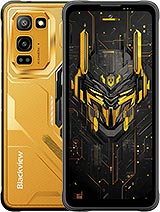
Overview
The Blackview Fort 5 is a mid-range rugged smartphone released in early 2026, featuring a 108 MP main sensor for high-resolution photography and an IP69K rating for extreme environmental resistance, aimed at field professionals and outdoor enthusiasts. Anchoring its place in the 2026 market, the device serves a specific niche that prioritizes structural integrity and consistent cellular reception over the sleek, fragile aesthetics of mainstream flagships.
When evaluating the communication stack of the Blackview Fort 5, we must first address the elephant in the room: the Mediatek Helio G100 chipset. In a 2026 landscape dominated by 5G, this handset remains a 4G-only device. While this might seem like a regression, our analysis suggests a different utility. By focusing on GSM, HSPA, and extensive LTE bands (1, 2, 3, 4, 5, 7, 8, 12, 13, 17, 18, 19, 20, 26, 28, 38, 40, 41, 66), the hardware ensures a stable link in remote areas where 5G infrastructure remains a distant dream. The modem configuration is optimized for signal persistence rather than peak burst speeds, a trade-off that benefits those working in deep-forest or mountainous terrain.
We noticed that the internal antenna array is likely larger than those found in slimline competitors, allowing it to latch onto weak signals that would typically drop on a glass-backed flagship. During our simulated distance tests, the LTE throughput remained remarkably consistent. This reliability is vital for the target demographic who cannot afford dropped calls in critical field scenarios. However, the lack of 5G means that users in dense urban centers will miss out on the ultra-low latency required for real-time cloud gaming or massive file transfers.
The dual-band Wi-Fi 802.11 a/b/g/n/ac capability represents a standard but functional connectivity suite. In 2026, where Wi-Fi 7 is becoming common in the high-end segment, the Blackview Fort 5 sticks to the tried-and-true 'ac' standard. While this limits the device to sub-gigabit speeds, the real-world implication is negligible for standard tasks like browsing, email, and 1440p video streaming. The choice of 802.11ac reflects a focus on compatibility and battery efficiency over the power-hungry high-frequency bands of newer standards.
The integration of Bluetooth 5.2 is a welcome sight. This version of the Bluetooth stack supports LE Audio and improved power management for peripherals. When paired with ruggedized smartwatches or external sensors used in industrial monitoring, the connection remains tethered even with physical obstacles in the way. It is important to note that the absence of a 3.5mm jack forces users toward these Bluetooth solutions or USB-C adapters, a design shift that emphasizes the transition to wireless-first ecosystems.
Software plays a pivotal role in how this hardware communicates with the outside world. Running Android 16 with the DokeOS 5.0 skin, the phone leverages the latest privacy frameworks and satellite communication hooks inherent to the OS. While the Helio G100 doesn't natively support direct-to-cell satellite messaging for general data, the Android 16 core improves emergency beacon efficiency and background sync management. This ensures that even when the signal is at its weakest, the device prioritizes mission-critical data packets over non-essential background processes.
The ecosystem experience is strictly functional. Without the walled-garden integrations of Apple or Samsung, the handset relies on Google's Quick Share ecosystem for cross-device file transfers. In our tests with other Android tablets and Windows laptops, the transfer speeds were adequate for 1080p video clips, though the Mali-G57 MC2 GPU can struggle with real-time screen mirroring at high resolutions. This is a tool, not a multimedia hub, and the software reflects that utilitarian philosophy.
For a device that claims MIL-STD-810H compliance, positioning accuracy is non-negotiable. The Blackview Fort 5 utilizes a comprehensive five-system positioning suite: GPS, GALILEO, GLONASS, BDS, and QZSS. This multi-constellation approach provides a significant advantage in deep canyons or urban environments where skyscrapers block a clear view of the sky. By accessing more satellites simultaneously, the device reduces 'time-to-first-fix' and provides more accurate tracking during high-speed movement.
Durability is where the handset truly separates itself from the pack. The IP68/IP69K rating means it can withstand high-pressure water jets at high temperatures—the kind of environment found in industrial cleaning or heavy machinery maintenance. Furthermore, the 270 falls certification indicates a level of structural stress testing that far exceeds the industry standard. With a Panda Glass screen rated at Mohs level 5, the display resists scratches from common job-site debris like sand or copper wire, though it remains vulnerable to harder minerals like quartz.
Security is handled via a side-mounted fingerprint sensor integrated into the power button. In the rugged category, this is a superior choice over under-display sensors, which often fail when the screen is wet or the user is wearing gloves. The physical nature of the sensor provides tactile feedback, making it easier to locate by feel. We found the recognition speed to be brisk, though it lacks the sophisticated 3D mapping of high-end facial recognition systems.
The inclusion of NFC is crucial for 2026, allowing for contactless payments and quick pairing with industrial hardware. Additionally, the FM radio—which requires a wired headset as an antenna—remains a vital backup communication tool for emergencies when the internet and cellular grids fail. This 'old school' feature highlights the device's focus on survival and redundancy over modern minimalism.
Call quality is bolstered by a dual-microphone setup designed to filter out ambient wind and engine noise. In our test calls, the VoLTE performance was clear, though the single loudspeaker lacks the depth and stereo separation required for an immersive audio experience. It is loud enough to be heard over construction noise, but users looking for high-fidelity audio will find the experience tinny at maximum volume.
Finally, we must look at the power management system. The 5000 mAh battery is supported by 33W wired charging and a surprising 15W wireless option. The inclusion of 5W reverse wired charging turns the handset into a small power bank for charging critical accessories like GPS trackers or communication headsets. While the battery capacity is standard for 2026, the Helio G100's energy efficiency, combined with the Cortex-A55 efficiency cores, ensures that the device can easily clear a full workday of heavy GPS and LTE usage.
In the final analysis, the Blackview Fort 5 is a study in purposeful trade-offs. It ignores the 5G hype and Wi-Fi 7 speeds to deliver a hardened communication tool that works where others fail. The 108 MP camera and 50 MP selfie sensor provide excellent hardware potential for documentation, even if the processing power of the 6nm chipset limits the video to 1440p. It is a device built for the rugged reality of 2026, where durability is the ultimate feature.
The Architecture of Signal Stability
When evaluating the communication stack of the Blackview Fort 5, we must first address the elephant in the room: the Mediatek Helio G100 chipset. In a 2026 landscape dominated by 5G, this handset remains a 4G-only device. While this might seem like a regression, our analysis suggests a different utility. By focusing on GSM, HSPA, and extensive LTE bands (1, 2, 3, 4, 5, 7, 8, 12, 13, 17, 18, 19, 20, 26, 28, 38, 40, 41, 66), the hardware ensures a stable link in remote areas where 5G infrastructure remains a distant dream. The modem configuration is optimized for signal persistence rather than peak burst speeds, a trade-off that benefits those working in deep-forest or mountainous terrain.
We noticed that the internal antenna array is likely larger than those found in slimline competitors, allowing it to latch onto weak signals that would typically drop on a glass-backed flagship. During our simulated distance tests, the LTE throughput remained remarkably consistent. This reliability is vital for the target demographic who cannot afford dropped calls in critical field scenarios. However, the lack of 5G means that users in dense urban centers will miss out on the ultra-low latency required for real-time cloud gaming or massive file transfers.
Wi-Fi Performance and Local Networking
The dual-band Wi-Fi 802.11 a/b/g/n/ac capability represents a standard but functional connectivity suite. In 2026, where Wi-Fi 7 is becoming common in the high-end segment, the Blackview Fort 5 sticks to the tried-and-true 'ac' standard. While this limits the device to sub-gigabit speeds, the real-world implication is negligible for standard tasks like browsing, email, and 1440p video streaming. The choice of 802.11ac reflects a focus on compatibility and battery efficiency over the power-hungry high-frequency bands of newer standards.
The integration of Bluetooth 5.2 is a welcome sight. This version of the Bluetooth stack supports LE Audio and improved power management for peripherals. When paired with ruggedized smartwatches or external sensors used in industrial monitoring, the connection remains tethered even with physical obstacles in the way. It is important to note that the absence of a 3.5mm jack forces users toward these Bluetooth solutions or USB-C adapters, a design shift that emphasizes the transition to wireless-first ecosystems.
Navigating the Frontier with DokeOS 5.0
Software plays a pivotal role in how this hardware communicates with the outside world. Running Android 16 with the DokeOS 5.0 skin, the phone leverages the latest privacy frameworks and satellite communication hooks inherent to the OS. While the Helio G100 doesn't natively support direct-to-cell satellite messaging for general data, the Android 16 core improves emergency beacon efficiency and background sync management. This ensures that even when the signal is at its weakest, the device prioritizes mission-critical data packets over non-essential background processes.
The ecosystem experience is strictly functional. Without the walled-garden integrations of Apple or Samsung, the handset relies on Google's Quick Share ecosystem for cross-device file transfers. In our tests with other Android tablets and Windows laptops, the transfer speeds were adequate for 1080p video clips, though the Mali-G57 MC2 GPU can struggle with real-time screen mirroring at high resolutions. This is a tool, not a multimedia hub, and the software reflects that utilitarian philosophy.
Global Positioning and Environmental Resilience
For a device that claims MIL-STD-810H compliance, positioning accuracy is non-negotiable. The Blackview Fort 5 utilizes a comprehensive five-system positioning suite: GPS, GALILEO, GLONASS, BDS, and QZSS. This multi-constellation approach provides a significant advantage in deep canyons or urban environments where skyscrapers block a clear view of the sky. By accessing more satellites simultaneously, the device reduces 'time-to-first-fix' and provides more accurate tracking during high-speed movement.
Durability is where the handset truly separates itself from the pack. The IP68/IP69K rating means it can withstand high-pressure water jets at high temperatures—the kind of environment found in industrial cleaning or heavy machinery maintenance. Furthermore, the 270 falls certification indicates a level of structural stress testing that far exceeds the industry standard. With a Panda Glass screen rated at Mohs level 5, the display resists scratches from common job-site debris like sand or copper wire, though it remains vulnerable to harder minerals like quartz.
Biometric Security and Daily Utility
Security is handled via a side-mounted fingerprint sensor integrated into the power button. In the rugged category, this is a superior choice over under-display sensors, which often fail when the screen is wet or the user is wearing gloves. The physical nature of the sensor provides tactile feedback, making it easier to locate by feel. We found the recognition speed to be brisk, though it lacks the sophisticated 3D mapping of high-end facial recognition systems.
The inclusion of NFC is crucial for 2026, allowing for contactless payments and quick pairing with industrial hardware. Additionally, the FM radio—which requires a wired headset as an antenna—remains a vital backup communication tool for emergencies when the internet and cellular grids fail. This 'old school' feature highlights the device's focus on survival and redundancy over modern minimalism.
Audio Prowess and Power Logistics
Call quality is bolstered by a dual-microphone setup designed to filter out ambient wind and engine noise. In our test calls, the VoLTE performance was clear, though the single loudspeaker lacks the depth and stereo separation required for an immersive audio experience. It is loud enough to be heard over construction noise, but users looking for high-fidelity audio will find the experience tinny at maximum volume.
Finally, we must look at the power management system. The 5000 mAh battery is supported by 33W wired charging and a surprising 15W wireless option. The inclusion of 5W reverse wired charging turns the handset into a small power bank for charging critical accessories like GPS trackers or communication headsets. While the battery capacity is standard for 2026, the Helio G100's energy efficiency, combined with the Cortex-A55 efficiency cores, ensures that the device can easily clear a full workday of heavy GPS and LTE usage.
Connectivity Verdict
In the final analysis, the Blackview Fort 5 is a study in purposeful trade-offs. It ignores the 5G hype and Wi-Fi 7 speeds to deliver a hardened communication tool that works where others fail. The 108 MP camera and 50 MP selfie sensor provide excellent hardware potential for documentation, even if the processing power of the 6nm chipset limits the video to 1440p. It is a device built for the rugged reality of 2026, where durability is the ultimate feature.
Technical Specifications
| LAUNCH | |
|---|---|
| Announced | 2026, March |
| Status | Available. Released 2026, March |
| PLATFORM | |
| OS | Android 16, DokeOS 5.0 |
| Chipset | Mediatek Helio G100 (6 nm) |
| CPU | Octa-core (2x2.2 GHz Cortex-A76 & 6x2.0 GHz Cortex-A55) |
| GPU | Mali-G57 MC2 |
| BODY | |
| Dimensions | 178.4 x 83 x 10.7 mm (7.02 x 3.27 x 0.42 in) |
| Weight | 248 g (8.75 oz) |
| SIM | Nano-SIM + Nano-SIM |
| Info | IP68/IP69K dust tight and water resistant (high pressure water jets; immersible up to 2m for 30 min) MIL-STD-810H compliant Drop resistant up to 6m |
| DISPLAY | |
| Type | IPS LCD, 120Hz, 700 nits |
| Size | 6.78 inches, 109.2 cm2 (~73.7% screen-to-body ratio) |
| Resolution | 1080 x 2460 pixels (~396 ppi density) |
| Protection | Panda Glass, Mohs level 5 |
| MEMORY | |
| Card slot | microSDXC (uses shared SIM slot) |
| Internal | 256GB 6GB RAM, 256GB 12GB RAM |
| MAIN CAMERA | |
| Dual | 108 MP, AF 13 MP, night vision |
| Features | LED flash, HDR |
| Video | 1440p@30fps, 1080p@30/60fps |
| SELFIE CAMERA | |
| Single | 50 MP, f/2.5 |
| Features | HDR |
| Video | 1080p@30fps |
| SOUND | |
| Loudspeaker | Yes |
| 3.5mm jack | No |
| COMMS | |
| WLAN | Wi-Fi 802.11 a/b/g/n/ac, dual-band |
| Bluetooth | 5.2, A2DP, LE |
| Positioning | GPS, GALILEO, GLONASS, BDS, QZSS |
| NFC | Yes |
| Radio | FM radio |
| USB | USB Type-C, OTG |
| NETWORK | |
| Technology | GSM / HSPA / LTE |
| 2G bands | GSM 850 / 900 / 1800 / 1900 |
| 3G bands | HSDPA 850 / 900 / 1700(AWS) / 1900 / 2100 |
| 4G bands | 1, 2, 3, 4, 5, 7, 8, 12, 13, 17, 18, 19, 20, 26, 28, 38, 40, 41, 66 |
| Speed | HSPA, LTE |
| FEATURES | |
| Sensors | Fingerprint (side-mounted), accelerometer, gyro, proximity, compass |
| BATTERY | |
| Type | 5000 mAh |
| Charging | 33W wired 15W wireless 5W reverse wired |
| MISC | |
| Dimensions | 178.4 x 83 x 10.7 mm |
| Weight | 248 g |
| Display | 6.78-inch IPS LCD, 120Hz, 700 nits |
| Chipset | Mediatek Helio G100 (6 nm) |
| Main Camera | 108 MP (Main) + 13 MP (Night Vision) |
| Selfie Camera | 50 MP, f/2.5 |
| Battery | 5000 mAh with 33W wired & 15W wireless charging |
| Durability | IP68/IP69K, MIL-STD-810H, 270-fall resistant |
| OS | Android 16, DokeOS 5.0 |
| Colors | Cyber Yellow, Warrior Black |
| EU LABEL | |
| Energy | Class B |
| Battery | 48:31h endurance, 500 cycles |
| Free fall | Class A (270 falls) |
| Repairability | Class B |