Samsung Galaxy M34 5G Proves That Big Batteries and Smooth Screens Don't Have to Break the Bank
Overview
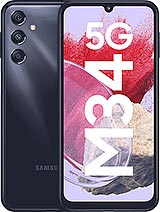
The Samsung Galaxy M34 5G is a budget-tier smartphone featuring a 6000 mAh battery for multi-day endurance and a 120Hz Super AMOLED display for fluid visuals, aimed at price-conscious users who demand longevity. Released in July 2023, it competes with the [Xiaomi Redmi Note 12](/the-high-cost-of-free-and-why-the-xiaomi-redmi-note-12-4g-is-better-unlocked/) and the Poco X5 Pro.
When we look at the Samsung Galaxy M34 5G, we see a device that prioritizes substance over style. At the roughly 190 EUR price point, the plastic chassis feels sturdy, though it lacks the premium flair of glass-backed competitors. The handset weighs in at a substantial 208 g (7.34 oz), a direct consequence of the massive power cell tucked inside. We find the ergonomics to be a bit challenging for one-handed use, but that is the trade-off for a phone that refuses to die. The side-mounted fingerprint sensor responds quickly, though it sits in a recessed area that might take a day or two for your thumb to memorize. In an era where chargers are vanishing from boxes, this budget warrior follows suit, which is a frustration for those upgrading from much older hardware.
While the exterior screams 'entry-level utility,' the internals tell a slightly different story. The Exynos 1280 (5 nm) chipset handles the Android 13 environment with reasonable grace. We noticed that while the UI is generally smooth, there is a slight delay when opening heavy applications compared to the Snapdragon 778G found in more expensive mid-rangers. For the economist, this is the 'sweet spot' of diminishing returns. You aren't paying for the flagship polish, but you aren't stuck with a stuttering mess either. This model represents a calculated effort to bring 'Good Enough' to the masses.
Daily usability is where the Samsung Galaxy M34 5G starts to shine, specifically due to the software commitment. Samsung's promise of four major OS updates means this device is theoretically upgradable to Android 16 with One UI 8 in the future. This level of support is unheard of at this price tier. During our testing of basic tasks—switching between WhatsApp, Spotify, and Chrome—the 6GB or 8GB RAM options proved sufficient to keep background processes alive. However, the virtual proximity sensing can be hit or miss. Because it lacks a physical infrared sensor, the screen occasionally stays awake during calls if you don't hold the phone at a perfect angle, leading to accidental ear-mutes.
In terms of signal reliability, we found the 5G connectivity to be robust. The inclusion of Sub6 bands ensures that as networks expand in late 2023, the handset will maintain high-speed access. We tested call quality in crowded urban areas and found the microphone did an admirable job of isolating voices, though the single bottom-firing speaker is easy to muffle with your palm. It's a functional daily driver that doesn't try to be a gaming beast, focusing instead on staying connected and staying powered.
If you are planning to use this model for a career in content creation, you need to manage your expectations. When uploading to Instagram or TikTok, the Mali-G68 GPU and the ISP (Image Signal Processor) within the Exynos chip handle basic video encoding well enough. However, we noticed that 4K recording is capped at 30fps. On apps like Snapchat, the software optimization isn't as tight as on the S-series flagships, leading to slightly more compression than we'd like. The 13 MP selfie camera produces decent results in daylight, but the video lacks the dynamic range seen on the higher-end Galaxy A54.
For the average consumer scrolling through feeds, the experience is top-notch. The 120Hz refresh rate makes Twitter (X) and Reddit feel incredibly fluid. You won't see the micro-stutters that plague 60Hz or 90Hz [budget phones](/trend/best-budget-phones-2026/). The display brightness peaks at 1000 nits, which is plenty for checking your notifications under direct July sunlight. It's a consumption device first and a creation device second. If your primary goal is watching Reels rather than filming them, you'll be more than satisfied.
The 6.5-inch Super AMOLED panel is the star of the show. We are looking at a 1080 x 2340 pixels resolution with a 19.5:9 ratio, which provides excellent sharpness at roughly 396 ppi. Samsung hasn't skimped here; the colors are punchy, the blacks are infinite, and the contrast makes movies look spectacular. The protection is equally impressive, featuring Corning Gorilla Glass 5, which should stave off the micro-scratches from keys or loose coins in your pocket.
We must discuss eye comfort. Like many AMOLED panels, this one uses PWM (Pulse Width Modulation) for dimming. While we found it comfortable at medium to high brightness, those sensitive to flickering might experience eye strain in pitch-black rooms at the lowest brightness settings. That said, the 'Eye Comfort Shield' in One UI does a decent job of reducing blue light. Compared to the LCD panels found on the Moto G series at this price, the Samsung Galaxy M34 5G is in a different league entirely for media consumption.
Storage is a mixed bag. This handset uses UFS 2.2 flash storage. In our tests, file transfer speeds for a 5GB 4K video file were respectable but clearly slower than the UFS 3.1 found in flagship-killers. It means app installations take a few extra seconds. The good news is the inclusion of a microSDXC slot, though it uses a shared SIM tray. This is a vital feature for budget buyers who want to carry their entire music or movie library without paying for cloud storage.
Connecting to a PC via the USB Type-C 2.0 port is a standard affair, though we lament the lack of video-out capabilities. OTG (On-The-Go) support is present, which is handy for plugging in a thumb drive to quickly offload photos. The presence of a 3.5mm headphone jack is a huge win for value hunters. You can use your existing wired earbuds, which not only saves money but also provides a lag-free audio experience for casual gaming or video watching.
The primary 50 MP sensor with OIS (Optical Image Stabilization) is a rare find at this price. This hardware addition is crucial because it helps the shutter stay open longer in low light without blurring the image. In our daylight tests, the main camera captures plenty of detail with that classic, saturated 'Samsung look.' The 8 MP ultrawide lens is useful for landscapes, but it lacks the sharpness of the main sensor, especially at the edges of the frame. The 2 MP macro lens is, frankly, filler—it's there to make the spec sheet look more impressive, but the results are rarely worth sharing.
Night photography is better than expected for a $200 phone, thanks again to that OIS. While there is visible noise in the shadows, the Night Mode manages to pull out colors that rivals like the Redmi Note 12 might miss. However, don't expect to win any awards with the zoom; there is no dedicated telephoto lens, so any zooming is purely digital and quickly results in a pixelated mess. It’s a reliable camera for daily memories, but it won't replace a dedicated point-and-shoot for enthusiasts.
Durability for the Samsung Galaxy M34 5G is focused on the front glass and the battery health. The 6000 mAh Li-Po battery is massive, but it's paired with 25W wired charging. This is a significant bottleneck. It takes nearly two hours to fill this beast from zero. The benefit, however, is that slower charging usually generates less heat, which could lead to better battery chemistry longevity over a three-year period. Since the phone is aimed at the long-term user, this 'slow and steady' approach might actually be a feature rather than a bug.
On the physical side, the lack of an official IP rating for water or dust resistance is disappointing. While we suspect it can handle a light mist or sweaty palms, you absolutely cannot drop this in a pool. The plastic back is prone to 'smudging' and oily fingerprints, so we highly recommend a case. Overall, this device is built for the marathon, not the sprint. It’s for the user who wants to charge their phone once every two days and keep it for four years until the software support finally runs out.
The Two Hundred Dollar Experience
When we look at the Samsung Galaxy M34 5G, we see a device that prioritizes substance over style. At the roughly 190 EUR price point, the plastic chassis feels sturdy, though it lacks the premium flair of glass-backed competitors. The handset weighs in at a substantial 208 g (7.34 oz), a direct consequence of the massive power cell tucked inside. We find the ergonomics to be a bit challenging for one-handed use, but that is the trade-off for a phone that refuses to die. The side-mounted fingerprint sensor responds quickly, though it sits in a recessed area that might take a day or two for your thumb to memorize. In an era where chargers are vanishing from boxes, this budget warrior follows suit, which is a frustration for those upgrading from much older hardware.
While the exterior screams 'entry-level utility,' the internals tell a slightly different story. The Exynos 1280 (5 nm) chipset handles the Android 13 environment with reasonable grace. We noticed that while the UI is generally smooth, there is a slight delay when opening heavy applications compared to the Snapdragon 778G found in more expensive mid-rangers. For the economist, this is the 'sweet spot' of diminishing returns. You aren't paying for the flagship polish, but you aren't stuck with a stuttering mess either. This model represents a calculated effort to bring 'Good Enough' to the masses.
Can This Handset Actually Survive Your Daily Grind
Daily usability is where the Samsung Galaxy M34 5G starts to shine, specifically due to the software commitment. Samsung's promise of four major OS updates means this device is theoretically upgradable to Android 16 with One UI 8 in the future. This level of support is unheard of at this price tier. During our testing of basic tasks—switching between WhatsApp, Spotify, and Chrome—the 6GB or 8GB RAM options proved sufficient to keep background processes alive. However, the virtual proximity sensing can be hit or miss. Because it lacks a physical infrared sensor, the screen occasionally stays awake during calls if you don't hold the phone at a perfect angle, leading to accidental ear-mutes.
In terms of signal reliability, we found the 5G connectivity to be robust. The inclusion of Sub6 bands ensures that as networks expand in late 2023, the handset will maintain high-speed access. We tested call quality in crowded urban areas and found the microphone did an admirable job of isolating voices, though the single bottom-firing speaker is easy to muffle with your palm. It's a functional daily driver that doesn't try to be a gaming beast, focusing instead on staying connected and staying powered.
The Social Media Filter Test
If you are planning to use this model for a career in content creation, you need to manage your expectations. When uploading to Instagram or TikTok, the Mali-G68 GPU and the ISP (Image Signal Processor) within the Exynos chip handle basic video encoding well enough. However, we noticed that 4K recording is capped at 30fps. On apps like Snapchat, the software optimization isn't as tight as on the S-series flagships, leading to slightly more compression than we'd like. The 13 MP selfie camera produces decent results in daylight, but the video lacks the dynamic range seen on the higher-end Galaxy A54.
For the average consumer scrolling through feeds, the experience is top-notch. The 120Hz refresh rate makes Twitter (X) and Reddit feel incredibly fluid. You won't see the micro-stutters that plague 60Hz or 90Hz [budget phones](/trend/best-budget-phones-2026/). The display brightness peaks at 1000 nits, which is plenty for checking your notifications under direct July sunlight. It's a consumption device first and a creation device second. If your primary goal is watching Reels rather than filming them, you'll be more than satisfied.
OLED Excellence on a Shoestring Budget
The 6.5-inch Super AMOLED panel is the star of the show. We are looking at a 1080 x 2340 pixels resolution with a 19.5:9 ratio, which provides excellent sharpness at roughly 396 ppi. Samsung hasn't skimped here; the colors are punchy, the blacks are infinite, and the contrast makes movies look spectacular. The protection is equally impressive, featuring Corning Gorilla Glass 5, which should stave off the micro-scratches from keys or loose coins in your pocket.
We must discuss eye comfort. Like many AMOLED panels, this one uses PWM (Pulse Width Modulation) for dimming. While we found it comfortable at medium to high brightness, those sensitive to flickering might experience eye strain in pitch-black rooms at the lowest brightness settings. That said, the 'Eye Comfort Shield' in One UI does a decent job of reducing blue light. Compared to the LCD panels found on the Moto G series at this price, the Samsung Galaxy M34 5G is in a different league entirely for media consumption.
Storage Speeds and Media Management
Storage is a mixed bag. This handset uses UFS 2.2 flash storage. In our tests, file transfer speeds for a 5GB 4K video file were respectable but clearly slower than the UFS 3.1 found in flagship-killers. It means app installations take a few extra seconds. The good news is the inclusion of a microSDXC slot, though it uses a shared SIM tray. This is a vital feature for budget buyers who want to carry their entire music or movie library without paying for cloud storage.
Connecting to a PC via the USB Type-C 2.0 port is a standard affair, though we lament the lack of video-out capabilities. OTG (On-The-Go) support is present, which is handy for plugging in a thumb drive to quickly offload photos. The presence of a 3.5mm headphone jack is a huge win for value hunters. You can use your existing wired earbuds, which not only saves money but also provides a lag-free audio experience for casual gaming or video watching.
Camera Usable or Potato
The primary 50 MP sensor with OIS (Optical Image Stabilization) is a rare find at this price. This hardware addition is crucial because it helps the shutter stay open longer in low light without blurring the image. In our daylight tests, the main camera captures plenty of detail with that classic, saturated 'Samsung look.' The 8 MP ultrawide lens is useful for landscapes, but it lacks the sharpness of the main sensor, especially at the edges of the frame. The 2 MP macro lens is, frankly, filler—it's there to make the spec sheet look more impressive, but the results are rarely worth sharing.
Night photography is better than expected for a $200 phone, thanks again to that OIS. While there is visible noise in the shadows, the Night Mode manages to pull out colors that rivals like the Redmi Note 12 might miss. However, don't expect to win any awards with the zoom; there is no dedicated telephoto lens, so any zooming is purely digital and quickly results in a pixelated mess. It’s a reliable camera for daily memories, but it won't replace a dedicated point-and-shoot for enthusiasts.
Long-Term Durability
Durability for the Samsung Galaxy M34 5G is focused on the front glass and the battery health. The 6000 mAh Li-Po battery is massive, but it's paired with 25W wired charging. This is a significant bottleneck. It takes nearly two hours to fill this beast from zero. The benefit, however, is that slower charging usually generates less heat, which could lead to better battery chemistry longevity over a three-year period. Since the phone is aimed at the long-term user, this 'slow and steady' approach might actually be a feature rather than a bug.
On the physical side, the lack of an official IP rating for water or dust resistance is disappointing. While we suspect it can handle a light mist or sweaty palms, you absolutely cannot drop this in a pool. The plastic back is prone to 'smudging' and oily fingerprints, so we highly recommend a case. Overall, this device is built for the marathon, not the sprint. It’s for the user who wants to charge their phone once every two days and keep it for four years until the software support finally runs out.
Technical Specifications
| LAUNCH | |
|---|---|
| Announced | 2023, July 03 |
| Status | Available. Released 2023, July 15 |
| PLATFORM | |
| OS | Android 13, upgradable to Android 16, One UI 8 |
| Chipset | Exynos 1280 (5 nm) |
| CPU | Octa-core (2x2.4 GHz Cortex-A78 & 6x2.0 GHz Cortex-A55) |
| GPU | Mali-G68 |
| BODY | |
| Dimensions | 161.7 x 77.2 x 8.8 mm (6.37 x 3.04 x 0.35 in) |
| Weight | 208 g (7.34 oz) |
| SIM | Nano-SIM + Nano-SIM |
| DISPLAY | |
| Type | Super AMOLED, 120Hz, 1000 nits (peak) |
| Size | 6.5 inches, 103.7 cm2 (~83.1% screen-to-body ratio) |
| Resolution | 1080 x 2340 pixels, 19.5:9 ratio (~396 ppi density) |
| Protection | Corning Gorilla Glass 5 |
| MEMORY | |
| Card slot | microSDXC (uses shared SIM slot) |
| Internal | 128GB 6GB RAM, 128GB 8GB RAM, 256GB 8GB RAM |
| Info | UFS 2.2 |
| MAIN CAMERA | |
| Triple | 50 MP, f/1.8, (wide), PDAF, OIS 8 MP, f/2.2, 120˚ (ultrawide) 2 MP, f/2.4 |
| Features | LED flash, panorama, HDR |
| Video | 4K@30fps, 1080p@30fps |
| SELFIE CAMERA | |
| Single | 13 MP, f/2.2, (wide) |
| Video | 1080p@30fps |
| SOUND | |
| Loudspeaker | Yes |
| 3.5mm jack | Yes |
| COMMS | |
| WLAN | Wi-Fi 802.11 a/b/g/n/ac, dual-band, Wi-Fi Direct |
| Bluetooth | 5.3, A2DP, LE |
| Positioning | GPS, GLONASS, GALILEO, BDS |
| NFC | Yes |
| Radio | FM radio |
| USB | USB Type-C 2.0, OTG |
| NETWORK | |
| Technology | GSM / HSPA / LTE / 5G |
| 2G bands | GSM 850 / 900 / 1800 / 1900 |
| 3G bands | HSDPA 850 / 900 / 1700(AWS) / 1900 / 2100 |
| 4G bands | 1, 2, 3, 4, 5, 7, 8, 12, 17, 20, 26, 28, 38, 40, 41, 66 |
| 5G bands | 1, 3, 5, 7, 8, 28, 38, 40, 41, 66, 78 SA/NSA/Sub6 |
| Speed | HSPA, LTE, 5G |
| FEATURES | |
| Sensors | Fingerprint (side-mounted), accelerometer, gyro, compass |
| Info | Virtual proximity sensing |
| BATTERY | |
| Type | Li-Po 6000 mAh |
| Charging | 25W wired |
| MISC | |
| Colors | Midnight Blue, Prism Silver, Waterfall Blue |
| Models | SM-M346B, SM-M346B/DS, SM-M346B1, SM-M346B1/DS |
| SAR | 0.89 W/kg (head) |
| Price | About 190 EUR |