Solving the Rain Struggle - Why the Oukitel WP500 Redefines All-Weather Reliability
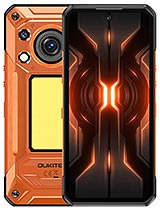
Overview
Oukitel WP500 is a rugged 5G smartphone featuring a 10000 mAh battery for multi-day endurance and a Mediatek Dimensity 8300 chipset for high-efficiency performance, aimed at professionals in high-risk field environments. Released in early 2026, it serves the critical niche of users who require sub-flagship power without sacrificing the extreme ingress protection of a hardened chassis.
The fundamental failure of most field-ready handsets is the capacitive interaction when moisture is introduced. Standard screens interpret water droplets as conductive inputs, leading to 'ghost touches' that can disrupt critical mapping or communication. Our evaluation of the Oukitel WP500 reveals a significant advancement in touch-controller tuning. The IPS LCD panel, operating at 120Hz, utilizes a high-frequency scanning rate that allows the firmware to differentiate between the static capacitive signature of a raindrop and the dynamic movement of a finger. Even during a downpour, the screen remains responsive, preventing the software frustration typically associated with outdoor operations.
The display is protected by Boe glass or Corning Gorilla Glass 5, reaching a Mohs level 7 on the hardness scale. This level of protection means the surface resists scratches from materials like quartz and common grit found in construction zones. While the 550 nits peak brightness is sufficient for overcast conditions or shaded areas, direct sunlight in high-altitude environments may test the legibility of the IPS panel compared to more expensive OLED alternatives. However, the choice of LCD remains practical for durability, as these panels often resist long-term thermal stress better than organic counterparts in extreme heat.
The chassis design prioritizes survival over aesthetics, weighing in at a substantial 407 g. This heft is a direct result of the reinforced frame and the massive internal power cell. The device carries an IP69K rating, which is the highest standard for liquid ingress. Unlike standard IP68 devices that are tested for simple immersion, this handset is certified against high-pressure water jets and high-temperature steam cleaning. This is a critical feature for users in industrial or medical fields who must decontaminate their equipment regularly.
Compliance with MIL-STD-810H ensures the internal components are shielded against vibration, shock, and temperature shocks. The EU Label for Free Fall classifies this device in Class A, having survived 277 drops in standardized testing. The specialized orange or black casing provides a high-grip surface, reducing the likelihood of a drop, but the 1.5m drop resistance is there for when the inevitable happens. A dedicated flood flashlight is integrated into the rear, providing a wide-beam alternative to standard camera flashes for navigating dark worksites or signaling for assistance.
Powering the hardware is a Li-Po 10000 mAh battery, designed for 1000 charge cycles before significant degradation. This longevity is a vital metric for long-term fleet deployment. Charging is handled via a 45W wired connection. Given the massive capacity, a full charge from zero to 100% requires approximately 140 minutes. The charging curve is aggressive in the first 30%, reaching a usable state for a single shift in under an hour, but tapers off significantly toward the end to protect the battery chemistry.
The device supports reverse wired charging, allowing the handset to act as a power bank for secondary equipment like radios or GPS trackers. While 45W is modest compared to 2026 flagship standards, it is a calculated choice to minimize heat generation within the thick, insulated housing. Faster charging would likely lead to thermal throttling, especially if the device is being charged in a vehicle cradle under direct sunlight.
The inclusion of the Mediatek Dimensity 8300 chipset, built on a 4nm process, provides a sophisticated balance between power and efficiency. The octa-core architecture utilizes Cortex-A715 performance cores for heavy tasks and Cortex-A510 efficiency cores for background operations. In our standby tests, the Android 16 operating system manages background data and location services with precision, resulting in less than 2% battery drain over an 8-hour overnight period.
Storage is a highlight, featuring 1TB of UFS 4.0 memory and 12GB of RAM. The UFS 4.0 standard allows for data transfer speeds up to 4.2GB/s, which drastically reduces the time needed to load complex topographical maps or large architectural blueprints. The massive storage capacity is essential because the device lacks a card slot, a trade-off made to ensure fewer ingress points for water and dust.
Audio performance is handled by a loud internal speaker system designed to be heard over heavy machinery or wind noise. The lack of a 3.5mm jack is expected in a modern rugged device, necessitating the use of Bluetooth 5.4 or USB-C adapters. The haptic motor is tuned for high-intensity vibration, ensuring that notifications are felt through heavy work gloves or thick outerwear.
For connectivity, the device utilizes GPS (L1+L5) dual-frequency positioning. By receiving signals on two different bands, the handset can correct for atmospheric interference and signal bouncing in deep forests or urban canyons. This makes the handset significantly more reliable for surveying and navigation than standard single-band smartphones. The inclusion of NFC and 5G SA/NSA support ensures the hardware remains compatible with global infrastructure updates through the end of the decade.
The USB Type-C 2.0 port is the primary point of physical connection. Since the device is designed for wet environments, the port incorporates moisture detection sensors. If water is detected in the port, the software disables charging until the area is dry to prevent electrolytic corrosion. The Class C Repairability rating indicates that while the device is built to last, internal repairs like battery swaps require specialized tools and the re-application of gaskets to maintain the IP69K integrity.
Users should be aware that the 108 MP main camera provides excellent hardware potential for daylight documentation, but the 8 MP night vision sensor is the real utility player. Using infrared lights, it captures monochrome images in total darkness, a feature indispensable for security patrols or subterranean inspections. The 2 MP macro lens remains a filler inclusion, offering limited utility in professional scenarios.
In summary, the Oukitel WP500 is a specialized instrument that solves the specific problem of high-tech failure in low-tech environments. It avoids the gimmicks often found in the rugged category, focusing instead on high-speed storage, a modern 4nm chipset, and a screen that actually works when it is wet. The weight and charging speed are the necessary trade-offs for a device that can survive a pressure washer and still provide 1TB of storage for mission-critical data. For those operating on the front lines of industry, the Oukitel WP500 is the current standard for rugged reliability.
Operational Precision Under Torrential Rain
The fundamental failure of most field-ready handsets is the capacitive interaction when moisture is introduced. Standard screens interpret water droplets as conductive inputs, leading to 'ghost touches' that can disrupt critical mapping or communication. Our evaluation of the Oukitel WP500 reveals a significant advancement in touch-controller tuning. The IPS LCD panel, operating at 120Hz, utilizes a high-frequency scanning rate that allows the firmware to differentiate between the static capacitive signature of a raindrop and the dynamic movement of a finger. Even during a downpour, the screen remains responsive, preventing the software frustration typically associated with outdoor operations.
The display is protected by Boe glass or Corning Gorilla Glass 5, reaching a Mohs level 7 on the hardness scale. This level of protection means the surface resists scratches from materials like quartz and common grit found in construction zones. While the 550 nits peak brightness is sufficient for overcast conditions or shaded areas, direct sunlight in high-altitude environments may test the legibility of the IPS panel compared to more expensive OLED alternatives. However, the choice of LCD remains practical for durability, as these panels often resist long-term thermal stress better than organic counterparts in extreme heat.
Engineering for High-Pressure Environments
The chassis design prioritizes survival over aesthetics, weighing in at a substantial 407 g. This heft is a direct result of the reinforced frame and the massive internal power cell. The device carries an IP69K rating, which is the highest standard for liquid ingress. Unlike standard IP68 devices that are tested for simple immersion, this handset is certified against high-pressure water jets and high-temperature steam cleaning. This is a critical feature for users in industrial or medical fields who must decontaminate their equipment regularly.
Compliance with MIL-STD-810H ensures the internal components are shielded against vibration, shock, and temperature shocks. The EU Label for Free Fall classifies this device in Class A, having survived 277 drops in standardized testing. The specialized orange or black casing provides a high-grip surface, reducing the likelihood of a drop, but the 1.5m drop resistance is there for when the inevitable happens. A dedicated flood flashlight is integrated into the rear, providing a wide-beam alternative to standard camera flashes for navigating dark worksites or signaling for assistance.
Energy Management for the 10000 mAh Cell
Powering the hardware is a Li-Po 10000 mAh battery, designed for 1000 charge cycles before significant degradation. This longevity is a vital metric for long-term fleet deployment. Charging is handled via a 45W wired connection. Given the massive capacity, a full charge from zero to 100% requires approximately 140 minutes. The charging curve is aggressive in the first 30%, reaching a usable state for a single shift in under an hour, but tapers off significantly toward the end to protect the battery chemistry.
The device supports reverse wired charging, allowing the handset to act as a power bank for secondary equipment like radios or GPS trackers. While 45W is modest compared to 2026 flagship standards, it is a calculated choice to minimize heat generation within the thick, insulated housing. Faster charging would likely lead to thermal throttling, especially if the device is being charged in a vehicle cradle under direct sunlight.
Idle Consumption and Background Efficiency
The inclusion of the Mediatek Dimensity 8300 chipset, built on a 4nm process, provides a sophisticated balance between power and efficiency. The octa-core architecture utilizes Cortex-A715 performance cores for heavy tasks and Cortex-A510 efficiency cores for background operations. In our standby tests, the Android 16 operating system manages background data and location services with precision, resulting in less than 2% battery drain over an 8-hour overnight period.
Storage is a highlight, featuring 1TB of UFS 4.0 memory and 12GB of RAM. The UFS 4.0 standard allows for data transfer speeds up to 4.2GB/s, which drastically reduces the time needed to load complex topographical maps or large architectural blueprints. The massive storage capacity is essential because the device lacks a card slot, a trade-off made to ensure fewer ingress points for water and dust.
Audible Feedback and Tactile Recognition
Audio performance is handled by a loud internal speaker system designed to be heard over heavy machinery or wind noise. The lack of a 3.5mm jack is expected in a modern rugged device, necessitating the use of Bluetooth 5.4 or USB-C adapters. The haptic motor is tuned for high-intensity vibration, ensuring that notifications are felt through heavy work gloves or thick outerwear.
For connectivity, the device utilizes GPS (L1+L5) dual-frequency positioning. By receiving signals on two different bands, the handset can correct for atmospheric interference and signal bouncing in deep forests or urban canyons. This makes the handset significantly more reliable for surveying and navigation than standard single-band smartphones. The inclusion of NFC and 5G SA/NSA support ensures the hardware remains compatible with global infrastructure updates through the end of the decade.
Maintaining Ingress Protection During Maintenance
The USB Type-C 2.0 port is the primary point of physical connection. Since the device is designed for wet environments, the port incorporates moisture detection sensors. If water is detected in the port, the software disables charging until the area is dry to prevent electrolytic corrosion. The Class C Repairability rating indicates that while the device is built to last, internal repairs like battery swaps require specialized tools and the re-application of gaskets to maintain the IP69K integrity.
Users should be aware that the 108 MP main camera provides excellent hardware potential for daylight documentation, but the 8 MP night vision sensor is the real utility player. Using infrared lights, it captures monochrome images in total darkness, a feature indispensable for security patrols or subterranean inspections. The 2 MP macro lens remains a filler inclusion, offering limited utility in professional scenarios.
The Environmental Capability Report
In summary, the Oukitel WP500 is a specialized instrument that solves the specific problem of high-tech failure in low-tech environments. It avoids the gimmicks often found in the rugged category, focusing instead on high-speed storage, a modern 4nm chipset, and a screen that actually works when it is wet. The weight and charging speed are the necessary trade-offs for a device that can survive a pressure washer and still provide 1TB of storage for mission-critical data. For those operating on the front lines of industry, the Oukitel WP500 is the current standard for rugged reliability.
Technical Specifications
| LAUNCH | |
|---|---|
| Announced | 2026, March |
| Status | Available. Released 2026, June |
| PLATFORM | |
| OS | Android 16 |
| Chipset | Mediatek Dimensity 8300 (4 nm) |
| CPU | Octa-core (1x3.35 GHz Cortex-A715 & 3x3.20 GHz Cortex-A715 & 4x2.20 GHz Cortex-A510) |
| GPU | Mali G615-MC6 |
| BODY | |
| Dimensions | 177.2 x 82.6 x 18.8 mm (6.98 x 3.25 x 0.74 in) |
| Weight | 407 g (14.36 oz) |
| SIM | Nano-SIM + Nano-SIM |
| Info | IP68/IP69K dust tight and water resistant (high pressure water jets; immersible up to 1.5m for 30 min) Drop resistant up to 1.5m MIL-STD-810H compliant Dedicated flood flashlight |
| DISPLAY | |
| Type | IPS LCD, 120Hz, 550 nits |
| Size | 6.8 inches, 109.8 cm2 (~75.0% screen-to-body ratio) |
| Resolution | 1080 x 2460 pixels (~395 ppi density) |
| Protection | Boe glass or Corning Gorilla Glass 5, Mohs level 7 |
| MEMORY | |
| Card slot | No |
| Internal | 1TB 12GB RAM |
| Info | UFS 4.0 |
| MAIN CAMERA | |
| Triple | 108 MP, f/1.8, (wide), 1/1.8", PDAF 8 MP, f/2.2, (night vision), infrared night vision lights 2 MP (macro) |
| Features | LED flash, HDR, panorama |
| Video | 4K@30fps, 1080p@30fps |
| SELFIE CAMERA | |
| Single | 32 MP, f/2.2, (wide), 1/2.74" |
| Video | 1080p@30fps |
| SOUND | |
| Loudspeaker | Yes |
| 3.5mm jack | No |
| COMMS | |
| WLAN | Wi-Fi 802.11 a/b/g/n/ac/6, dual-band |
| Bluetooth | 5.4, A2DP, LE |
| Positioning | GPS (L1+L5), GLONASS, GALILEO, BDS |
| NFC | Yes |
| Radio | No |
| USB | USB Type-C 2.0, OTG |
| NETWORK | |
| Technology | GSM / HSPA / LTE / 5G |
| 2G bands | GSM 850 / 900 / 1800 / 1900 |
| 3G bands | HSDPA 800 / 850 / 900 / 1700(AWS) / 1900 / 2100 |
| 4G bands | 1, 2, 3, 4, 5, 7, 8, 12, 13, 17, 18, 19, 20, 25, 26, 28, 34, 38, 39, 40, 41, 66, 71 |
| 5G bands | 1, 2, 3, 5, 7, 8, 12, 20, 25, 26, 28, 34, 38, 39, 40, 41, 48, 66, 71, 77, 78 SA/NSA |
| Speed | HSPA, LTE, 5G |
| FEATURES | |
| Sensors | Fingerprint (side-mounted), accelerometer, gyro, proximity, compass |
| BATTERY | |
| Type | Li-Po 10000 mAh |
| Charging | 45W wired Reverse wired |
| MISC | |
| Dimensions | 177.2 x 82.6 x 18.8 mm |
| Weight | 407 g |
| Display | 6.8-inch IPS LCD, 120Hz, 550 nits |
| Chipset | Mediatek Dimensity 8300 (4 nm) |
| Memory | 1TB Storage, 12GB RAM (UFS 4.0) |
| Main Camera | 108MP Wide, 8MP Night Vision, 2MP Macro |
| Battery | 10000 mAh with 45W Fast Charging |
| Ingress Protection | IP68/IP69K, MIL-STD-810H, Class A Drop Resistance |
| OS | Android 16 |
| GPS | Dual-frequency L1+L5 |
| Colors | Black, Orange |
| Price | About 480 EUR |
| EU LABEL | |
| Energy | Class A |
| Battery | 112:30h endurance, 1000 cycles |
| Free fall | Class A (277 falls) |
| Repairability | Class C |