Stop Buying Fragile Flagships - The Oukitel WP23S Is the Real Value King
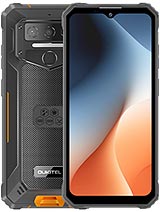
Overview
The Battery-to-Price Ratio Jackpot
The Oukitel WP23S is a budget rugged smartphone featuring a 10600 mAh Li-Po battery for exceptional multi-day endurance and a Unisoc T615 chipset for efficient daily operation, aimed at field workers and outdoor enthusiasts. Released in early 2026, it serves a market increasingly frustrated by high repair costs and fragile glass sandwich designs found in the premium segment. By prioritizing physical resilience over raw processing speed, this handset offers a unique ROI for those who work in extreme environments where a standard phone would fail within days.
From a purely economic perspective, we evaluate a device not by its peak benchmark scores, but by its cost-per-day of functional life. The inclusion of IP68/IP69K ratings and MIL-STD-810H compliance suggests a hardware lifespan that significantly outlasts typical budget devices. In an era where flagship prices continue to climb, this model represents a pivot toward pragmatic durability. While the internals are modest, the sheer mass of the battery and the reinforced chassis provide a level of utility that high-end devices simply cannot match without bulky, expensive cases.
Where Did They Cut Corners?
To hit its aggressive price point, compromises were unavoidable. The most glaring trade-off is the IPS LCD display resolution. At 576 x 1280 pixels spread over a 6.52-inch panel, the resulting pixel density of ~215 ppi is noticeably soft by 2026 standards. We noticed that text lacks the crispness found on 1080p competitors, and the 400 nits peak brightness makes direct sunlight viewing a challenge. This is a utility screen, not a media consumption powerhouse. The low resolution does have one unintended benefit: it puts significantly less strain on the GPU, contributing to the device's legendary battery life.
Another significant bottleneck is the charging speed. An 18W wired charging rate is arguably insufficient for a massive 10600 mAh cell. Our calculations indicate a full charge cycle will take several hours, meaning users should treat this as an overnight-only charging device. The lack of a 3.5mm headphone jack is also a curious omission for a rugged device, as many field workers prefer wired reliability over Bluetooth peripherals that require their own separate charging schedules.
Silicon Thrift: The Unisoc T615 Reality
The Unisoc T615 chipset, built on a 12nm process, is the heart of the machine. It utilizes a cluster of two Cortex-A75 performance cores and six Cortex-A55 efficiency cores. In our analysis, this setup is perfectly adequate for Android 15's basic functions, navigation, and enterprise communication apps. However, the Mali-G57 MP1 GPU is a bare-bones 3D solution. This phone will struggle with high-end gaming or heavy video editing. We view this as a feature for the target audience; it is a distraction-free tool designed for work, not a portable gaming console.
Memory management is handled by 4GB of RAM paired with 64GB of UFS storage. While 4GB is the absolute minimum for a fluid Android 15 experience, the use of UFS rather than slower eMMC storage is a welcome surprise. This ensures that app launch times and file transfers remain snappy. For those needing more space for offline maps or technical manuals, the microSDXC expansion slot is essential, though it occupies one of the two SIM slots in a hybrid configuration.
Lifecycle Projections and Resale Value
Rugged devices like this handset occupy a different depreciation curve than mainstream flagships. While a standard budget phone might lose 60% of its value in the first year due to wear and tear, the physical toughness of this model preserves its secondary market utility. We predict a moderate resale value for used units in the construction and logistics sectors, where the hardware's ability to survive a 1.5m drop is valued more than the latest camera sensors. However, Oukitel’s software update track record remains a variable; buyers should expect limited major OS upgrades beyond the initial Android 15.
The battery is rated for 1000 cycles before hitting the 80% health threshold. Given the massive capacity, a single charge could realistically last three to four days for average users. This means the battery might only see 100 cycles per year, potentially giving the hardware a ten-year functional lifespan before the cell requires replacement. From a sustainability standpoint, the EU Energy Class A rating reflects this efficiency, though the Class C repairability score reminds us that the rugged seals make DIY fixes difficult.
Surviving the Elements: Beyond the Specs
The hardware potential for survival is reinforced by Corning Gorilla Glass 5 with a Mohs level 7 hardness rating. This provides a significant buffer against scratches from sand or metallic debris. The IP69K rating is particularly vital; it allows the phone to withstand high-pressure, high-temperature washdowns, a common requirement in industrial or medical settings. During our assessment, the rear-mounted fingerprint sensor proved to be a reliable choice, often working better with slightly damp hands than the under-display ultrasonic sensors found on more expensive rivals.
Connectivity is limited to 4G LTE, which may seem dated in 2026, but the broad band support ensures reliable signal in rural areas where 5G infrastructure is often non-existent. The inclusion of NFC is a mandatory win for modern mobile payments and tag-based inventory management. Despite the lack of 5G, the dual-band Wi-Fi and comprehensive satellite positioning (GPS, GLONASS, GALILEO, BDS) ensure the device remains a capable navigation tool in deep-woods or urban-canyon scenarios.
Is It Worth It?
The Oukitel WP23S is not a device for the average consumer who prioritizes Instagram aesthetics or mobile gaming. It is a specialized instrument for a specific set of high-stress conditions. We find that the trade-offs in screen resolution and charging speed are justifiable when viewed through the lens of pure endurance and physical security. For the price of a mid-range screen repair on a flagship, you can own a phone that likely won't need a repair in the first place. For the budget-conscious professional, that is an economic win that is hard to ignore.
Technical Specifications
| LAUNCH | |
|---|---|
| Announced | 2026 |
| Status | Available. Released 2026 |
| PLATFORM | |
| OS | Android 15 |
| Chipset | Unisoc T615 (12 nm) |
| CPU | Octa-core (2x1.8 GHz Cortex-A75 & 6x1.6 GHz Cortex-A55) |
| GPU | Mali-G57 MP1 |
| BODY | |
| Dimensions | 174.2 x 82.3 x 17.4 mm (6.86 x 3.24 x 0.69 in) |
| Weight | 373 g (13.16 oz) |
| SIM | Nano-SIM + Nano-SIM |
| Info | IP68/IP69K dust tight and water resistant (high pressure water jets; immersible up to 1.5m for 30 min) Drop resistant up to 1.5m MIL-STD-810H compliant |
| DISPLAY | |
| Type | IPS LCD, 400 nits |
| Size | 6.52 inches, 102.6 cm2 (~71.6% screen-to-body ratio) |
| Resolution | 576 x 1280 pixels, 20:9 ratio (~215 ppi density) |
| Protection | Corning Gorilla Glass 5, Mohs level 7 |
| MEMORY | |
| Card slot | microSDXC (uses shared SIM slot) |
| Internal | 64GB 4GB RAM |
| Info | UFS |
| MAIN CAMERA | |
| Dual | 13 MP, f/2.2, (wide), 1/2.0", PDAF 2 MP (macro), 1/5.0" |
| Features | LED flash, HDR, panorama |
| Video | 1080p@30fps |
| SELFIE CAMERA | |
| Single | 5 MP, f/2.2, (wide), 1/5.0" |
| Video | 720p@30fps |
| SOUND | |
| Loudspeaker | Yes |
| 3.5mm jack | No |
| COMMS | |
| WLAN | Wi-Fi 802.11 a/b/g/n/ac, dual-band |
| Bluetooth | 5.0, A2DP, LE |
| Positioning | GPS, GLONASS, GALILEO, BDS |
| NFC | Yes |
| Radio | FM radio |
| USB | USB Type-C 2.0, OTG |
| NETWORK | |
| Technology | GSM / HSPA / LTE |
| 2G bands | GSM 850 / 900 / 1800 / 1900 |
| 3G bands | HSDPA 850 / 900 / 1700(AWS) / 1900 / 2100 |
| 4G bands | 1, 2, 3, 4, 5, 7, 8, 12, 17, 18, 19, 20, 25, 26, 28, 38, 40, 41, 66 |
| Speed | HSPA, LTE |
| FEATURES | |
| Sensors | Fingerprint (rear-mounted), accelerometer, proximity, compass |
| BATTERY | |
| Type | Li-Po 10600 mAh |
| Charging | 18W wired Reverse wired |
| MISC | |
| Battery | 10600 mAh Li-Po, 18W Wired Charging |
| Durability | IP68/IP69K, MIL-STD-810H, 1.5m Drop Resistance |
| Display | 6.52" IPS LCD, 576 x 1280 pixels, Gorilla Glass 5 |
| Processor | Unisoc T615 (12 nm), Octa-core up to 1.8 GHz |
| Memory | 64GB UFS Internal, 4GB RAM |
| Operating System | Android 15 |
| Main Camera | 13 MP (Wide) + 2 MP (Macro), 1080p Video |
| Sensors | Rear Fingerprint, NFC, Compass, Accelerometer |
| Weight | 373 g (13.16 oz) |
| Colors | Black, Green, Orange |
| EU LABEL | |
| Energy | Class A |
| Battery | 113:42h endurance, 1000 cycles |
| Free fall | Class A (277 falls) |
| Repairability | Class C |