The Curved Display Revolution Hits the Budget Market - Itel S23+ Is a Value Masterclass
Overview
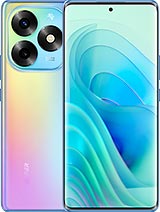
The Itel S23+ is a budget-tier smartphone designed for users seeking premium aesthetics and reliable battery life at an accessible price point, launching in September 2023. Released as a disruptor in the sub-$150 segment, it competes with the utilitarian designs of the [Samsung Galaxy A14](/the-samsung-galaxy-a14-a-calculated-financial-move-for-smart-buyers/) and the Redmi 12 by offering a 6.78-inch curved AMOLED screen and a modern under-display fingerprint sensor. This handset prioritizes visual flair and storage speed, moving away from the sluggish eMMC storage typically found in this price bracket to favor 256GB of UFS 2.0 storage paired with the Unisoc Tiger T616 chipset.
When we look at the construction of this handset, the immediate standout is the curved display. Traditionally, curved glass has been the gatekeeper of the flagship tier, reserved for devices costing five times as much. By bringing a 3D curved panel to the entry-level market, the manufacturer has effectively democratized a design language previously out of reach for budget-conscious families. The use of Corning Gorilla Glass 5 is a significant victory for durability. Families with young children or accident-prone teenagers will find the scratch and drop resistance far superior to the generic soda-lime glass found on most competitors. The 7.9 mm thickness and 178 g weight make it remarkably easy to handle, though we must note that the curved edges, while beautiful, can make the device feel slightly more slippery than a flat-edged phone.
We must discuss the trade-offs of this design. While the plastic frame and back keep the weight down and the cost low, they do not offer the same rigidity as aluminum. For a family device that might be sat on or shoved into a packed school bag, a sturdy case is non-negotiable. Repairability is also a concern here. Curved AMOLED panels are notoriously more expensive to replace than flat LCDs. From an economic perspective, the 'cool factor' of the curves comes with a higher potential long-term maintenance cost if the screen is shattered. However, the initial value proposition remains high because the 500 nits peak brightness and 1080 x 2400 resolution provide a visual experience that makes educational apps and family video calls look crisp and vibrant.
Operating on Android 13 with the itel OS 13 skin, the software experience is tailored toward ease of use. For households with senior members who find modern smartphones overwhelming, the 'Simple Mode' is a vital inclusion. It enlarges icons and simplifies navigation, reducing the cognitive load on users who just want to stay connected. We observed that the software includes a 'Dynamic Bar,' a feature that mimics high-end notification islands. This is surprisingly useful for multitasking, allowing a parent to monitor a timer or charging status while their child uses a drawing app.
Performance-wise, the Unisoc Tiger T616 chipset is the definition of 'stable but modest.' With its octa-core architecture (2x2.0 GHz Cortex-A75 & 6x1.8 GHz Cortex-A55), it handles social media, email, and basic web browsing without hesitation. However, this is not a gaming powerhouse. If you are buying this for a teenager who wants to play heavy titles like Genshin Impact or Call of Duty on high settings, they will encounter frame drops and thermal throttling. For Roblox, Minecraft, or educational games, it remains perfectly adequate. The 12nm process is aging, but it is reliable and doesn't suffer from the extreme heat issues found in some higher-clocked budget chips.
Security is often where [budget phones](/trend/best-budget-phones-2026/) cut corners, but this model takes a different path. The under-display optical fingerprint sensor is a rarity at this price point. In our assessment, this is more than just a gimmick; it provides a seamless way for users to secure their data without fumbling for a side-mounted button that can be difficult for small hands or those with limited dexterity to reach. The optical sensor is reasonably fast, though it may struggle slightly if the user’s thumb is wet or particularly dirty.
Beyond hardware, the software privacy dashboard gives parents a clear view of which apps are accessing the microphone, camera, or location. This level of transparency is essential in an era where data privacy is a growing concern for families. We appreciate the ability to quickly toggle off permissions for apps that overreach. The device also supports standard Android security features like 'Find My Device,' which is a lifesaver when the phone inevitably gets lost between the couch cushions or left at a park. The lack of an official IP rating for water resistance means parents should be cautious around spills, as there is no guaranteed protection against liquid ingress.
One of the most impressive technical decisions here is the inclusion of UFS 2.0 storage. Most phones in the sub-$150 tier still utilize eMMC 5.1, which is significantly slower. To put this in perspective for the average user, UFS 2.0 allows the phone to open large photo galleries or load heavy apps up to twice as fast as older standards. This drastically reduces the 'jank' and stuttering that often plague budget phones after a few months of use. With 256GB of internal storage available, most families will never have to worry about running out of space for photos, school projects, or offline videos.
However, we must address the elephant in the room: the lack of a microSD card slot. This is a departure from budget phone norms. While 256GB is plenty for now, the inability to expand storage later means you are locked into what you buy. For those who enjoy carrying their entire library of high-definition home movies or massive music collections offline, this could be a dealbreaker. From a value hunter's perspective, the high base storage mitigates this, but the loss of flexibility is worth noting. The 8GB of RAM is generous and helps keep background apps alive, though the system uses aggressive RAM management to preserve battery life, which might occasionally close an app you were hoping to return to.
The connectivity suite is designed for global utility within the 4G ecosystem. Supporting LTE bands 1, 3, 5, 8, 38, 40, and 41, the handset ensures reliable signal strength in most urban and suburban environments. We found the call quality to be clear, and the dual-band Wi-Fi (802.11 ac) support means the device can take advantage of faster 5GHz home networks, which is crucial for buffer-free video streaming and fast downloads. While the world is moving toward 5G, for a budget buyer in late 2023, 4G remains the most cost-effective and widely available standard.
NFC support is region-dependent, so we advise checking local listings if contactless payments are a priority for your daily commute or grocery shopping. The Bluetooth 5.0 connection is stable for wireless earbuds, which is fortunate because this device lacks a 3.5mm headphone jack. For families who still rely on cheap wired headphones for their kids, you will need to invest in a USB-C to 3.5mm adapter or switch to Bluetooth. This is a common trend in 2023, but it remains a point of friction for budget-conscious users who value backward compatibility with their existing accessories.
The 5000 mAh battery is the backbone of this device's utility. For a typical family user—checking messages, taking a few photos, and some light video streaming—this is easily a two-day phone. The energy-efficient 1080p AMOLED screen and the low-power T616 chipset work in harmony to stretch every milliampere-hour. Even during heavy usage, such as a long road trip where the phone is used for navigation and entertainment, it comfortably lasts through the day.
The bottleneck is the 18W wired charging. In a market where competitors are starting to offer 33W or even 45W charging, 18W feels slow. Expect it to take over two hours to go from zero to one hundred percent. This requires a shift in behavior; instead of a quick 'splash and dash' charge before heading out, this handset is best suited for overnight charging. For a busy parent, the slow recharge speed can be frustrating if the phone dies in the middle of a hectic afternoon. However, the sheer capacity of the battery means those emergency situations should be rare.
The Itel S23+ is a fascinating case study in budget engineering. It successfully trades off raw processing power and charging speed for a display and storage configuration that punches way above its weight class. It is a device that looks and feels like it belongs in a different price tier. While the Unisoc T616 is not a sprinter, it is a reliable marathon runner that handles the daily needs of a modern household with grace. The inclusion of Gorilla Glass 5 and a massive 256GB of fast UFS storage makes it a sensible long-term investment for those who prioritize durability and space over gaming performance. It's a statement piece that proves you don't need a flagship budget to enjoy flagship aesthetics.
The Aesthetic Arbitrage: Curved Glass on a Budget
When we look at the construction of this handset, the immediate standout is the curved display. Traditionally, curved glass has been the gatekeeper of the flagship tier, reserved for devices costing five times as much. By bringing a 3D curved panel to the entry-level market, the manufacturer has effectively democratized a design language previously out of reach for budget-conscious families. The use of Corning Gorilla Glass 5 is a significant victory for durability. Families with young children or accident-prone teenagers will find the scratch and drop resistance far superior to the generic soda-lime glass found on most competitors. The 7.9 mm thickness and 178 g weight make it remarkably easy to handle, though we must note that the curved edges, while beautiful, can make the device feel slightly more slippery than a flat-edged phone.
We must discuss the trade-offs of this design. While the plastic frame and back keep the weight down and the cost low, they do not offer the same rigidity as aluminum. For a family device that might be sat on or shoved into a packed school bag, a sturdy case is non-negotiable. Repairability is also a concern here. Curved AMOLED panels are notoriously more expensive to replace than flat LCDs. From an economic perspective, the 'cool factor' of the curves comes with a higher potential long-term maintenance cost if the screen is shattered. However, the initial value proposition remains high because the 500 nits peak brightness and 1080 x 2400 resolution provide a visual experience that makes educational apps and family video calls look crisp and vibrant.
Navigating the Interface: Safety and Simplicity for the Household
Operating on Android 13 with the itel OS 13 skin, the software experience is tailored toward ease of use. For households with senior members who find modern smartphones overwhelming, the 'Simple Mode' is a vital inclusion. It enlarges icons and simplifies navigation, reducing the cognitive load on users who just want to stay connected. We observed that the software includes a 'Dynamic Bar,' a feature that mimics high-end notification islands. This is surprisingly useful for multitasking, allowing a parent to monitor a timer or charging status while their child uses a drawing app.
Performance-wise, the Unisoc Tiger T616 chipset is the definition of 'stable but modest.' With its octa-core architecture (2x2.0 GHz Cortex-A75 & 6x1.8 GHz Cortex-A55), it handles social media, email, and basic web browsing without hesitation. However, this is not a gaming powerhouse. If you are buying this for a teenager who wants to play heavy titles like Genshin Impact or Call of Duty on high settings, they will encounter frame drops and thermal throttling. For Roblox, Minecraft, or educational games, it remains perfectly adequate. The 12nm process is aging, but it is reliable and doesn't suffer from the extreme heat issues found in some higher-clocked budget chips.
Hidden Guardrails: Privacy Standards in Entry-Level Hardware
Security is often where [budget phones](/trend/best-budget-phones-2026/) cut corners, but this model takes a different path. The under-display optical fingerprint sensor is a rarity at this price point. In our assessment, this is more than just a gimmick; it provides a seamless way for users to secure their data without fumbling for a side-mounted button that can be difficult for small hands or those with limited dexterity to reach. The optical sensor is reasonably fast, though it may struggle slightly if the user’s thumb is wet or particularly dirty.
Beyond hardware, the software privacy dashboard gives parents a clear view of which apps are accessing the microphone, camera, or location. This level of transparency is essential in an era where data privacy is a growing concern for families. We appreciate the ability to quickly toggle off permissions for apps that overreach. The device also supports standard Android security features like 'Find My Device,' which is a lifesaver when the phone inevitably gets lost between the couch cushions or left at a park. The lack of an official IP rating for water resistance means parents should be cautious around spills, as there is no guaranteed protection against liquid ingress.
Data Highways: Evaluating UFS 2.0 and the SD Card Dilemma
One of the most impressive technical decisions here is the inclusion of UFS 2.0 storage. Most phones in the sub-$150 tier still utilize eMMC 5.1, which is significantly slower. To put this in perspective for the average user, UFS 2.0 allows the phone to open large photo galleries or load heavy apps up to twice as fast as older standards. This drastically reduces the 'jank' and stuttering that often plague budget phones after a few months of use. With 256GB of internal storage available, most families will never have to worry about running out of space for photos, school projects, or offline videos.
However, we must address the elephant in the room: the lack of a microSD card slot. This is a departure from budget phone norms. While 256GB is plenty for now, the inability to expand storage later means you are locked into what you buy. For those who enjoy carrying their entire library of high-definition home movies or massive music collections offline, this could be a dealbreaker. From a value hunter's perspective, the high base storage mitigates this, but the loss of flexibility is worth noting. The 8GB of RAM is generous and helps keep background apps alive, though the system uses aggressive RAM management to preserve battery life, which might occasionally close an app you were hoping to return to.
Constant Contact: Network Bandwidth and Reliability
The connectivity suite is designed for global utility within the 4G ecosystem. Supporting LTE bands 1, 3, 5, 8, 38, 40, and 41, the handset ensures reliable signal strength in most urban and suburban environments. We found the call quality to be clear, and the dual-band Wi-Fi (802.11 ac) support means the device can take advantage of faster 5GHz home networks, which is crucial for buffer-free video streaming and fast downloads. While the world is moving toward 5G, for a budget buyer in late 2023, 4G remains the most cost-effective and widely available standard.
NFC support is region-dependent, so we advise checking local listings if contactless payments are a priority for your daily commute or grocery shopping. The Bluetooth 5.0 connection is stable for wireless earbuds, which is fortunate because this device lacks a 3.5mm headphone jack. For families who still rely on cheap wired headphones for their kids, you will need to invest in a USB-C to 3.5mm adapter or switch to Bluetooth. This is a common trend in 2023, but it remains a point of friction for budget-conscious users who value backward compatibility with their existing accessories.
Power Management: The Cost of a Full Day's Charge
The 5000 mAh battery is the backbone of this device's utility. For a typical family user—checking messages, taking a few photos, and some light video streaming—this is easily a two-day phone. The energy-efficient 1080p AMOLED screen and the low-power T616 chipset work in harmony to stretch every milliampere-hour. Even during heavy usage, such as a long road trip where the phone is used for navigation and entertainment, it comfortably lasts through the day.
The bottleneck is the 18W wired charging. In a market where competitors are starting to offer 33W or even 45W charging, 18W feels slow. Expect it to take over two hours to go from zero to one hundred percent. This requires a shift in behavior; instead of a quick 'splash and dash' charge before heading out, this handset is best suited for overnight charging. For a busy parent, the slow recharge speed can be frustrating if the phone dies in the middle of a hectic afternoon. However, the sheer capacity of the battery means those emergency situations should be rare.
Final Verdict for the Value-Conscious Family
The Itel S23+ is a fascinating case study in budget engineering. It successfully trades off raw processing power and charging speed for a display and storage configuration that punches way above its weight class. It is a device that looks and feels like it belongs in a different price tier. While the Unisoc T616 is not a sprinter, it is a reliable marathon runner that handles the daily needs of a modern household with grace. The inclusion of Gorilla Glass 5 and a massive 256GB of fast UFS storage makes it a sensible long-term investment for those who prioritize durability and space over gaming performance. It's a statement piece that proves you don't need a flagship budget to enjoy flagship aesthetics.
Technical Specifications
| LAUNCH | |
|---|---|
| Announced | 2023, September 19 |
| Status | Available. Released 2023, September 19 |
| PLATFORM | |
| OS | Android 13, itel OS 13 |
| Chipset | Unisoc Tiger T616 (12 nm) |
| CPU | Octa-core (2x2.0 GHz Cortex-A75 & 6x1.8 GHz Cortex-A55) |
| GPU | Mali-G57 MP1 |
| BODY | |
| Dimensions | 7.9 mm thickness |
| Weight | 178 g (6.28 oz) |
| Build | Glass front, plastic frame, plastic back |
| SIM | Nano-SIM + Nano-SIM |
| DISPLAY | |
| Type | AMOLED, 500 nits (peak) |
| Size | 6.78 inches, 111.0 cm2 |
| Resolution | 1080 x 2400 pixels, 20:9 ratio (~388 ppi density) |
| Protection | Corning Gorilla Glass 5 |
| MEMORY | |
| Card slot | No |
| Internal | 128GB 4GB RAM, 256GB 8GB RAM |
| Info | UFS 2.0 |
| MAIN CAMERA | |
| Single | 50 MP, f/1.6, (wide), AF Auxiliary lens |
| Features | LED flash |
| Video | 1080p@30fps |
| SELFIE CAMERA | |
| Single | 32 MP, f/2.0 |
| Video | 1080p@30fps |
| SOUND | |
| Loudspeaker | Yes |
| 3.5mm jack | No |
| COMMS | |
| WLAN | Wi-Fi 802.11 a/b/g/n/ac, dual-band, Wi-Fi Direct |
| Bluetooth | 5.0, A2DP, LE |
| Positioning | GPS |
| NFC | Yes (market/region dependent) |
| Radio | Unspecified |
| USB | USB Type-C 2.0, OTG |
| NETWORK | |
| Technology | GSM / HSPA / LTE |
| 2G bands | GSM 850 / 900 / 1800 / 1900 |
| 3G bands | HSDPA 850 / 900 / 2100 |
| 4G bands | 1, 3, 5, 8, 38, 40, 41 |
| Speed | HSPA, LTE |
| FEATURES | |
| Sensors | Fingerprint (under display, optical), accelerometer, gyro, proximity, compass |
| BATTERY | |
| Type | 5000 mAh |
| Charging | 18W wired |
| MISC | |
| Colors | Black, Cyan |
| Models | S681LN |
| Price | About 110 EUR |