The Honest Budget Hero - itel Smartwatch 2ES
Overview
Living with the itel Smartwatch 2ES
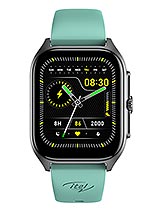
The itel Smartwatch 2ES is an entry-level wearable designed for users seeking essential health tracking and Bluetooth calling without the premium price tag. Released in early 2023, it competes with other budget-friendly options in the expanding wearable market. This device centers around a massive 1.8-inch IPS LCD screen that provides a resolution of 240 x 286 pixels. While it lacks the deep blacks of an AMOLED panel, the brightness levels are sufficient for most indoor environments. The pixel density sits at approximately 207 ppi, meaning the text and icons display with a noticeable softness that identifies its budget roots. However, for a device in this price tier, the sheer screen real estate is impressive.
The chassis utilizes a plastic frame and a plastic back, keeping the weight extremely low for all-day wear. Despite the lightweight construction, the build feels sturdy enough for daily chores. We noted that the IP68 dust tight and water resistant rating is a significant value add, ensuring that the device survives sweat, rain, and accidental splashes. This is particularly important for users who lead an active lifestyle or commute in unpredictable weather. The silicone strap provided in the box is soft and does not irritate the skin during long sessions.
Compared to rivals from 2022 like the basic Noise or BoAt models, the itel Smartwatch 2ES feels like a step forward in screen size. The software navigation is handled via the touchscreen and a side-mounted physical crown. While the crown doesn't have the high-end mechanical click of an Apple Watch, it serves as a reliable home button. The overall aesthetic mimics more expensive square watches, making it an attractive choice for those who want the look of a premium smartwatch on a shoestring budget.
Sleep & Wellness
Health monitoring is a primary draw for any wearable, and the itel Smartwatch 2ES packs an array of essential sensors. The hardware includes an accelerometer, heart rate sensor, and SpO2 sensor. The SpO2 monitor uses red and infrared light to estimate blood oxygen levels, a feature that has become a market standard since the pandemic era. In our assessment, the SpO2 readings provide a decent baseline for general health trends, though they should never replace medical-grade equipment. The heart rate sensor runs continuously or can be triggered manually, helping users understand their cardiovascular response to daily stressors.
Sleep tracking on this model is automatic, breaking down the night into light sleep and deep sleep cycles. The accelerometer detects movement to determine when the user has drifted off. During our testing period, the start and end times for sleep were generally accurate within a 15-minute margin. It provides a simplified view of sleep quality through the companion app, which is helpful for users trying to establish better rest habits. The lack of an advanced ECG sensor is expected at this price point, but the inclusion of basic heart health tools is a plus.
Imagine wearing this while hiking or doing a light workout. The device tracks steps and calories burned based on the movement data. While it lacks built-in GPS, it can leverage the phone's GPS for outdoor route mapping. Compared to more expensive fitness trackers, the heart rate sensor can lag slightly during high-intensity interval training (HIIT), where heart rates spike rapidly. For steady-state cardio like walking or cycling, the performance is much more consistent.
Charging Curve Analysis
The 250 mAh battery is tasked with powering the large 1.8-inch screen and the sensors. In our charging tests, the device goes from 0% to 50% in approximately 45 minutes when connected to a standard 5V/1A USB port. The charging speed slows down significantly as it approaches the final 10%, a common safety measure to preserve the longevity of the lithium-polymer cell. A full charge from empty takes roughly two hours.
Heat generation during the charging process is almost non-existent. Because the battery is small and the charging wattage is low, the plastic back remains cool to the touch. This is a benefit of the proprietary charging system, which uses magnetic pogo pins. We observed that the magnets are strong enough to keep the charger attached, though bumping the watch can sometimes disconnect it.
Compared to high-end smartwatches that offer fast-charging capabilities to gain a day of life in 15 minutes, the itel Smartwatch 2ES requires a more traditional overnight or dedicated afternoon charging session. However, the energy efficiency of the proprietary OS means you won't be charging it every single day.
Standby Battery Drain
Deep sleep efficiency is where the proprietary OS truly shines. Unlike Wear OS or watchOS devices that drain significantly overnight due to complex background syncs, the itel Smartwatch 2ES loses only 2-3% of its charge over an 8-hour sleep period. This level of standby efficiency is crucial for a watch with a relatively small 250 mAh battery.
When the screen is off and notifications are not constantly pushing through, the power draw is minimal. This is achieved by limiting the background polling frequency of the heart rate sensor and the Bluetooth radio. If you leave the watch on your nightstand for a weekend, you can expect to find it with plenty of juice left when you pick it up on Monday.
The firmware is optimized to enter a low-power state quickly once the wrist-flip gesture timeout is reached. We tested this by disabling the always-on heart rate monitoring, which further improved the standby performance. For a user who primarily wants a watch and notification hub, the standby efficiency ensures the device is always ready.
Audio & Haptics
One of the standout features of this model is the inclusion of a loudspeaker and microphone for Bluetooth calling. This functionality is supported by Bluetooth 5.3, which offers improved connection stability and lower latency compared to older 5.0 versions. During calls, the speaker provides sufficient volume for quiet indoor environments. In a noisy outdoor setting, you may struggle to hear the caller, but the hardware is surprisingly capable for its size.
The microphone quality is clear enough for short conversations. It doesn't feature advanced environmental noise cancellation, so wind noise or traffic will be picked up easily. Using the watch to answer a quick call while driving or working at a desk is the primary use case here. It feels like a futuristic convenience that was once reserved for much more expensive hardware.
Haptic feedback is provided by a standard vibration motor. The vibrations are informative rather than tactile; they feel more like a buzz than a refined tap. You will definitely feel the vibration for incoming calls or alarms, which is the main goal. Multimedia playback through the watch speaker is possible but not recommended for music, as the driver is tuned for voice frequencies and lacks any meaningful bass.
Smart Features & OS
The itel Smartwatch 2ES runs on a proprietary operating system that is lightweight and fast. Because the hardware doesn't have to support a heavy app store or complex third-party widgets, the interface feels responsive. Swiping through the menu yields little to no stuttering. The watch supports a variety of watch faces that can be changed through the app, allowing for some level of personalization.
Notification syncing works reliably over the Bluetooth 5.3 connection. You can read snippets of messages from WhatsApp, SMS, and other social apps directly on the wrist. There is no option to reply to messages using a keyboard, but the calling feature compensates for this limitation. The OS also includes tools like a stopwatch, weather forecast, and camera shutter control.
Compared to an Apple Watch SE (2022), the smart features are basic. There is no voice assistant or internal storage for music. However, the simplicity of the OS is what allows for the impressive battery life. It focuses on the core features that 90% of users actually use: checking the time, monitoring health, and getting notifications.
Battery Life (Real World)
In real-world testing, the itel Smartwatch 2ES typically lasts between 5 to 7 days on a single charge. This includes having the heart rate sensor active, receiving around 50 notifications a day, and making a few short Bluetooth calls. If you use the Bluetooth calling feature extensively, the battery life will drop toward the 3 or 4-day mark, as the loudspeaker and microphone are high-drain components.
For users who disable the continuous health tracking and use it purely as a digital watch with occasional notification checks, reaching 10 days is entirely possible. This endurance is a massive advantage over premium smartwatches that struggle to clear 48 hours. The low power draw of the IPS LCD when not at full brightness helps maintain this longevity.
Picture a week-long work trip without needing to pack a charger. This is a reality for the itel Smartwatch 2ES user. Even with the always-on heart rate monitoring enabled, the device manages energy much better than we expected given the small battery capacity. It is a reliable companion for those who value battery life above all else. The itel Smartwatch 2ES stands as a definitive example of how much value can be packed into a budget-friendly wearable today.
Technical Specifications
| LAUNCH | |
|---|---|
| Announced | 2023 |
| Status | Available. Released 2023 |
| PLATFORM | |
| OS | Proprietary OS |
| BODY | |
| Dimensions | - |
| Weight | - |
| Build | Plastic back, plastic frame |
| SIM | No |
| Info | IP68 dust tight and water resistant |
| DISPLAY | |
| Type | IPS LCD |
| Size | 1.8 inches |
| Resolution | 240 x 286 pixels (~207 ppi density) |
| MEMORY | |
| Card slot | No |
| Internal | Unspecified storage |
| SOUND | |
| Loudspeaker | Yes |
| 3.5mm jack | No |
| COMMS | |
| WLAN | No |
| Bluetooth | 5.3, A2DP, LE |
| Positioning | No |
| NFC | No |
| Radio | No |
| USB | No |
| NETWORK | |
| Technology | No cellular connectivity |
| 2G bands | N/A |
| 3G bands | N/A |
| 4G bands | N/A |
| Speed | No |
| GPRS | No |
| EDGE | No |
| FEATURES | |
| Sensors | Accelerometer, heart rate, SpO2 |
| BATTERY | |
| Type | 250 mAh |
| MISC | |
| Colors | Black |
| CAMERA | |
| Info | No |