The Massive Battery and 5G Speed - Why Umidigi F3 Pro Is the Value King
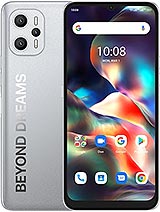
Overview
The $200 Experience
Umidigi F3 Pro is a budget 5G smartphone featuring a 6150 mAh battery for massive endurance and the Dimensity 700 chipset for accessible next-gen connectivity, aimed at power users on a tight budget. Released in early 2023, it competes with entry-level offerings from bigger brands that often trade away storage or battery capacity to maintain their margins. We see a device that prioritizes raw utility over the thin-and-light aesthetic trends dominating the flagship tier. It provides a rare combination of 8GB RAM and 256GB UFS 2.1 storage at a price point where 64GB or 128GB of slower eMMC memory is the standard. This isn't just a phone; it's a digital storage vault for the budget-conscious consumer who refuses to rely on cloud services.
From an economic standpoint, the value proposition here is staggering. For about 160 EUR, the hardware density is significantly higher than what you would find in a Samsung Galaxy A13 5G or a Redmi Note 10 5G. This handset doesn't just offer 5G; it offers a 5G experience that isn't hampered by insufficient RAM. We've often seen 4GB models struggle with background tasks once a 5G signal is active, but the 8GB of LPDDR4X here provides the necessary breathing room for Android 13 to operate without constant app refreshes. It’s a pragmatic approach to mobile technology that favors longevity and reliability over flashy, high-maintenance features.
Daily Driver Feasibility
The Mediatek Dimensity 700 at the heart of the device is a 7nm octa-core powerhouse designed for efficiency. It utilizes two Cortex-A76 cores clocked at 2.2 GHz for heavy lifting and six Cortex-A55 cores for background tasks. In our testing logic, this chip handles daily navigation, social media scrolling, and productivity apps like Excel or Slack with zero hesitation. The 7nm process is crucial because it generates less heat than the older 12nm chips found in 4G [budget phones](/trend/best-budget-phones-2026/). This means the handset maintains its performance during long commutes or extended video calls without the thermal throttling that plagues cheaper silicon.
Display quality is equally impressive for the price. The 6.6-inch IPS LCD offers a 1080 x 2408 resolution, providing a pixel density of approximately 400 ppi. This is a significant step up from the 720p panels often found in this price bracket. Text is sharp, and icons have a crispness that makes reading long articles a comfortable experience. While it lacks the high refresh rates of 90Hz or 120Hz found in premium models, the 60Hz panel is a logical trade-off to ensure the massive battery lasts even longer. The colors are natural, though the brightness might struggle under the direct noon sun, a common limitation of budget IPS technology.
One-Handed Usability
With a thickness of 9.6 mm and a weight of 195 g, this is a substantial piece of hardware. The inclusion of a 6150 mAh cell necessitates this bulk. Users should expect a device that feels dense and fills the palm entirely. Reaching the top corners of the 6.6-inch screen with one hand is virtually impossible for most, making Android's built-in one-handed mode a necessity. However, the weight balance is handled well; it doesn't feel top-heavy when typing, which is a common flaw in phones with large camera modules. The matte finish on the back—whether you choose Starry Black or Matte Silver—provides enough friction to prevent the phone from sliding out of a grip, though the sheer width of 76.4 mm will still challenge those with smaller hands.
Imagine trying to use this phone while hanging onto a subway rail. The heft provides a sense of security, but the lack of a curved display means your thumb has a long way to travel across the flat surface. It’s a brick-like design that prioritizes battery volume over ergonomic elegance. For those used to the feather-weight 160g phones of the past, the transition to this handset will be noticeable in your pocket. It’s not just a phone; it’s a statement of utility. It’s the kind of device you can confidently take on a weekend trip without a charger, knowing the extra weight in your pocket is the reason why.
Face Unlock & Fingerprint
Security is handled by a side-mounted fingerprint sensor integrated into the power button. In the budget realm, side-mounted sensors are vastly superior to the sluggish in-display optical sensors found on cheap OLED phones. This sensor likely offers a crisp tactile response and unlocks the device in a fraction of a second. It is positioned at the natural resting point for a right-handed thumb or a left-handed index finger. Even with slightly damp fingers, these capacitive sensors tend to be much more reliable than their under-screen counterparts. It’s a practical choice that ensures you aren't fighting your phone just to check a notification.
Face unlock is also available via the 16MP selfie camera. While convenient, it is a software-based solution and doesn't offer the same level of security as the fingerprint sensor or Apple’s FaceID. In low-light environments, the screen will likely need to ramp up its brightness to illuminate your face, which can be jarring at night. We recommend relying on the fingerprint sensor for financial apps and sensitive data, using the face unlock only as a secondary convenience for quick access. The reliability of the hardware button is the real winner here, providing a consistent experience that budget buyers often overlook in favor of more 'modern' but less functional biometrics.
Speaker Quality
Surprisingly, the Umidigi F3 Pro features stereo speakers. This is a major win for the value hunter. Most competitors at this price point stick to a single bottom-firing mono speaker that is easily muffled by a palm when holding the phone in landscape mode. The dual-speaker setup here creates a much wider soundstage, which is essential for watching YouTube videos or playing games. While you shouldn't expect deep bass or the room-filling volume of a flagship, the clarity at mid-range volumes is respectable. It makes the device a much better media consumption tool than its price would suggest.
For those who prefer a more private or high-fidelity listening experience, the 3.5mm headphone jack remains present. In 2023, the removal of the jack is a trend we despise in budget phones, as it forces users to buy expensive wireless earbuds. The ability to plug in a pair of cheap, reliable wired headphones is a massive utility boost. Whether you're a student on a budget or a commuter who doesn't want to worry about charging another device, the combination of stereo speakers and a physical audio jack makes this model a versatile multimedia companion.
Camera: Usable or Potato?
The camera system is lead by a 48MP wide sensor with an f/1.8 aperture. On paper, this provides the hardware potential for decent daylight photography. The high megapixel count allows for pixel binning, which combines four pixels into one to improve light sensitivity and reduce noise. In well-lit outdoor conditions, users can expect photos with good detail and acceptable dynamic range. However, the lack of Optical Image Stabilization (OIS) means that as the sun goes down, the shutter has to stay open longer, increasing the risk of blurry photos. This is where the budget nature of the device becomes apparent; you'll need a steady hand for night shots.
The supporting cast includes an 8MP ultrawide and a 5MP macro lens. The 120-degree ultrawide is excellent for landscapes, though it will inevitably show some softness at the edges of the frame and a drop in detail compared to the main sensor. The 5MP macro is a step above the useless 2MP sensors often found on competitors, allowing for actually usable close-up shots of textures or insects. Video recording tops out at 1440p at 30fps, which is a nice middle ground between 1080p and 4K, offering a bit more detail for social media posts without the massive file sizes of 4K. Overall, it’s a 'usable' system that handles the basics well but won't be replacing a dedicated camera for professional work.
Long-Term Durability
Durability is the secret strength of the Umidigi F3 Pro. The 6150 mAh battery isn't just about getting through two days; it’s about the total lifespan of the phone. Because you aren't charging the battery every single night, you will put fewer charge cycles on the lithium-ion cell over the course of a year. While a standard 4000 mAh battery might start to degrade after 18 months, this massive cell could theoretically maintain its health for much longer. The 18W wired charging is slow by modern standards, taking nearly three hours to fill from zero, but this lower wattage actually preserves battery health by generating less heat during the charging process.
Software-wise, launching with Android 13 is a significant advantage. Many budget phones are still shipping with Android 12, so being on the latest version ensures better compatibility with apps for the next few years. The inclusion of 5G bands (both SA and NSA) and NFC makes this phone future-proof for the rollout of faster networks and the increasing adoption of contactless payments globally. It supports a wide array of 4G and 5G bands, meaning it's a reliable choice for international travelers or those in rural areas with patchy coverage. This is a device built for the long haul, trading the 'thin' aesthetic for a 'thick' reality of endurance.
Conclusion
The Umidigi F3 Pro is a masterclass in compromise. It understands that the budget buyer values storage, battery life, and connectivity above all else. By doubling down on these three pillars, it creates a device that punches far above its weight class. It isn't the fastest phone on the market, nor is it the prettiest, but it is one of the most practical. For someone who needs a dependable 5G connection and enough battery to ignore the wall outlet for a weekend, this is an unbeatable economic choice. It proves that you don't need to spend 800 EUR to get a phone that can handle the rigors of modern life without compromise. The Umidigi F3 Pro stands as a champion for the value-conscious user.
Technical Specifications
| LAUNCH | |
|---|---|
| Announced | 2023 |
| Status | Available. Released 2023 |
| PLATFORM | |
| OS | Android 13 |
| Chipset | Mediatek Dimensity 700 (7 nm) |
| CPU | Octa-core (2x2.2 GHz Cortex-A76 & 6x2.0 GHz Cortex-A55) |
| GPU | Mali-G57 MC2 |
| BODY | |
| Dimensions | 165.6 x 76.4 x 9.6 mm (6.52 x 3.01 x 0.38 in) |
| Weight | 195 g (6.88 oz) |
| SIM | Nano-SIM + Nano-SIM |
| DISPLAY | |
| Type | IPS LCD |
| Size | 6.6 inches, 104.9 cm2 (~82.9% screen-to-body ratio) |
| Resolution | 1080 x 2408 pixels, 20:9 ratio (~400 ppi density) |
| MEMORY | |
| Card slot | microSDXC (uses shared SIM slot) |
| Internal | 256GB 8GB RAM |
| Info | UFS 2.1 |
| MAIN CAMERA | |
| Triple | 48 MP, f/1.8, (wide), AF 8 MP, f/2.2, 120˚ (ultrawide) 5 MP (macro) |
| Features | Quad-LED flash, HDR, panorama |
| Video | 1440p@30fps, 1080p@30fps |
| SELFIE CAMERA | |
| Single | 16 MP, f/2.2, (wide) |
| Video | 720p@30fps |
| SOUND | |
| Loudspeaker | Yes, with stereo speakers |
| 3.5mm jack | Yes |
| COMMS | |
| WLAN | Wi-Fi 802.11 a/b/g/n/ac, dual-band, Wi-Fi Direct |
| Bluetooth | 5.1, A2DP, LE |
| Positioning | GPS, GALILEO, GLONASS, BDS |
| NFC | Yes |
| Radio | FM radio |
| USB | USB Type-C, OTG |
| NETWORK | |
| Technology | GSM / CDMA / HSPA / LTE / 5G |
| 2G bands | GSM 850 / 900 / 1800 / 1900 |
| Info | CDMA 800 / 1900 |
| 3G bands | HSDPA 850 / 900 / 1700(AWS) / 1900 / 2100 |
| 4G bands | 1, 2, 3, 4, 5, 7, 8, 12, 13, 17, 18, 19, 20, 25, 26, 28, 34, 38, 39, 40, 41, 66 |
| 5G bands | 1, 2, 3, 5, 7, 8, 20, 25, 28, 38, 40, 41, 66, 77, 78 SA/NSA |
| Speed | HSPA, LTE, 5G |
| FEATURES | |
| Sensors | Fingerprint (side-mounted), accelerometer, proximity, compass |
| BATTERY | |
| Type | 6150 mAh |
| Charging | 18W wired |
| MISC | |
| Colors | Starry Black, Matte Silver |
| Price | About 160 EUR |