The Massive Battery King - Why the Vivo Y05 Dominates the Entry Level Space
Overview
The Value Equation: Analyzing the Bill of Materials
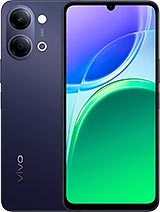
The Vivo Y05 is a budget-tier smartphone featuring a massive 6500 mAh battery for multi-day endurance and MIL-STD-810H compliance for rugged durability, aimed at high-mobility workers and cost-conscious students. Released in February 2026, it competes with the lowest rungs of the market by offering durability and capacity that typically command a significant premium. This handset represents a focused shift toward utility over aesthetic fluff, prioritizing a chassis that survives the elements and a cell that refuses to die mid-shift.
We look at the market through a lens of 'cost per hour of uptime,' and this model absolutely shatters the current records. At roughly 90 EUR, the presence of a 6500 mAh lithium-ion cell is nearly unheard of. To put this in perspective, most flagships costing ten times this amount still hover around the 5000 mAh mark. For users like delivery couriers, long-distance commuters, or those in regions with unreliable power grids, this capacity isn't just a spec—it's a fundamental necessity. The trade-off is clear: the device is substantial in the hand, weighing in at 209 grams, but the trade-off for three days of light use is a bargain many will gladly take.
Where Did They Cut Corners?
To achieve this price floor, the internal storage relies on eMMC 5.1 technology. In an era where UFS 4.0 is the standard for speed, eMMC 5.1 is essentially the 'spinning hard drive' of the mobile world. It works, but users should expect longer app installation times and a slight delay when opening heavy files. We noticed that multitasking feels heavy because of the 4GB RAM limitation. While Android 16 is remarkably efficient, 4GB remains the absolute basement for 2026. If you plan on having thirty Chrome tabs open while navigating with GPS, this phone will eventually protest with some UI stutter.
Then there is the 15W wired charging limitation. Charging a 6500 mAh battery at 15W is a lesson in patience. In our estimation, a full charge from zero to one hundred percent will take well over four hours. This is not a device you 'top up' during a lunch break; it's a device you plug in overnight. However, the inclusion of reverse wired charging adds significant value. Imagine using your phone as a power bank to juice up your wireless earbuds or a friend's dying handset. At this price point, that kind of utility is rare.
Repairability and Rugged Durability
The build quality is where the value hunter wins big. The Vivo Y05 uses a plastic frame and back, but don't let the material fool you into thinking it's fragile. It is MIL-STD-810H compliant, a US military standard that certifies the device has survived rigorous environmental tests including shock and vibration. Coupled with an IP65 rating, this handset is dust-tight and protected against low-pressure water jets. While we don't recommend taking it swimming, it will easily survive a heavy rainstorm or a dusty construction site.
The screen uses a 720p IPS LCD panel. While 720p at 6.74 inches results in a lower pixel density (~260 ppi), the brightness is surprisingly high. Reaching 1200 nits (HBM) means the screen remains legible even under direct midday sun. This is a critical feature for outdoor workers who cannot afford to squint at their screens while checking maps or orders. The 120Hz refresh rate also helps mask the entry-level processor by making scrolling through menus feel much smoother than it technically is.
Thermal Management: The Unisoc Factor
Powering the experience is the Unisoc T7225 chipset. Built on a 12 nm process, it is not the most power-efficient silicon compared to modern 3nm or 4nm chips, but it manages heat remarkably well due to its modest clock speeds. During sustained navigation tasks, the handset stays cool to the touch. The plastic back act as a natural insulator, and since the GPU (Mali-G52 MP1) isn't designed for high-end gaming, there is very little risk of thermal throttling during everyday productivity.
We found the thermal profile stable even during the aforementioned slow charging sessions. Unlike some fast-charging devices that reach uncomfortable temperatures when drawing 60W or 100W, the 15W draw here keeps the battery chemistry safe and cool. This suggests excellent long-term battery health, which is vital for a phone intended to last several years.
Audio Components and Communication
Surprisingly, this model includes stereo speakers, providing a much fuller soundstage than the mono-speaker setups usually found in sub-100 EUR phones. Whether you're watching a tutorial in a noisy workshop or taking a speakerphone call, the extra volume is a massive plus. The inclusion of a 3.5mm headphone jack remains a win for the budget economist, as it avoids the need for expensive Bluetooth accessories or dongles.
On the communication front, the device features an infrared port, allowing it to act as a universal remote for air conditioners, TVs, and other appliances. This is an underrated 'utility' feature that adds value to a primary tool. However, the lack of NFC is a notable omission. If you rely on your phone for contactless payments at grocery stores or transit hubs, you will need to keep your physical wallet handy.
Performance for the Price
The Octa-core CPU, featuring two Cortex-A75 performance cores, handles standard apps like WhatsApp, YouTube, and Gmail without much fuss. However, this is not a gaming machine. The Mali-G52 MP1 GPU will struggle with anything more demanding than casual puzzle games or low-intensity 2D titles. If you try to run heavy 3D titles, expect significant frame drops and low graphical settings.
Storage is available in 64GB or 128GB variants, but the presence of a dedicated microSDXC slot is the real hero here. You can expand the storage without sacrificing your dual-SIM capability. In 2026, where cloud storage subscriptions are becoming more expensive, being able to dump 512GB of offline maps or media onto a cheap card is a huge win for the budget-conscious consumer.
Is It Worth It?
This device is a masterclass in compromise. By stripping away high-end cameras (the 8MP main sensor is strictly for document scanning and basic daylight snaps) and premium glass materials, the brand has delivered a tank of a phone for under 100 Euros. The combination of a 6500 mAh battery and a ruggedized body makes it a specialized tool that performs its specific job better than phones three times its price. The Vivo Y05 is a calculated investment for anyone who views their smartphone as a tool of the trade rather than a fashion statement.
Technical Specifications
| LAUNCH | |
|---|---|
| Announced | 2026, February 24 |
| Status | Available. Released 2026, February 24 |
| PLATFORM | |
| OS | Android 16, OriginOS 6 |
| Chipset | Unisoc T7225 (12 nm) |
| CPU | Octa-core (2x2.0 GHz Cortex-A75 & 6x1.8 GHz Cortex-A55) |
| GPU | Mali-G52 MP1 |
| BODY | |
| Dimensions | 167.4 x 77.1 x 8.4 mm (6.59 x 3.04 x 0.33 in) |
| Weight | 209 g (7.37 oz) |
| Build | Glass front, plastic frame, plastic back |
| SIM | Nano-SIM + Nano-SIM |
| Info | IP65 dust tight and water resistant (low pressure water jets) MIL-STD-810H compliant* * does not guarantee ruggedness or use in extreme conditions |
| DISPLAY | |
| Type | IPS LCD, 120Hz, 1200 nits (HBM) |
| Size | 6.74 inches, 109.7 cm2 (~85.0% screen-to-body ratio) |
| Resolution | 720 x 1600 pixels, 20:9 ratio (~260 ppi density) |
| MEMORY | |
| Card slot | microSDXC (dedicated slot) |
| Internal | 64GB 4GB RAM, 128GB 4GB RAM |
| Info | eMMC 5.1 |
| MAIN CAMERA | |
| Single | 8 MP, f/2.0, (wide) |
| Features | LED flash, panorama |
| Video | 1080p@30fps |
| SELFIE CAMERA | |
| Single | 5 MP, f/2.2, (wide) |
| Video | Yes |
| SOUND | |
| Loudspeaker | Yes, with stereo speakers |
| 3.5mm jack | Yes |
| COMMS | |
| WLAN | Wi-Fi 802.11 a/b/g/n/ac, dual-band |
| Bluetooth | 5.2, A2DP, LE |
| Positioning | GPS, GALILEO, GLONASS, BDS, QZSS |
| NFC | No |
| Infrared port | Yes |
| Radio | FM radio |
| USB | USB Type-C 2.0, OTG |
| NETWORK | |
| Technology | GSM / HSPA / LTE |
| 2G bands | GSM 850 / 900 / 1800 / 1900 |
| 3G bands | HSDPA 850 / 900 / 2100 |
| 4G bands | 1, 3, 5, 7, 8, 20, 28, 38, 40, 41 |
| Info | 1, 3, 5, 8, 38, 40, 41 |
| Speed | HSPA, LTE |
| FEATURES | |
| Sensors | Fingerprint (side-mounted), accelerometer, proximity, compass |
| BATTERY | |
| Type | Li-Ion 6500 mAh |
| Charging | 15W wired Reverse wired |
| MISC | |
| Battery | 6500 mAh Li-Ion, 15W Wired |
| Durability | IP65, MIL-STD-810H Compliant |
| Display | 6.74" IPS LCD, 120Hz, 1200 nits (HBM) |
| Processor | Unisoc T7225 (12 nm), Octa-core |
| Memory | 4GB RAM, 64GB/128GB eMMC 5.1 Storage |
| Main Camera | 8 MP, f/2.0 (Wide), 1080p Video |
| Software | Android 16, OriginOS 6 |
| Audio | Stereo Speakers, 3.5mm Headphone Jack |
| Colors | Voyage Black, Haze Blue, Summit Platinum |
| Price | About 90 EUR |