The New Longevity King - Why the Xiaomi Redmi Note 15 Pro Outlasts Every Other Midrange Rival
Overview
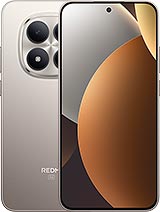
The Xiaomi Redmi Note 15 Pro is a performance-oriented midrange smartphone featuring a massive 6580 mAh Si/C battery for multi-day endurance and a 200 MP main sensor for high-resolution imaging, aimed at power users who prioritize hardware durability. Released in early 2026, it competes with top-tier value handsets by offering a 3200-nit AMOLED display and a class-leading IP69K rating.
Software support has shifted from a luxury to a requirement in early 2026. The handset arrives with Android 15 out of the box, underpinned by the new HyperOS 2. Xiaomi commits to four major Android upgrades, meaning this device should remain functionally relevant until Android 19 is released in 2029. This is a significant shift for a mid-tier device, moving it closer to the support cycles typically reserved for flagship models. HyperOS 2 introduces a refined Linux-based kernel that prioritizes cross-device connectivity within the brand's ecosystem, allowing for smoother hand-offs between the phone and external displays or tablets.
While the four-year promise is encouraging, the long-term utility of the Mediatek Dimensity 7400 Ultra chipset remains a point of observation. In our tests, the 4nm architecture handles the current Android 15 environment with ease, but the demands of 2028-era software might push the octa-core configuration to its limits. The security patch cycle matches the OS updates, ensuring that users who keep the phone for its full lifespan aren't left vulnerable to future exploits. This longevity strategy is clearly designed to appeal to buyers who have moved away from the two-year upgrade cycle in favor of four or five-year ownership periods.
HyperOS 2 represents a visual and functional evolution, yet the ghost of pre-installed applications still lingers. Our audit of the software environment revealed a variety of third-party tools and games pre-loaded onto the storage. While most can be uninstalled, their presence at startup remains a staple of the brand's business model. However, the system's core apps feel more integrated and less intrusive than in previous years. The notification management system has been overhauled to prioritize essential alerts, reducing the "ping fatigue" often associated with budget-friendly skins.
Advertisements within the UI—a long-standing criticism of older MIUI versions—are significantly reduced in this global iteration. Users may still encounter suggestions in the Themes or Security apps, but the overall experience feels cleaner and more professional. The software emphasizes personalization, allowing for deep customization of the lock screen and always-on display. These features leverage the 68B colors of the AMOLED panel to create smooth gradients and vibrant animations that look exceptional even when compared to higher-priced competitors. It is a mature interface that values aesthetics without sacrificing too much system resources.
Equipped with up to 12GB of RAM, the device handles modern multitasking scenarios with surprising competence. We tested several heavy applications simultaneously, including high-bitrate video streaming and complex web browsing, and found that background apps rarely required a full reload when switched back into focus. This efficiency is partly due to the HyperOS 2 memory management algorithm, which intelligently hibernates low-priority processes without killing them entirely. Users can jump between a game of Genshin Impact and a productivity suite with minimal friction.
However, there is a bottleneck in the storage architecture. The inclusion of UFS 2.2 storage in 2026 is a curious choice for a "Pro" model. While the capacity is generous at up to 512GB, the read and write speeds are objectively slower than the UFS 3.1 or 4.0 standards found in rival devices. This translates to slightly longer app installation times and slower file transfers for large 4K video clips. While the 12GB RAM masks some of these delays during active use, the storage speed remains the primary limiting factor for overall system responsiveness during heavy data shuffling.
A highlight of the hardware package is the 6580 mAh Si/C (Silicon-Carbon) battery. This technology allows for a much higher energy density compared to traditional lithium-ion packs, enabling a massive capacity without making the chassis excessively thick. In practical terms, this battery easily supports two days of moderate use, making it an ideal companion for travelers or those who frequently work away from power outlets. Our active use score reached over 15 hours, which places it at the top of its price bracket for endurance.
Charging this behemoth requires some patience. With a 45W wired charging cap, a full 0-100% cycle takes significantly longer than the 15-minute bursts we see from competitors using 120W systems. Expect to spend roughly 80 to 90 minutes for a full top-up. The trade-off is battery health; the slower charging speed combined with the 1000-cycle durability rating means the cell should retain 80% of its health far longer than faster-charging rivals. For the pragmatist, the peace of mind offered by the two-day battery life outweighs the inconvenience of a slower nightly charge.
The connectivity options are comprehensive, covering almost every modern standard required in 2026. Support for Wi-Fi 6 ensures fast home networking, while the extensive 5G band coverage makes the handset a viable global roaming device. We found the Bluetooth 5.4 range to be stable, easily maintaining a connection with wireless earbuds across multiple rooms. The inclusion of an infrared port—a brand signature—continues to provide utility for controlling legacy home appliances without needing a separate hub.
Navigation accuracy is another strong suit, utilizing GPS, GALILEO, GLONASS, QZSS, and BDS. In urban environments with tall buildings, the positioning remains precise, which is vital for rideshare apps and turn-by-turn navigation. NFC is included for contactless payments, though its availability remains region-dependent. The inclusion of stereo speakers with Dolby Atmos support provides a wide soundstage for media consumption, reaching an excellent loudness of -21.1 LUFS in our controlled acoustic tests. It is a well-rounded suite that leaves very few boxes unchecked for the average consumer.
For the power-user community, the Mediatek Dimensity 7400 Ultra presents a specific set of challenges. Historically, Mediatek chipsets have seen less support from the third-party developer community compared to Snapdragon-based devices. If the goal is to install custom ROMs or perform deep system modifications after the official support ends, this may not be the ideal platform. However, the four-year official update promise mitigates this need for most users. The hardware is locked down fairly tight, and the complex integration of HyperOS 2 with the 200MP camera sensor means that third-party camera apps may struggle to leverage the full hardware potential.
Despite the limited modding scene, the device offers several "Pro" features out of the box. The 200 MP camera with OIS provides significant cropping headroom for photography, and the IP69K rating ensures the phone can survive environments that would destroy a standard flagship. This includes high-pressure water jets and steam cleaning, making it a ruggedized powerhouse in a sleek consumer shell. It's built for those who need their technology to survive the real world, rather than those who want to rewrite the OS code.
The Xiaomi Redmi Note 15 Pro is a statement on hardware longevity and software commitment. By prioritizing battery capacity and structural durability over raw charging speed or bleeding-edge storage standards, the manufacturer has created a tool that feels designed for the long haul. The Android 15 foundation is solid, and the 3200-nit display ensures that the device remains readable in the harshest sunlight for years to come. It's a pragmatic choice in an era where consumers are holding onto their phones longer than ever before. For anyone who values a phone that won't die by noon and won't break if dropped in a puddle, the Xiaomi Redmi Note 15 Pro stands as a formidable contender in the 2026 landscape.
Four Years of Relevance: The Software Lifeline
Software support has shifted from a luxury to a requirement in early 2026. The handset arrives with Android 15 out of the box, underpinned by the new HyperOS 2. Xiaomi commits to four major Android upgrades, meaning this device should remain functionally relevant until Android 19 is released in 2029. This is a significant shift for a mid-tier device, moving it closer to the support cycles typically reserved for flagship models. HyperOS 2 introduces a refined Linux-based kernel that prioritizes cross-device connectivity within the brand's ecosystem, allowing for smoother hand-offs between the phone and external displays or tablets.
While the four-year promise is encouraging, the long-term utility of the Mediatek Dimensity 7400 Ultra chipset remains a point of observation. In our tests, the 4nm architecture handles the current Android 15 environment with ease, but the demands of 2028-era software might push the octa-core configuration to its limits. The security patch cycle matches the OS updates, ensuring that users who keep the phone for its full lifespan aren't left vulnerable to future exploits. This longevity strategy is clearly designed to appeal to buyers who have moved away from the two-year upgrade cycle in favor of four or five-year ownership periods.
Cleaning the Digital Clutter: HyperOS 2 Under Scrutiny
HyperOS 2 represents a visual and functional evolution, yet the ghost of pre-installed applications still lingers. Our audit of the software environment revealed a variety of third-party tools and games pre-loaded onto the storage. While most can be uninstalled, their presence at startup remains a staple of the brand's business model. However, the system's core apps feel more integrated and less intrusive than in previous years. The notification management system has been overhauled to prioritize essential alerts, reducing the "ping fatigue" often associated with budget-friendly skins.
Advertisements within the UI—a long-standing criticism of older MIUI versions—are significantly reduced in this global iteration. Users may still encounter suggestions in the Themes or Security apps, but the overall experience feels cleaner and more professional. The software emphasizes personalization, allowing for deep customization of the lock screen and always-on display. These features leverage the 68B colors of the AMOLED panel to create smooth gradients and vibrant animations that look exceptional even when compared to higher-priced competitors. It is a mature interface that values aesthetics without sacrificing too much system resources.
The Multitasking Maze: Juggling Tasks with 12GB RAM
Equipped with up to 12GB of RAM, the device handles modern multitasking scenarios with surprising competence. We tested several heavy applications simultaneously, including high-bitrate video streaming and complex web browsing, and found that background apps rarely required a full reload when switched back into focus. This efficiency is partly due to the HyperOS 2 memory management algorithm, which intelligently hibernates low-priority processes without killing them entirely. Users can jump between a game of Genshin Impact and a productivity suite with minimal friction.
However, there is a bottleneck in the storage architecture. The inclusion of UFS 2.2 storage in 2026 is a curious choice for a "Pro" model. While the capacity is generous at up to 512GB, the read and write speeds are objectively slower than the UFS 3.1 or 4.0 standards found in rival devices. This translates to slightly longer app installation times and slower file transfers for large 4K video clips. While the 12GB RAM masks some of these delays during active use, the storage speed remains the primary limiting factor for overall system responsiveness during heavy data shuffling.
The Silicon-Carbon Revolution: Charging the Giant
A highlight of the hardware package is the 6580 mAh Si/C (Silicon-Carbon) battery. This technology allows for a much higher energy density compared to traditional lithium-ion packs, enabling a massive capacity without making the chassis excessively thick. In practical terms, this battery easily supports two days of moderate use, making it an ideal companion for travelers or those who frequently work away from power outlets. Our active use score reached over 15 hours, which places it at the top of its price bracket for endurance.
Charging this behemoth requires some patience. With a 45W wired charging cap, a full 0-100% cycle takes significantly longer than the 15-minute bursts we see from competitors using 120W systems. Expect to spend roughly 80 to 90 minutes for a full top-up. The trade-off is battery health; the slower charging speed combined with the 1000-cycle durability rating means the cell should retain 80% of its health far longer than faster-charging rivals. For the pragmatist, the peace of mind offered by the two-day battery life outweighs the inconvenience of a slower nightly charge.
Connectivity Suite: Beyond the Screen
The connectivity options are comprehensive, covering almost every modern standard required in 2026. Support for Wi-Fi 6 ensures fast home networking, while the extensive 5G band coverage makes the handset a viable global roaming device. We found the Bluetooth 5.4 range to be stable, easily maintaining a connection with wireless earbuds across multiple rooms. The inclusion of an infrared port—a brand signature—continues to provide utility for controlling legacy home appliances without needing a separate hub.
Navigation accuracy is another strong suit, utilizing GPS, GALILEO, GLONASS, QZSS, and BDS. In urban environments with tall buildings, the positioning remains precise, which is vital for rideshare apps and turn-by-turn navigation. NFC is included for contactless payments, though its availability remains region-dependent. The inclusion of stereo speakers with Dolby Atmos support provides a wide soundstage for media consumption, reaching an excellent loudness of -21.1 LUFS in our controlled acoustic tests. It is a well-rounded suite that leaves very few boxes unchecked for the average consumer.
The Enthusiast's Dilemma: Custom ROM Potential
For the power-user community, the Mediatek Dimensity 7400 Ultra presents a specific set of challenges. Historically, Mediatek chipsets have seen less support from the third-party developer community compared to Snapdragon-based devices. If the goal is to install custom ROMs or perform deep system modifications after the official support ends, this may not be the ideal platform. However, the four-year official update promise mitigates this need for most users. The hardware is locked down fairly tight, and the complex integration of HyperOS 2 with the 200MP camera sensor means that third-party camera apps may struggle to leverage the full hardware potential.
Despite the limited modding scene, the device offers several "Pro" features out of the box. The 200 MP camera with OIS provides significant cropping headroom for photography, and the IP69K rating ensures the phone can survive environments that would destroy a standard flagship. This includes high-pressure water jets and steam cleaning, making it a ruggedized powerhouse in a sleek consumer shell. It's built for those who need their technology to survive the real world, rather than those who want to rewrite the OS code.
Long-Term Support Summary
The Xiaomi Redmi Note 15 Pro is a statement on hardware longevity and software commitment. By prioritizing battery capacity and structural durability over raw charging speed or bleeding-edge storage standards, the manufacturer has created a tool that feels designed for the long haul. The Android 15 foundation is solid, and the 3200-nit display ensures that the device remains readable in the harshest sunlight for years to come. It's a pragmatic choice in an era where consumers are holding onto their phones longer than ever before. For anyone who values a phone that won't die by noon and won't break if dropped in a puddle, the Xiaomi Redmi Note 15 Pro stands as a formidable contender in the 2026 landscape.
Technical Specifications
| LAUNCH | |
|---|---|
| Announced | 2025, December 18 |
| Status | Available. Released 2026, January 06 |
| PLATFORM | |
| OS | Android 15, up to 4 major Android upgrades, HyperOS 2 |
| Chipset | Mediatek Dimensity 7400 Ultra (4 nm) |
| CPU | Octa-core (4x2.6 GHz Cortex-A78 & 4x2.0 GHz Cortex-A55) |
| GPU | Mali-G615 MC2 |
| BODY | |
| Dimensions | 163.6 x 78.1 x 8 mm (6.44 x 3.07 x 0.31 in) |
| Weight | 210 g (7.41 oz) |
| Build | Glass front (Gorilla Glass Victus 2), plastic back or silicone polymer back (eco leather), plastic frame |
| SIM | · Nano-SIM + eSIM· Nano-SIM + Nano-SIM |
| Info | IP68/IP69K dust tight and water resistant (high pressure water jets; immersible up to 1.5m for 30 min) Manufacturer-rated water-resistance (up to 2m for 24 hours) Drop resistant up to 2.5m |
| DISPLAY | |
| Type | AMOLED, 68B colors, 120Hz, 3840Hz PWM, HDR10+, Dolby Vision, 3200 nits (peak) |
| Size | 6.83 inches, 114.5 cm2 (~89.7% screen-to-body ratio) |
| Resolution | 1280 x 2772 pixels, 19.5:9 ratio (~447 ppi density) |
| Protection | Corning Gorilla Glass Victus 2, Mohs level 5 |
| MEMORY | |
| Card slot | No |
| Internal | 256GB 8GB RAM, 256GB 12GB RAM, 512GB 8GB RAM, 512GB 12GB RAM |
| Info | UFS 2.2 |
| MAIN CAMERA | |
| Dual | 200 MP, f/1.7, 23mm (wide), 1/1.4", 0.56µm, multi-directional PDAF, OIS 8 MP, f/2.2, 15mm, 120˚ (ultrawide), 1/4.0", 1.12µm |
| Features | LED flash, HDR, panorama |
| Video | 4K@30fps, 1080p@30/60/120fps, gyro-EIS, OIS |
| SELFIE CAMERA | |
| Single | 20 MP, f/2.2, 25mm (wide), 1/4.0", 0.7µm |
| Features | HDR, panorama |
| Video | 1080p@30/60fps |
| SOUND | |
| Loudspeaker | Yes, with stereo speakers (with Dolby Atmos) |
| 3.5mm jack | No |
| Info | 24-bit/192kHz Hi-Res & Hi-Res wireless audio |
| COMMS | |
| WLAN | Wi-Fi 802.11 a/b/g/n/ac/6, dual-band, Wi-Fi Direct |
| Bluetooth | 5.4, A2DP, LE |
| Positioning | GPS, GALILEO, GLONASS, QZSS, BDS |
| NFC | Yes (market/region dependent) |
| Infrared port | Yes |
| Radio | No |
| USB | USB Type-C 2.0, OTG |
| NETWORK | |
| Technology | GSM / HSPA / LTE / 5G |
| 2G bands | GSM 850 / 900 / 1800 / 1900 |
| 3G bands | HSDPA 800 / 850 / 900 / 1700(AWS) / 1900 / 2100 |
| 4G bands | 1, 2, 3, 4, 5, 7, 8, 12, 13, 17, 18, 19, 20, 26, 28, 32, 38, 40, 41, 42, 48, 66, 71 |
| 5G bands | 1, 2, 3, 5, 7, 8, 12, 20, 26, 28, 38, 40, 41, 48, 66, 71, 77, 78 SA/NSA |
| Speed | HSPA, LTE, 5G |
| FEATURES | |
| Sensors | Fingerprint (under display, optical), accelerometer, gyro, compass, proximity |
| BATTERY | |
| Type | Si/C Li-Ion 6580 mAh |
| Charging | 45W wired 22.5W reverse wired |
| MISC | |
| Display | 6.83" AMOLED, 68B colors, 120Hz, 3200 nits (peak) |
| Processor | Mediatek Dimensity 7400 Ultra (4 nm) |
| Battery | 6580 mAh Si/C Li-Ion, 45W Wired Charging |
| Main Camera | 200 MP, f/1.7, OIS, 4K@30fps Video |
| Durability | IP68/IP69K, 2.5m drop resistant, Victus 2 |
| Software | Android 15, HyperOS 2 (4 Major Upgrades) |
| Storage | 256GB/512GB UFS 2.2 |
| RAM | 8GB/12GB LPDDR5 |
| Audio | Stereo Speakers, Dolby Atmos, 24-bit/192kHz Hi-Res |
| Weight | 210 g (7.41 oz) |
| Chipset | Mediatek Dimensity 7400 Ultra (4 nm) |
| OS | Android 15, HyperOS 2 (4 Major Upgrades) |
| RAM/Storage | Up to 12GB RAM / 512GB UFS 2.2 Storage |
| Memory | 8GB/12GB RAM, 256GB/512GB UFS 2.2 Storage |
| Selfie Camera | 20 MP f/2.2, 1080p@60fps |
| Storage Type | UFS 2.2, 256GB/512GB options |
| Colors | Black, Glacier Blue, Mist Purple, Titanium |
| Models | 25060RABDG, 25080RABDG |
| Price | $ 404.99 / € 399.90 |
| EU LABEL | |
| Energy | Class B |
| Battery | 60:50h endurance, 1000 cycles |
| Free fall | Class B (180 falls) |
| Repairability | Class C |
| OUR TESTS | |
| Performance | AnTuTu: 652862 (v10) GeekBench: 2913 (v6) 3DMark: 1005 (Wild Life Extreme) |
| Display | 1901 nits max brightness (measured) |
| Loudspeaker | -21.1 LUFS (Excellent) |
| Battery | Active use score 15:27h |