The Right to Repair Revolution - Why the Nokia G22 Is the Smartest Budget Buy Right Now
Overview
The Economic Logic of Repairability in 2023
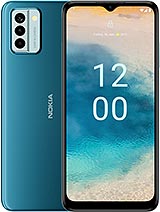
Nokia G22 is a budget smartphone featuring a QuickFix reparable design for longevity and a 50MP main camera for detailed photography, aimed at environmentally conscious and cost-sensitive consumers. Released in early 2023, it competes with the likes of the [Samsung Galaxy A14](/the-samsung-galaxy-a14-a-calculated-financial-move-for-smart-buyers/) and various refurbished older flagships. In an era where tech companies often build obstacles to self-repair, this handset stands out by providing an official path for users to replace their own screens, batteries, and charging ports.
From a value-hunter perspective, the total cost of ownership is the only metric that matters. Most [budget phones](/trend/best-budget-phones-2026/) are discarded when the screen cracks because the professional repair costs nearly as much as the device itself. This model disrupts that cycle. By partnering with iFixit to provide guides and genuine parts, the manufacturer ensures that a simple drop doesn't mean a $130 loss. We view this as a financial hedge against the inevitable accidents of daily life.
The New vs. Used Dilemma
When looking at the $130 to $150 price bracket, the temptation to buy a three-year-old flagship is strong. A used iPhone 11 or a Galaxy S20 offers significantly more raw power. However, those devices come with degraded batteries and no warranty. This phone offers a fresh 5050 mAh battery and the peace of mind that comes with a brand-new warranty. For the average user who prioritizes longevity over gaming performance, the math favors the new hardware.
Older flagships often lack modern battery efficiencies and the latest security patches. This handset launches with Android 12 and a promise of consistent updates. While the Unisoc T606 chipset isn't winning any speed races, it is built on a 12nm process that prioritizes power efficiency. For the economist, the trade-off is clear: you lose the ability to play heavy titles like Genshin Impact at high settings, but you gain a device that can comfortably last three days on a single charge.
Build Quality and Ergonomics
The device utilizes a high-gloss plastic back that mimics glass. While it lacks the premium cold touch of metal or the depth of Gorilla Glass, the plastic frame and back offer better impact resistance than glass would. In our analysis, plastic is the superior material for a budget device because it doesn't shatter upon the first impact. The 196g weight gives it a substantial presence in the hand without feeling like a brick.
We suspect the side-mounted fingerprint sensor provides a more intuitive unlocking experience than the sluggish under-display optical sensors found in some cheap competitors. The buttons likely offer a firm, tactile click, characteristic of recent builds from the brand. There is a certain honesty in the design—it doesn't try to be something it isn't, focusing instead on structural integrity and accessibility.
Performance Reality and the 720p Compromise
Under the hood, the Unisoc T606 features two Cortex-A75 performance cores and six Cortex-A55 efficiency cores. This configuration handles daily tasks—scrolling through social media, checking emails, and navigating GPS—with surprising fluidity, aided by the 90Hz refresh rate. The high refresh rate is a critical inclusion because it masks the entry-level nature of the processor by making animations and transitions appear smoother than they would on a standard 60Hz panel.
However, we must address the 720 x 1600 resolution. On a 6.5-inch screen, a 720p panel results in a pixel density of roughly 270 ppi. If you look closely, you can see individual pixels, and text isn't as crisp as it would be on a 1080p display. But there is a hidden benefit to this low resolution: the GPU has significantly fewer pixels to push. This results in better sustained performance and less thermal throttling during extended use compared to a budget phone trying to force a 1080p display with the same chipset.
Connectivity and Audio Dynamics
The inclusion of NFC is a major win for European and Asian markets where contactless payments are the norm. Many competitors in this price tier omit NFC to shave off a few dollars, but its presence here makes the handset a viable primary device for the modern world. Signal stability on 4G networks appears robust, though the lack of 5G might be a dealbreaker for those in urban centers looking to future-proof their purchase for the next five years.
Audio is handled by a single bottom-firing loudspeaker. While it gets loud enough for notifications, it lacks the depth and stereo separation required for an immersive movie experience. Fortunately, the 3.5mm headphone jack remains present. This allows for the use of high-quality wired IEMs or headphones, which is always the preferred economic choice over expensive, disposable wireless earbuds that will have dead batteries in two years.
The Triple Camera System
The 50MP main sensor with an f/1.8 aperture is the star of the show. In well-lit environments, the sensor provides the hardware potential for sharp, detailed images. The high megapixel count allows for decent digital zooming, which is necessary since there is no dedicated telephoto lens. The Auxiliary lens and 2MP macro sensor are, frankly, filler. They contribute little to the photographic experience and are largely there to fill out the camera housing for marketing purposes.
Video recording is capped at 1080p@30fps. This is standard for the class but lacks the stabilization needed for professional-looking vlogs. For the budget-conscious user, the primary camera is perfectly adequate for capturing family moments or scanning documents. The 8MP selfie camera is utilitarian; it works well for video calls but lacks the dynamic range for high-end portraiture.
Endurance: A Three-Day Champion
With a 5050 mAh cell and a low-power 720p display, the endurance of this model is exceptional. In typical usage scenarios, getting through two full days is easy, and three days is achievable with moderate use. This reduces the number of charge cycles the battery undergoes, further extending the overall lifespan of the device.
Charging is limited to 20W. For a battery this large, a full charge will take nearly two hours. While fast charging is convenient, slower charging is actually better for long-term battery health as it generates less heat. Heat is the primary enemy of lithium-ion longevity. For a phone designed to be kept for years, the conservative 20W speed is a logical, if slightly frustrating, choice.
The Final Take
Nokia G22 is not trying to be the fastest or the prettiest phone on the shelf. It is a tool designed for the long haul. Its value isn't found in a benchmark score, but in the $30 screen replacement you can do yourself on your kitchen table. For those who view their phone as an appliance rather than a fashion statement, this is the most logical purchase of early 2023. It prioritizes what actually matters: battery life, ease of repair, and essential connectivity.
Technical Specifications
| LAUNCH | |
|---|---|
| Announced | 2023, February 25 |
| Status | Available. Released 2023, February 25 |
| PLATFORM | |
| OS | Android 12 |
| Chipset | Unisoc T606 (12 nm) |
| CPU | Octa-core (2x1.6 GHz Cortex-A75 & 6x1.6 GHz Cortex-A55) |
| GPU | Mali-G57 MP1 |
| BODY | |
| Dimensions | 165 x 76.2 x 8.5 mm (6.50 x 3.00 x 0.33 in) |
| Weight | 196.2 g (6.91 oz) |
| Build | Glass front (Gorilla Glass 3), plastic frame, plastic back |
| SIM | Nano-SIM + Nano-SIM |
| Info | Dust and splash resistant QuickFix user-reparable design |
| DISPLAY | |
| Type | IPS LCD, 90Hz, 500 nits (typ) |
| Size | 6.5 inches, 102.0 cm2 (~81.1% screen-to-body ratio) |
| Resolution | 720 x 1600 pixels, 20:9 ratio (~270 ppi density) |
| Protection | Corning Gorilla Glass 3 |
| MEMORY | |
| Card slot | microSDXC (uses shared SIM slot) |
| Internal | 64GB 4GB RAM, 128GB 4GB RAM, 256GB 6GB RAM |
| Info | UFS 2.2 |
| MAIN CAMERA | |
| Triple | 50 MP, f/1.8, (wide), 1/2.76", 0.64µm, PDAF 2 MP (macro) Auxiliary lens |
| Features | LED flash, HDR, panorama |
| Video | 1080p@30fps |
| SELFIE CAMERA | |
| Single | 8 MP, f/2.0, (wide) |
| Video | 1080p@30fps |
| SOUND | |
| Loudspeaker | Yes |
| 3.5mm jack | Yes |
| COMMS | |
| WLAN | Wi-Fi 802.11 a/b/g/n/ac, dual-band |
| Bluetooth | 5.0, A2DP, LE |
| Positioning | GPS, GLONASS, GALILEO |
| NFC | Yes (market/region dependent) |
| Radio | FM radio, RDS |
| USB | USB Type-C 2.0, OTG |
| NETWORK | |
| Technology | GSM / HSPA / LTE |
| 2G bands | GSM 850 / 900 / 1800 / 1900 |
| 3G bands | HSDPA 850 / 900 / 2100 |
| 4G bands | 1, 3, 5, 7, 8, 20, 28, 38, 39, 40, 41 |
| Speed | HSPA, LTE |
| FEATURES | |
| Sensors | Fingerprint (side-mounted), accelerometer, proximity |
| BATTERY | |
| Type | Li-Po 5050 mAh |
| Charging | 20W wired, PD3.0 |
| MISC | |
| Colors | Lagoon Blue, Meteor Gray, So Peach |
| Price | About 120 EUR |