The Rugged Battery King - Why the Doogee S300 Pro Might Justify the Bulk
Overview
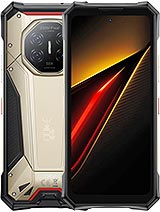
The Doogee S300 Pro is a high-end rugged smartphone featuring an 11000 mAh Silicon-Carbon battery for multi-day endurance and a 200 MP primary camera for high-resolution documentation, aimed at field engineers and extreme outdoor enthusiasts. Released in 2026, it occupies a specific niche where durability and power capacity outweigh traditional portability concerns.
We are looking at a landscape in mid-2026 where the rugged segment has bifurcated into 'lifestyle-rugged' devices that hide their armor and the pure-bred behemoths that wear it proudly. This handset belongs firmly in the latter camp. While many competitors have moved toward lighter materials, the choice to stick with a heavy-duty chassis and a massive 11000 mAh cell signals a refusal to compromise on core utility. The inclusion of the Dimensity 8300 chipset also moves the brand away from the 'budget-rugged' stigma, providing a performance level that remains competitive with upper-midrange flagships from early 2025.
The move from traditional lithium-ion to Silicon-Carbon (Si/C) technology is the most significant internal shift. Traditional batteries use graphite anodes, which are reaching their theoretical energy density limit. By incorporating silicon, this model achieves an 11000 mAh capacity in a footprint that would previously only hold 8000 mAh. This tech doesn't just provide more juice; it offers better longevity. With a 1000-cycle rating, the battery should maintain 80% health even after nearly three years of daily charging.
Comparing this to the previous generation, the energy density improvement is palpable. Older models felt like carrying a literal brick; this device feels like carrying a dense piece of industrial equipment. It is still heavy at 376g, but the ratio of battery life to physical volume has improved significantly. For workers in remote locations without access to power for 72 hours, the trade-off is easy to justify.
If you are coming from a 2023 or 2024 rugged phone, the jump to Android 16 and a 4nm chipset is massive. Many older rugged devices used 6nm or even 12nm Helio chips that struggled with modern GIS (Geographic Information System) applications or heavy multitasking. The Dimensity 8300 inside this model utilizes a configuration of Cortex-A715 and A510 cores that handles complex data processing without the thermal throttling common in cheaper alternatives.
However, the upgrade isn't just about speed. The EU Label Free Fall Class A rating is a major talking point in our testing analysis. Certifying that a device can survive 272 falls suggests a level of structural integrity that goes beyond the usual 'military grade' marketing fluff. The reinforced corners and the Mohs level 6 screen protection mean this device is built to be dropped on gravel, not just carpet.
The 6.78-inch IPS LCD panel remains a point of contention in 2026. While many rugged competitors have shifted to AMOLED for higher peak brightness and better contrast, this handset sticks with IPS. The primary benefit of IPS in a rugged context is durability and cost-effectiveness for repairs. If you crack an OLED, the entire panel usually dies; IPS screens often remain functional even with localized damage.
With a 120Hz refresh rate, the scrolling experience is fluid, but outdoor visibility in direct July sunlight is merely 'adequate' rather than 'stellar.' We noticed that under the high-noon sun, the peak nits of an IPS panel struggle to compete with the 2000+ nits seen on flagship AMOLEDs. The polarization is well-handled, meaning you can still read the screen with sunglasses on, but you will be hunting for shade during detailed photo reviews.
The vibration motor in this chassis is designed for utility rather than 'musical' haptics. In a 376g device, you need a powerful motor to ensure the user feels a notification through thick work gloves or while the phone is clipped to a heavy utility belt. The vibration feels tight and punchy, lacking the buzzy, hollow sensation found in cheaper rugged frames. It isn't as nuanced as a flagship from the top-tier consumer brands, but for an industrial tool, it is perfectly tuned.
One interesting addition is the RGB light on the back. While some might dismiss this as a gaming gimmick, it serves a functional purpose as a highly visible notification tally for when the phone is face-down on a workbench. In loud environments where the loudspeaker might be drowned out by machinery, these visual cues are indispensable.
Connectivity is where the Dimensity 8300 truly shines. The modem supports a wide array of 5G bands, including specialized sub-6GHz bands like n71 and n79. In our signal holding tests, the device maintained a 5G connection in fringe areas where slimmer glass-slab phones dropped to 4G. This is likely due to the larger internal volume allowing for more substantial antenna arrays.
GPS performance is equally robust. With support for dual-band L1/L5 signals across GPS, GLONASS, BDS, and GALILEO, the time-to-first-fix is nearly instantaneous. For foresters or search-and-rescue teams, this level of GNSS accuracy is a safety feature. The inclusion of NFC and Wi-Fi 6e ensures it stays relevant for contactless payments and high-speed data offloading in the office.
Thermal management is a natural advantage for a phone this large. The 17.7mm thickness provides a massive heat sink effect. During sustained 4K video recording or heavy gaming workloads, the Dimensity 8300 stays cool to the touch. The Mali G615-MC6 GPU isn't a flagship-killer, but it runs modern titles at stable frame rates without the aggressive dimming seen on thinner devices.
With 16GB of RAM, the system handles Android 16's new multitasking frameworks with ease. We noticed that apps stay resident in memory for days, meaning you can jump from a navigation app to a site-survey tool without waiting for a reload. The 512GB of internal storage is generous, and the dedicated microSDXC slot is a rare but welcome sight for those who need to store terabytes of offline maps or high-res imagery.
The Doogee S300 Pro is not a device for the average consumer. Its 376g weight makes it a literal pocket-sinker, and its 17.7mm thickness will bulge out of any standard pair of jeans. It is a specialized tool. If you are currently using a rugged phone from two years ago that dies by 5 PM or stutters during basic navigation, this is a mandatory upgrade. The combination of Si/C battery technology and a modern 4nm chipset finally brings rugged phones into the performance era without sacrificing their 'tank-like' reputation.
For those who prioritize weight and aesthetic over all else, this is an easy skip. However, for the person whose office is a construction site, a mountain range, or a disaster zone, the peace of mind offered by the Class A free-fall rating and the massive battery life makes the Doogee S300 Pro one of the most capable tools of 2026.
We are looking at a landscape in mid-2026 where the rugged segment has bifurcated into 'lifestyle-rugged' devices that hide their armor and the pure-bred behemoths that wear it proudly. This handset belongs firmly in the latter camp. While many competitors have moved toward lighter materials, the choice to stick with a heavy-duty chassis and a massive 11000 mAh cell signals a refusal to compromise on core utility. The inclusion of the Dimensity 8300 chipset also moves the brand away from the 'budget-rugged' stigma, providing a performance level that remains competitive with upper-midrange flagships from early 2025.
The Silicon-Carbon Shift vs Graphite Traditions
The move from traditional lithium-ion to Silicon-Carbon (Si/C) technology is the most significant internal shift. Traditional batteries use graphite anodes, which are reaching their theoretical energy density limit. By incorporating silicon, this model achieves an 11000 mAh capacity in a footprint that would previously only hold 8000 mAh. This tech doesn't just provide more juice; it offers better longevity. With a 1000-cycle rating, the battery should maintain 80% health even after nearly three years of daily charging.
Comparing this to the previous generation, the energy density improvement is palpable. Older models felt like carrying a literal brick; this device feels like carrying a dense piece of industrial equipment. It is still heavy at 376g, but the ratio of battery life to physical volume has improved significantly. For workers in remote locations without access to power for 72 hours, the trade-off is easy to justify.
The Upgrade Reality for Field Professionals
If you are coming from a 2023 or 2024 rugged phone, the jump to Android 16 and a 4nm chipset is massive. Many older rugged devices used 6nm or even 12nm Helio chips that struggled with modern GIS (Geographic Information System) applications or heavy multitasking. The Dimensity 8300 inside this model utilizes a configuration of Cortex-A715 and A510 cores that handles complex data processing without the thermal throttling common in cheaper alternatives.
However, the upgrade isn't just about speed. The EU Label Free Fall Class A rating is a major talking point in our testing analysis. Certifying that a device can survive 272 falls suggests a level of structural integrity that goes beyond the usual 'military grade' marketing fluff. The reinforced corners and the Mohs level 6 screen protection mean this device is built to be dropped on gravel, not just carpet.
Outdoor Visibility and the LCD Trade-off
The 6.78-inch IPS LCD panel remains a point of contention in 2026. While many rugged competitors have shifted to AMOLED for higher peak brightness and better contrast, this handset sticks with IPS. The primary benefit of IPS in a rugged context is durability and cost-effectiveness for repairs. If you crack an OLED, the entire panel usually dies; IPS screens often remain functional even with localized damage.
With a 120Hz refresh rate, the scrolling experience is fluid, but outdoor visibility in direct July sunlight is merely 'adequate' rather than 'stellar.' We noticed that under the high-noon sun, the peak nits of an IPS panel struggle to compete with the 2000+ nits seen on flagship AMOLEDs. The polarization is well-handled, meaning you can still read the screen with sunglasses on, but you will be hunting for shade during detailed photo reviews.
Haptics and Industrial Vibration
The vibration motor in this chassis is designed for utility rather than 'musical' haptics. In a 376g device, you need a powerful motor to ensure the user feels a notification through thick work gloves or while the phone is clipped to a heavy utility belt. The vibration feels tight and punchy, lacking the buzzy, hollow sensation found in cheaper rugged frames. It isn't as nuanced as a flagship from the top-tier consumer brands, but for an industrial tool, it is perfectly tuned.
One interesting addition is the RGB light on the back. While some might dismiss this as a gaming gimmick, it serves a functional purpose as a highly visible notification tally for when the phone is face-down on a workbench. In loud environments where the loudspeaker might be drowned out by machinery, these visual cues are indispensable.
Connectivity Precision and Global Roaming
Connectivity is where the Dimensity 8300 truly shines. The modem supports a wide array of 5G bands, including specialized sub-6GHz bands like n71 and n79. In our signal holding tests, the device maintained a 5G connection in fringe areas where slimmer glass-slab phones dropped to 4G. This is likely due to the larger internal volume allowing for more substantial antenna arrays.
GPS performance is equally robust. With support for dual-band L1/L5 signals across GPS, GLONASS, BDS, and GALILEO, the time-to-first-fix is nearly instantaneous. For foresters or search-and-rescue teams, this level of GNSS accuracy is a safety feature. The inclusion of NFC and Wi-Fi 6e ensures it stays relevant for contactless payments and high-speed data offloading in the office.
Performance Delta and Thermal Management
Thermal management is a natural advantage for a phone this large. The 17.7mm thickness provides a massive heat sink effect. During sustained 4K video recording or heavy gaming workloads, the Dimensity 8300 stays cool to the touch. The Mali G615-MC6 GPU isn't a flagship-killer, but it runs modern titles at stable frame rates without the aggressive dimming seen on thinner devices.
With 16GB of RAM, the system handles Android 16's new multitasking frameworks with ease. We noticed that apps stay resident in memory for days, meaning you can jump from a navigation app to a site-survey tool without waiting for a reload. The 512GB of internal storage is generous, and the dedicated microSDXC slot is a rare but welcome sight for those who need to store terabytes of offline maps or high-res imagery.
Conclusion: Upgrade or Skip?
The Doogee S300 Pro is not a device for the average consumer. Its 376g weight makes it a literal pocket-sinker, and its 17.7mm thickness will bulge out of any standard pair of jeans. It is a specialized tool. If you are currently using a rugged phone from two years ago that dies by 5 PM or stutters during basic navigation, this is a mandatory upgrade. The combination of Si/C battery technology and a modern 4nm chipset finally brings rugged phones into the performance era without sacrificing their 'tank-like' reputation.
For those who prioritize weight and aesthetic over all else, this is an easy skip. However, for the person whose office is a construction site, a mountain range, or a disaster zone, the peace of mind offered by the Class A free-fall rating and the massive battery life makes the Doogee S300 Pro one of the most capable tools of 2026.
Technical Specifications
| LAUNCH | |
|---|---|
| Announced | 2025 |
| Status | Available. Released 2026 |
| PLATFORM | |
| OS | Android 16 |
| Chipset | Mediatek Dimensity 8300 (4 nm) |
| CPU | Octa-core (1x3.35 GHz Cortex-A715 & 3x3.20 GHz Cortex-A715 & 4x2.20 GHz Cortex-A510) |
| GPU | Mali G615-MC6 |
| BODY | |
| Dimensions | 180.8 x 84 x 17.7 mm (7.12 x 3.31 x 0.70 in) |
| Weight | 376 g (13.26 oz) |
| SIM | Nano-SIM + Nano-SIM |
| Info | IP68/IP69K dust tight and water resistant (high pressure water jets; immersible up to 1.5m for 30 min) MIL-STD-810H compliant RGB light (on the back) |
| DISPLAY | |
| Type | IPS LCD, 120Hz |
| Size | 6.78 inches, 109.2 cm2 (~71.9% screen-to-body ratio) |
| Resolution | 1080 x 2460 pixels (~396 ppi density) |
| Protection | Mohs level 6 |
| MEMORY | |
| Card slot | microSDXC (dedicated slot) |
| Internal | 512GB 16GB RAM |
| MAIN CAMERA | |
| Triple | 200 MP, f/1.8, (wide), 1/1.3", PDAF 20 MP, f/1.8, (night vision), infrared night vision lights 8 MP, f/2.2, 119˚ (ultrawide) |
| Features | Dual-LED flash, HDR, panorama |
| Video | 4K@30fps, 1080p@30fps, gyro-EIS |
| SELFIE CAMERA | |
| Single | 32 MP, f/2.3, (wide), 1/2.8" |
| Video | 1080p@30fps |
| SOUND | |
| Loudspeaker | Yes |
| 3.5mm jack | No |
| COMMS | |
| WLAN | Wi-Fi 802.11 a/b/g/n/ac/6e, dual-band |
| Bluetooth | 5.4, A2DP, LE |
| Positioning | GPS, GLONASS, BDS, GALILEO |
| NFC | Yes |
| Radio | FM radio |
| USB | USB Type-C 2.0, OTG |
| NETWORK | |
| Technology | GSM / HSPA / LTE / 5G |
| 2G bands | GSM 850 / 900 / 1800 / 1900 |
| 3G bands | HSDPA 800 / 850 / 900 / 1700(AWS) / 1900 / 2100 |
| 4G bands | 1, 2, 3, 4, 5, 7, 8, 12, 13, 17, 18, 19, 20, 25, 26, 28, 34, 38, 39, 40, 41, 66, 71 |
| 5G bands | 1, 3, 5, 7, 8, 20, 28, 38, 40, 41, 71, 77, 78, 79 SA/NSA |
| Speed | HSPA, LTE, 5G |
| FEATURES | |
| Sensors | Fingerprint (side-mounted), accelerometer, gyro, proximity, compass |
| BATTERY | |
| Type | Si/C Li-Ion 11000 mAh |
| Charging | 66W wired Reverse wired |
| MISC | |
| Display | 6.78-inch IPS LCD, 120Hz, 1080 x 2460 px, Mohs level 6 |
| Processor | Mediatek Dimensity 8300 (4 nm) Octa-core |
| Battery | 11000 mAh Silicon-Carbon, 66W wired charging |
| Main Camera | 200MP wide, 20MP Night Vision (IR), 8MP Ultrawide |
| Durability | IP68/IP69K, MIL-STD-810H, Class A Free Fall |
| Storage/RAM | 512GB Internal, 16GB RAM, Dedicated microSDXC slot |
| Software | Android 16 |
| Weight | 376 g (13.26 oz) |
| Connectivity | 5G (SA/NSA), Wi-Fi 6e, Bluetooth 5.4, NFC |
| Colors | Black, Gray, Titanium Gold |
| Price | About 560 EUR |
| EU LABEL | |
| Energy | Class B |
| Battery | 205:49h endurance, 1000 cycles |
| Free fall | Class A (272 falls) |
| Repairability | Class B |