The Supreme Cinematic Powerhouse - OnePlus Pad 4 Is the Ultimate Entertainment Hub
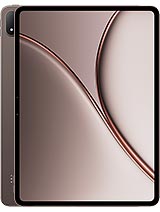
Overview
The Cinema in Your Backpack
OnePlus Pad 4 is a flagship media-centric tablet featuring a 13.2-inch 144Hz IPS LCD with 68 billion colors and the Snapdragon 8 Elite Gen 5 processor, designed for enthusiasts who demand desktop-class performance and theatrical immersion in a portable form factor. Released in April 2026, it enters a competitive market as a direct rival to established high-end slates, prioritizing screen real estate and massive battery capacity over cellular mobility.
While the industry often pivots toward OLED panels, this slate doubles down on IPS technology refined to its absolute peak. The 13.2-inch canvas provides a sprawling 530 cm2 of viewing area. With a resolution of 2400 x 3392, the pixel density sits at a sharp 315 ppi. This is critical for a device of this size; lower densities would reveal the sub-pixel grid when held at a standard arm's length. The hardware potential here is focused squarely on visual fidelity. By utilizing a 12-bit panel capable of rendering 68 billion colors, this device eliminates the color banding often seen in standard 10-bit displays during high-contrast HDR scenes.
Screen and Audio Deep Dive
We must discuss the 12-bit color depth, an engineering feat for an IPS panel in 2026. Most competing tablets still utilize 10-bit panels, which can only produce 1.07 billion colors. The jump to 68 billion means that sunset gradients in 4K Dolby Vision content appear perfectly smooth, without the digital artifacts that plague lesser screens. Peak brightness hits 1000 nits in High Brightness Mode (HBM). While this ensures visibility in sunlit environments, buyers should understand the trade-off: an IPS panel cannot achieve the true, infinite blacks of an OLED. In a pitch-black room, letterboxing on movies will appear as a very dark gray rather than a total void. However, the 144Hz refresh rate combined with OxygenOS 16 creates a level of fluid motion that feels more consistent than variable-rate OLEDs that sometimes struggle with low-brightness flickering.
Audio is where this model truly pulls ahead of the pack. It houses an 8-speaker stereo array. Most premium slates stop at four. These eight drivers create a wide soundstage that actually mimics a small soundbar. High-frequency details remain crisp due to the 24-bit/192kHz Hi-Res audio support, and the sheer volume output is enough to fill a medium-sized bedroom without distortion. If you prefer wireless audio, the inclusion of Bluetooth 6.0 and aptX HD ensures that high-fidelity streams remain stable even in environments crowded with signal interference. It is a complete sensory package that rarely requires external peripherals to feel immersive.
Software Longevity
Android 16 serves as the foundation here, layered with OxygenOS 16. In our analysis of the 2026 software landscape, this version of the OS focuses heavily on windowed multitasking and cross-device integration. With the Snapdragon 8 Elite Gen 5 under the hood—featuring the Oryon V3 Phoenix architecture—there is an immense amount of overhead. The 4.6 GHz peak clock speeds on the large cores mean that basic OS tasks barely utilize 10% of the chip's potential. This suggests the tablet will remain fast for at least four to five years of major software updates.
Will it slow down in two years? Highly unlikely. The transition to the 3nm process for the Gen 5 chipset means thermal efficiency is at an all-time high. Even as apps become more resource-heavy by 2028, the octa-core configuration is built to handle sustained heavy loads. OnePlus has a track record of maintaining its 'Fast and Smooth' mantra, and given the sheer hardware headroom provided by 12GB of RAM in the upper tier, the software experience should remain snappy well into the late 2020s.
Bloatware and Ads
OxygenOS 16 maintains a relatively clean profile, but it is not entirely devoid of pre-installed software. You will find the usual suite of brand-specific utility apps for notes, weather, and community forums. Fortunately, the aggressive ad-injection seen in some budget competitors is absent here. Most pre-installed third-party apps can be uninstalled immediately. This is vital for a productivity-focused device; a clean notification shade is mandatory for maintaining focus. While we did notice some 'recommendations' within the global search tool, these can be toggled off in the settings menu, leaving a professional environment for work or play.
Storage Speed
This slate utilizes UFS 4.1 storage. This is the 2026 standard for high-end mobile devices, offering incremental but noticeable speed increases over UFS 4.0. For the user, this translates to near-instantaneous app installations and zero lag when scrubbing through massive 4K video files stored locally. When transferring a 50GB video project via the USB Type-C 3.2 port, the bandwidth is sufficient to handle the data stream without bottlenecking. Whether you choose the 256GB or 512GB model, the read and write speeds remain consistent, which is essential for professional workflows that involve large datasets or high-resolution media editing.
Gaming Performance
The Adreno 840 GPU is the star of the show for gamers. In 2026, mobile ray tracing is no longer a gimmick; it is a standard feature in flagship titles. The Snapdragon 8 Elite Gen 5 handles these complex lighting calculations with surprising ease. During extended sessions of intensive open-world RPGs, the frame rate stays locked at 120fps or 144fps depending on the game's optimization. The large 13.2-inch surface area also acts as a natural heat sink, allowing the internals to stay cool longer than a smaller smartphone would.
However, there is a weight trade-off. At 672 grams, this is a heavy device. Holding it for more than 30 minutes of handheld gaming will likely lead to wrist fatigue. We recommend using a controller or propping the slate up with a stand for long sessions. The aluminum back and frame feel incredibly sturdy, but that metal construction contributes to the heft. It is a desktop-replacement level of power, and it carries the weight to match.
Final Thoughts
OnePlus Pad 4 represents a definitive peak for IPS-based media tablets. By combining a massive 13380 mAh battery with a class-leading 8-speaker system and a 12-bit color panel, it carves out a niche for users who value a cinematic experience above all else. While the lack of cellular connectivity and GPS limits its utility as a travel-first device, it is arguably the best living-room companion available today. For those who want a portable cinema that can pull double duty as a high-end gaming machine and a productivity hub, the OnePlus Pad 4 is an easy recommendation.
Technical Specifications
| LAUNCH | |
|---|---|
| Announced | 2026, April 24 |
| Status | Available. Released 2026, April 30 |
| PLATFORM | |
| OS | Android 16, OxygenOS 16 |
| Chipset | Qualcomm SM8850-AC Snapdragon 8 Elite Gen 5 (3 nm) |
| CPU | Octa-core (2x4.6 GHz Oryon V3 Phoenix L + 6x3.62 GHz Oryon V3 Phoenix M) |
| GPU | Adreno 840 |
| BODY | |
| Dimensions | 289.7 x 209.8 x 5.9 mm (11.41 x 8.26 x 0.23 in) |
| Weight | 672 g (1.48 lb) |
| Build | Glass front, aluminum frame, aluminum back |
| SIM | No |
| Info | Stylus support |
| DISPLAY | |
| Type | IPS LCD, 68B colors, Dolby Vision, 144Hz, 700 nits (typ), 1000 nits (HBM) |
| Size | 13.2 inches, 530.0 cm2 (~87.2% screen-to-body ratio) |
| Resolution | 2400 x 3392 pixels (~315 ppi density) |
| MEMORY | |
| Card slot | No |
| Internal | 256GB 8GB RAM, 512GB 12GB RAM |
| Info | UFS 4.1 |
| MAIN CAMERA | |
| Single | 13 MP |
| Features | LED flash |
| Video | 4K@30fps, 1080p@30ps, gyro-EIS |
| SELFIE CAMERA | |
| Single | 8 MP |
| Video | 1080p@30fps |
| SOUND | |
| Loudspeaker | Yes, with stereo speakers (8 speakers) |
| 3.5mm jack | No |
| Info | 24-bit/192kHz Hi-Res audio |
| COMMS | |
| WLAN | Wi-Fi 802.11 a/b/g/n/ac/6/7, dual-band |
| Bluetooth | 6.0, A2DP, LE, aptX HD |
| Positioning | No |
| NFC | No |
| Radio | No |
| USB | USB Type-C 3.2, OTG, accessory connector pins |
| NETWORK | |
| Technology | No cellular connectivity |
| 2G bands | N/A |
| 3G bands | N/A |
| 4G bands | N/A |
| GPRS | No |
| EDGE | No |
| FEATURES | |
| Sensors | Accelerometer, proximity (accessories only), gyro, compass |
| BATTERY | |
| Type | 13380 mAh |
| Charging | 80W wired |
| MISC | |
| Display | 13.2-inch IPS LCD, 144Hz, 68B colors, 1000 nits (HBM) |
| Chipset | Qualcomm Snapdragon 8 Elite Gen 5 (3 nm) |
| CPU | Octa-core (2x4.6 GHz Oryon V3 Phoenix L + 6x3.62 GHz Oryon V3 Phoenix M) |
| Memory | Up to 512GB UFS 4.1, 12GB RAM |
| Battery | 13380 mAh with 80W wired charging |
| Audio | 8-speaker stereo system, 24-bit/192kHz Hi-Res |
| OS | Android 16, OxygenOS 16 |
| Build | Aluminum frame and back, glass front |
| Connectivity | Wi-Fi 7, Bluetooth 6.0, USB-C 3.2 |
| Colors | Dune Glow, Sage Mist |
| Price | About 600 EUR |