The True Economic Cost of the Free Motorola Moto G06 Carrier Deal
Overview
The Illusion of the Zero-Dollar Phone
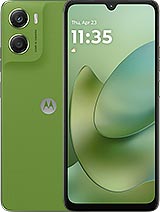
Motorola Moto G06 is a budget smartphone featuring a 6.88-inch IPS LCD and a 5200mAh battery, aimed at cost-conscious consumers seeking high durability at a low entry price. Released in late 2025, it competes with other sub-$150 devices by focusing on chassis resilience and long-term battery health rather than raw processing power or high-resolution display technology.
We see this device frequently bundled as a 'free' upgrade on basic carrier plans. However, the financial reality is more complex. While the hardware lists for just under $120, signing a 24-month contract to secure it 'for free' often locks users into higher monthly service fees. In the world of budget tech economics, we advise looking at the total cost of ownership. If the plan costs $15 more per month than a prepaid equivalent, that 'free' phone effectively costs you $360 over two years. At that price, the value proposition of this specific hardware collapses.
Resilience Over Refinement in the Build
The physical construction reveals where the investment went. While many competitors at this price point use brittle, glossy plastics, this model utilizes a silicone polymer (eco leather) back. This material selection provides superior grip and resistance to oily fingerprints. More importantly, it is less likely to shatter upon impact compared to traditional glass or hard plastic backings. The handset also carries a Class A Free Fall certification, surviving up to 270 falls in testing, which is an industrial-grade metric rarely seen in the consumer budget space.
With an IP64 rating, the device is completely dust-tight and can survive splashes from any direction. It is not submersible, so users should avoid drops into pools or sinks. However, for those working in dusty environments or using their phone in light rain, this level of protection provides a safety net that many entry-level rivals lack. The choice of Gorilla Glass 3 for the front, rated at Mohs level 4, offers basic scratch resistance, though we still recommend a screen protector for sand or pocket debris.
At 194 grams, the weight feels substantial but balanced. The plastic frame is a necessary cost-cutting measure, but the structural integrity feels solid enough for daily abuse. The handset measures 171.4 mm in height, making it a very tall device. Users with smaller hands should be aware that one-handed operation is virtually impossible here, especially when trying to reach the top of the nearly 7-inch display.
The High-Refresh Low-Resolution Compromise
The 6.88-inch IPS LCD is a study in trade-offs. We are pleased to see a 120Hz refresh rate at this price point, which ensures that system animations and social media scrolling look fluid. However, this smoothness is offset by the 720 x 1640 resolution. At roughly 260 pixels per inch, the screen lacks the sharpness required for crisp text or high-definition video. Fine details in photos often appear soft, and jagged edges are visible if you hold the phone at a standard reading distance.
Outdoor visibility is another hurdle. While the peak brightness is sufficient for indoor use or overcast days, the panel struggles against direct September sunlight. The lack of an OLED's infinite contrast means blacks look dark gray, and colors can appear washed out when the backlight is pushed to its limit. Furthermore, the polarization layer can make the screen difficult to view when wearing certain types of sunglasses—a common issue for budget IPS panels.
We also noticed significant bezel thickness, particularly at the bottom 'chin' of the device. The waterdrop notch for the 8MP selfie camera feels slightly dated in an era where hole-punch cutouts have trickled down to the budget tier. However, for users who prioritize screen size for maps or large-print text, the sheer surface area of this panel remains a functional asset.
Navigating the Sensory Experience
Haptics are often where [budget phones](/trend/best-budget-phones-2026/) reveal their true nature, and this model is no exception. The vibration motor feels loose and 'buzzy.' Instead of the sharp, precise taps found on premium devices, this handset produces a lingering rattle that can be heard across a quiet room. We recommend turning off haptic feedback for typing to save battery and avoid the tactile annoyance of the vibrating chassis.
On the audio front, the inclusion of stereo speakers is a major win. Most budget phones stick to a single bottom-firing speaker that is easily muffled. Having sound come from both ends of the device creates a much more balanced media experience, even if the speakers lack deep bass. The 3.5mm headphone jack remains a critical feature for the value-hunter, allowing the use of inexpensive wired buds without needing a dongle.
The side-mounted fingerprint sensor is integrated into the power button. In our assessment, this is the most logical placement for a budget device. It is faster and more reliable than the cheap under-display optical sensors often found in [mid-range phones](/trend/best-mid-range-phones-2026/). The physical click of the button combined with the biometric scan makes for a seamless entry into the OS, provided your thumb is clean and dry.
Connectivity Limitations in a High-Speed Era
The Mediatek Helio G81 Ultra chipset powers the device, and while 'Ultra' sounds impressive, it is an optimized 12nm chip designed for efficiency, not speed. This is a 4G LTE device. In September 2025, with 5G networks now the standard in most urban areas, the lack of 5G is a significant bottleneck. While 4G speeds are sufficient for web browsing and standard video streaming, users will notice slower download speeds for large apps or high-res files.
GPS performance is adequate for basic turn-by-turn navigation. The device supports GPS, GALILEO, and GLONASS, ensuring it can lock onto multiple satellite constellations. However, the lack of a compass sensor in some regional models can make 'walking mode' in maps frustrating, as the phone may struggle to identify which direction you are facing while standing still. We recommend checking local regional specs for NFC support, as it is market-dependent and essential for contactless payments.
Signal stability on 4G bands is reliable. The antenna placement within the plastic frame helps maintain a steady connection even in fringe signal areas. For users in rural locations where 5G has yet to penetrate, this 4G focus might actually be a benefit, as the modem isn't constantly hunting for a non-existent 5G signal and draining the battery in the process.
Biometric Integration and Daily Access
Security is handled by the aforementioned side-mounted sensor and a basic 2D face unlock via the 8MP front camera. The face unlock is convenient but lacks the security of a 3D sensor; it can be fooled by high-resolution photos and struggles in low light. For banking apps and secure logins, we strongly advise sticking to the fingerprint scanner or a strong PIN.
Software-wise, the device runs Android 15. Motorola typically keeps the UI very close to 'stock' Android, which helps the modest 4GB or 8GB of RAM keep the system running smoothly. However, with only a Mali-G52 MC2 GPU, gaming is limited to casual titles. Trying to run heavy games like Genshin Impact or Warzone Mobile results in significant frame drops and heat build-up. This is a tool for communication and information, not a gaming rig.
Storage options are generous, with up to 256GB internal and a dedicated microSDXC slot. This is vital for users who want to carry their music or video library offline. Given the low resolution of the screen, downloading standard-definition video is a smart way to maximize storage while keeping data costs low. The dedicated slot means you don't have to choose between a second SIM card and extra storage.
Evaluating the Long-Term Cost of Ownership
The 5200mAh battery is the standout feature for longevity. It is rated for 1200 cycles, meaning it can likely last three to four years of daily charging before the capacity significantly degrades. This aligns with the Class A Repairability rating, suggesting that the phone is designed to be kept in service rather than discarded. The 10W wired charging is the biggest pain point. A full charge takes over three hours, making it essential to charge the device overnight.
From an economist's perspective, this phone is a 'utility' buy. It offers zero prestige but high functional survival. At $119.50, you are paying for the battery and the ruggedness. If you can buy it unlocked and pair it with a low-cost MVNO plan, the math works in your favor. If you are forced into a high-tier contract to get it for free, the carrier is the only one winning that deal.
Ultimately, the Motorola Moto G06 serves a specific niche: the user who breaks phones frequently and needs a large-screen device that won't die halfway through a shift. It is a pragmatic choice in an increasingly expensive market, provided you understand the limitations of its 720p display and 10W charging speed.
Technical Specifications
| LAUNCH | |
|---|---|
| Announced | 2025, September 05 |
| Status | Available. Released 2025, September 23 |
| PLATFORM | |
| OS | Android 15 |
| Chipset | Mediatek Helio G81 Ultra (12 nm) |
| CPU | Octa-core (2x2.0 GHz Cortex-A75 & 6x1.7 GHz Cortex-A55) |
| GPU | Mali-G52 MC2 |
| BODY | |
| Dimensions | 171.4 x 77.5 x 8.3 mm (6.75 x 3.05 x 0.33 in) |
| Weight | 194 g (6.84 oz) |
| Build | Glass front (Gorilla Glass 3), plastic frame, silicone polymer back (eco leather) |
| SIM | Nano-SIM + Nano-SIM |
| Info | IP64 dust tight and water resistant (water splashes) |
| DISPLAY | |
| Type | IPS LCD, 120Hz |
| Size | 6.88 inches, 112.4 cm2 (~84.6% screen-to-body ratio) |
| Resolution | 720 x 1640 pixels (~260 ppi density) |
| Protection | Corning Gorilla Glass 3, Mohs level 4 |
| MEMORY | |
| Card slot | microSDXC (dedicated slot) |
| Internal | 64GB 4GB RAM, 128GB 4GB RAM, 256GB 4GB RAM, 256GB 8GB RAM |
| MAIN CAMERA | |
| Single | 50 MP, f/1.8, (wide), PDAF |
| Features | LED flash, HDR |
| Video | 1080p@30fps |
| SELFIE CAMERA | |
| Single | 8 MP, f/2.1, (wide), 1.12µm |
| Features | HDR |
| Video | 1080p@30fps |
| SOUND | |
| Loudspeaker | Yes, with stereo speakers |
| 3.5mm jack | Yes |
| COMMS | |
| WLAN | Wi-Fi 802.11 a/b/g/n/ac, dual-band |
| Bluetooth | Yes |
| Positioning | GPS, GALILEO, GLONASS |
| NFC | Yes (market/region dependent) |
| Radio | No |
| USB | USB Type-C 2.0 |
| NETWORK | |
| Technology | GSM / HSPA / LTE |
| 2G bands | GSM 850 / 900 / 1800 / 1900 |
| 3G bands | HSDPA 850 / 900 / 1900 / 2100 |
| 4G bands | 1, 3, 5, 7, 8, 20, 28, 38, 40, 41 - Europe |
| Info | 1, 2, 3, 5, 7, 8, 18, 19, 20, 26, 28, 38, 40, 41 - MEA |
| Speed | HSPA, LTE |
| FEATURES | |
| Sensors | Fingerprint (side-mounted), accelerometer, proximity |
| BATTERY | |
| Type | 5200 mAh |
| Charging | 10W wired |
| MISC | |
| Colors | Pantone: Laurel Oak, Arabesque, Tapestry, Tendril |
| Models | XT2535-1, XT2535-2, XT2535-3, XT2535-14 |
| Price | $ 99.50 / € 123.52 |
| EU LABEL | |
| Energy | Class A |
| Battery | 55:21h endurance, 1200 cycles |
| Free fall | Class A (270 falls) |
| Repairability | Class A |