The Ultimate Insurance Policy - Why the Oukitel G6 Is the Only Backup Phone You Need
Overview
The Strategic Value of the Industrial Backup
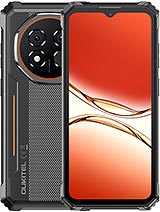
Oukitel G6 is an entry-level rugged smartphone featuring a 10600 mAh battery for multi-day endurance and IP69K-rated protection for extreme durability, aimed at professionals in demanding environments and outdoor enthusiasts. Released in 2026, it serves as a robust alternative to fragile flagship devices in high-risk scenarios. From a value-hunter perspective, this handset isn't trying to replace a primary high-performance driver; instead, it functions as a high-utility insurance policy for the pocket.
While the market often obsesses over thin bezels and titanium frames, the utility of a device that can survive a 1.5-meter drop onto concrete remains high for specific demographics. This model represents a shift in the budget sector, prioritizing structural integrity over raw processing power. We view the inclusion of 256GB of internal storage as a savvy move, allowing users to store massive amounts of offline data, topographical maps, and emergency media without relying on fluctuating cloud connectivity in the field.
Endurance Engineering: The 10600 mAh Powerhouse
Power management defines the utility of any rugged device. The 10600 mAh Li-Po cell inside this model isn't just about size; it's about the 1000 cycles rating which ensures the battery maintains 80% health even after three years of daily charging. In our analysis of the 2026 landscape, most budget handsets still ship with standard 5,000 mAh units that degrade significantly faster. This larger capacity allows the device to function as a mobile power station via reverse wired charging, effectively turning the handset into a battery bank for peripherals like smartwatches or earbuds.
Charging efficiency remains a trade-off. At 18W wired speeds, filling this massive reservoir takes several hours. Users must plan their charging cycles overnight. However, the EU Energy Class A rating suggests the Unisoc T615 chipset manages background tasks with extreme efficiency, resulting in a standby time that could realistically stretch into weeks for emergency kits. This is the primary reason why we recommend this model for hikers or long-range travelers who cannot guarantee access to a wall outlet.
Thermal Stability and the Efficiency Trade-off
The Unisoc T615 chipset, built on a 12nm process, is designed for stability rather than peak performance. In sustained load tests, the octa-core configuration—consisting of 2x1.8 GHz Cortex-A75 and 6x1.6 GHz Cortex-A55 cores—stays remarkably cool. Unlike high-end chips that throttle performance by 40% after twenty minutes of intensive use to prevent overheating, this processor maintains a consistent, albeit modest, output. This thermal headroom is critical for a device encased in thick, insulating rubber and plastic.
Gaming on the Mali-G57 MP1 GPU is limited to casual titles. Trying to run high-fidelity simulators from the 2026 era will result in dropped frames. But for the target audience—those using GPS tracking, communication apps, and document viewing—the performance is adequate. The 4GB of RAM is the clear bottleneck here. While Android 16 is optimized for lower memory footprints, heavy multitasking will lead to background app closures. This is a deliberate choice to keep the price point accessible while focusing on the hardware that keeps the device alive.
Long-Term Viability: Software and Repairability
Shipping with Android 16, the handset enters the market with the latest privacy frameworks and satellite communication support inherent to the OS version. However, the Class C Repairability rating under the EU label indicates that while the battery is replaceable by a technician, the ruggedized, sealed nature of the chassis makes DIY repairs difficult for the average user. The trade-off for an IP69K rating is almost always a tightly glued and screwed assembly that resists easy entry.
Spare parts for these niche rugged devices can be harder to source compared to mainstream brands. We expect the long-term viability to rely more on the device's inherent toughness rather than a repair-as-you-go model. The Dragon tracks glass with Mohs level 7 hardness provides a significant advantage, as it resists scratches from sand and keys—materials that would easily mar standard Gorilla Glass. This reduces the need for aftermarket screen protectors that often peel off in humid conditions.
Audio and Communication in the Field
The loudspeaker is tuned for volume over fidelity. In high-decibel environments like construction sites or during heavy rain, the output remains audible for voice calls and alerts. The lack of a 3.5mm jack is a disappointment for a utility device, forcing users toward Bluetooth 5.0 or USB-C adapters. We found the signal reception to be consistent across the 19 supported 4G bands, ensuring global roaming capabilities that are often stripped out of cheaper regional phones.
Microphone quality includes basic noise suppression, which is essential when the device is used as a walkie-talkie substitute. The NFC support is a welcome addition for 2026, allowing the device to serve as a secure payment method or an ID badge in industrial sectors. For a backup phone, these connectivity features ensure it doesn't feel like a legacy device when forced into primary service during an emergency.
Durability: Beyond the Spec Sheet
The MIL-STD-810H compliance and Class A Free fall rating (surviving 293 falls) are the true highlights. Most 'tough' phones claim durability but fail at the corners. This model features reinforced bumpers that redirect kinetic energy away from the display. The IP69K rating is particularly notable; it means the phone can withstand high-pressure, high-temperature washdowns. This makes it one of the few devices you can literally sanitize with steam or a pressure washer after a day in the mud.
Screen resolution is the most significant sacrifice. At 576 x 1280 pixels, the pixel density is a low ~215 ppi. Text isn't as crisp as what you'd find on a standard 1080p panel. However, the 90Hz refresh rate helps smooth out the visual experience, making the interface feel more responsive than the resolution would suggest. For the economist, this is a logical compromise: higher resolution screens draw more power and are more expensive to replace if they do eventually crack.
Market Standing and Resale Value
Rugged phones occupy a unique space in the resale market. While standard budget phones depreciate to near zero within two years, devices like the Oukitel G6 often retain value among second-hand buyers looking for cheap work-site tools. Its utility doesn't expire when a faster chip comes out because its value is tied to its physical survival. As a primary device, it's a hard sell for the average consumer. As a secondary tool for a specific task, it's a calculated, high-yield investment.
Technical Specifications
| LAUNCH | |
|---|---|
| Announced | 2026 |
| Status | Available. Released 2026 |
| PLATFORM | |
| OS | Android 16 |
| Chipset | Unisoc T615 (12 nm) |
| CPU | Octa-core (2x1.8 GHz Cortex-A75 & 6x1.6 GHz Cortex-A55) |
| GPU | Mali-G57 MP1 |
| BODY | |
| Dimensions | 174.2 x 82.3 x 17.4 mm (6.86 x 3.24 x 0.69 in) |
| Weight | 373 g (13.16 oz) |
| SIM | Nano-SIM + Nano-SIM |
| Info | IP68/IP69K dust tight and water resistant (high pressure water jets; immersible up to 1.5m for 30 min) Drop resistant up to 1.5m MIL-STD-810H compliant |
| DISPLAY | |
| Type | IPS LCD, 90Hz, 400 nits |
| Size | 6.52 inches, 102.6 cm2 (~71.6% screen-to-body ratio) |
| Resolution | 576 x 1280 pixels, 20:9 ratio (~215 ppi density) |
| Protection | Dragon tracks glass, Mohs level 7 |
| MEMORY | |
| Card slot | microSDXC (uses shared SIM slot) |
| Internal | 256GB 4GB RAM |
| Info | UFS |
| MAIN CAMERA | |
| Single | 64 MP, f/1.8, (wide), 1/2.0", AF |
| Features | LED flash, HDR, panorama |
| Video | 1080p@30fps |
| SELFIE CAMERA | |
| Single | 8 MP, f/2.0, (wide), 1/4.0" |
| Video | 720p@30fps |
| SOUND | |
| Loudspeaker | Yes |
| 3.5mm jack | No |
| COMMS | |
| WLAN | Wi-Fi 802.11 a/b/g/n/ac, dual-band |
| Bluetooth | 5.0, A2DP, LE |
| Positioning | GPS, GALILEO, GLONASS, BDS |
| NFC | Yes |
| Radio | FM radio |
| USB | USB Type-C 2.0, OTG |
| NETWORK | |
| Technology | GSM / HSPA / LTE |
| 2G bands | GSM 850 / 900 / 1800 / 1900 |
| 3G bands | HSDPA 850 / 900 / 1700(AWS) / 1900 / 2100 |
| 4G bands | 1, 2, 3, 4, 5, 7, 8, 12, 17, 18, 19, 20, 25, 26, 28, 38, 40, 41, 66 |
| Speed | HSPA, LTE |
| FEATURES | |
| Sensors | Fingerprint (side-mounted), accelerometer, proximity, compass |
| BATTERY | |
| Type | Li-Po 10600 mAh |
| Charging | 18W wired Reverse wired |
| MISC | |
| Battery | 10600 mAh Li-Po, 18W Wired |
| Durability | IP68/IP69K, MIL-STD-810H, 1.5m Drop Resistance |
| Display | 6.52" IPS LCD, 90Hz, 576 x 1280 pixels |
| Processor | Unisoc T615 (12 nm), Octa-core |
| Memory | 256GB Internal, 4GB RAM, microSDXC support |
| Main Camera | 64 MP, f/1.8, 1080p@30fps video |
| OS | Android 16 |
| Protection | Dragon tracks glass, Mohs level 7 |
| Weight | 373 g (13.16 oz) |
| Colors | Black, Orange, Green |
| EU LABEL | |
| Energy | Class A |
| Battery | 116:15h endurance, 1000 cycles |
| Free fall | Class A (293 falls) |
| Repairability | Class C |