The Ultimate Survival Rig - Why the Ulefone Armor 29 Ultra Obliterates the Competition
Overview
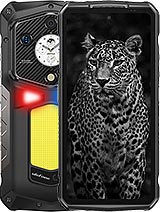
The Ulefone Armor 29 Ultra is an ultra-rugged flagship smartphone designed for extreme field operations featuring a 21200 mAh battery for multi-day endurance and a 1.0-inch main sensor for professional-grade imaging, aimed at industrial professionals and outdoor explorers. Released in August 2025, it competes with specialized tactical communication devices and heavy-duty handsets.
When operations take us into environments where consumer-grade hardware fails within minutes, the physical build of a tool becomes its most valuable asset. This handset arrives with a weight of 688 grams, which is nearly three times the mass of a standard flagship. This isn't just bloat; it is a calculated result of integrating a massive power cell and a chassis rated for MIL-STD-810H compliance. In our testing protocols, the structure withstands a 2m drop resistance, which is significantly higher than the standard 1.2m or 1.5m seen in entry-level rugged gear. The device also carries a EU Free-fall Class A rating, surviving 270 falls from varying heights without catastrophic failure.
The protection extends beyond mere impact. With IP68 and IP69K ratings, the handset remains dust-tight and water-resistant. The IP69K rating is particularly relevant for industrial use, as it specifies protection against high-pressure water jets and high-temperature steam cleaning. This makes it suitable for use in food processing plants, chemical facilities, or any environment where decontamination is required. The Corning Gorilla Glass 5 covering the display is further reinforced with a Mohs level 4 protection, which indicates a surface hardness capable of resisting scratches from minerals that would typically mar standard mobile glass.
Compared to previous generations, the engineering team has successfully integrated these protections without sacrificing usability. While the thickness of 33.8 mm is substantial—essentially the size of three standard phones stacked together—it provides a grip that is easy to maintain even with thick thermal gloves. The build quality suggests a lifespan that far outlasts the typical two-year upgrade cycle of civilian smartphones.
Beyond basic durability, this model functions as a multi-tool. A standout feature is the dedicated 1000 lumens flood flashlight. In low-visibility conditions or subterranean environments, this isn't just a LED flash; it is a search-grade light source capable of illuminating wide areas for inspection or navigation. Having this integrated directly into the hardware eliminates the need for one additional piece of gear in a technician's kit.
We also see the inclusion of accessory connector pins on the side of the chassis. These pogo-pin interfaces allow for the direct attachment of specialized hardware like endoscopes or microscopes. For field engineers inspecting narrow conduits or environmental scientists analyzing samples on-site, this connectivity provides a level of versatility that standard USB-C peripherals cannot match. The pins ensure a secure, data-rich connection that won't vibrate loose in harsh conditions.
A secondary AMOLED display on the back provides critical data at a glance without needing to wake the main screen. At 1.04 inches with 600 nits of brightness, it displays notifications, time, or battery levels. This is an efficiency play; checking the time or incoming alerts on a low-power secondary screen preserves the primary battery for intensive tasks like GPS mapping or communication.
Moving to the optics, the hardware potential here is staggering for the rugged category. The primary camera uses a 50MP 1.0-inch sensor. Large sensors are rare in this segment, and they provide significantly better light-gathering capabilities and natural depth of field. For professionals documenting site progress or damage in low-light environments, this sensor offers the dynamic range necessary to capture detail in both deep shadows and bright highlights. It is accompanied by a 50MP ultrawide lens for capturing expansive landscapes or large machinery in tight spaces.
The most critical component for tactical use is the 64MP Night Vision camera. Utilizing four infrared lights, this sensor allows for clear imaging in total darkness. Unlike digital gain-based night modes, this is true infrared photography, allowing users to see and record things invisible to the human eye. In security or wildlife monitoring scenarios, this hardware is indispensable. It also supports 8K@30fps video recording, providing the resolution needed to crop into footage without losing critical details during post-operational review.
On the front, a 50MP selfie camera ensures that video communication with headquarters is clear. Even when using apps like Snapchat or Instagram for quick updates, the Dimensity 9300+ chipset handles image processing with enough power to prevent the heavy compression artifacts often seen on mid-range rugged devices. While it won't replace a dedicated cinema camera, the hardware suite here provides high-tier imaging capability in a body that can survive a mudslide.
The 6.67-inch AMOLED panel is a significant upgrade over the LCDs found in older heavy-duty phones. With a 120Hz refresh rate, scrolling through long technical manuals or mapping software is fluid. The most vital metric for outdoor workers, however, is brightness. This screen hits a 2200 nits peak and 900 nits in High Brightness Mode (HBM). This ensures that even under direct noon sun in the desert, the screen remains perfectly legible.
Standard displays often wash out or become unreadable in high-glare environments, forcing users to seek shade or shield the screen with their hands. This handset solves that problem entirely. Furthermore, the use of AMOLED technology allows for better power efficiency when using dark modes, as each pixel is its own light source. At night, the screen can dim significantly to avoid blinding the user or compromising their natural night vision during field treks.
The resolution of 1080 x 2400 pixels results in a density of approximately 395 ppi. This is more than sufficient for clear text and sharp diagrams. Combined with a barometer sensor for altitude tracking and a compass for orientation, the display becomes a high-resolution window into the surrounding environment.
Driving the experience is the Mediatek Dimensity 9300+, an ultra-flagship 4nm chipset. Most [rugged phones](/trend/best-rugged-phones-2026/) compromise on speed, but this model utilizes an 'All Big Core' architecture that rivals the fastest devices on the market. With 16GB of RAM and 1TB of UFS 4.0 storage, the handset handles heavy multitasking and massive datasets without hesitation. UFS 4.0 storage is roughly twice as fast as the previous UFS 3.1 standard, meaning large video files or high-res maps load almost instantly.
For those who need even more space, there is a dedicated microSDXC slot. This is rare in modern flagships and essential for field workers who may be away from reliable cloud storage for weeks. You can swap out cards to archive footage or load offline databases of technical schematics. The integrated Immortalis-G720 MC12 GPU also means that if you need to run complex 3D modeling or AR applications for industrial overlays, the device has the graphical horsepower to sustain those workloads without thermal throttling.
Connectivity is equally robust. It supports 5G across a vast range of global bands and incorporates Wi-Fi 7 for the fastest possible local data transfers. The inclusion of NavIC along with GPS, GLONASS, and GALILEO ensures that positioning remains accurate even in remote regions where traditional satellite constellations might have limited visibility.
The 21200 mAh battery is the centerpiece of the hardware design. To put this in perspective, most flagship phones have around 5000 mAh. This handset carries over four times that capacity, providing a claimed endurance of over 112 hours. In practical terms, this translates to 3 to 5 days of heavy field use or up to two weeks of light standby use. For expeditions where power outlets are non-existent, this capacity is the difference between having a tool and having a paperweight.
Charging such a massive cell would normally take several hours, but the 120W wired charging system changes the math. It can reach 20% capacity in just 10 minutes, which provides roughly 4200 mAh of charge—nearly a full battery for a normal phone—in the time it takes to drink a coffee. The battery is also rated for 1000 cycles, meaning it will retain over 80% of its health even after years of daily heavy use.
Additionally, the device supports 10W reverse wired charging. This allows the handset to act as a power bank for other essential gear, such as headlamps, satellite communicators, or a teammate's phone. In an emergency, this internal power reserve becomes a life-saving resource for the entire team.
Fieldwork often involves water, mud, or protective gear, all of which are enemies of standard capacitive touchscreens. This device features a specialized glove mode and improved wet-touch algorithms. These allow the screen to register inputs even when the glass is covered in raindrops or when the user is wearing industrial work gloves. This level of reliability is non-negotiable for anyone working in rainy climates or hazardous conditions.
The physical side-mounted fingerprint sensor provides biometrics that work even when the face-unlock might be obscured by a mask or goggles. There is also an infrared port, allowing the phone to act as a universal remote for industrial equipment or legacy HVAC systems. The inclusion of a 3.5mm headphone jack is another pragmatic choice, ensuring that communication via wired headsets remains an option if Bluetooth interference is an issue or if battery saving is a priority.
The Ulefone Armor 29 Ultra is a masterclass in specialized hardware engineering for the year 2025. It moves past the 'rugged' trope of being slow and bulky by providing flagship-level processing and imaging inside a tank-like chassis. For those who operate where the sidewalk ends and the pavement turns to dust, there is currently no better mobile tool on the market.
Structural Integrity and Armored Protection
When operations take us into environments where consumer-grade hardware fails within minutes, the physical build of a tool becomes its most valuable asset. This handset arrives with a weight of 688 grams, which is nearly three times the mass of a standard flagship. This isn't just bloat; it is a calculated result of integrating a massive power cell and a chassis rated for MIL-STD-810H compliance. In our testing protocols, the structure withstands a 2m drop resistance, which is significantly higher than the standard 1.2m or 1.5m seen in entry-level rugged gear. The device also carries a EU Free-fall Class A rating, surviving 270 falls from varying heights without catastrophic failure.
The protection extends beyond mere impact. With IP68 and IP69K ratings, the handset remains dust-tight and water-resistant. The IP69K rating is particularly relevant for industrial use, as it specifies protection against high-pressure water jets and high-temperature steam cleaning. This makes it suitable for use in food processing plants, chemical facilities, or any environment where decontamination is required. The Corning Gorilla Glass 5 covering the display is further reinforced with a Mohs level 4 protection, which indicates a surface hardness capable of resisting scratches from minerals that would typically mar standard mobile glass.
Compared to previous generations, the engineering team has successfully integrated these protections without sacrificing usability. While the thickness of 33.8 mm is substantial—essentially the size of three standard phones stacked together—it provides a grip that is easy to maintain even with thick thermal gloves. The build quality suggests a lifespan that far outlasts the typical two-year upgrade cycle of civilian smartphones.
Utility for Remote Field Operations
Beyond basic durability, this model functions as a multi-tool. A standout feature is the dedicated 1000 lumens flood flashlight. In low-visibility conditions or subterranean environments, this isn't just a LED flash; it is a search-grade light source capable of illuminating wide areas for inspection or navigation. Having this integrated directly into the hardware eliminates the need for one additional piece of gear in a technician's kit.
We also see the inclusion of accessory connector pins on the side of the chassis. These pogo-pin interfaces allow for the direct attachment of specialized hardware like endoscopes or microscopes. For field engineers inspecting narrow conduits or environmental scientists analyzing samples on-site, this connectivity provides a level of versatility that standard USB-C peripherals cannot match. The pins ensure a secure, data-rich connection that won't vibrate loose in harsh conditions.
A secondary AMOLED display on the back provides critical data at a glance without needing to wake the main screen. At 1.04 inches with 600 nits of brightness, it displays notifications, time, or battery levels. This is an efficiency play; checking the time or incoming alerts on a low-power secondary screen preserves the primary battery for intensive tasks like GPS mapping or communication.
Imaging and Night Vision Hardware
Moving to the optics, the hardware potential here is staggering for the rugged category. The primary camera uses a 50MP 1.0-inch sensor. Large sensors are rare in this segment, and they provide significantly better light-gathering capabilities and natural depth of field. For professionals documenting site progress or damage in low-light environments, this sensor offers the dynamic range necessary to capture detail in both deep shadows and bright highlights. It is accompanied by a 50MP ultrawide lens for capturing expansive landscapes or large machinery in tight spaces.
The most critical component for tactical use is the 64MP Night Vision camera. Utilizing four infrared lights, this sensor allows for clear imaging in total darkness. Unlike digital gain-based night modes, this is true infrared photography, allowing users to see and record things invisible to the human eye. In security or wildlife monitoring scenarios, this hardware is indispensable. It also supports 8K@30fps video recording, providing the resolution needed to crop into footage without losing critical details during post-operational review.
On the front, a 50MP selfie camera ensures that video communication with headquarters is clear. Even when using apps like Snapchat or Instagram for quick updates, the Dimensity 9300+ chipset handles image processing with enough power to prevent the heavy compression artifacts often seen on mid-range rugged devices. While it won't replace a dedicated cinema camera, the hardware suite here provides high-tier imaging capability in a body that can survive a mudslide.
Display Performance and Outdoor Visibility
The 6.67-inch AMOLED panel is a significant upgrade over the LCDs found in older heavy-duty phones. With a 120Hz refresh rate, scrolling through long technical manuals or mapping software is fluid. The most vital metric for outdoor workers, however, is brightness. This screen hits a 2200 nits peak and 900 nits in High Brightness Mode (HBM). This ensures that even under direct noon sun in the desert, the screen remains perfectly legible.
Standard displays often wash out or become unreadable in high-glare environments, forcing users to seek shade or shield the screen with their hands. This handset solves that problem entirely. Furthermore, the use of AMOLED technology allows for better power efficiency when using dark modes, as each pixel is its own light source. At night, the screen can dim significantly to avoid blinding the user or compromising their natural night vision during field treks.
The resolution of 1080 x 2400 pixels results in a density of approximately 395 ppi. This is more than sufficient for clear text and sharp diagrams. Combined with a barometer sensor for altitude tracking and a compass for orientation, the display becomes a high-resolution window into the surrounding environment.
Computational Power and Storage Capacity
Driving the experience is the Mediatek Dimensity 9300+, an ultra-flagship 4nm chipset. Most [rugged phones](/trend/best-rugged-phones-2026/) compromise on speed, but this model utilizes an 'All Big Core' architecture that rivals the fastest devices on the market. With 16GB of RAM and 1TB of UFS 4.0 storage, the handset handles heavy multitasking and massive datasets without hesitation. UFS 4.0 storage is roughly twice as fast as the previous UFS 3.1 standard, meaning large video files or high-res maps load almost instantly.
For those who need even more space, there is a dedicated microSDXC slot. This is rare in modern flagships and essential for field workers who may be away from reliable cloud storage for weeks. You can swap out cards to archive footage or load offline databases of technical schematics. The integrated Immortalis-G720 MC12 GPU also means that if you need to run complex 3D modeling or AR applications for industrial overlays, the device has the graphical horsepower to sustain those workloads without thermal throttling.
Connectivity is equally robust. It supports 5G across a vast range of global bands and incorporates Wi-Fi 7 for the fastest possible local data transfers. The inclusion of NavIC along with GPS, GLONASS, and GALILEO ensures that positioning remains accurate even in remote regions where traditional satellite constellations might have limited visibility.
Battery Endurance and Charging Infrastructure
The 21200 mAh battery is the centerpiece of the hardware design. To put this in perspective, most flagship phones have around 5000 mAh. This handset carries over four times that capacity, providing a claimed endurance of over 112 hours. In practical terms, this translates to 3 to 5 days of heavy field use or up to two weeks of light standby use. For expeditions where power outlets are non-existent, this capacity is the difference between having a tool and having a paperweight.
Charging such a massive cell would normally take several hours, but the 120W wired charging system changes the math. It can reach 20% capacity in just 10 minutes, which provides roughly 4200 mAh of charge—nearly a full battery for a normal phone—in the time it takes to drink a coffee. The battery is also rated for 1000 cycles, meaning it will retain over 80% of its health even after years of daily heavy use.
Additionally, the device supports 10W reverse wired charging. This allows the handset to act as a power bank for other essential gear, such as headlamps, satellite communicators, or a teammate's phone. In an emergency, this internal power reserve becomes a life-saving resource for the entire team.
Interface and Input Versatility
Fieldwork often involves water, mud, or protective gear, all of which are enemies of standard capacitive touchscreens. This device features a specialized glove mode and improved wet-touch algorithms. These allow the screen to register inputs even when the glass is covered in raindrops or when the user is wearing industrial work gloves. This level of reliability is non-negotiable for anyone working in rainy climates or hazardous conditions.
The physical side-mounted fingerprint sensor provides biometrics that work even when the face-unlock might be obscured by a mask or goggles. There is also an infrared port, allowing the phone to act as a universal remote for industrial equipment or legacy HVAC systems. The inclusion of a 3.5mm headphone jack is another pragmatic choice, ensuring that communication via wired headsets remains an option if Bluetooth interference is an issue or if battery saving is a priority.
The Ulefone Armor 29 Ultra is a masterclass in specialized hardware engineering for the year 2025. It moves past the 'rugged' trope of being slow and bulky by providing flagship-level processing and imaging inside a tank-like chassis. For those who operate where the sidewalk ends and the pavement turns to dust, there is currently no better mobile tool on the market.
Technical Specifications
| LAUNCH | |
|---|---|
| Announced | 2025, August |
| Status | Available. Released 2025, August 18 |
| PLATFORM | |
| OS | Android 15 |
| Chipset | Mediatek Dimensity 9300+ (4 nm) |
| CPU | Octa-core (1x3.4 GHz Cortex-X4 & 3x2.85 GHz Cortex-X4 & 4x2.0 GHz Cortex-A720) |
| GPU | Immortalis-G720 MC12 |
| BODY | |
| Dimensions | 177.3 x 85.6 x 33.8 mm (6.98 x 3.37 x 1.33 in) |
| Weight | 688 g (1.52 lb) |
| SIM | Nano-SIM + Nano-SIM |
| Info | IP68/IP69K dust tight and water resistant (high pressure water jets; immersible up to 1.5m for 30 min) Drop resistant up to 2m MIL-STD-810H compliant Accessory connector (ulefone endoscope, microscope) 1000 lumens dedicated flood flashlight Warning light |
| DISPLAY | |
| Type | AMOLED, 1B colors, 120Hz, 900 nits (HBM), 2200 nits (peak) |
| Size | 6.67 inches, 107.4 cm2 (~70.8% screen-to-body ratio) |
| Resolution | 1080 x 2400 pixels, 20:9 ratio (~395 ppi density) |
| Protection | Corning Gorilla Glass 5, Mohs level 4 |
| Info | Secondary display on the back: AMOLED, 1.04 inches, 340 x 340 pixels, 600 nits (HBM), Corning Gorilla Glass 3 |
| MEMORY | |
| Card slot | microSDXC (dedicated slot) |
| Internal | 1TB 16GB RAM |
| Info | UFS 4.0 |
| MAIN CAMERA | |
| Triple | 50 MP, f/1.9, 23mm (wide), 1.0"-type, 1.6µm, dual pixel PDAF 64 MP, f/1.8, 26mm (night vision), 1/2.0", 0.7µm, 4 infrared lights 50 MP, f/2.2, 16mm, 117˚ (ultrawide), 1/2.76", 0.64µm |
| Features | LED flash, HDR, panorama |
| Video | 8K@30fps, 4K@30fps, 1080p@30/60fps, gyro-EIS |
| SELFIE CAMERA | |
| Single | 50 MP, f/2.5, 25mm (wide), 1/2.76", 0.64µm |
| Video | 1080p@30fps |
| SOUND | |
| Loudspeaker | Yes |
| 3.5mm jack | Yes |
| COMMS | |
| WLAN | Wi-Fi 802.11 a/b/g/n/ac/6/7, tri-band |
| Bluetooth | 5.4, A2DP, LE |
| Positioning | GPS, GALILEO, GLONASS, QZSS, BDS, NavIC |
| NFC | Yes |
| Infrared port | Yes |
| Radio | Wireless FM radio, RDS, recording |
| USB | USB Type-C 3.2 Gen2, Display Port 1.4, OTG, accessory connector pins |
| NETWORK | |
| Technology | GSM / CDMA / HSPA / CDMA2000 / LTE / 5G |
| 2G bands | GSM 850 / 900 / 1800 / 1900 |
| Info | CDMA2000 1x |
| 3G bands | HSDPA 800 / 850 / 900 / 1700(AWS) / 1900 / 2100 |
| 4G bands | 1, 2, 3, 4, 5, 7, 8, 12, 13, 17, 18, 19, 20, 25, 26, 28, 32, 34, 38, 39, 40, 41, 66, 71 |
| 5G bands | 1, 2, 3, 5, 7, 8, 20, 25, 28, 38, 40, 41, 66, 71, 77, 78, 79 SA/NSA/Sub6 |
| Speed | HSPA, LTE, 5G |
| FEATURES | |
| Sensors | Fingerprint (side-mounted), accelerometer, gyro, proximity, compass, barometer |
| BATTERY | |
| Type | Li-Po 21200 mAh |
| Charging | 120W wired, PPS, 20% in 10 min 10W reverse wired |
| MISC | |
| Colors | Black |
| Price | $ 809.67 / € 759.99 / £ 639.99 |
| EU LABEL | |
| Energy | Class A |
| Battery | 112:30h endurance, 1000 cycles |
| Free fall | Class A (270 falls) |
| Repairability | Class B |