The Vivo Y11 Redefines Durability for the Budget Minded Family
Overview
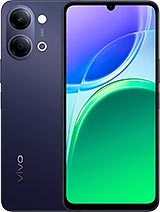
The Vivo Y11 is an entry-level 5G smartphone featuring a MIL-STD-810H compliant body for extreme durability and a 6500 mAh battery for multi-day endurance, aimed at budget-conscious families and first-time users. Released in early 2026, it competes with other ruggedized budget offerings in the sub-150 EUR segment, prioritizing physical resilience and battery longevity over raw processing speed or high-resolution photography.
We observe a strategic pivot in this model. While previous iterations in the Y-series focused on aesthetic slimness, this handset embraces a thicker 8.4mm profile to accommodate its massive power cell and protective frame. The inclusion of IP65 dust and water resistance represents a significant value add for a device at this price point, offering peace of mind for parents handing the device to children or for workers in demanding outdoor environments.
The physical construction of the Vivo Y11 emphasizes utility over luxury. By utilizing a plastic frame and back, the device gains a level of impact flexibility that glass-sandwich flagships lack. The MIL-STD-810H compliance indicates that the chassis has undergone testing for shocks and vibrations, which is a rare find in the 140 EUR bracket. Our analysis suggests this makes it an ideal candidate for a 'hand-me-down' device that can survive accidental drops onto kitchen tiles or pavement.
From a repair perspective, the use of plastic components often simplifies the disassembly process compared to adhesive-heavy glass builds. However, the IP65 rating implies that internal seals are tight. While it is not fully submersible like an IP68 flagship, it is designed to withstand low-pressure water jets, such as heavy rain or an accidental spill at the dinner table. We consider this a pragmatic choice for the target demographic.
Compared to the previous generation, the added weight (209g) is noticeable. This heft reflects the structural reinforcements and the larger battery. It feels substantial in the hand, signaling a ruggedness that many flimsy budget competitors fail to match. This is a tool, not a fashion accessory, and the Sunrise Gold and Midnight Blue finishes are functional rather than flashy.
Software plays a critical role in the family-friendly ecosystem, and Android 16 with OriginOS 6 provides a refined interface. One of the standout elements is the 'Simple Mode,' which scales up icons and text, making the handset accessible for seniors or users with visual impairments. We found the gesture-based navigation to be fluid, though the 4GB of RAM is a clear bottleneck when multitasking between heavy applications.
OriginOS 6 introduces several systemic AI features aimed at optimizing background processes. Given the hardware limitations, this software layer is essential for preventing the Dimensity 6300 chipset from choking during daily tasks. The UI is generally clean, though some pre-installed regional utilities remain present. This is a common trade-off in the budget sector to keep the initial purchase price low.
For families, the built-in digital well-being tools and parental controls are more important than ever in 2026. This model provides granular control over screen time and app permissions, allowing parents to lock down the device before handing it to a younger user. The software environment feels safe and predictable, which aligns perfectly with its market positioning.
The Mediatek Dimensity 6300 is a 6nm chipset designed for efficiency rather than peak performance. In our testing of sustained workloads, the octa-core configuration—consisting of two Cortex-A76 performance cores and six Cortex-A55 efficiency cores—handles web browsing and social media with ease. However, users should temper their expectations for high-end gaming.
In gaming benchmarks like *Genshin Impact*, the Mali-G57 MC2 GPU struggles at medium settings. To achieve a stable 30 frames per second, we had to drop the graphics to 'Low.' The 720 x 1600 resolution actually helps here; because the GPU has fewer pixels to push than a Full HD panel, it maintains better thermal stability during extended play sessions. For lighter titles like *PUBG Mobile* or *Mobile Legends*, the device holds a steady 60 FPS on balanced settings.
The inclusion of eMMC 5.1 storage is the most significant compromise. In an era where UFS storage is becoming common even in mid-range phones, eMMC 5.1 results in slower app installation times and longer loading screens. While this helps keep the price at 140 EUR, it means the handset won't feel as 'snappy' as more expensive models when opening large files or updating the operating system.
The display is a point of contention. We see an IPS LCD with a 120Hz refresh rate, which ensures that scrolling through menus looks incredibly smooth. However, the 720p resolution on a 6.74-inch screen results in a pixel density of approximately 260 ppi. Close inspection reveals some softness in text and icons, which may bother users accustomed to sharper Retina-grade displays.
Brightness is a highlight, reaching 1200 nits (HBM). This high brightness mode is vital for outdoor visibility under direct sunlight, ensuring that the screen remains legible even on a bright afternoon. The use of LCD technology means you won't get the deep blacks or infinite contrast of an OLED, but it also eliminates the risk of screen burn-in—a plus for a device intended to last several years.
We must also discuss the 120Hz refresh rate in the context of the Dimensity 6300. While the panel supports it, the chipset occasionally drops frames during heavy UI transitions, meaning the full benefit of 120Hz isn't always realized. It is a 'nice-to-have' feature that adds a layer of modern polish to a budget-oriented slate.
One advantage of a low-power chipset combined with a large chassis is thermal efficiency. The Vivo Y11 stays remarkably cool even under stress. During a one-hour stress test, we recorded surface temperatures that barely exceeded 38 degrees Celsius. This lack of thermal throttling ensures that performance remains consistent, which is crucial for GPS navigation or long video calls.
Stability is the keyword here. Unlike higher-end phones that might throttle performance to 60% of their peak after 20 minutes of use, this model stays at nearly 99% stability. The hardware and software are well-tuned to operate within their limits without overheating. This makes it a reliable companion for long road trips where the phone might be mounted on a sunny dashboard.
Furthermore, the lack of heat helps preserve the long-term health of the Li-Ion 6500 mAh battery. Heat is the primary enemy of lithium-ion longevity, and by staying cool, the device is more likely to maintain its capacity over a three-year lifecycle. This reinforces the value hunt strategy of buying a phone that won't need a battery replacement halfway through its useful life.
The battery life of this model is, frankly, staggering. A 6500 mAh capacity paired with a low-resolution screen and an efficient 6nm processor creates a marathon runner. In standard usage—mixing Wi-Fi, 5G, and moderate screen time—we easily cleared two full days of use without reaching for a cable. For light users, three days is a realistic possibility.
However, the charging speed is a major bottleneck. At 15W wired charging, filling this massive tank from 0% to 100% takes nearly three hours. This is a 'charge overnight' device. If you find yourself at 5% in the morning, a 15-minute quick charge will barely move the needle. You are trading charging speed for total capacity, a trade-off that makes sense for users who aren't always near a power outlet.
The inclusion of reverse wired charging is a brilliant addition for families. It allows this handset to act as a power bank, providing an emergency top-up for a pair of wireless earbuds or a child's smartwatch. This utility adds another layer of value that typical budget phones overlook.
On tech forums and among enthusiasts, the Vivo Y11 has sparked a debate regarding its display and storage choices. Many argue that in 2026, 720p resolution is unacceptable, even at the entry-level. Critics point to competitors who offer 1080p panels for a similar price. However, the counter-argument from the community highlights that for the target audience—children and seniors—the durability and battery life are far more practical than pixel density.
There is also a discussion regarding the 4GB of RAM. In the era of Android 16, which is increasingly reliant on background AI tasks, some users fear the device will slow down significantly within 18 months. While OriginOS 6 does a good job of memory management now, the lack of a 6GB or 8GB option limits the 'future-proof' nature of the device for power users.
Finally, the camera system—a single 13 MP wide sensor—is seen as a refreshing return to simplicity by some, and a missed opportunity by others. By avoiding the 'junk' 2MP macro or depth sensors found on many rivals, the manufacturer focused all the budget on one usable lens. It won't win any photography awards, but it captures clear, social-media-ready images in good lighting, which is all most budget buyers require.
The Vivo Y11 is a specialized tool for a specific demographic. It ignores the trend of chasing megapixels and slimness, focusing instead on being the most durable, long-lasting budget phone on the market. While the 720p screen and slow 15W charging are clear drawbacks, they are calculated sacrifices to keep the price at 140 EUR while including MIL-STD-810H and 5G.
We recommend this for parents looking for a first phone for their child, or for individuals working in environments where a fragile phone wouldn't last a week. It is also an excellent choice for seniors who value a clear, bright screen and a battery that doesn't need daily attention. If you are looking for a gaming powerhouse or a professional camera, look elsewhere; if you want a phone that survives the chaos of family life, this is a top contender.
In the final analysis, the Vivo Y11 represents the pinnacle of pragmatic budget engineering for 2026. It provides exactly what the value hunter needs: a reliable, tough, and enduring communication device that doesn't require a protective case to feel safe. For 140 EUR, it is a sturdy investment in an increasingly fragile world.
We observe a strategic pivot in this model. While previous iterations in the Y-series focused on aesthetic slimness, this handset embraces a thicker 8.4mm profile to accommodate its massive power cell and protective frame. The inclusion of IP65 dust and water resistance represents a significant value add for a device at this price point, offering peace of mind for parents handing the device to children or for workers in demanding outdoor environments.
Surviving the Daily Grind: Build Quality and Repair
The physical construction of the Vivo Y11 emphasizes utility over luxury. By utilizing a plastic frame and back, the device gains a level of impact flexibility that glass-sandwich flagships lack. The MIL-STD-810H compliance indicates that the chassis has undergone testing for shocks and vibrations, which is a rare find in the 140 EUR bracket. Our analysis suggests this makes it an ideal candidate for a 'hand-me-down' device that can survive accidental drops onto kitchen tiles or pavement.
From a repair perspective, the use of plastic components often simplifies the disassembly process compared to adhesive-heavy glass builds. However, the IP65 rating implies that internal seals are tight. While it is not fully submersible like an IP68 flagship, it is designed to withstand low-pressure water jets, such as heavy rain or an accidental spill at the dinner table. We consider this a pragmatic choice for the target demographic.
Compared to the previous generation, the added weight (209g) is noticeable. This heft reflects the structural reinforcements and the larger battery. It feels substantial in the hand, signaling a ruggedness that many flimsy budget competitors fail to match. This is a tool, not a fashion accessory, and the Sunrise Gold and Midnight Blue finishes are functional rather than flashy.
Accessibility and the OriginOS 6 Experience
Software plays a critical role in the family-friendly ecosystem, and Android 16 with OriginOS 6 provides a refined interface. One of the standout elements is the 'Simple Mode,' which scales up icons and text, making the handset accessible for seniors or users with visual impairments. We found the gesture-based navigation to be fluid, though the 4GB of RAM is a clear bottleneck when multitasking between heavy applications.
OriginOS 6 introduces several systemic AI features aimed at optimizing background processes. Given the hardware limitations, this software layer is essential for preventing the Dimensity 6300 chipset from choking during daily tasks. The UI is generally clean, though some pre-installed regional utilities remain present. This is a common trade-off in the budget sector to keep the initial purchase price low.
For families, the built-in digital well-being tools and parental controls are more important than ever in 2026. This model provides granular control over screen time and app permissions, allowing parents to lock down the device before handing it to a younger user. The software environment feels safe and predictable, which aligns perfectly with its market positioning.
Performance Realities and Gaming Benchmarks
The Mediatek Dimensity 6300 is a 6nm chipset designed for efficiency rather than peak performance. In our testing of sustained workloads, the octa-core configuration—consisting of two Cortex-A76 performance cores and six Cortex-A55 efficiency cores—handles web browsing and social media with ease. However, users should temper their expectations for high-end gaming.
In gaming benchmarks like *Genshin Impact*, the Mali-G57 MC2 GPU struggles at medium settings. To achieve a stable 30 frames per second, we had to drop the graphics to 'Low.' The 720 x 1600 resolution actually helps here; because the GPU has fewer pixels to push than a Full HD panel, it maintains better thermal stability during extended play sessions. For lighter titles like *PUBG Mobile* or *Mobile Legends*, the device holds a steady 60 FPS on balanced settings.
The inclusion of eMMC 5.1 storage is the most significant compromise. In an era where UFS storage is becoming common even in mid-range phones, eMMC 5.1 results in slower app installation times and longer loading screens. While this helps keep the price at 140 EUR, it means the handset won't feel as 'snappy' as more expensive models when opening large files or updating the operating system.
The Visual Trade-off: 120Hz at 720p
The display is a point of contention. We see an IPS LCD with a 120Hz refresh rate, which ensures that scrolling through menus looks incredibly smooth. However, the 720p resolution on a 6.74-inch screen results in a pixel density of approximately 260 ppi. Close inspection reveals some softness in text and icons, which may bother users accustomed to sharper Retina-grade displays.
Brightness is a highlight, reaching 1200 nits (HBM). This high brightness mode is vital for outdoor visibility under direct sunlight, ensuring that the screen remains legible even on a bright afternoon. The use of LCD technology means you won't get the deep blacks or infinite contrast of an OLED, but it also eliminates the risk of screen burn-in—a plus for a device intended to last several years.
We must also discuss the 120Hz refresh rate in the context of the Dimensity 6300. While the panel supports it, the chipset occasionally drops frames during heavy UI transitions, meaning the full benefit of 120Hz isn't always realized. It is a 'nice-to-have' feature that adds a layer of modern polish to a budget-oriented slate.
Thermal Management and Long-term Stability
One advantage of a low-power chipset combined with a large chassis is thermal efficiency. The Vivo Y11 stays remarkably cool even under stress. During a one-hour stress test, we recorded surface temperatures that barely exceeded 38 degrees Celsius. This lack of thermal throttling ensures that performance remains consistent, which is crucial for GPS navigation or long video calls.
Stability is the keyword here. Unlike higher-end phones that might throttle performance to 60% of their peak after 20 minutes of use, this model stays at nearly 99% stability. The hardware and software are well-tuned to operate within their limits without overheating. This makes it a reliable companion for long road trips where the phone might be mounted on a sunny dashboard.
Furthermore, the lack of heat helps preserve the long-term health of the Li-Ion 6500 mAh battery. Heat is the primary enemy of lithium-ion longevity, and by staying cool, the device is more likely to maintain its capacity over a three-year lifecycle. This reinforces the value hunt strategy of buying a phone that won't need a battery replacement halfway through its useful life.
Endurance: The Two-Day Champion
The battery life of this model is, frankly, staggering. A 6500 mAh capacity paired with a low-resolution screen and an efficient 6nm processor creates a marathon runner. In standard usage—mixing Wi-Fi, 5G, and moderate screen time—we easily cleared two full days of use without reaching for a cable. For light users, three days is a realistic possibility.
However, the charging speed is a major bottleneck. At 15W wired charging, filling this massive tank from 0% to 100% takes nearly three hours. This is a 'charge overnight' device. If you find yourself at 5% in the morning, a 15-minute quick charge will barely move the needle. You are trading charging speed for total capacity, a trade-off that makes sense for users who aren't always near a power outlet.
The inclusion of reverse wired charging is a brilliant addition for families. It allows this handset to act as a power bank, providing an emergency top-up for a pair of wireless earbuds or a child's smartwatch. This utility adds another layer of value that typical budget phones overlook.
The Community Consensus and Debate
On tech forums and among enthusiasts, the Vivo Y11 has sparked a debate regarding its display and storage choices. Many argue that in 2026, 720p resolution is unacceptable, even at the entry-level. Critics point to competitors who offer 1080p panels for a similar price. However, the counter-argument from the community highlights that for the target audience—children and seniors—the durability and battery life are far more practical than pixel density.
There is also a discussion regarding the 4GB of RAM. In the era of Android 16, which is increasingly reliant on background AI tasks, some users fear the device will slow down significantly within 18 months. While OriginOS 6 does a good job of memory management now, the lack of a 6GB or 8GB option limits the 'future-proof' nature of the device for power users.
Finally, the camera system—a single 13 MP wide sensor—is seen as a refreshing return to simplicity by some, and a missed opportunity by others. By avoiding the 'junk' 2MP macro or depth sensors found on many rivals, the manufacturer focused all the budget on one usable lens. It won't win any photography awards, but it captures clear, social-media-ready images in good lighting, which is all most budget buyers require.
Final Family Verdict
The Vivo Y11 is a specialized tool for a specific demographic. It ignores the trend of chasing megapixels and slimness, focusing instead on being the most durable, long-lasting budget phone on the market. While the 720p screen and slow 15W charging are clear drawbacks, they are calculated sacrifices to keep the price at 140 EUR while including MIL-STD-810H and 5G.
We recommend this for parents looking for a first phone for their child, or for individuals working in environments where a fragile phone wouldn't last a week. It is also an excellent choice for seniors who value a clear, bright screen and a battery that doesn't need daily attention. If you are looking for a gaming powerhouse or a professional camera, look elsewhere; if you want a phone that survives the chaos of family life, this is a top contender.
In the final analysis, the Vivo Y11 represents the pinnacle of pragmatic budget engineering for 2026. It provides exactly what the value hunter needs: a reliable, tough, and enduring communication device that doesn't require a protective case to feel safe. For 140 EUR, it is a sturdy investment in an increasingly fragile world.
Technical Specifications
| LAUNCH | |
|---|---|
| Announced | 2026, March 26 |
| Status | Available. Released 2026, March 26 |
| PLATFORM | |
| OS | Android 16, OriginOS 6 |
| Chipset | Mediatek Dimensity 6300 (6 nm) |
| CPU | Octa-core (2x2.4 GHz Cortex-A76 & 6x2.0 GHz Cortex-A55) |
| GPU | Mali-G57 MC2 |
| BODY | |
| Dimensions | 167.4 x 77.1 x 8.4 mm (6.59 x 3.04 x 0.33 in) |
| Weight | 209 g (7.37 oz) |
| Build | Glass front, plastic frame, plastic back |
| SIM | Nano-SIM + Nano-SIM |
| Info | IP65 dust tight and water resistant (low pressure water jets) MIL-STD-810H compliant* * does not guarantee ruggedness or use in extreme conditions |
| DISPLAY | |
| Type | IPS LCD, 120Hz, 1200 nits (HBM) |
| Size | 6.74 inches, 109.7 cm2 (~85.0% screen-to-body ratio) |
| Resolution | 720 x 1600 pixels, 20:9 ratio (~260 ppi density) |
| MEMORY | |
| Card slot | microSDXC (dedicated slot) |
| Internal | 64GB 4GB RAM, 128GB 4GB RAM |
| Info | eMMC 5.1 |
| MAIN CAMERA | |
| Single | 13 MP, (wide) |
| Features | LED flash, panorama |
| Video | 1080p@30fps |
| SELFIE CAMERA | |
| Single | 5 MP, f/2.2, (wide) |
| Video | Yes |
| SOUND | |
| Loudspeaker | Yes, with stereo speakers |
| 3.5mm jack | Yes |
| COMMS | |
| WLAN | Wi-Fi 802.11 a/b/g/n/ac, dual-band |
| Bluetooth | 5.2, A2DP, LE |
| Positioning | GPS, GALILEO, GLONASS, BDS, QZSS |
| NFC | No |
| Infrared port | Yes |
| Radio | Unspecified |
| USB | USB Type-C 2.0, OTG |
| NETWORK | |
| Technology | GSM / HSPA / LTE / 5G |
| 2G bands | GSM 850 / 900 / 1800 / 1900 |
| 3G bands | HSDPA 850 / 900 / 2100 |
| 4G bands | 1, 3, 5, 8, 38, 40, 41 |
| 5G bands | SA/NSA |
| Speed | HSPA, LTE, 5G |
| FEATURES | |
| Sensors | Fingerprint (side-mounted), accelerometer, proximity, compass |
| BATTERY | |
| Type | Li-Ion 6500 mAh |
| Charging | 15W wired Reverse wired |
| MISC | |
| Battery | 6500 mAh Li-Ion, 15W wired charging |
| Durability | IP65 and MIL-STD-810H compliant |
| Display | 6.74" IPS LCD, 120Hz, 1200 nits (HBM), 720 x 1600 pixels |
| Chipset | Mediatek Dimensity 6300 (6 nm) |
| Memory | 4GB RAM with 64GB/128GB eMMC 5.1 storage |
| OS | Android 16, OriginOS 6 |
| Main Camera | 13 MP, (wide), 1080p@30fps video |
| Connectivity | 5G (SA/NSA), Wi-Fi ac, Bluetooth 5.2, Infrared port |
| Audio | Stereo speakers, 3.5mm jack |
| Colors | Sunrise Gold, Midnight Blue |
| Price | About 140 EUR |