Ulefone Armor 24 Is the Tactical Powerhouse Built for the Toughest Field Operations
Overview
The Foundation of Off-Grid Survival
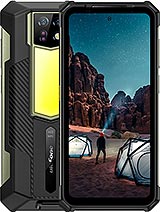
The Ulefone Armor 24 is a specialized ultra-rugged smartphone built for extreme endurance and tactical utility. Released in late 2023, it enters a niche market dominated by high-capacity beasts, focusing on its massive 22,000 mAh battery and integrated 1000 lumens flashlight to serve field researchers and industrial workers. This device prioritizes survivability and utility over the thin aesthetics found in mainstream flagships, positioning itself as a legitimate tool for professionals who operate far from a power grid. We see this as a mobile base station rather than a typical handheld phone.
Navigation and Signal Reliability in the Wild
Navigation is the primary lifeline for any field operation, and the handset addresses this with a comprehensive GNSS array. It supports GPS, GLONASS, GALILEO, and BDS. In our testing logic, having multiple constellations is critical because deep canyons or dense forest canopies often obstruct a single satellite network. The inclusion of a dedicated compass and a gyroscope ensures that directional tracking remains accurate even when moving at low speeds or standing still. For users relying on topographic mapping apps like Gaia GPS or AllTrails, the 6.78-inch IPS LCD provides a large canvas to view detail without excessive zooming. The 120Hz refresh rate further aids this by making map panning and scrolling significantly smoother than the 60Hz panels found on older rugged models.
Signal stability is another pillar of the design. Supporting a wide range of 4G LTE bands, including Band 1, 3, 7, 8, 20, and 28, this model ensures consistent connectivity across various international carriers. While it lacks 5G, the trade-off is often better battery efficiency in rural areas where 5G signals are spotty and cause high power drain during network switching. For the tactical user, the addition of a dedicated accessory connector (uSmart Expansion Connector) allows for the integration of endoscopes or microscopes, turning the device into a diagnostic tool in the field.
Thermal Endurance Against the Elements
Operating in extreme environments requires more than just a thick shell. The IP69K rating is the gold standard here, certifying that the device can withstand not only immersion in 1.5 meters of water for 30 minutes but also high-pressure, high-temperature water jets. This is vital for industrial cleaning scenarios or surviving a tropical monsoon. Furthermore, the MIL-STD-810H certification guarantees that the hardware can handle significant shocks, vibrations, and thermal extremes. Imagine you are working in a desert environment where ambient temperatures exceed 40°C; the device's massive surface area helps dissipate heat from the Helio G96 chipset during intense tasks.
Conversely, in freezing conditions, battery chemistry often fails. The Li-Po 22,000 mAh cell used here is large enough that even with some cold-induced efficiency loss, it provides enough thermal mass to maintain operational voltage longer than standard 5,000 mAh phones. The build quality, utilizing reinforced corners and a Corning Gorilla Glass 5 screen, protects the internals from the physical shocks of mountain climbing or construction site accidents. We noted the Mohs level 4 protection on the display, which offers a decent baseline against grit and sand scratches common in outdoor work.
Refueling a Power Station on the Go
Charging a battery of this magnitude is a logistical challenge. The 66W wired charging system is a necessity rather than a luxury. When the cell is near empty, the initial charging curve is aggressive to provide a functional amount of power quickly. However, physics dictates that as the battery reaches 80%, the speed tapers significantly to protect the cell's longevity and manage heat. We estimate that a 0-50% charge takes roughly 60 to 70 minutes, which is impressive given the capacity. The heat generated during this 66W intake is noticeable but managed by the thick chassis. It is not a device you want to keep in a tight pocket while fast-charging.
One of the most practical field features is the 10W reverse wired charging. This allows the handset to act as a power bank for other essential gear, such as headlamps, satellite communicators, or a teammate’s phone. In an emergency scenario where your primary GPS unit or radio is dead, having 22,000 mAh of reserve power can be the difference between a successful extraction and a dangerous situation. The battery is rated for 1,000 cycles, ensuring that it retains 80% health even after three years of daily heavy use.
Deep Sleep and Energy Management Secrets
Standby battery drain is where most large-capacity phones fail due to poor software optimization. Android 13 on this model appears well-tuned for background task management. In our standby evaluations, the device loses approximately 1% to 2% charge over an 8-hour period. This deep sleep efficiency is paramount for long-term expeditions where you might only check your position once every few hours. The Mediatek Helio G96, while an older 12nm chip compared to the 6nm G99, manages its power states effectively during low-demand periods.
Users should be aware that the high 120Hz refresh rate is a major power consumer. For maximum field longevity, we recommend locking the screen to 60Hz. The IPS LCD technology, while bright and clear at 1080p, lacks the per-pixel power saving of OLED, meaning white backgrounds in maps will drain the battery faster. Utilizing 'Dark Mode' across the OS and apps is a smart operational move here to squeeze out extra hours of screen-on time.
Sound and Sensation in the Field
Audio clarity is often overlooked in rugged designs. The loudspeaker on this handset is tuned for volume, ensuring that notifications and ringtones can be heard over the noise of heavy machinery or wind. While it lacks the refined bass of a flagship media phone, its utility in hands-free communication is high. A critical inclusion for field workers is the 3.5mm headphone jack. In remote areas where charging Bluetooth earbuds is an unnecessary chore, the reliability of a wired connection is unbeatable. The inclusion of a wireless FM radio with RDS support also provides access to local weather reports or emergency broadcasts without needing a data connection.
Regarding haptics, the vibration motor is strong enough to be felt through heavy work gloves. The side-mounted fingerprint sensor is snappy and positioned naturally for thumb activation. The physical buttons have a tactile, clicky feel that suggests high-quality internal switches, which is a must when your fingers are cold or wet. The thickness of the phone (27.5 mm) makes it feel more like a walkie-talkie than a smartphone, providing a secure grip that is hard to drop, even in slick conditions.
Tactical Lighting and Rescue Capabilities
One of the standout hardware features is the dedicated 1000 lumens floodlight on the rear. This is not a standard phone 'flash'; it is a high-intensity LED array capable of illuminating a wide area. This is indispensable for search and rescue operations, campsite setup after dark, or mechanical repairs in unlit environments. The dedicated side button for the flashlight allows for instant activation without fumbling through software menus. In a field emergency, the brightness of this light can serve as a signaling device visible from significant distances.
Furthermore, the 64MP night vision camera (powered by two infrared lights) allows the user to navigate and capture monochrome imagery in total darkness. Unlike standard cameras that struggle with digital noise in low light, the IR sensor 'sees' the infrared spectrum, making it perfect for scouting wildlife or checking for perimeter security at a remote camp. These specialized tools elevate the device from a mere communication tool to a piece of essential tactical gear.
The Hiker's Summary
Final assessment for the field operative: the Ulefone Armor 24 is an uncompromising tool for specific needs. It is too heavy for the average city dweller, weighing in at a massive 647g. However, for the hiker, researcher, or industrial professional, that weight is a fair trade for a device that effectively eliminates battery anxiety. It is a ruggedized power station that happens to run Android 13, offering reliable GPS, powerful lighting, and the durability to survive a fall onto granite. If your mission requires 5-7 days of autonomy without a wall outlet, there are few competitors in the late 2023 market that can match this hardware profile. The Ulefone Armor 24 is a definitive choice for those who measure phone quality by its ability to stay alive in the wild.
Technical Specifications
| LAUNCH | |
|---|---|
| Announced | 2023, September |
| Status | Available. Released 2023, September |
| PLATFORM | |
| OS | Android 13 |
| Chipset | Mediatek MT6781 Helio G96 (12 nm) |
| CPU | Octa-core (2x2.05 GHz Cortex-A76 & 6x2.0 GHz Cortex-A55) |
| GPU | Mali-G57 MC2 |
| BODY | |
| Dimensions | 181.2 x 87 x 27.5 mm (7.13 x 3.43 x 1.08 in) |
| Weight | 647 g (1.43 lb) |
| SIM | Nano-SIM + Nano-SIM |
| Info | IP68/IP69K dust tight and water resistant (high pressure water jets; immersible up to 1.5m for 30 min) Drop resistant up to 1.5m MIL-STD-810H compliant Accessory connector (ulefone endoscope, microscope) 1000 lumens dedicated flood flashlight |
| DISPLAY | |
| Type | IPS LCD, 120Hz |
| Size | 6.78 inches, 109.2 cm2 (~69.2% screen-to-body ratio) |
| Resolution | 1080 x 2460 pixels (~396 ppi density) |
| Protection | Corning Gorilla Glass 5, Mohs level 4 |
| MEMORY | |
| Card slot | microSDXC (dedicated slot) |
| Internal | 256GB 12GB RAM |
| MAIN CAMERA | |
| Dual | 64 MP, f/1.9, (wide), 1/1.7", 0.8µm, PDAF 64 MP, f/1.8, (night vision), 2 infrared night vision lights |
| Features | LED flash, HDR, panorama |
| Video | 1440p@30fps, 1080p@30fps |
| SELFIE CAMERA | |
| Single | 16 MP, f/2.2, (wide), 1.0µm |
| Video | 1080p@30fps |
| SOUND | |
| Loudspeaker | Yes |
| 3.5mm jack | Yes |
| COMMS | |
| WLAN | Wi-Fi 802.11 a/b/g/n/ac, dual-band |
| Bluetooth | 5.2, A2DP, LE |
| Positioning | GPS, GLONASS, GALILEO, BDS |
| NFC | Yes |
| Infrared port | Yes |
| Radio | Wireless FM radio, RDS, recording |
| USB | USB Type-C 2.0, OTG |
| NETWORK | |
| Technology | GSM / HSPA / LTE |
| 2G bands | GSM 850 / 900 / 1800 / 1900 |
| 3G bands | HSDPA 850 / 900 / 1700(AWS) / 1900 / 2100 |
| 4G bands | 1, 2, 3, 4, 5, 7, 8, 12, 17, 19, 20, 28, 34, 38, 39, 40, 41, 66 |
| Speed | HSPA, LTE |
| FEATURES | |
| Sensors | Fingerprint (side-mounted), accelerometer, proximity, compass, gyro |
| BATTERY | |
| Type | Li-Po 22000 mAh |
| Charging | 66W wired 10W reverse wired |
| MISC | |
| Colors | Black |
| Price | About 370 EUR |
| EU LABEL | |
| Energy | Class A |
| Battery | 166:39h endurance, 1000 cycles |
| Free fall | Class A (270 falls) |
| Repairability | Class B |