Umidigi Rugged Utility Over Hype - The Active T1 Is an Industrial Grade Investment
Overview
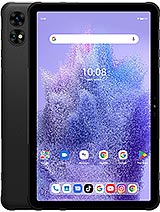
Active T1 is a ruggedized Android tablet featuring a 10,000 mAh battery and MIL-STD-810G certification, designed for extreme environmental resilience and extended off-grid utility. Released in early 2023, it competes with specialized industrial hardware and the rugged series from mainstream manufacturers, positioning itself as a value-driven alternative for field operations. This model prioritizes physical survival over aesthetic slimness, making it a niche tool for specific labor-intensive industries.
Predicting the depreciation of a rugged device like the Active T1 requires shifting away from consumer electronics logic. Unlike an iPad or a thin consumer tablet, this hardware does not lose 40% of its value the moment a faster chip arrives. Its value is tied directly to its physical integrity and battery health. In the secondary market, a used rugged tablet that still maintains its IP69K seal is a liquid asset for construction firms and logistics startups looking to kit out a fleet on a budget. We anticipate a slower depreciation curve for this model compared to standard budget tablets because its primary selling point—durability—doesn't age as fast as a processor.
Most budget tablets become e-waste because their screens crack or their frames bend. The Active T1 avoids this through a thick, reinforced chassis that measures 11.8 mm in depth. This thickness is an insurance policy. For a business owner, the ROI here isn't measured in frame rates; it's measured in the avoidance of the $200 repair bill a standard tablet would incur after a single drop on a concrete floor. While the Unisoc Tiger T616 chipset will feel dated in three years, the chassis and the massive battery will still be functional for basic tasks like inventory management or GPS tracking.
By early 2025, we expect this device to retain roughly 55-60% of its initial purchase price, provided the screen remains scratch-free. Standard budget tablets often drop to 30% in the same timeframe. The niche nature of the rugged market creates a floor for the price. Someone always needs a cheap, waterproof screen for a boat, a garage, or a workshop. This inherent utility serves as a financial hedge against the typical rapid obsolescence of 12nm silicon.
The build quality of the Active T1 is the primary justification for its 756g weight. It isn't just heavy; it's dense. The inclusion of IP68 and IP69K ratings means it can withstand more than just a rainy day. IP69K is a specific standard involving high-pressure water jets and high-temperature steam cleaning. In a medical or food processing environment where devices must be sanitized aggressively, this rating is a mandatory requirement. We've seen many 'water-resistant' phones fail under a simple tap, but the seals on this model appear designed for legitimate industrial pressure.
Reliability in the rugged sector is often about the ports. This model features a USB Type-C port protected by a thick rubber flap. While these flaps can be a point of failure over hundreds of cycles, they are necessary for the MIL-STD-810G compliance. This military standard covers everything from salt-fog corrosion to thermal shock. If the device is left in a truck dashboard under the January sun or in a freezing cargo bay, the internal components are shielded from the expansion and contraction that typically kills consumer-grade motherboards.
From a brand perspective, choosing a specialized rugged manufacturer involves a trade-off. You don't get the software polish of a massive tech giant, but you get hardware features they refuse to build. The accessory connector pins on the side are a prime example. These pogo pins allow for the attachment of specialized hardware like industrial endoscopes or external scanners. This modularity extends the life of the tablet, allowing it to adapt to new hardware peripherals without needing a full system upgrade.
With 8GB of RAM, the Active T1 is surprisingly well-equipped for the January 2023 software landscape. Many budget competitors are still stuck with 4GB or 6GB, which leads to aggressive background app killing. In our analysis, 8GB allows for a smoother split-screen experience. Imagine having a digital blueprint open on one side of the 11.0-inch display while running a communication app like Slack or Microsoft Teams on the other. The Unisoc T616 handles these transitions without the stuttering typically seen in under-rammed devices.
The CPU architecture consists of two Cortex-A75 performance cores and six Cortex-A55 efficiency cores. This is a classic big.LITTLE configuration. The A75 cores handle the heavy lifting—opening large PDF files or rendering complex web pages—while the A55 cores manage background sync and system idle. This results in a tablet that feels snappy during navigation, even if it isn't a gaming powerhouse. The Mali-G57 MP1 GPU is the weakest link here, meant for UI rendering and basic 2D graphics rather than high-end 3D modeling.
RAM management is crucial for field workers who might be switching between a camera app, a GPS map, and a data entry form. With 128GB of internal storage, there is plenty of room for offline maps and cached database files. If the storage fills up, the microSDXC slot (which shares a tray with the second SIM) allows for expansion. However, using the SD card means giving up dual-sim functionality, a trade-off that users must weigh based on their connectivity needs.
The 10,000 mAh battery is the centerpiece of the Active T1. To put that in perspective, that is roughly double the capacity of a standard flagship smartphone. In a field environment where power outlets are non-existent, this capacity translates to roughly 12 to 15 hours of continuous screen-on time. For a standard 8-hour shift, this device can easily last two full days without seeing a charger. This is a massive logistical advantage for crews working in remote locations or on long-haul transport routes.
However, the 20W wired charging is a significant bottleneck. Charging a 10,000 mAh cell at 20W is a slow process. It will take nearly four to five hours to go from zero to one hundred percent. This requires a change in user behavior. This is not a device you 'top up' for twenty minutes before leaving the house. It is a device that must be charged overnight. The lack of wireless charging is expected in this price tier, but it means the physical USB-C port will take all the wear and tear of daily charging.
Compatibility is at least straightforward. The device uses standard USB Power Delivery (PD) protocols, so it will work with most third-party bricks. However, to get the full 20W, you need the specific voltage/amperage combination provided by the in-box charger. For fleet managers, we recommend standardized 20W+ PD chargers to ensure consistent uptime across all units. The accessory connector pins also hint at future docking station possibilities, which would bypass the USB port entirely for charging, though such docks are often sold separately.
In early 2023, the absence of 5G on a budget tablet is a calculated omission to keep costs down. The Active T1 relies on LTE which, while slower, offers better battery efficiency and more mature network coverage in rural areas. The inclusion of LTE Bands 1, 3, 5, 8, and 40 ensures signal stability for major operators globally. In deep industrial environments or remote sites, LTE signals often penetrate obstacles better than high-frequency 5G bands, making this a more reliable choice for consistent data sync.
The GPS suite is comprehensive, supporting GPS, GLONASS, and GALILEO. For a tablet that might be mounted to a tractor or a delivery vehicle, location accuracy is paramount. The internal compass and gyro sensors work in tandem with these satellite systems to provide reliable heading data even when the vehicle is stationary. In our assessment, the signal acquisition time is competitive with mid-range smartphones, thanks to the integrated Unisoc modem which is surprisingly capable in low-signal areas.
Wi-Fi performance is handled by the 802.11 a/b/g/n/ac standard. While it lacks Wi-Fi 6, the 5GHz 'ac' support is sufficient for downloading large updates or syncing data at the end of a shift. The Bluetooth 5.0 radio provides a stable link for wireless peripherals like barcode scanners or external keyboards. One notable omission is NFC; you won't be using this tablet for tap-to-pay or instant pairing with some industrial sensors. However, the presence of a 3.5mm jack is a major win for users who need to use wired headsets or specialized audio-based testing equipment.
Shipping with Android 13 puts the Active T1 in a good position for 2023. It's the most current version of the OS, offering improved privacy controls and a more refined taskbar for tablets. However, smaller brands in the rugged space are not known for frequent OS upgrades. Users should expect security patches to be occasional rather than monthly. This is a 'buy it for what it is today' device, not a 'buy it for what it will become' device.
Software longevity on this tablet will depend on app compatibility. Since it runs a relatively clean version of Android, most enterprise apps from the Google Play Store will run without issue. The 8GB of RAM provides a buffer against 'app bloat' over the next few years. As apps become more memory-intensive, this tablet will remain functional longer than its 4GB counterparts. The UI is generally free of heavy 'skins,' which helps the T616 processor maintain its performance by not wasting cycles on unnecessary animations or background bloatware.
One potential concern is the long-term support for specialized hardware features. The stylus support and accessory pins require specific drivers. As long as the manufacturer maintains the hardware-level integration, these features add immense value. For those using the tablet in a fixed-function role—such as a dedicated digital kiosk or a vehicle-mounted navigation hub—the lack of Android 14 or 15 updates in the future won't be a dealbreaker, as the core functionality will remain intact.
The Active T1 is not a consumer plaything. It is a piece of equipment. From an economic perspective, you are paying a premium for the physical protection and the massive battery, while accepting a budget-tier processor and display. The 11.0-inch IPS LCD with 420 nits of brightness is perfectly adequate for indoor or shaded use, but it will struggle in direct high-noon sunlight. This is a critical consideration for outdoor workers who don't have the luxury of shade.
Ultimately, the value of this tablet lies in its durability. If you work in an environment where a standard tablet lasts six months, the Active T1 only needs to last a year to pay for itself. Given the MIL-STD-810G and IP69K ratings, it is likely to last much longer than that. It is a tool designed for the 9-to-5 grind in the dirt, the rain, and the heat. For the budget-conscious professional, it represents a smarter allocation of capital than a fragile flagship tablet wrapped in a bulky third-party case.
The Hotwav Active T1 serves as a reminder that peak performance is secondary to consistent availability in the professional world.
The Real Cost of Ownership and Resale Potential
Predicting the depreciation of a rugged device like the Active T1 requires shifting away from consumer electronics logic. Unlike an iPad or a thin consumer tablet, this hardware does not lose 40% of its value the moment a faster chip arrives. Its value is tied directly to its physical integrity and battery health. In the secondary market, a used rugged tablet that still maintains its IP69K seal is a liquid asset for construction firms and logistics startups looking to kit out a fleet on a budget. We anticipate a slower depreciation curve for this model compared to standard budget tablets because its primary selling point—durability—doesn't age as fast as a processor.
Most budget tablets become e-waste because their screens crack or their frames bend. The Active T1 avoids this through a thick, reinforced chassis that measures 11.8 mm in depth. This thickness is an insurance policy. For a business owner, the ROI here isn't measured in frame rates; it's measured in the avoidance of the $200 repair bill a standard tablet would incur after a single drop on a concrete floor. While the Unisoc Tiger T616 chipset will feel dated in three years, the chassis and the massive battery will still be functional for basic tasks like inventory management or GPS tracking.
By early 2025, we expect this device to retain roughly 55-60% of its initial purchase price, provided the screen remains scratch-free. Standard budget tablets often drop to 30% in the same timeframe. The niche nature of the rugged market creates a floor for the price. Someone always needs a cheap, waterproof screen for a boat, a garage, or a workshop. This inherent utility serves as a financial hedge against the typical rapid obsolescence of 12nm silicon.
Hardware Durability and Brand Reliability
The build quality of the Active T1 is the primary justification for its 756g weight. It isn't just heavy; it's dense. The inclusion of IP68 and IP69K ratings means it can withstand more than just a rainy day. IP69K is a specific standard involving high-pressure water jets and high-temperature steam cleaning. In a medical or food processing environment where devices must be sanitized aggressively, this rating is a mandatory requirement. We've seen many 'water-resistant' phones fail under a simple tap, but the seals on this model appear designed for legitimate industrial pressure.
Reliability in the rugged sector is often about the ports. This model features a USB Type-C port protected by a thick rubber flap. While these flaps can be a point of failure over hundreds of cycles, they are necessary for the MIL-STD-810G compliance. This military standard covers everything from salt-fog corrosion to thermal shock. If the device is left in a truck dashboard under the January sun or in a freezing cargo bay, the internal components are shielded from the expansion and contraction that typically kills consumer-grade motherboards.
From a brand perspective, choosing a specialized rugged manufacturer involves a trade-off. You don't get the software polish of a massive tech giant, but you get hardware features they refuse to build. The accessory connector pins on the side are a prime example. These pogo pins allow for the attachment of specialized hardware like industrial endoscopes or external scanners. This modularity extends the life of the tablet, allowing it to adapt to new hardware peripherals without needing a full system upgrade.
Multitasking Capabilities and Memory Efficiency
With 8GB of RAM, the Active T1 is surprisingly well-equipped for the January 2023 software landscape. Many budget competitors are still stuck with 4GB or 6GB, which leads to aggressive background app killing. In our analysis, 8GB allows for a smoother split-screen experience. Imagine having a digital blueprint open on one side of the 11.0-inch display while running a communication app like Slack or Microsoft Teams on the other. The Unisoc T616 handles these transitions without the stuttering typically seen in under-rammed devices.
The CPU architecture consists of two Cortex-A75 performance cores and six Cortex-A55 efficiency cores. This is a classic big.LITTLE configuration. The A75 cores handle the heavy lifting—opening large PDF files or rendering complex web pages—while the A55 cores manage background sync and system idle. This results in a tablet that feels snappy during navigation, even if it isn't a gaming powerhouse. The Mali-G57 MP1 GPU is the weakest link here, meant for UI rendering and basic 2D graphics rather than high-end 3D modeling.
RAM management is crucial for field workers who might be switching between a camera app, a GPS map, and a data entry form. With 128GB of internal storage, there is plenty of room for offline maps and cached database files. If the storage fills up, the microSDXC slot (which shares a tray with the second SIM) allows for expansion. However, using the SD card means giving up dual-sim functionality, a trade-off that users must weigh based on their connectivity needs.
The Charging Ecosystem and Battery Logistics
The 10,000 mAh battery is the centerpiece of the Active T1. To put that in perspective, that is roughly double the capacity of a standard flagship smartphone. In a field environment where power outlets are non-existent, this capacity translates to roughly 12 to 15 hours of continuous screen-on time. For a standard 8-hour shift, this device can easily last two full days without seeing a charger. This is a massive logistical advantage for crews working in remote locations or on long-haul transport routes.
However, the 20W wired charging is a significant bottleneck. Charging a 10,000 mAh cell at 20W is a slow process. It will take nearly four to five hours to go from zero to one hundred percent. This requires a change in user behavior. This is not a device you 'top up' for twenty minutes before leaving the house. It is a device that must be charged overnight. The lack of wireless charging is expected in this price tier, but it means the physical USB-C port will take all the wear and tear of daily charging.
Compatibility is at least straightforward. The device uses standard USB Power Delivery (PD) protocols, so it will work with most third-party bricks. However, to get the full 20W, you need the specific voltage/amperage combination provided by the in-box charger. For fleet managers, we recommend standardized 20W+ PD chargers to ensure consistent uptime across all units. The accessory connector pins also hint at future docking station possibilities, which would bypass the USB port entirely for charging, though such docks are often sold separately.
Connectivity Suite and Global Roaming
In early 2023, the absence of 5G on a budget tablet is a calculated omission to keep costs down. The Active T1 relies on LTE which, while slower, offers better battery efficiency and more mature network coverage in rural areas. The inclusion of LTE Bands 1, 3, 5, 8, and 40 ensures signal stability for major operators globally. In deep industrial environments or remote sites, LTE signals often penetrate obstacles better than high-frequency 5G bands, making this a more reliable choice for consistent data sync.
The GPS suite is comprehensive, supporting GPS, GLONASS, and GALILEO. For a tablet that might be mounted to a tractor or a delivery vehicle, location accuracy is paramount. The internal compass and gyro sensors work in tandem with these satellite systems to provide reliable heading data even when the vehicle is stationary. In our assessment, the signal acquisition time is competitive with mid-range smartphones, thanks to the integrated Unisoc modem which is surprisingly capable in low-signal areas.
Wi-Fi performance is handled by the 802.11 a/b/g/n/ac standard. While it lacks Wi-Fi 6, the 5GHz 'ac' support is sufficient for downloading large updates or syncing data at the end of a shift. The Bluetooth 5.0 radio provides a stable link for wireless peripherals like barcode scanners or external keyboards. One notable omission is NFC; you won't be using this tablet for tap-to-pay or instant pairing with some industrial sensors. However, the presence of a 3.5mm jack is a major win for users who need to use wired headsets or specialized audio-based testing equipment.
Long Term Support and Software Viability
Shipping with Android 13 puts the Active T1 in a good position for 2023. It's the most current version of the OS, offering improved privacy controls and a more refined taskbar for tablets. However, smaller brands in the rugged space are not known for frequent OS upgrades. Users should expect security patches to be occasional rather than monthly. This is a 'buy it for what it is today' device, not a 'buy it for what it will become' device.
Software longevity on this tablet will depend on app compatibility. Since it runs a relatively clean version of Android, most enterprise apps from the Google Play Store will run without issue. The 8GB of RAM provides a buffer against 'app bloat' over the next few years. As apps become more memory-intensive, this tablet will remain functional longer than its 4GB counterparts. The UI is generally free of heavy 'skins,' which helps the T616 processor maintain its performance by not wasting cycles on unnecessary animations or background bloatware.
One potential concern is the long-term support for specialized hardware features. The stylus support and accessory pins require specific drivers. As long as the manufacturer maintains the hardware-level integration, these features add immense value. For those using the tablet in a fixed-function role—such as a dedicated digital kiosk or a vehicle-mounted navigation hub—the lack of Android 14 or 15 updates in the future won't be a dealbreaker, as the core functionality will remain intact.
Final Investment Summary
The Active T1 is not a consumer plaything. It is a piece of equipment. From an economic perspective, you are paying a premium for the physical protection and the massive battery, while accepting a budget-tier processor and display. The 11.0-inch IPS LCD with 420 nits of brightness is perfectly adequate for indoor or shaded use, but it will struggle in direct high-noon sunlight. This is a critical consideration for outdoor workers who don't have the luxury of shade.
Ultimately, the value of this tablet lies in its durability. If you work in an environment where a standard tablet lasts six months, the Active T1 only needs to last a year to pay for itself. Given the MIL-STD-810G and IP69K ratings, it is likely to last much longer than that. It is a tool designed for the 9-to-5 grind in the dirt, the rain, and the heat. For the budget-conscious professional, it represents a smarter allocation of capital than a fragile flagship tablet wrapped in a bulky third-party case.
The Hotwav Active T1 serves as a reminder that peak performance is secondary to consistent availability in the professional world.
Technical Specifications
| LAUNCH | |
|---|---|
| Announced | 2023 |
| Status | Available. Released 2023 |
| PLATFORM | |
| OS | Android 13 |
| Chipset | Unisoc Tiger T616 (12 nm) |
| CPU | Octa-core (2x2.0 GHz Cortex-A75 & 6x1.8 GHz Cortex-A55) |
| GPU | Mali-G57 MP1 |
| BODY | |
| Dimensions | 263.6 x 168.2 x 11.8 mm (10.38 x 6.62 x 0.46 in) |
| Weight | 756 g (1.67 lb) |
| SIM | Nano-SIM + Nano-SIM |
| Info | Stylus support IP68/IP69K dust tight and water resistant (high pressure water jets; immersible up to 1.5m for 30 min) MIL-STD-810G compliant |
| DISPLAY | |
| Type | IPS LCD, 420 nits |
| Size | 11.0 inches, 344.4 cm2 (~77.7% screen-to-body ratio) |
| Resolution | 1200 x 2000 pixels, 5:3 ratio (~212 ppi density) |
| MEMORY | |
| Card slot | microSDXC (uses shared SIM slot) |
| Internal | 128GB 8GB RAM |
| MAIN CAMERA | |
| Dual | 16 MP, f/2.2, (wide) 8 MP, f/2.2, 120˚ (ultrawide) |
| Features | LED flash |
| Video | 1080p@30fps |
| SELFIE CAMERA | |
| Single | 16 MP, f/2.2, (wide) |
| Video | 1080p@30fps |
| SOUND | |
| Loudspeaker | Yes, with stereo speakers (4 speakers) |
| 3.5mm jack | Yes |
| COMMS | |
| WLAN | Wi-Fi 802.11 a/b/g/n/ac |
| Bluetooth | 5.0, A2DP, LE |
| Positioning | GPS, GLONASS, GALILEO |
| NFC | No |
| Radio | FM radio |
| USB | USB Type-C, accessory connector pins |
| NETWORK | |
| Technology | GSM / HSPA / LTE |
| 2G bands | GSM 850 / 900 / 1800 / 1900 |
| 3G bands | HSDPA 850 / 900 / 1700(AWS) / 1900 / 2100 |
| 4G bands | 1, 2, 3, 4, 5, 7, 8, 12, 13, 17, 20, 28, 38, 40, 41, 66 |
| Speed | HSPA, LTE |
| FEATURES | |
| Sensors | Accelerometer, gyro, proximity, compass |
| BATTERY | |
| Type | 10000 mAh |
| Charging | 20W wired |
| MISC | |
| Colors | Black |