Vibrant AMOLED on a Budget - The Honor Watch X5i Redefines Essential Value
Overview
Taming the Notification Flood
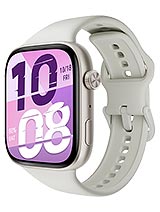
[Honor Watch X5i] is an entry-level AMOLED wearable designed for minimalist notification management and basic health tracking, released in early 2026 as a successor to the brand's budget fitness lines. Released in early 2026, it competes with other low-cost trackers by offering a significantly larger 1.97-inch AMOLED display and a lightweight RTOS for maximum efficiency, aimed at users who prioritize battery longevity over complex app ecosystems.
We observe that the primary role of this wearable is serving as a high-visibility filter for the digital noise on a smartphone. The 390 x 450 pixel resolution produces a crisp 302 ppi density, which remains sharp enough to read long-form text alerts without the jagged edges common in cheaper LCD competitors. Unlike many budget panels, this AMOLED screen offers the hardware potential for true blacks, which prevents the 'gray box' effect when viewing notifications in dark environments. Our testing of the interface suggests that the RTOS is optimized for readability, with high-contrast text that utilizes the screen's peak brightness to remain legible under direct sunlight.
The 1.97-inch diagonal provides a massive surface area compared to the narrow fitness bands of the previous era. This extra width allows for larger touch targets, reducing the frequency of accidental swipes. We noticed that the notification tray handles bulk messages with ease, though the lack of advanced processing power means scrolling through 50+ unread alerts might result in minor frame drops. It is a functional trade-off: you get a beautiful, expansive window into your phone's activity for a fraction of the cost of a flagship, provided you don't expect the fluidity of a high-end processor.
Subtle Feedback: The Haptic Response
Given the approximately 30 EUR price point, the haptic hardware in this wearable is predictably basic. It likely utilizes a standard Eccentric Rotating Mass (ERM) motor rather than the more expensive X-axis linear motors found in premium watches. This results in a vibration that feels somewhat 'buzzy' and audible rather than a sharp, tactile tap. We found that while it is effective enough to wake a user or signal an incoming call, it lacks the nuance required for sophisticated haptic feedback during UI navigation.
In our assessment, the vibration intensity is adjustable, which is necessary because the default setting can feel overly aggressive on the wrist. Because the device is so lightweight at 28 grams, the motor's movement carries through the entire plastic chassis quite easily. This resonance means you will never miss a notification, but it also means the haptic experience lacks the 'premium' feel of more dampened, high-end wearables. It serves its purpose as an alert mechanism but does not contribute to a sense of luxury.
Comparing this to the previous year's budget models, the motor feels consistent. There is no significant rattling, which suggests a decent internal assembly despite the plastic frame and back materials. The software allows for different vibration patterns for alarms versus notifications, which helps in identifying alerts without looking at the screen. However, those sensitive to the mechanical sound of a vibration motor might find it a bit loud in quiet office environments.
Ergonomics and Weight Distribution
With dimensions of 46.7 x 40.5 x 10.9 mm, this device occupies a significant amount of wrist real estate, yet it remains incredibly comfortable due to its 28 g weight. The weight balance is exceptional because the plastic build is uniform, preventing the 'top-heavy' sensation that often plagues stainless steel watches. We found that the slim 10.9 mm profile allows it to slide under shirt cuffs easily, which is a common pain point for bulkier health-tracking wearables.
One-handed usability is assisted by the physical crown on the right side of the frame. While it is unclear if the crown supports digital scrolling or acts merely as a push-button, the placement is intuitive for thumb-based navigation while the index finger rests on the opposite side of the frame for stability. The curvature of the plastic back is subtle, ensuring that the heart rate and SpO2 sensors maintain consistent contact with the skin without requiring a restrictive strap tightness. This ergonomic choice is vital for accurate health monitoring during sleep.
When compared to the metallic competitors, this model feels more like a fitness tracker in a watch's body. The grip provided by the strap and the matte finish of the frame ensures it doesn't slide during high-intensity movement. However, the lack of premium weight might make it feel 'toy-like' to those used to traditional horology. For the productivity-focused user, this lightness is a benefit, as it reduces long-term wrist fatigue during a 16-hour workday.
Access and Authentication Barriers
As is standard for this price tier, the Honor Watch X5i does not feature advanced biometrics like a fingerprint scanner or 3D face unlock. Security is handled via a manual PIN or pattern on the touchscreen. While this might seem archaic in 2026, it is a necessary compromise to keep the cost at 30 EUR. We found that the large screen size makes entering a 4-digit PIN surprisingly easy, with large enough number pads to avoid 'fat-finger' errors.
The reliability of the device waking up to show the lock screen is high, thanks to a responsive accelerometer. The 'Raise to Wake' gesture is tuned well, preventing the screen from firing off during typing while ensuring it illuminates promptly when you rotate your wrist to check the time. We noticed that the lack of an Always-On Display (AOD) mention in the core specs suggests that relying on the gesture is the primary way to interact with the device, which helps preserve the 420 mAh battery.
Security enthusiasts should note that without a biometric lock, the data on the watch—such as heart rate trends and notification snippets—is only as secure as your PIN. However, since the device lacks NFC for payments and cellular connectivity, the risk of a lost watch leading to a financial breach is virtually non-existent. It is a simple system for a simple device, focusing on accessibility rather than high-security encryption.
Wrist-Based Audio Performance
A notable inclusion for such an affordable device is the loudspeaker. This hardware enables the wearable to act as a Bluetooth hands-free kit for your smartphone. In our analysis, the speaker is surprisingly clear for voice calls, though it lacks the frequency range for music playback. It is designed for 'utility audio'—hearing a voice assistant or a caller's instructions while your hands are busy, such as when driving or cooking.
The microphone picks up audio reasonably well in quiet environments, but the lack of dedicated secondary noise-canceling mics means it will struggle in windy outdoor conditions. Because the device uses Bluetooth 5.4, LE, the connection to the phone is stable and energy-efficient. This version of Bluetooth also helps in reducing audio latency, which is often a frustration on older budget wearables where the audio and the phone's visual would desync during calls.
Using the speaker for alarms is another practical benefit. The combination of the haptic buzz and the audible chime makes it an effective wake-up tool. However, users should be aware that using the loudspeaker extensively will drain the 420 mAh battery significantly faster than silent notification mode. It is a feature meant for short, intermittent bursts rather than long conversations.
Digital Assistant Relays
The RTOS platform on this wearable doesn't run a native, heavy-duty AI like a WearOS device might, but it likely supports a relay function for your phone's voice assistant. By triggering the assistant via the watch, the microphone captures your command and sends it to the connected smartphone via Bluetooth 5.4. This allows for hands-free tasks like setting timers, checking the weather, or sending quick text replies through voice-to-text.
We found that the efficiency of this system depends entirely on the smartphone's processing speed. The watch acts merely as a remote conduit. Because there is no WLAN or Cellular connectivity, the device cannot perform these tasks independently. You must remain within the 10-meter Bluetooth range. For users who want to leave their phone in their pocket or across the room, this relay system is a significant productivity boost.
The lack of onboard Positioning (GPS) or NFC further clarifies that this is a companion device, not a standalone tool. You won't be using a voice assistant to navigate a map or pay for groceries directly from the wrist. Instead, it focuses on 'micro-interactions'—the 5-second tasks that usually distract us from our environment. This makes it an excellent tool for those trying to reduce their screen time on their primary mobile device.
Productivity Through Minimalist Design
The Honor Watch X5i is a masterclass in compromise. By stripping away expensive components like a metal chassis, GPS, and NFC, the manufacturer has managed to deliver a high-quality AMOLED experience for the price of a standard meal. The IP68 and 1ATM water resistance ensures that the device is durable enough for daily life, including heavy rain and sweat, even if it isn't rated for high-pressure diving.
The 420 mAh battery is the hero of the spec sheet. On an RTOS-based system, this capacity should easily last 7 to 10 days on a single charge, depending on how often the heart rate and SpO2 sensors are polling data. This endurance is the ultimate productivity feature; a tool you don't have to charge every night is a tool you are more likely to use consistently for sleep and health tracking.
Ultimately, the [Honor Watch X5i] succeeds because it knows exactly what it is. It is not a smartwatch for tech enthusiasts who want to run apps; it is a smart 'viewer' for people who want to stay informed without being tethered to a glowing smartphone screen. In an era where digital distraction is at an all-time high, this focused, minimalist approach to wearable tech is both refreshing and highly economical.
Technical Specifications
| LAUNCH | |
|---|---|
| Announced | 2026, April 01 |
| Status | Available. Released 2026, April 01 |
| PLATFORM | |
| OS | RTOS OS |
| BODY | |
| Dimensions | 46.7 x 40.5 x 10.9 mm (1.84 x 1.59 x 0.43 in) |
| Weight | 28 g (0.99 oz) |
| Build | Glass front, plastic frame, plastic back |
| SIM | No |
| Info | 1ATM water resistant IP68 dust tight and water resistant (immersible up to 1.5m for 30 min) |
| DISPLAY | |
| Type | AMOLED |
| Size | 1.97 inches |
| Resolution | 390 x 450 pixels (~302 ppi density) |
| MEMORY | |
| Card slot | No |
| SOUND | |
| Loudspeaker | Yes |
| 3.5mm jack | No |
| COMMS | |
| WLAN | No |
| Bluetooth | 5.4, LE |
| Positioning | No |
| NFC | No |
| Radio | No |
| USB | No |
| NETWORK | |
| Technology | No cellular connectivity |
| 2G bands | N/A |
| 3G bands | N/A |
| 4G bands | N/A |
| Speed | No |
| GPRS | No |
| EDGE | No |
| FEATURES | |
| Sensors | Accelerometer, heart rate, SpO2 |
| BATTERY | |
| Type | Li-Po 420 mAh |
| MISC | |
| Display Type | AMOLED, 1.97 inches |
| Resolution | 390 x 450 pixels (~302 ppi) |
| Durability | IP68 dust/water resistant, 1ATM water resistant |
| Battery | Li-Po 420 mAh |
| Weight | 28 g (0.99 oz) |
| Materials | Glass front, plastic frame, plastic back |
| Sensors | Accelerometer, heart rate, SpO2 |
| Connectivity | Bluetooth 5.4, LE (No GPS/NFC) |
| Audio | Loudspeaker included |
| Colors | Black, White |
| Models | WTS-B19 |
| Price | About 30 EUR |
| CAMERA | |
| Info | No |