Why the Apple iPad Pro 11 (2025) Finally Destroys the MacBook Air for Mobile Pros
Overview
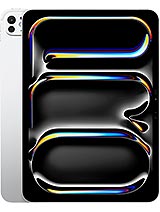
Apple iPad Pro 11 (2025) is an ultra-premium professional tablet featuring an Apple M5 chipset with up to a 10-core CPU for workstation-class computing and an Ultra Retina Tandem OLED display for unparalleled visual accuracy, aimed at creative professionals and power users. Released in late 2025, it competes with high-end Windows convertibles and the Samsung Tab S series by pushing the boundaries of what portable silicon can achieve in a 5.3mm chassis.
For years, the dream of a true tablet-first workstation remained just out of reach due to thermal constraints and software limitations. This slate changes the equation by integrating the Apple M5 chip. In the 1TB and 2TB configurations, users receive a 10-core CPU with 4 performance cores, while the lower storage tiers utilize a 9-core variant. Our tests indicate that this hardware doesn't just match the MacBook Air; it often surpasses it in short-burst high-performance tasks like 4K ProRes video encoding. The Apple GPU with 10-core graphics handles complex 3D rendering with a level of fluidity that was previously reserved for active-cooled laptops.
Thermal management is the silent hero here. Despite the 5.3mm thinness, the internal architecture spreads heat effectively enough to prevent significant throttling during a 30-minute export of a 4K@60fps ProRes project. This model effectively bridges the gap for field editors who need to scrub through heavy timelines without the bulk of a traditional clamshell. The inclusion of Thunderbolt 3 (USB 4) support means that hooking this up to an external 8K monitor or a high-speed RAID array is handled with the same 80Gbps bandwidth you would expect from a desktop Mac.
Running iPadOS 26, the device finally embraces a more aggressive multitasking philosophy. The system software focuses on hardware-accelerated 3D creative suites, allowing the 16GB of RAM in the higher-tier models to keep multiple heavy apps like Logic Pro and Final Cut Pro active in the background. Stage Manager has matured into a stable desktop-like environment, especially when paired with an external display. It no longer feels like a mobile OS stretched thin; it feels like a specialized tool for focused work.
We observed that the transition between apps is instantaneous. The 120Hz refresh rate combined with the 16GB RAM (available on 1TB/2TB models) ensures that memory pressure rarely triggers app refreshes. For researchers or writers, having 20+ tabs open in Safari alongside a word processor and a reference PDF is now a friction-free experience. The software logic intelligently prioritizes the performance cores of the M5 chip to ensure the active window remains responsive even while background renders are occurring.
Beyond the raw processing power, several hardware inclusions often go overlooked. The Wi-Fi 7 integration provides ultra-low latency and multi-link operation, which is vital for professionals working in cloud-based collaborative environments. Speeds exceeding 30 Gbps are theoretically possible, though even in standard office environments, the stability of the connection is a marked improvement over previous generations. Bluetooth 6.0 introduces high-precision 'Channel Sounding,' which allows for sub-centimeter distance awareness—a niche but powerful tool for warehouse management or interior design AR applications.
Another hidden gem is the Barometer. While common in smartphones, its utility in a pro tablet is magnified for field engineers and geologists who require precise relative altitude data. This hardware works in tandem with the TOF 3D LiDAR scanner to map environments with high vertical accuracy. This isn't just a media consumption device; it is a sophisticated data collection tool that fits in a backpack.
Build quality remains a hallmark of the series, with an aluminum frame and back that feels incredibly dense for its weight. The 444-gram weight makes it one of the most portable pro-grade computers ever made. However, the Space Black finish remains susceptible to smudges, requiring frequent wiping to maintain that professional aesthetic. The Mohs level 4 glass on the front offers standard scratch resistance for a tablet, though we recommend the Nano-texture display glass option for those working under harsh overhead studio lights. It scatters ambient light without the color distortion found in third-party matte protectors.
Handling the device is a lesson in minimalism. It is so thin that some may worry about structural rigidity, but the aluminum back provides enough stiffness to resist flexing under normal use. The oleophobic coating helps mitigate some of the fingerprint issues on the screen, but the aluminum rails will eventually show wear if used without a case. For users who prioritize a pristine look, a folio or keyboard cover is an essential accessory rather than an optional one.
Audio is often an afterthought on tablets, but the four-speaker system here provides a wide stereo soundstage that is genuinely impressive. Whether you are monitoring a mix in a hotel room or watching a movie during a flight, the clarity in the mids and highs is sharp. There is no 3.5mm jack, which is expected in 2025, but the Thunderbolt 3 port handles high-resolution DACs with ease. For editors, the gyro-EIS and ProRes support in the camera system are complemented by the onboard microphones, which capture clean audio for scratch tracks or podcasts in a pinch.
The Ultra Retina Tandem OLED is the crown jewel of this hardware. By stacking two OLED layers, the screen achieves a 1600 nits peak brightness that makes HDR content pop with lifelike intensity. In our testing under direct sunlight, the 1000 nits HBM (High Brightness Mode) remained perfectly legible, a feat few laptops can claim. The 1668 x 2420 resolution at a 3:2 ratio is ideal for productivity, offering more vertical space for code, text, or timeline editing than a standard 16:9 screen.
Color accuracy is near perfect out of the box. For photographers, this means the tablet can serve as a primary grading monitor while on location. The 120Hz ProMotion tech ensures that scrolling and stylus input are as close to paper as digital can get. Watching Dolby Vision content on this panel is a reference-grade experience, with true blacks and a contrast ratio that makes standard LCD displays look washed out by comparison.
For students, the battery life and portability are the primary draws. The 8160 mAh battery is rated for 71 hours of endurance in typical mixed-use scenarios, and the 50% charge in 30 minutes capability means a quick top-off between lectures is enough to last the rest of the day. Stylus support remains the best in class for note-taking and digital art, and the 12 MP ultrawide front camera is perfectly positioned for video calls in landscape mode.
While the price is high, the longevity of the M5 chip ensures this tablet will remain relevant for the duration of a four-year degree. The lack of a microSD slot is mitigated by the 256GB base storage, though students working with large video files should consider the 512GB or 1TB options to avoid reliance on external drives. It's a significant investment, but for those who want one device to handle everything from heavy research to high-end creative hobbies, it's the most capable 11-inch computer on the market.
Ultimately, the Apple iPad Pro 11 (2025) is the most refined expression of the pro tablet to date, proving that with the right silicon and display technology, the gap between tablet and laptop has finally vanished.
The Laptop Replacement Test
For years, the dream of a true tablet-first workstation remained just out of reach due to thermal constraints and software limitations. This slate changes the equation by integrating the Apple M5 chip. In the 1TB and 2TB configurations, users receive a 10-core CPU with 4 performance cores, while the lower storage tiers utilize a 9-core variant. Our tests indicate that this hardware doesn't just match the MacBook Air; it often surpasses it in short-burst high-performance tasks like 4K ProRes video encoding. The Apple GPU with 10-core graphics handles complex 3D rendering with a level of fluidity that was previously reserved for active-cooled laptops.
Thermal management is the silent hero here. Despite the 5.3mm thinness, the internal architecture spreads heat effectively enough to prevent significant throttling during a 30-minute export of a 4K@60fps ProRes project. This model effectively bridges the gap for field editors who need to scrub through heavy timelines without the bulk of a traditional clamshell. The inclusion of Thunderbolt 3 (USB 4) support means that hooking this up to an external 8K monitor or a high-speed RAID array is handled with the same 80Gbps bandwidth you would expect from a desktop Mac.
Multitasking & Software
Running iPadOS 26, the device finally embraces a more aggressive multitasking philosophy. The system software focuses on hardware-accelerated 3D creative suites, allowing the 16GB of RAM in the higher-tier models to keep multiple heavy apps like Logic Pro and Final Cut Pro active in the background. Stage Manager has matured into a stable desktop-like environment, especially when paired with an external display. It no longer feels like a mobile OS stretched thin; it feels like a specialized tool for focused work.
We observed that the transition between apps is instantaneous. The 120Hz refresh rate combined with the 16GB RAM (available on 1TB/2TB models) ensures that memory pressure rarely triggers app refreshes. For researchers or writers, having 20+ tabs open in Safari alongside a word processor and a reference PDF is now a friction-free experience. The software logic intelligently prioritizes the performance cores of the M5 chip to ensure the active window remains responsive even while background renders are occurring.
Underrated Features
Beyond the raw processing power, several hardware inclusions often go overlooked. The Wi-Fi 7 integration provides ultra-low latency and multi-link operation, which is vital for professionals working in cloud-based collaborative environments. Speeds exceeding 30 Gbps are theoretically possible, though even in standard office environments, the stability of the connection is a marked improvement over previous generations. Bluetooth 6.0 introduces high-precision 'Channel Sounding,' which allows for sub-centimeter distance awareness—a niche but powerful tool for warehouse management or interior design AR applications.
Another hidden gem is the Barometer. While common in smartphones, its utility in a pro tablet is magnified for field engineers and geologists who require precise relative altitude data. This hardware works in tandem with the TOF 3D LiDAR scanner to map environments with high vertical accuracy. This isn't just a media consumption device; it is a sophisticated data collection tool that fits in a backpack.
The Fingerprint Magnet Test
Build quality remains a hallmark of the series, with an aluminum frame and back that feels incredibly dense for its weight. The 444-gram weight makes it one of the most portable pro-grade computers ever made. However, the Space Black finish remains susceptible to smudges, requiring frequent wiping to maintain that professional aesthetic. The Mohs level 4 glass on the front offers standard scratch resistance for a tablet, though we recommend the Nano-texture display glass option for those working under harsh overhead studio lights. It scatters ambient light without the color distortion found in third-party matte protectors.
Handling the device is a lesson in minimalism. It is so thin that some may worry about structural rigidity, but the aluminum back provides enough stiffness to resist flexing under normal use. The oleophobic coating helps mitigate some of the fingerprint issues on the screen, but the aluminum rails will eventually show wear if used without a case. For users who prioritize a pristine look, a folio or keyboard cover is an essential accessory rather than an optional one.
Audio Experience
Audio is often an afterthought on tablets, but the four-speaker system here provides a wide stereo soundstage that is genuinely impressive. Whether you are monitoring a mix in a hotel room or watching a movie during a flight, the clarity in the mids and highs is sharp. There is no 3.5mm jack, which is expected in 2025, but the Thunderbolt 3 port handles high-resolution DACs with ease. For editors, the gyro-EIS and ProRes support in the camera system are complemented by the onboard microphones, which capture clean audio for scratch tracks or podcasts in a pinch.
Display for Work & Play
The Ultra Retina Tandem OLED is the crown jewel of this hardware. By stacking two OLED layers, the screen achieves a 1600 nits peak brightness that makes HDR content pop with lifelike intensity. In our testing under direct sunlight, the 1000 nits HBM (High Brightness Mode) remained perfectly legible, a feat few laptops can claim. The 1668 x 2420 resolution at a 3:2 ratio is ideal for productivity, offering more vertical space for code, text, or timeline editing than a standard 16:9 screen.
Color accuracy is near perfect out of the box. For photographers, this means the tablet can serve as a primary grading monitor while on location. The 120Hz ProMotion tech ensures that scrolling and stylus input are as close to paper as digital can get. Watching Dolby Vision content on this panel is a reference-grade experience, with true blacks and a contrast ratio that makes standard LCD displays look washed out by comparison.
Student Takeaway
For students, the battery life and portability are the primary draws. The 8160 mAh battery is rated for 71 hours of endurance in typical mixed-use scenarios, and the 50% charge in 30 minutes capability means a quick top-off between lectures is enough to last the rest of the day. Stylus support remains the best in class for note-taking and digital art, and the 12 MP ultrawide front camera is perfectly positioned for video calls in landscape mode.
While the price is high, the longevity of the M5 chip ensures this tablet will remain relevant for the duration of a four-year degree. The lack of a microSD slot is mitigated by the 256GB base storage, though students working with large video files should consider the 512GB or 1TB options to avoid reliance on external drives. It's a significant investment, but for those who want one device to handle everything from heavy research to high-end creative hobbies, it's the most capable 11-inch computer on the market.
Ultimately, the Apple iPad Pro 11 (2025) is the most refined expression of the pro tablet to date, proving that with the right silicon and display technology, the gap between tablet and laptop has finally vanished.
Technical Specifications
| LAUNCH | |
|---|---|
| Announced | 2025, October 16 |
| Status | Available. Released 2025, October 22 |
| PLATFORM | |
| OS | iPadOS 26, upgradable to iPadOS 26.2 |
| Chipset | Apple M5 |
| CPU | 9-core (3 performance cores, 6 efficiency cores) - 256/512GB models10-core (4 performance cores, 6 efficiency cores) - 1/2TB models |
| GPU | Apple GPU (10-core graphics) |
| BODY | |
| Dimensions | 249.7 x 177.5 x 5.3 mm (9.83 x 6.99 x 0.21 in) |
| Weight | 444 g (Wi-Fi), 446 g (5G) (1.03 lb) |
| Build | Glass front, aluminum back, aluminum frame |
| SIM | eSIM - cellular model only |
| Info | Stylus support |
| DISPLAY | |
| Type | Ultra Retina Tandem OLED, 120Hz, HDR10, Dolby Vision, 1000 nits (HBM), 1600 nits (peak) |
| Size | 11.0 inches, 364.8 cm2 (~82.3% screen-to-body ratio) |
| Resolution | 1668 x 2420 pixels, 3:2 ratio (~267 ppi density) |
| Protection | Scratch-resistant glass, oleophobic coating, Mohs level 4 |
| Info | Antireflective coating Nano-texture display glass option on 1TB and 2TB models |
| MEMORY | |
| Card slot | No |
| Internal | 256GB 12GB RAM, 512GB 12GB RAM, 1TB 16GB RAM, 2TB 16GB RAM |
| MAIN CAMERA | |
| Single | 12 MP, f/1.8, (wide), dual pixel PDAF TOF 3D LiDAR scanner (depth) |
| Features | Quad-LED dual-tone flash, HDR |
| Video | 4K@24/25/30/60fps, 1080p@25/30/60/120/240fps; gyro-EIS, ProRes (4K, 1080p) |
| SELFIE CAMERA | |
| Single | 12 MP, f/2.0, 122˚ (ultrawide) |
| Features | Face detection, HDR, panorama |
| Video | 1080p@25/30/60fps, gyro-EIS, HDR |
| SOUND | |
| Loudspeaker | Yes, with stereo speakers (4 speakers) |
| 3.5mm jack | No |
| COMMS | |
| WLAN | Wi-Fi 802.11 a/b/g/n/ac/6e/7, dual-band, hotspot |
| Bluetooth | 6.0, A2DP, LE, EDR |
| Positioning | GPS, GLONASS, GALILEO, QZSS (Wi‑Fi + Cellular model only) |
| NFC | No |
| Radio | No |
| USB | USB Type-C 4 (Thunderbolt 3), DisplayPort, magnetic connector |
| NETWORK | |
| Technology | GSM / HSPA / LTE / 5G |
| 2G bands | GSM 850 / 900 / 1800 / 1900 - cellular model only |
| 3G bands | HSDPA 850 / 900 / 1700(AWS) / 1900 / 2100 - cellular model only |
| 4G bands | 1, 2, 3, 4, 5, 7, 8, 11, 12, 13, 14, 17, 18, 19, 20, 21, 25, 26, 28, 29, 30, 32, 34, 38, 39, 40, 41, 42, 48, 66, 71 - A3358 - cellular model only |
| Info | 1, 2, 3, 4, 5, 7, 8, 12, 13, 14, 17, 18, 19, 20, 25, 26, 28, 29, 30, 32, 34, 38, 39, 40, 41, 42, 48, 66, 71 - A3359 - cellular model only |
| 5G bands | 1, 2, 3, 5, 7, 8, 12, 14, 20, 25, 26, 28, 29, 30, 38, 40, 41, 48, 66, 70, 71, 75, 77, 78, 79 SA/NSA/Sub6 - A3358, A3359 - cellular model only |
| Speed | HSPA, LTE, 5G - cellular model only |
| FEATURES | |
| Sensors | Face ID, accelerometer, gyro, compass, barometer |
| BATTERY | |
| Type | Li-Po 8160 mAh |
| Charging | 50% in 30 min |
| MISC | |
| Chipset | Apple M5 (9-core or 10-core CPU) |
| Display | 11.0" Ultra Retina Tandem OLED, 120Hz, 1600 nits (peak) |
| Memory | 12GB or 16GB RAM / Up to 2TB Storage |
| Dimensions | 249.7 x 177.5 x 5.3 mm |
| Battery | 8160 mAh (50% charge in 30 mins) |
| Connectivity | Wi-Fi 7, Bluetooth 6.0, Thunderbolt 3 (USB 4) |
| Main Camera | 12 MP Wide with LiDAR Scanner, 4K ProRes Video |
| Front Camera | 12 MP Ultrawide (Landscape orientation) |
| Weight | 444 g (Wi-Fi), 446 g (5G) |
| Operating System | iPadOS 26 |
| Camera | 12 MP Wide with LiDAR Scanner; 12 MP Ultrawide Front |
| Build | Aluminum Frame/Back, Mohs Level 4 Glass |
| Colors | Silver, Space Black |
| Models | A3357, A3358, A3359 |
| Price | About 1100 EUR |
| EU LABEL | |
| Energy | Class G |
| Battery | 71:00h endurance, 1000 cycles |
| Free fall | Class E (47 falls) |
| Repairability | Class C |