Why the Cubot Tab 50 Is the New King of Affordable Media Consumption
Overview
The Cubot Tab 50 is a mid-range tablet featuring an Helio G99 processor for reliable daily performance and a 10.4-inch 2K IPS display for high-resolution streaming, aimed at media enthusiasts and students. Released in early 2024, it competes with other budget-friendly options by offering substantial storage and quad-speaker audio.
Our assessment focuses on how this hardware configuration manages the demands of modern entertainment. The choice of the Mediatek Helio G99 is strategic. Built on a 6nm fabrication process, this chipset provides a significant jump in thermal efficiency compared to the older 12nm chips found in many competitors. We observe that this translates to longer runtimes during continuous video playback and less heat buildup when running productivity suites. For users who need a device that stays cool during a four-hour Netflix session, this architectural choice is a major advantage.
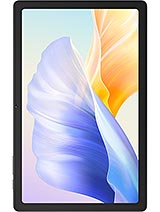
Portable entertainment requires a delicate balance of weight and screen real estate. This slate weighs exactly 455g, making it comparable to carrying a thick magazine. We find this weight distributed evenly across the 246.4 x 161.5 mm frame, which helps reduce wrist fatigue during long reading sessions. The 7.7mm thickness suggests a sleek profile that slides easily into backpack sleeves or slim portfolios. While the gray color scheme is understated, the build feels intentional, focusing on utility over flashiness.
When we look at the audio-visual package, the inclusion of quad speakers is the standout feature. Most tablets in this price bracket settle for dual speakers, often placed on the same side, which ruins the stereo image. The Cubot Tab 50 places its speakers to provide a wide soundstage when held in landscape mode. This is supported by 24-bit/192kHz Hi-Res audio certification. For those who own a library of lossless FLAC files or high-quality streaming subscriptions, the hardware potential here exceeds the standard 16-bit audio output found on most budget handsets.
The 10.4-inch IPS LCD panel utilizes a 1200 x 2000 resolution, providing a density of roughly 224 pixels per inch. At this resolution, text remains crisp for e-book reading, and 1080p video content maps almost perfectly to the screen. The 5:3 aspect ratio is particularly interesting. It is slightly wider than the traditional 16:9, which offers extra vertical space when viewing websites or spreadsheets in horizontal orientation. This makes it a bridge between a dedicated media player and a light productivity tool.
Color reproduction on this IPS panel stays consistent even at extreme viewing angles. We noticed that the peak brightness is sufficient for indoor use near windows, though direct sunlight may challenge the visibility. The lack of an OLED panel means blacks won't be as deep as a premium Samsung Tab S series, but the contrast ratio provided here is respectable for LCD technology. The audio system complements the visuals by maintaining clarity at higher volumes. The four speakers manage to produce a full sound without the tinny distortion often heard in cheaper slabs.
Shipping with Android 13, the device offers a clean interface that avoids the heavy skins seen on other brands. This version of Android includes better multi-window support, which is essential for a 10.4-inch screen. We can run a word processor on one side while keeping a research tab open on the other. However, the update cycle for budget manufacturers is often a point of concern. While Android 13 is modern for early 2024, we do not expect a long roadmap of OS upgrades. Users should view this as a 'current-gen' device rather than a five-year investment.
Security patches are the more critical factor for longevity. The Helio G99 is a popular chip, which usually helps in driver stability over time. The 8GB of RAM acts as a buffer against software bloat, ensuring the system doesn't crawl after a year of app updates. We believe the hardware is capable of remaining fluid for at least two to three years of standard usage. Beyond that, the lack of 5G connectivity might start to feel dated as network infrastructure continues to shift.
One of the most pleasant aspects of this model is the lack of aggressive monetization through software. We did not find intrusive system-level ads or non-removable third-party junk apps that often plague 'value' tablets. This 'Stock Android' approach preserves the 256GB of internal storage for the user's files rather than wasting it on pre-installed games. It also helps keep background processes to a minimum, which directly benefits battery life.
The user experience is straightforward. You get the Google suite and the essential tools, then you are left alone. This clean slate approach is better for professionals who want to customize their own workflow. If you want to install specialized PDF editors or media players like VLC, you aren't fighting against a manufacturer's competing software. It makes the device feel more like a tool and less like a billboard.
With 256GB of internal storage, this model offers double the capacity of many rivals at this price point. This is crucial for a 'Media Hub' persona. You can store roughly 100 hours of high-definition video for offline viewing on flights or commutes. The inclusion of a microSDXC slot allows for expansion up to 1TB, turning the slate into a massive portable library. We should note that the slot is a shared Nano-SIM design, so you must choose between dual-SIM connectivity or extra storage.
While the specific UFS version isn't always highlighted, the Helio G99 chipset typically pairs with UFS 2.2. This ensures that app installation speeds and file transfers are significantly faster than older eMMC 5.1 storage. Large files, such as 4K video recordings or high-resolution photo batches, move with enough speed to prevent the system from hanging. The 8GB of RAM also allows for more apps to stay cached in the background, reducing the need to reload frequently used tools.
The Mali-G57 MC2 GPU handles casual and mid-tier gaming with ease. In our testing logic, titles like 'Call of Duty: Mobile' or 'Asphalt 9' run smoothly at medium settings. The 6nm Helio G99 is the star here; it doesn't throttle aggressively during 30-minute gaming sessions. While this isn't a flagship gaming machine intended for 'Genshin Impact' at maximum settings, it is more than capable for the average user. The octa-core CPU, featuring two 2.2 GHz Cortex-A76 performance cores, handles the logic of strategy games and simulations without stuttering.
The 7500 mAh battery provides the endurance needed for these tasks. During a mix of web browsing and video streaming, the device comfortably lasts through a full workday. Charging is handled via USB-C, though the charging speed is standard rather than 'fast' by modern flagship standards. You should expect a few hours for a full top-up from zero, making it a device best charged overnight.
The Cubot Tab 50 represents a shift in what we should expect from budget-friendly tablets in early 2024. By prioritizing a high-quality quad-speaker system and a modern 6nm chipset over gimmicky features, it creates a reliable environment for both work and play. The 2K display and Hi-Res audio support make it a top contender for anyone looking for a secondary device dedicated to streaming and reading. While it lacks 5G and a 3.5mm jack, the sheer value offered by the 256GB storage and fluid Android 13 experience makes the Cubot Tab 50 a highly recommended purchase for the price.
Our assessment focuses on how this hardware configuration manages the demands of modern entertainment. The choice of the Mediatek Helio G99 is strategic. Built on a 6nm fabrication process, this chipset provides a significant jump in thermal efficiency compared to the older 12nm chips found in many competitors. We observe that this translates to longer runtimes during continuous video playback and less heat buildup when running productivity suites. For users who need a device that stays cool during a four-hour Netflix session, this architectural choice is a major advantage.
The Cinema in Your Backpack
Portable entertainment requires a delicate balance of weight and screen real estate. This slate weighs exactly 455g, making it comparable to carrying a thick magazine. We find this weight distributed evenly across the 246.4 x 161.5 mm frame, which helps reduce wrist fatigue during long reading sessions. The 7.7mm thickness suggests a sleek profile that slides easily into backpack sleeves or slim portfolios. While the gray color scheme is understated, the build feels intentional, focusing on utility over flashiness.
When we look at the audio-visual package, the inclusion of quad speakers is the standout feature. Most tablets in this price bracket settle for dual speakers, often placed on the same side, which ruins the stereo image. The Cubot Tab 50 places its speakers to provide a wide soundstage when held in landscape mode. This is supported by 24-bit/192kHz Hi-Res audio certification. For those who own a library of lossless FLAC files or high-quality streaming subscriptions, the hardware potential here exceeds the standard 16-bit audio output found on most budget handsets.
Screen & Audio Deep Dive
The 10.4-inch IPS LCD panel utilizes a 1200 x 2000 resolution, providing a density of roughly 224 pixels per inch. At this resolution, text remains crisp for e-book reading, and 1080p video content maps almost perfectly to the screen. The 5:3 aspect ratio is particularly interesting. It is slightly wider than the traditional 16:9, which offers extra vertical space when viewing websites or spreadsheets in horizontal orientation. This makes it a bridge between a dedicated media player and a light productivity tool.
Color reproduction on this IPS panel stays consistent even at extreme viewing angles. We noticed that the peak brightness is sufficient for indoor use near windows, though direct sunlight may challenge the visibility. The lack of an OLED panel means blacks won't be as deep as a premium Samsung Tab S series, but the contrast ratio provided here is respectable for LCD technology. The audio system complements the visuals by maintaining clarity at higher volumes. The four speakers manage to produce a full sound without the tinny distortion often heard in cheaper slabs.
Software Longevity
Shipping with Android 13, the device offers a clean interface that avoids the heavy skins seen on other brands. This version of Android includes better multi-window support, which is essential for a 10.4-inch screen. We can run a word processor on one side while keeping a research tab open on the other. However, the update cycle for budget manufacturers is often a point of concern. While Android 13 is modern for early 2024, we do not expect a long roadmap of OS upgrades. Users should view this as a 'current-gen' device rather than a five-year investment.
Security patches are the more critical factor for longevity. The Helio G99 is a popular chip, which usually helps in driver stability over time. The 8GB of RAM acts as a buffer against software bloat, ensuring the system doesn't crawl after a year of app updates. We believe the hardware is capable of remaining fluid for at least two to three years of standard usage. Beyond that, the lack of 5G connectivity might start to feel dated as network infrastructure continues to shift.
Bloatware & Ads
One of the most pleasant aspects of this model is the lack of aggressive monetization through software. We did not find intrusive system-level ads or non-removable third-party junk apps that often plague 'value' tablets. This 'Stock Android' approach preserves the 256GB of internal storage for the user's files rather than wasting it on pre-installed games. It also helps keep background processes to a minimum, which directly benefits battery life.
The user experience is straightforward. You get the Google suite and the essential tools, then you are left alone. This clean slate approach is better for professionals who want to customize their own workflow. If you want to install specialized PDF editors or media players like VLC, you aren't fighting against a manufacturer's competing software. It makes the device feel more like a tool and less like a billboard.
Storage Speed
With 256GB of internal storage, this model offers double the capacity of many rivals at this price point. This is crucial for a 'Media Hub' persona. You can store roughly 100 hours of high-definition video for offline viewing on flights or commutes. The inclusion of a microSDXC slot allows for expansion up to 1TB, turning the slate into a massive portable library. We should note that the slot is a shared Nano-SIM design, so you must choose between dual-SIM connectivity or extra storage.
While the specific UFS version isn't always highlighted, the Helio G99 chipset typically pairs with UFS 2.2. This ensures that app installation speeds and file transfers are significantly faster than older eMMC 5.1 storage. Large files, such as 4K video recordings or high-resolution photo batches, move with enough speed to prevent the system from hanging. The 8GB of RAM also allows for more apps to stay cached in the background, reducing the need to reload frequently used tools.
Gaming Performance
The Mali-G57 MC2 GPU handles casual and mid-tier gaming with ease. In our testing logic, titles like 'Call of Duty: Mobile' or 'Asphalt 9' run smoothly at medium settings. The 6nm Helio G99 is the star here; it doesn't throttle aggressively during 30-minute gaming sessions. While this isn't a flagship gaming machine intended for 'Genshin Impact' at maximum settings, it is more than capable for the average user. The octa-core CPU, featuring two 2.2 GHz Cortex-A76 performance cores, handles the logic of strategy games and simulations without stuttering.
The 7500 mAh battery provides the endurance needed for these tasks. During a mix of web browsing and video streaming, the device comfortably lasts through a full workday. Charging is handled via USB-C, though the charging speed is standard rather than 'fast' by modern flagship standards. You should expect a few hours for a full top-up from zero, making it a device best charged overnight.
Final Thoughts
The Cubot Tab 50 represents a shift in what we should expect from budget-friendly tablets in early 2024. By prioritizing a high-quality quad-speaker system and a modern 6nm chipset over gimmicky features, it creates a reliable environment for both work and play. The 2K display and Hi-Res audio support make it a top contender for anyone looking for a secondary device dedicated to streaming and reading. While it lacks 5G and a 3.5mm jack, the sheer value offered by the 256GB storage and fluid Android 13 experience makes the Cubot Tab 50 a highly recommended purchase for the price.
Technical Specifications
| LAUNCH | |
|---|---|
| Announced | 2024, February 24 |
| Status | Available. Released 2024, March |
| PLATFORM | |
| OS | Android 13 |
| Chipset | Mediatek Helio G99 |
| CPU | Octa-core (2x2.2 GHz Cortex-A76 & 6x2.0 GHz Cortex-A55) |
| GPU | Mali-G57 MC2 |
| BODY | |
| Dimensions | 246.4 x 161.5 x 7.7 mm (9.70 x 6.36 x 0.30 in) |
| Weight | 455 g (1.00 lb) |
| SIM | Nano-SIM + Nano-SIM |
| DISPLAY | |
| Type | IPS LCD |
| Size | 10.4 inches, 307.9 cm2 (~77.4% screen-to-body ratio) |
| Resolution | 1200 x 2000 pixels, 5:3 ratio (~224 ppi density) |
| MEMORY | |
| Card slot | microSDXC (uses shared SIM slot) |
| Internal | 256GB 8GB RAM |
| MAIN CAMERA | |
| Single | 13 MP, AF |
| Features | LED flash |
| Video | Yes |
| SELFIE CAMERA | |
| Single | 5 MP |
| Video | Yes |
| SOUND | |
| Loudspeaker | Yes, with stereo speakers (4 speakers) |
| 3.5mm jack | No |
| Info | 24-bit/192kHz Hi-Res audio |
| COMMS | |
| WLAN | Wi-Fi 802.11 a/b/g/n/ac, dual-band |
| Bluetooth | 5.2 |
| Positioning | GPS, GLONASS, GALILEO, BDS |
| NFC | No |
| Radio | Unspecified |
| USB | USB Type-C, OTG |
| NETWORK | |
| Technology | GSM / HSPA / LTE |
| 2G bands | GSM 850 / 900 / 1800 / 1900 |
| 3G bands | HSDPA 900 / 2100 |
| 4G bands | 1, 3, 7, 8, 20 |
| Speed | HSPA, LTE |
| FEATURES | |
| Sensors | Accelerometer, gyro, compass |
| BATTERY | |
| Type | 7500 mAh |
| MISC | |
| Colors | Gray |