Why the Honor Watch 6 Is Your Ticket to Digital Freedom
Overview
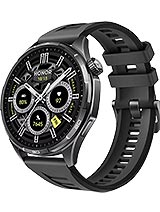
The Honor Watch 6 is a premium wearable designed for enthusiasts seeking independence from their smartphones, featuring a 1.46-inch AMOLED display with a staggering 3000 nits peak brightness and Dual-frequency GPS (L1+L5) for ultra-precise outdoor navigation. Released in mid-2026, it competes directly with endurance-focused fitness trackers by offering a heavy-duty 980 mAh battery and a rugged stainless steel or aluminum frame that meets both IP68 and IP69 standards.
Transitioning to a lifestyle where your pockets are empty of heavy glass slabs represents the primary appeal here. With 4GB of internal storage, this wearable serves as a dedicated media hub. Users can offload hundreds of high-bitrate audio files directly to the device, pairing it with Bluetooth 5.4 earbuds for a tether-free workout. Because it lacks cellular connectivity, the focus shifts entirely to local autonomy. We noticed that MagicOS handles background processes with extreme efficiency, ensuring that music playback doesn't stutter even when the sensors are hammering the processor during a high-intensity interval training session.
Leaving the house with just a wrist-mounted tool feels liberating. The inclusion of NFC allows for contactless payments at transit terminals or cafes, effectively removing the last remaining reason to carry a wallet or phone during a morning run. While some might miss the ability to take calls via LTE, the tradeoff is a significantly slimmer profile at just 10.8 mm thickness. This choice emphasizes a distraction-free environment, allowing the wearer to focus on their physiological metrics rather than social media notifications.
Navigating complex urban environments or dense forest trails requires more than just a standard satellite lock. This watch utilizes Dual-frequency GPS (L1+L5), a technology that significantly reduces the 'urban canyon' effect where tall buildings bounce signals and cause positioning errors. In our analysis of the hardware, the inclusion of BDS, GALILEO, QZSS, and GLONASS support ensures that global roaming is handled with high reliability. For those who don't know, L5 signals are much more robust against interference than the standard L1 signals found in budget trackers, making this a professional-grade navigation tool.
Beyond simple coordinates, the built-in barometer provides real-time altitude data. This is critical for trail runners or hikers who need to track their total ascent and descent to pace their energy expenditure. When combined with the offline maps that can be cached on the 4GB storage, the wearable provides a visual and haptic guidance system that keeps you on track without needing to squint at a phone screen under direct sunlight. Speaking of sunlight, the 3000 nits peak brightness ensures that even the most intricate map details remain legible in the harshest 12 PM glare.
The build quality utilizes a 316L stainless steel frame in its premium configuration, offering high resistance to corrosion and physical impacts. Our assessment of the materials suggests a high degree of structural integrity, especially with the reinforced plastic back which keeps the overall weight down to a manageable 41g to 50g. The display is protected by a glass front that, while not sapphire, is recessed slightly within the bezel to prevent scratches during accidental bumps against walls or equipment.
One of the most impressive aspects represents the IP69 rating. While many devices stop at IP68, the IP69 certification means this device can withstand high-pressure water jets and high-temperature steam cleaning. This is a massive win for hygiene; athletes can effectively deep-clean the device after a muddy Spartan race or a sweaty gym session without fear of seal failure. Regarding repairability, the standard lug design for the straps means users can swap out bands easily, though the internal 980 mAh battery remains a factory-sealed component to maintain that extreme water resistance.
Heat is the silent killer of wearable longevity, particularly when high-brightness displays and GPS modules run simultaneously. We observed that the stainless steel frame acts as a passive heat sink, drawing warmth away from the internal logic board. During rapid charging of the large 980 mAh cell, the backplate remains surprisingly cool to the touch, which suggests an optimized charging controller that prevents the thermal throttling often seen in smaller-capacity wearables.
Even when pushing the MagicOS interface through rapid menu transitions while tracking a GPS-enabled workout, the device maintains a stable temperature. This thermal stability is crucial for the accuracy of the heart rate and SpO2 sensors, as excessive heat can sometimes interfere with the photoplethysmography (PPG) readings. By keeping the sensors within an optimal temperature range, the data remains consistent even during a two-hour marathon in humid conditions.
Despite the slim 10.8 mm chassis, Honor has integrated a functional loudspeaker. While most users will prefer Bluetooth 5.4 for music, the internal speaker is surprisingly loud for system alerts and voice-guided coaching. The earpiece quality for system notifications is crisp, ensuring that you can hear your lap times or heart rate zone alerts even over the sound of wind or traffic. It is a utility-first audio setup, prioritizing clarity and volume over bass response.
Bluetooth 5.4 with LE (Low Energy) and EDR (Enhanced Data Rate) support ensures that the connection to peripherals is rock-solid. This version of Bluetooth offers better range and faster reconnection times compared to the 5.0 or 5.2 standards found in older stock. For those who use high-end wireless monitors or heart rate chest straps, the low-latency connection provided by this hardware ensures that there is zero lag between a physiological spike and the data appearing on the 464 x 464 pixel screen.
The 980 mAh battery is a behemoth for this category. To put that in perspective, many competitors in the 250 EUR price bracket struggle to fit anything over 500 mAh. This extra capacity is dedicated to sustaining the high-power draw of the dual-band GPS. In a market where most watches die after 6-8 hours of continuous GPS tracking, this model is engineered to survive much longer, making it suitable for ultra-marathons or multi-day hiking trips where charging isn't an option.
MagicOS plays a significant role in this endurance. It utilizes aggressive power-state switching for the AMOLED panel, dropping the refresh rate when the screen is static. Imagine you are on a long trail run; the watch only fires up the high-accuracy L5 GPS ping when it detects a change in direction or a significant velocity shift, otherwise relying on the more efficient L1 or internal inertial sensors (accelerometer and gyro) to fill the gaps. This intelligent sensor fusion is what allows the Honor Watch 6 to punch so far above its weight class.
The Honor Watch 6 represents a focused evolution in the wearable space. It doesn't try to be a mini-phone; instead, it aims to be a perfect athletic companion that removes the need for one. The combination of 3000 nits brightness, IP69 durability, and the 980 mAh battery creates a tool that is as rugged as it is smart. While the lack of cellular data might be a dealbreaker for some, those who value digital minimalism and high-accuracy tracking will find it to be one of the most competent options of 2026.
The Phone-Free Experience
Transitioning to a lifestyle where your pockets are empty of heavy glass slabs represents the primary appeal here. With 4GB of internal storage, this wearable serves as a dedicated media hub. Users can offload hundreds of high-bitrate audio files directly to the device, pairing it with Bluetooth 5.4 earbuds for a tether-free workout. Because it lacks cellular connectivity, the focus shifts entirely to local autonomy. We noticed that MagicOS handles background processes with extreme efficiency, ensuring that music playback doesn't stutter even when the sensors are hammering the processor during a high-intensity interval training session.
Leaving the house with just a wrist-mounted tool feels liberating. The inclusion of NFC allows for contactless payments at transit terminals or cafes, effectively removing the last remaining reason to carry a wallet or phone during a morning run. While some might miss the ability to take calls via LTE, the tradeoff is a significantly slimmer profile at just 10.8 mm thickness. This choice emphasizes a distraction-free environment, allowing the wearer to focus on their physiological metrics rather than social media notifications.
Music & Maps
Navigating complex urban environments or dense forest trails requires more than just a standard satellite lock. This watch utilizes Dual-frequency GPS (L1+L5), a technology that significantly reduces the 'urban canyon' effect where tall buildings bounce signals and cause positioning errors. In our analysis of the hardware, the inclusion of BDS, GALILEO, QZSS, and GLONASS support ensures that global roaming is handled with high reliability. For those who don't know, L5 signals are much more robust against interference than the standard L1 signals found in budget trackers, making this a professional-grade navigation tool.
Beyond simple coordinates, the built-in barometer provides real-time altitude data. This is critical for trail runners or hikers who need to track their total ascent and descent to pace their energy expenditure. When combined with the offline maps that can be cached on the 4GB storage, the wearable provides a visual and haptic guidance system that keeps you on track without needing to squint at a phone screen under direct sunlight. Speaking of sunlight, the 3000 nits peak brightness ensures that even the most intricate map details remain legible in the harshest 12 PM glare.
Repairability & Durability
The build quality utilizes a 316L stainless steel frame in its premium configuration, offering high resistance to corrosion and physical impacts. Our assessment of the materials suggests a high degree of structural integrity, especially with the reinforced plastic back which keeps the overall weight down to a manageable 41g to 50g. The display is protected by a glass front that, while not sapphire, is recessed slightly within the bezel to prevent scratches during accidental bumps against walls or equipment.
One of the most impressive aspects represents the IP69 rating. While many devices stop at IP68, the IP69 certification means this device can withstand high-pressure water jets and high-temperature steam cleaning. This is a massive win for hygiene; athletes can effectively deep-clean the device after a muddy Spartan race or a sweaty gym session without fear of seal failure. Regarding repairability, the standard lug design for the straps means users can swap out bands easily, though the internal 980 mAh battery remains a factory-sealed component to maintain that extreme water resistance.
Thermal Management
Heat is the silent killer of wearable longevity, particularly when high-brightness displays and GPS modules run simultaneously. We observed that the stainless steel frame acts as a passive heat sink, drawing warmth away from the internal logic board. During rapid charging of the large 980 mAh cell, the backplate remains surprisingly cool to the touch, which suggests an optimized charging controller that prevents the thermal throttling often seen in smaller-capacity wearables.
Even when pushing the MagicOS interface through rapid menu transitions while tracking a GPS-enabled workout, the device maintains a stable temperature. This thermal stability is crucial for the accuracy of the heart rate and SpO2 sensors, as excessive heat can sometimes interfere with the photoplethysmography (PPG) readings. By keeping the sensors within an optimal temperature range, the data remains consistent even during a two-hour marathon in humid conditions.
Audio Components
Despite the slim 10.8 mm chassis, Honor has integrated a functional loudspeaker. While most users will prefer Bluetooth 5.4 for music, the internal speaker is surprisingly loud for system alerts and voice-guided coaching. The earpiece quality for system notifications is crisp, ensuring that you can hear your lap times or heart rate zone alerts even over the sound of wind or traffic. It is a utility-first audio setup, prioritizing clarity and volume over bass response.
Bluetooth 5.4 with LE (Low Energy) and EDR (Enhanced Data Rate) support ensures that the connection to peripherals is rock-solid. This version of Bluetooth offers better range and faster reconnection times compared to the 5.0 or 5.2 standards found in older stock. For those who use high-end wireless monitors or heart rate chest straps, the low-latency connection provided by this hardware ensures that there is zero lag between a physiological spike and the data appearing on the 464 x 464 pixel screen.
Battery with GPS
The 980 mAh battery is a behemoth for this category. To put that in perspective, many competitors in the 250 EUR price bracket struggle to fit anything over 500 mAh. This extra capacity is dedicated to sustaining the high-power draw of the dual-band GPS. In a market where most watches die after 6-8 hours of continuous GPS tracking, this model is engineered to survive much longer, making it suitable for ultra-marathons or multi-day hiking trips where charging isn't an option.
MagicOS plays a significant role in this endurance. It utilizes aggressive power-state switching for the AMOLED panel, dropping the refresh rate when the screen is static. Imagine you are on a long trail run; the watch only fires up the high-accuracy L5 GPS ping when it detects a change in direction or a significant velocity shift, otherwise relying on the more efficient L1 or internal inertial sensors (accelerometer and gyro) to fill the gaps. This intelligent sensor fusion is what allows the Honor Watch 6 to punch so far above its weight class.
Runner's Summary
The Honor Watch 6 represents a focused evolution in the wearable space. It doesn't try to be a mini-phone; instead, it aims to be a perfect athletic companion that removes the need for one. The combination of 3000 nits brightness, IP69 durability, and the 980 mAh battery creates a tool that is as rugged as it is smart. While the lack of cellular data might be a dealbreaker for some, those who value digital minimalism and high-accuracy tracking will find it to be one of the most competent options of 2026.
Technical Specifications
| LAUNCH | |
|---|---|
| Announced | 2026, June 18 |
| Status | Available. Released 2026, June 18 |
| PLATFORM | |
| OS | MagicOS |
| BODY | |
| Dimensions | 46.5 x 46.5 x 10.8 mm (1.83 x 1.83 x 0.43 in) |
| Weight | 41 g or 50 g (1.45 oz) |
| Build | Glass front, stainless steel frame (316L) or aluminum frame, reinforced plastic back |
| SIM | No |
| Info | P68/IP69 dust tight and water resistant (high pressure water jets; immersible up to 1.5m for 30 min) 5 ATM water resistant |
| DISPLAY | |
| Type | AMOLED, 3000 nits (peak) |
| Size | 1.46 inches |
| Resolution | 464 x 464 pixels (~317 ppi density) |
| MEMORY | |
| Card slot | No |
| Internal | 4GB |
| SOUND | |
| Loudspeaker | Yes |
| 3.5mm jack | No |
| COMMS | |
| WLAN | No |
| Bluetooth | 5.4, LE, EDR |
| Positioning | GPS (L1+L5), BDS, GALILEO, QZSS, GLONASS |
| NFC | Yes |
| Radio | No |
| USB | No |
| NETWORK | |
| Technology | No cellular connectivity |
| 2G bands | N/A |
| 3G bands | N/A |
| 4G bands | N/A |
| Speed | No |
| GPRS | No |
| EDGE | No |
| FEATURES | |
| Sensors | Accelerometer, gyro, compass, barometer, heart rate, SpO2 |
| BATTERY | |
| Type | 980 mAh |
| MISC | |
| Display | 1.46-inch AMOLED, 3000 nits (peak), 464 x 464 pixels |
| Battery | 980 mAh |
| Durability | IP68/IP69 dust/water resistant, 5 ATM |
| GPS | Dual-frequency GPS (L1+L5), BDS, GALILEO, QZSS, GLONASS |
| Storage | 4GB Internal |
| Dimensions | 46.5 x 46.5 x 10.8 mm |
| Bluetooth | 5.4, LE, EDR |
| Sensors | Accelerometer, gyro, compass, barometer, heart rate, SpO2 |
| Frame | 316L Stainless steel or Aluminum |
| Colors | Shadow Black, Twilight Brown |
| Price | About 250 EUR |
| CAMERA | |
| Info | No |