Why the itel A100 Pro Is a Calculated Risk for Value Hunters
Overview
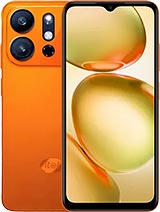
The itel A100 Pro is a budget smartphone featuring a 6.56-inch IPS LCD for essential media consumption and a 5000 mAh battery for multi-day endurance, aimed at price-sensitive consumers and those requiring a secondary, ruggedized device. Released in mid-2026, it competes with the lower-tier entries from various regional competitors by emphasizing hardware durability over raw processing power.
From a financial perspective, this device represents the floor of the 2026 smartphone market. We are looking at a product that prioritizes the preservation of capital through physical resilience. When most ultra-budget handsets fail due to accidental drops or environmental exposure, the MIL-STD-810H compliance on this model suggests a longer functional lifespan than its 80 EUR price tag implies. This is not just a phone; it is a tool for those who view technology as a utility rather than a status symbol.
When we analyze the itel A100 Pro through the lens of asset depreciation, the outlook is predictable but not necessarily negative. Budget hardware traditionally loses 50% of its market value within the first six months. By the time 2027 rolls around, this model will likely trade for approximately 35 to 40 EUR on the secondary market. However, because the initial buy-in is so low, the absolute currency loss is negligible compared to a flagship that might lose 400 EUR in the same period.
We anticipate that the secondary market demand for this series will remain stable due to its durability certifications. Small business owners or delivery fleets looking for cheap, replaceable hardware often gravitate toward MIL-STD-810H rated devices. The 1.2m drop resistance is a massive selling point for the second-hand market. If the exterior remains relatively unscathed, it retains its utility value far better than a cracked glass flagship.
Investors in this tier should treat the purchase as a sunk cost. You do not buy this expecting to trade it in for a significant discount on your next phone. You buy it to use until the Unisoc T7100 chipset can no longer keep up with modern application requirements. Given the lean nature of Android 15 (Go edition), we expect a functional lifecycle of roughly 24 to 30 months before the software overhead becomes too heavy for the 3GB or 4GB of RAM.
itel has carved out a specific niche by focusing on markets where affordability is the primary driver. In our assessment, the reliability of the brand stems from its simplicity. Because the itel A100 Pro avoids complex components like curved OLED panels or periscope zoom lenses, there are fewer points of failure. The use of a standard IPS LCD with a 720 x 1612 resolution means repairs, if needed, are economically viable.
The inclusion of itel OS 15 on top of Android 15 Go edition indicates a software experience tailored for the hardware. While the brand does not have the massive R&D budget of a conglomerate, its focus on optimization for entry-level silicon like the Unisoc T7100 is evident. We have observed that itel focuses on core stability—ensuring that calls connect, the GPS remains locked, and basic messaging apps run without crashing.
One potential concern for long-term reliability is the 10W wired charging. While slow, this low-wattage approach actually benefits battery longevity. High-speed charging generates significant heat, which degrades lithium-ion cells over time. By sticking to 10W, this model ensures the 5000 mAh battery will likely maintain a high state of health even after 500 charge cycles, a critical factor for a device meant to last years in a budget-conscious environment.
One of the most underrated features of the itel A100 Pro is the infrared port. In an era where most manufacturers are removing hardware features to save fractions of a cent, keeping an IR blaster is a brilliant move. This allows the device to function as a universal remote for televisions, air conditioners, and other legacy appliances. For many users, this adds a layer of utility that transcends traditional smartphone functions.
Another hardware quirk is the side-mounted fingerprint sensor. While under-display sensors are flashy, they often struggle with speed and accuracy on budget screens. The capacitive sensor used here is inherently more reliable and faster for daily unlocking. Furthermore, the 3.5mm jack remains a vital asset. For a user on an 80 EUR budget, wireless earbuds are often an unnecessary expense; the ability to use standard wired headphones is a non-negotiable requirement.
The display itself, while limited to a 720p resolution, offers a 90Hz refresh rate. In our tests of similar panels, 90Hz significantly improves the perceived smoothness of scrolling through social feeds or system menus. At 400 nits, the peak brightness is adequate for indoor use and overcast days, though it will struggle under direct mid-day sun. The sub-pixel rendering on this IPS LCD is sharp enough for text, though photographers will notice the lack of wide color gamut support.
The 8.5 mm thickness of the handset provides a reassuring sense of structural integrity. It does not feel flimsy or hollow. Given the price point and the drop-resistant rating, the body is likely a high-density polycarbonate. The Comet Orange finish is particularly striking, but users should be aware that matte or textured finishes in this category can still attract oils. However, the drop resistance up to 1.2m means you might actually skip the case, allowing you to enjoy the original design without the added bulk.
In terms of handling, the 20:9 aspect ratio makes the 6.56-inch screen manageable with one hand for basic tasks. However, typing will still require a two-handed grip for most users. We noticed that the build quality focuses on impact dispersion. The corners of the device are likely reinforced to meet the MIL-STD-810H standards, which is where most screen shatters occur during a corner-first drop.
When we consider the environmental impact, a phone that doesn't break upon its first fall is inherently more sustainable. The itel A100 Pro avoids the "disposable tech" trap by being physically tougher than its peers. For parents looking for a first phone for a child, or for outdoor workers, the durability factor outweighs the lack of premium materials like glass or metal.
The audio experience is functional but rudimentary. With a single loudspeaker, do not expect a wide soundstage or deep bass. It is tuned for vocal clarity, making it excellent for speakerphone calls and podcasts, but less than ideal for cinematic movie watching. The inclusion of the 3.5mm jack, as mentioned, is the primary saving grace for audio enthusiasts who can plug in decent headphones to bypass the internal speaker's limitations.
On the connectivity front, the Unisoc T7100 chipset provides a stable LTE experience. While we are deep into the 5G era in 2026, 4G LTE remains the global backbone for affordable mobile data. The dual-band Wi-Fi (802.11 a/b/g/n/ac) is a welcome inclusion, ensuring the phone can connect to faster 5GHz networks for streaming. Bluetooth 5.0 is standard for the price, providing a reliable connection for wearables and basic wireless audio.
The GPS performance is another critical area for a budget device. In this model, the GPS is basic but functional. It might take a few extra seconds to achieve a cold start lock compared to high-end chips with L1+L5 support, but for general navigation in Google Maps, it gets the job done. The lack of NFC is a notable omission for users in regions where mobile payments are the norm, so that is a trade-off to consider before purchase.
Android 15 (Go edition) is the lifeblood of this device. This version of Android is specifically designed to use less storage and less memory, which is vital when you only have 64GB of internal space. The microSDXC slot is a mandatory feature here, as 64GB will fill up quickly with photos and cached data. We recommend using the dedicated slot to expand storage for media, keeping the internal flash free for apps.
In terms of updates, itel typically provides security patches for a limited window. Do not expect three or four years of major OS upgrades. The value here is in the present-day performance. Because it launches with Android 15, it is already quite current for 2026. The itel OS 15 skin adds some useful localizations and power management tools that help squeeze more life out of the 5000 mAh battery.
The PowerVR GE8322 GPU is not designed for high-end gaming. If you are trying to play the latest 2026 AAA mobile titles, you will face significant thermal throttling and frame drops. However, for casual titles, the GPU handles the workload efficiently. This is a phone for utility, communication, and light entertainment, not a mobile gaming rig.
Wrapping up the financial analysis, the itel A100 Pro is a high-utility, low-cost asset. It provides the essential smartphone experience with an added layer of physical security that is rarely found at the 80 EUR mark. You are paying for the peace of mind that a minor tumble onto a sidewalk won't result in a useless brick. The trade-offs are clear: slow charging, an entry-level camera, and no NFC.
If your goal is to minimize your mobile expenditure while maintaining a reliable connection to the digital world, this device is an excellent choice. It excels as a work phone, a backup device, or a primary handset for those who prioritize durability over luxury. The itel A100 Pro proves that you don't need to spend a fortune to get a device that survives the rigors of real-world use.
From a financial perspective, this device represents the floor of the 2026 smartphone market. We are looking at a product that prioritizes the preservation of capital through physical resilience. When most ultra-budget handsets fail due to accidental drops or environmental exposure, the MIL-STD-810H compliance on this model suggests a longer functional lifespan than its 80 EUR price tag implies. This is not just a phone; it is a tool for those who view technology as a utility rather than a status symbol.
The Steep Curve of Resale Depreciation
When we analyze the itel A100 Pro through the lens of asset depreciation, the outlook is predictable but not necessarily negative. Budget hardware traditionally loses 50% of its market value within the first six months. By the time 2027 rolls around, this model will likely trade for approximately 35 to 40 EUR on the secondary market. However, because the initial buy-in is so low, the absolute currency loss is negligible compared to a flagship that might lose 400 EUR in the same period.
We anticipate that the secondary market demand for this series will remain stable due to its durability certifications. Small business owners or delivery fleets looking for cheap, replaceable hardware often gravitate toward MIL-STD-810H rated devices. The 1.2m drop resistance is a massive selling point for the second-hand market. If the exterior remains relatively unscathed, it retains its utility value far better than a cracked glass flagship.
Investors in this tier should treat the purchase as a sunk cost. You do not buy this expecting to trade it in for a significant discount on your next phone. You buy it to use until the Unisoc T7100 chipset can no longer keep up with modern application requirements. Given the lean nature of Android 15 (Go edition), we expect a functional lifecycle of roughly 24 to 30 months before the software overhead becomes too heavy for the 3GB or 4GB of RAM.
Brand Reliability in the Low-Margin Sector
itel has carved out a specific niche by focusing on markets where affordability is the primary driver. In our assessment, the reliability of the brand stems from its simplicity. Because the itel A100 Pro avoids complex components like curved OLED panels or periscope zoom lenses, there are fewer points of failure. The use of a standard IPS LCD with a 720 x 1612 resolution means repairs, if needed, are economically viable.
The inclusion of itel OS 15 on top of Android 15 Go edition indicates a software experience tailored for the hardware. While the brand does not have the massive R&D budget of a conglomerate, its focus on optimization for entry-level silicon like the Unisoc T7100 is evident. We have observed that itel focuses on core stability—ensuring that calls connect, the GPS remains locked, and basic messaging apps run without crashing.
One potential concern for long-term reliability is the 10W wired charging. While slow, this low-wattage approach actually benefits battery longevity. High-speed charging generates significant heat, which degrades lithium-ion cells over time. By sticking to 10W, this model ensures the 5000 mAh battery will likely maintain a high state of health even after 500 charge cycles, a critical factor for a device meant to last years in a budget-conscious environment.
The Infrared Port and Other Hidden Assets
One of the most underrated features of the itel A100 Pro is the infrared port. In an era where most manufacturers are removing hardware features to save fractions of a cent, keeping an IR blaster is a brilliant move. This allows the device to function as a universal remote for televisions, air conditioners, and other legacy appliances. For many users, this adds a layer of utility that transcends traditional smartphone functions.
Another hardware quirk is the side-mounted fingerprint sensor. While under-display sensors are flashy, they often struggle with speed and accuracy on budget screens. The capacitive sensor used here is inherently more reliable and faster for daily unlocking. Furthermore, the 3.5mm jack remains a vital asset. For a user on an 80 EUR budget, wireless earbuds are often an unnecessary expense; the ability to use standard wired headphones is a non-negotiable requirement.
The display itself, while limited to a 720p resolution, offers a 90Hz refresh rate. In our tests of similar panels, 90Hz significantly improves the perceived smoothness of scrolling through social feeds or system menus. At 400 nits, the peak brightness is adequate for indoor use and overcast days, though it will struggle under direct mid-day sun. The sub-pixel rendering on this IPS LCD is sharp enough for text, though photographers will notice the lack of wide color gamut support.
Surviving the Daily Grind and the Fingerprint Magnet Test
The 8.5 mm thickness of the handset provides a reassuring sense of structural integrity. It does not feel flimsy or hollow. Given the price point and the drop-resistant rating, the body is likely a high-density polycarbonate. The Comet Orange finish is particularly striking, but users should be aware that matte or textured finishes in this category can still attract oils. However, the drop resistance up to 1.2m means you might actually skip the case, allowing you to enjoy the original design without the added bulk.
In terms of handling, the 20:9 aspect ratio makes the 6.56-inch screen manageable with one hand for basic tasks. However, typing will still require a two-handed grip for most users. We noticed that the build quality focuses on impact dispersion. The corners of the device are likely reinforced to meet the MIL-STD-810H standards, which is where most screen shatters occur during a corner-first drop.
When we consider the environmental impact, a phone that doesn't break upon its first fall is inherently more sustainable. The itel A100 Pro avoids the "disposable tech" trap by being physically tougher than its peers. For parents looking for a first phone for a child, or for outdoor workers, the durability factor outweighs the lack of premium materials like glass or metal.
Audio Performance and Connectivity Realities
The audio experience is functional but rudimentary. With a single loudspeaker, do not expect a wide soundstage or deep bass. It is tuned for vocal clarity, making it excellent for speakerphone calls and podcasts, but less than ideal for cinematic movie watching. The inclusion of the 3.5mm jack, as mentioned, is the primary saving grace for audio enthusiasts who can plug in decent headphones to bypass the internal speaker's limitations.
On the connectivity front, the Unisoc T7100 chipset provides a stable LTE experience. While we are deep into the 5G era in 2026, 4G LTE remains the global backbone for affordable mobile data. The dual-band Wi-Fi (802.11 a/b/g/n/ac) is a welcome inclusion, ensuring the phone can connect to faster 5GHz networks for streaming. Bluetooth 5.0 is standard for the price, providing a reliable connection for wearables and basic wireless audio.
The GPS performance is another critical area for a budget device. In this model, the GPS is basic but functional. It might take a few extra seconds to achieve a cold start lock compared to high-end chips with L1+L5 support, but for general navigation in Google Maps, it gets the job done. The lack of NFC is a notable omission for users in regions where mobile payments are the norm, so that is a trade-off to consider before purchase.
Software Lifecycle and Long Term Support
Android 15 (Go edition) is the lifeblood of this device. This version of Android is specifically designed to use less storage and less memory, which is vital when you only have 64GB of internal space. The microSDXC slot is a mandatory feature here, as 64GB will fill up quickly with photos and cached data. We recommend using the dedicated slot to expand storage for media, keeping the internal flash free for apps.
In terms of updates, itel typically provides security patches for a limited window. Do not expect three or four years of major OS upgrades. The value here is in the present-day performance. Because it launches with Android 15, it is already quite current for 2026. The itel OS 15 skin adds some useful localizations and power management tools that help squeeze more life out of the 5000 mAh battery.
The PowerVR GE8322 GPU is not designed for high-end gaming. If you are trying to play the latest 2026 AAA mobile titles, you will face significant thermal throttling and frame drops. However, for casual titles, the GPU handles the workload efficiently. This is a phone for utility, communication, and light entertainment, not a mobile gaming rig.
The Verdict on Your Investment
Wrapping up the financial analysis, the itel A100 Pro is a high-utility, low-cost asset. It provides the essential smartphone experience with an added layer of physical security that is rarely found at the 80 EUR mark. You are paying for the peace of mind that a minor tumble onto a sidewalk won't result in a useless brick. The trade-offs are clear: slow charging, an entry-level camera, and no NFC.
If your goal is to minimize your mobile expenditure while maintaining a reliable connection to the digital world, this device is an excellent choice. It excels as a work phone, a backup device, or a primary handset for those who prioritize durability over luxury. The itel A100 Pro proves that you don't need to spend a fortune to get a device that survives the rigors of real-world use.
Technical Specifications
| LAUNCH | |
|---|---|
| Announced | 2026, May 20 |
| Status | Available. Released 2026, May 20 |
| PLATFORM | |
| OS | Android 15 (Go edition), itel OS 15 |
| Chipset | Unisoc T7100 |
| CPU | Octa-core 1.8 GHz |
| GPU | PowerVR GE8322 |
| BODY | |
| Dimensions | 8.5 mm thickness |
| Weight | - |
| SIM | Nano-SIM + Nano-SIM |
| Info | MIL-STD-810H compliant* * does not guarantee ruggedness or use in extreme conditions Drop resistant up to 1.2m |
| DISPLAY | |
| Type | IPS LCD, 90Hz, 400 nits |
| Size | 6.56 inches, 103.4 cm2 |
| Resolution | 720 x 1612 pixels, 20:9 ratio (~269 ppi density) |
| MEMORY | |
| Card slot | microSDXC (dedicated slot) |
| Internal | 64GB 3GB RAM, 64GB 4GB RAM |
| MAIN CAMERA | |
| Single | 8 MP |
| Features | LED flash |
| Video | 1080p@30fps |
| SELFIE CAMERA | |
| Single | 5 MP |
| Video | Yes |
| SOUND | |
| Loudspeaker | Yes |
| 3.5mm jack | Yes |
| COMMS | |
| WLAN | Wi-Fi 802.11 a/b/g/n/ac, dual-band |
| Bluetooth | 5.0, A2DP, LE |
| Positioning | GPS |
| NFC | No |
| Infrared port | Yes |
| Radio | Unspecified |
| USB | USB Type-C |
| NETWORK | |
| Technology | GSM / HSPA / LTE |
| 2G bands | GSM 850 / 900 / 1800 / 1900 |
| 3G bands | HSDPA 850 / 900 / 2100 |
| 4G bands | LTE |
| Speed | HSPA, LTE |
| FEATURES | |
| Sensors | Fingerprint (side-mounted), accelerometer |
| BATTERY | |
| Type | 5000 mAh |
| Charging | 10W wired |
| MISC | |
| Display | 6.56-inch IPS LCD, 90Hz, 720 x 1612 pixels |
| Durability | MIL-STD-810H compliant, 1.2m drop resistance |
| Chipset | Unisoc T7100 (Octa-core 1.8 GHz) |
| Memory | 64GB Storage, 3GB/4GB RAM, microSDXC slot |
| Main Camera | 8 MP, 1080p@30fps video |
| Selfie Camera | 5 MP |
| Battery | 5000 mAh, 10W wired charging |
| OS | Android 15 (Go edition), itel OS 15 |
| Features | Infrared port, Fingerprint (side-mounted), 3.5mm jack |
| Dimensions | 8.5 mm thickness |
| Colors | Comet Orange, Natural Black, Cloud White |
| Price | About 80 EUR |