Why the Oukitel G7 Is the Only Rugged Phone You Should Buy Outright
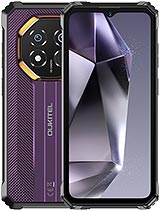
Overview
The Hidden Cost of the 'Free' Rugged Phone
The Oukitel G7 is a budget-tier rugged smartphone featuring a 10600 mAh battery for extreme multi-day endurance and MIL-STD-810H compliance for structural integrity, aimed at field workers and outdoor enthusiasts. Released in early 2026, it competes with entry-level outdoor handsets by prioritizing raw physical resilience over processing power or connectivity speed.
Carrier deals often lure consumers with the promise of a 'free' rugged device on a 24-month or 36-month contract. For a device like the Oukitel G7, this is a calculated trap. When we break down the math, paying for a premium data plan just to 'subsidize' a handset that is inherently affordable makes no economic sense. This device is designed for the cost-conscious buyer who needs a secondary 'tank' for the job site or the backcountry. Buying it unlocked ensures you aren't overpaying for 4G-only technology in a world moving toward 6G prototyping.
Armor-Plated Hardware and Compromised Clarity
The build quality of this handset is its primary selling point. Weighing in at a substantial 373 grams, it feels less like a phone and more like a piece of industrial equipment. The chassis utilizes a combination of reinforced rubber and metal, providing a tactile sense of security. It carries an IP68/IP69K rating, meaning it can survive not just a dip in a stream but also high-pressure, high-temperature water jets. If you are working in environments where steam cleaning or heavy mud is common, this level of protection is essential.
However, the screen is where the budget reality sets in. The 6.52-inch IPS LCD offers a 90Hz refresh rate, which provides some fluid scrolling, but the resolution is a paltry 576 x 1280 pixels. In June 2026, seeing a ppi (pixels per inch) density of approximately 215 is jarring. Text lacks the crispness found on standard 1080p panels, and viewing high-resolution blueprints or maps can be frustrating. The display is protected by Dragon tracks glass with a Mohs level 7 hardness, which means it will resist scratches from coins or keys, but it won't save you from the lack of visual detail.
The Unisoc Reality and Software Longevity
Under the hood, the Unisoc T615 chipset handles the heavy lifting. This 12nm octa-core processor is built for efficiency, not velocity. It utilizes two Cortex-A75 performance cores at 1.8 GHz paired with six Cortex-A55 energy-efficient cores. For basic navigation, email, and rugged-sector apps like GPS or light inventory management, the performance is adequate. But don't expect to run heavy 3D rendering or intensive mobile games. The Mali-G57 MP1 GPU provides just enough power to keep the UI smooth at 90Hz, but anything more demanding causes noticeable frame drops.
Running Android 16 out of the box is a surprising win. This version of the OS introduces refined privacy controls and better background task management, which is crucial for a phone with limited RAM. While the 4GB of RAM is on the lower end for 2026, the UFS storage helps mitigate some of the lag when switching between apps. Users should still expect some 'reloading' of apps if they have more than five or six tabs open in a browser. The lack of bloatware in our assessment is a refreshing change, though the UI feels very 'stock,' which may appear dated to those used to more polished skins.
The 10600 mAh Battery: A Double-Edged Sword
The standout feature is undoubtedly the 10600 mAh Li-Po battery. For the average user, this is a four-day phone. For the heavy field worker using GPS and high brightness all day, it easily clears two full days of use. This capacity effectively turns the handset into a portable power bank, and the reverse wired charging feature allows you to top up your earbuds or a coworker's dying phone in a pinch. The EU Energy Label 'Class A' rating confirms that this cell is designed for efficiency and long-term health.
The trade-off is the charging speed. At 18W wired charging, refueling this massive tank is an overnight affair. We are talking about five to six hours for a full 0-100% cycle. In an era where 65W is the mid-range standard, 18W feels glacial. Furthermore, while the battery is rated for 1000 cycles—meaning it stays healthy for about three years of daily use—the heat generated during long charging sessions can be a concern. It doesn't get dangerously hot, but the warmth is persistent due to the thick rubber insulation trapping thermal energy.
Audio, Haptics, and the Missing Jack
The audio experience is functional but uninspired. The single loudspeaker is loud enough to be heard over a construction site, but it lacks any semblance of bass or depth. It is tuned for vocal clarity, which is great for speakerphone calls but poor for media consumption. Surprisingly, for a rugged device that often appeals to the 'old school' crowd, there is no 3.5mm headphone jack. You will need to rely on the Bluetooth 5.0 connection or a USB-C dongle.
Haptic feedback is another area where the budget constraints are visible. The vibration motor is 'buzzy' rather than precise. It doesn't offer the sharp, tactile clicks seen in more expensive handsets. When typing, the vibration often feels like it's trailing behind your fingers, which leads many users to simply turn haptics off entirely. This isn't a dealbreaker for a tool, but it's a reminder that this is a utility device, not a luxury one.
The Connectivity Bottleneck
One of the most significant warnings for buyers in 2026 is the network limitation. The Oukitel G7 is an LTE-only device. While 4G coverage remains robust, the lack of 5G means you miss out on the lower latency and higher speeds that are becoming standard for cloud-based industrial applications. If your job requires uploading large 4K video inspections or massive data sets, the HSPA/LTE speeds will feel like a bottleneck. Additionally, the lack of NFC is a major oversight. You cannot use this phone for contactless payments (Google Wallet), which is a massive inconvenience for a daily driver in the mid-2020s.
Final Buying Strategy
If you are considering this device, do not get it through a carrier. The Oukitel G7 is a 'buy it and forget it' tool. Its value lies in its independence from fragile accessories and its massive battery. It is the perfect backup phone for camping, a primary phone for a rough-and-tumble trade job, or a device for a teenager who tends to shatter screens. But as a primary smartphone for a tech-savvy user, the low screen resolution and lack of 5G are hard pills to swallow.
The Oukitel G7 succeeds as a rugged power bank that happens to make calls. It fails as a modern multimedia machine. Choose your use case accordingly. If you need a phone that survives a three-story drop into a puddle and still has 40% battery on Thursday, this is your champion. If you want to watch Netflix in HD or pay for your coffee with your phone, look elsewhere.
Technical Specifications
| LAUNCH | |
|---|---|
| Announced | 2026 |
| Status | Available. Released 2026 |
| PLATFORM | |
| OS | Android 16 |
| Chipset | Unisoc T615 (12 nm) |
| CPU | Octa-core (2x1.8 GHz Cortex-A75 & 6x1.6 GHz Cortex-A55) |
| GPU | Mali-G57 MP1 |
| BODY | |
| Dimensions | 174.2 x 82.3 x 18.5 mm (6.86 x 3.24 x 0.73 in) |
| Weight | 373 g (13.16 oz) |
| SIM | Nano-SIM + Nano-SIM |
| Info | IP68/IP69K dust tight and water resistant (high pressure water jets; immersible up to 1.5m for 30 min) Drop resistant up to 1.5m MIL-STD-810H compliant |
| DISPLAY | |
| Type | IPS LCD, 90Hz, 400 nits |
| Size | 6.52 inches, 102.6 cm2 (~71.6% screen-to-body ratio) |
| Resolution | 576 x 1280 pixels, 20:9 ratio (~215 ppi density) |
| Protection | Dragon tracks glass, Mohs level 7 |
| MEMORY | |
| Card slot | microSDXC (uses shared SIM slot) |
| Internal | 64GB 4GB RAM, 128GB 4GB RAM, 256GB 4GB RAM, 256GB 8GB RAM |
| Info | UFS |
| MAIN CAMERA | |
| Single | 16 MP, f/2.2, (wide), 1/3.06", AF |
| Features | LED flash, HDR, panorama |
| Video | 1080p@30fps |
| SELFIE CAMERA | |
| Single | 8 MP, f/2.0, (wide), 1/4.0" |
| Video | 720p@30fps |
| SOUND | |
| Loudspeaker | Yes |
| 3.5mm jack | No |
| COMMS | |
| WLAN | Wi-Fi 802.11 a/b/g/n/ac, dual-band |
| Bluetooth | 5.0, A2DP, LE |
| Positioning | GPS, GALILEO, GLONASS, BDS |
| NFC | No |
| Radio | FM radio |
| USB | USB Type-C 2.0, OTG |
| NETWORK | |
| Technology | GSM / HSPA / LTE |
| 2G bands | GSM 850 / 900 / 1800 / 1900 |
| 3G bands | HSDPA 850 / 900 / 1700(AWS) / 1900 / 2100 |
| 4G bands | 1, 2, 3, 4, 5, 7, 8, 12, 17, 18, 19, 20, 25, 26, 28, 38, 40, 41, 66 |
| Speed | HSPA, LTE |
| FEATURES | |
| Sensors | Fingerprint, accelerometer, proximity, compass |
| BATTERY | |
| Type | Li-Po 10600 mAh |
| Charging | 18W wired Reverse wired |
| MISC | |
| Battery | 10600 mAh Li-Po, 18W Wired |
| Durability | IP68, IP69K, MIL-STD-810H, 1.5m Drop Resistant |
| Display | 6.52" IPS LCD, 90Hz, 576 x 1280 pixels |
| Chipset | Unisoc T615 (12 nm), Octa-core |
| Main Camera | 16 MP, f/2.2, 1080p@30fps |
| Selfie Camera | 8 MP, f/2.0, 720p@30fps |
| Software | Android 16 |
| Weight | 373 g (13.16 oz) |
| Memory | Up to 256GB Storage, 8GB RAM (UFS) |
| Connectivity | 4G LTE, Wi-Fi 5, Bluetooth 5.0, No NFC |
| Colors | Purple, Black, Green |
| EU LABEL | |
| Energy | Class A |
| Battery | 121:24h endurance, 1000 cycles |
| Free fall | Class A (308 falls) |
| Repairability | Class C |