Why the TCL 403 Is the Best Secondary Phone for Your Wallet
Overview
The Strategic Value of the Backup Handset
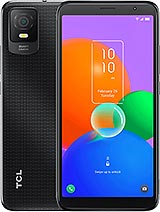
The TCL 403 is an entry-level smartphone featuring Android 12 (Go edition) for efficient resource management and a 6.0-inch TFT LCD for basic utility, aimed at budget-conscious users seeking a reliable secondary device. Released in early 2023, it competes with other ultra-budget options like the Nokia C-series, focusing on providing essential connectivity at a fraction of the cost of flagship models. We view this device not as a primary multimedia powerhouse, but as a calculated financial asset designed to mitigate the risks of high-end smartphone ownership.
Investing in this handset makes sense when viewed through the lens of operational efficiency. Many users carry a primary device worth over 800 EUR, making the prospect of theft, loss, or damage a significant financial liability. This model acts as a protective hedge. By offloading risky tasks like using GPS while cycling or taking calls in crowded public spaces to a sub-100 EUR device, you effectively lower your total cost of ownership for mobile technology. It is a tool for communication that prioritizes function over form, ensuring that you remain reachable without the anxiety associated with premium hardware.
Endurance in the Shadows
Power management on this model relies on a 3000 mAh Li-Ion battery. While this capacity appears modest compared to the 5000 mAh standard found in [mid-range phones](/trend/best-mid-range-phones-2026/), the hardware load is significantly lighter. The Mediatek MT6761 Helio A22 chipset is a 12nm quad-core processor that sips power during idle states. Because the screen resolution is limited to 480 x 960 pixels, the GPU does not have to work hard to push pixels, which preserves energy for background tasks and standby time.
In our assessment of standby reliability, the device excels as an 'emergency drawer phone'. If you leave it fully charged and powered down, the Li-Ion chemistry ensures it retains enough juice to be useful weeks later. During active use, expect it to survive a full workday of light communication. The lack of a high-refresh-rate panel or power-hungry 5G modems works in its favor here. It is a low-maintenance companion that doesn't demand constant attention from a wall outlet. For a backup phone, standby time is the most critical metric, and this model delivers stability that more complex devices often sacrifice for performance.
Navigating the Performance Floor
With 1GB or 2GB of RAM, this phone exists at the absolute baseline of modern smartphone functionality. This is where Android 12 (Go edition) becomes the most important software feature. Standard Android would likely crawl on this hardware, but the Go variant uses optimized 'Lite' versions of essential apps like Google Maps Go and Gmail Go. These versions are designed to occupy less storage and utilize fewer system resources, allowing the PowerVR GE8320 GPU to maintain basic UI fluidity.
Multitasking is not the goal here. Attempting to run multiple heavy applications simultaneously will lead to aggressive background app killing. We recommend a linear usage pattern: open one app, complete the task, and move to the next. For WhatsApp, basic web browsing, and telephony, the quad-core Cortex-A53 processor at 2.0 GHz provides enough kick to get the job done. It's a reminder that not everyone needs a supercomputer in their pocket for everyday errands. Users who understand these hardware limitations will find the experience predictable and utilitarian.
The Legacy Charging Infrastructure
Charging occurs through a microUSB 2.0 port. From a modern perspective, this is a legacy connection, but from a value-hunter's perspective, it offers a hidden advantage. Most households are already saturated with microUSB cables from older electronics, meaning you likely have charging points available at home, in the car, and at the office without spending extra on new peripherals. It follows the philosophy of 'use what you have'.
There is no fast-charging protocol present here. Expect a full charge cycle to take roughly two to three hours. This isn't a device you top up for fifteen minutes before heading out; it's a device you charge overnight. The absence of wireless charging is an expected trade-off at this price point. By omitting these expensive components, the manufacturer keeps the entry price low, which is the primary draw for this specific market segment. It is a straightforward, wired experience that avoids the complexity and heat generation of higher-wattage systems.
Connectivity and Basic Communication
The 4G LTE Cat4 modem provides download speeds up to 150 Mbps, which is more than sufficient for the types of tasks this hardware can handle. Whether you're checking emails or navigating with GPS, the signal stability remains consistent. It supports standard Wi-Fi 802.11 b/g/n, which, while not the fastest Wi-Fi 6 standard, is perfectly compatible with almost every public and home router available in 2023.
Bluetooth 5.0 is a welcome inclusion, ensuring a stable connection for wireless earbuds or car audio systems. We also appreciate the inclusion of a 3.5mm headphone jack. In an era where premium brands are removing this port to sell expensive wireless accessories, this handset retains the ability to use cheap, reliable wired headsets. This is a practical win for users who don't want to worry about charging their headphones. For a phone designed for utility, being able to plug in any standard set of buds is a major convenience.
Structural Integrity and Physical Value
Weighing in at 182 grams, the phone feels solid without being cumbersome. The build is primarily plastic, which is an intentional choice for durability. Unlike glass-backed flagships that shatter upon the first encounter with a sidewalk, plastic is resilient and flexible. It can absorb minor impacts that would crack more 'premium' materials. The textured back helps with grip, reducing the likelihood of accidental drops in the first place.
With a thickness of 9.6 mm, it feels substantial in the hand. This isn't the thinnest device on the market, but the extra girth allows for a more rigid frame. For a phone likely to be tossed into a glovebox or a gym bag, this ruggedness is a selling point. You don't need a 50 EUR case to protect it; the chassis itself is built for the rigors of real-world use. It’s the digital equivalent of a reliable work boot—not stylish, but built to last through the day.
Long-Term Asset Depreciation
From a resale perspective, ultra-[budget phones](/trend/best-budget-phones-2026/) like this don't follow the same depreciation curve as flagships. When you buy a phone for 80 EUR, there isn't much further for the price to fall. It retains its value as a functional tool. Even after a year of use, its worth to another person as an emergency handset or a child's first phone remains relatively high compared to its initial cost. This makes the 'net cost' of owning the device exceptionally low.
The inclusion of a dedicated microSDXC slot is another value-add. You can expand the 32GB of internal storage without sacrificing one of the SIM slots. This allows the handset to double as a dedicated MP3 player or an offline GPS unit with downloaded maps. In our view, the versatility offered by these physical expansion options far outweighs the lack of high-end software features. It is a device that allows you to control your data and storage without relying on expensive cloud subscriptions.
The TCL 403 succeeds by knowing exactly what it is: an affordable, functional, and durable communication tool. It doesn't try to be a gaming machine or a professional camera. Instead, it focuses on the core necessities of mobile life in 2023. For the savvy economist, it represents one of the smartest ways to stay connected without overextending your tech budget.
Technical Specifications
| LAUNCH | |
|---|---|
| Announced | 2023, January 05 |
| Status | Available. Released 2023, April 04 |
| PLATFORM | |
| OS | Android 12 (Go edition) |
| Chipset | Mediatek MT6761 Helio A22 (12 nm) |
| CPU | Quad-core 2.0 GHz Cortex-A53 |
| GPU | PowerVR GE8320 |
| BODY | |
| Dimensions | 159.2 x 78.2 x 9.6 mm (6.27 x 3.08 x 0.38 in) |
| Weight | 182 g (6.42 oz) |
| SIM | · Nano-SIM· Nano-SIM + Nano-SIM |
| DISPLAY | |
| Type | TFT LCD |
| Size | 6.0 inches, 92.9 cm2 (~74.6% screen-to-body ratio) |
| Resolution | 480 x 960 pixels, 18:9 ratio (~179 ppi density) |
| MEMORY | |
| Card slot | microSDXC (dedicated slot) |
| Internal | 32GB 1GB RAM, 32GB 2GB RAM |
| MAIN CAMERA | |
| Single | 8 MP, f/2.0, 27mm (wide), 1/4.0", 1.12µm, AF or 5 MP, f/2.4, 27mm (wide), 1/5.0", 1.12µm - T431Q only |
| Features | LED flash, HDR, panorama |
| Video | 1080p@30fps or 720p@30fps (T431Q only) |
| SELFIE CAMERA | |
| Single | 5 MP, f/2.8 or 2 MP, f/2.8 - T431Q only |
| Video | 720p@30fps |
| SOUND | |
| Loudspeaker | Yes |
| 3.5mm jack | Yes |
| COMMS | |
| WLAN | Wi-Fi 802.11 b/g/n, Wi-Fi Direct |
| Bluetooth | 5.0, A2DP, LE |
| Positioning | GPS, GALILEO, BDS |
| NFC | No |
| Radio | Unspecified |
| USB | microUSB 2.0 |
| NETWORK | |
| Technology | GSM / HSPA / LTE |
| 2G bands | GSM 850 / 900 / 1800 / 1900 |
| 3G bands | HSDPA 900 / 2100 - T431D |
| Info | 1, 3, 5, 7, 8, 20, 28, 38, 40, 41 - T431Q |
| 4G bands | 1, 3, 7, 8, 20, 28 - T431D |
| Speed | HSPA 42.2/11.5 Mbps, LTE Cat4 150/75 Mbps |
| FEATURES | |
| Sensors | Accelerometer |
| BATTERY | |
| Type | Li-Ion 3000 mAh |
| MISC | |
| Colors | Prime Black, Mauve Mist |
| Models | T431D, T431U, T431Q, T431P, T431A, T431E |
| Price | About 80 EUR |