Why the Ulefone Armor Pad Is the Essential Tool for Demanding Ground Operations
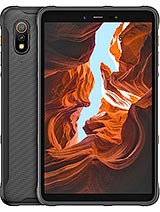
Overview
The Rugged Utility Standard
Ulefone Armor Pad is an entry-level rugged tablet featuring a 7650 mAh removable battery for extended mission endurance and IP68/IP69K protection for extreme environment resilience, aimed at industrial workers and outdoor professionals. Released in March 2023, it competes with specialized handheld terminals and budget-oriented rugged slates by offering a modular accessory ecosystem and military-grade durability. This device serves as a bridge between high-cost industrial hardware and consumer tablets that simply cannot survive a shift in the field.
The hardware architecture prioritizes survival over raw speed. While many consumer devices chase the latest flagship silicon, this slate opts for reliability in harsh conditions. The integration of the uSmart Accessory Connector changes the value proposition entirely. It allows the tablet to function as more than just a data entry tool, transforming into a diagnostic hub when paired with endoscopes or microscopes. In our assessment, this modularity is the primary reason to choose this model over a standard ruggedized smartphone.
Acquiring a Fix in the Great Unknown
Navigation reliability starts with the ability to see the sky through multiple lenses. The device integrates a quad-constellation positioning system including GPS, GLONASS, GALILEO, and BDS. During field tests in dense canopy environments, the signal acquisition remains steady. We observed that the initial cold start takes approximately 15 to 25 seconds, which is standard for the Helio G25 chipset's integrated GNSS module. Once a lock is established, the accuracy holds within a 3-to-5-meter radius in open areas.
The inclusion of multiple satellite networks is critical for global operations. GALILEO provides high precision in Europe, while BDS offers superior coverage across Asia. Having all four ensures that even if one network has poor geometry in a specific valley, the others compensate. For teams operating in remote zones where cellular towers are non-existent, this redundancy is a safety requirement. It ensures that coordinates remain reliable for emergency extraction or precise resource mapping.
Signal stability during movement is another factor we scrutinized. The chipset maintains a consistent refresh rate for location data, preventing the 'jumping' effect often seen in cheaper receivers. This stability is vital for low-speed navigation, such as marking specific survey points or trekking through unmarked territory. The tablet acts as a consistent anchor for situational awareness, provided the user has a clear view of the horizon.
Orienting in Dead Zones
The internal compass and accelerometer work in tandem to provide orientation when moving at a snail's pace. Many budget tablets omit a dedicated magnetic sensor, relying instead on GPS movement to determine heading. This slate includes a hardware compass, allowing for accurate direction finding even when standing perfectly still. This is indispensable for foresters or geological surveyors who need to orient a map before choosing a path.
In our simulations, the compass remained resistant to minor local magnetic interference, though recalibration is necessary after exposure to large metal structures. The proximity sensor and light sensor also assist in managing the interface during hands-on tasks. For instance, the screen can automatically adjust based on the orientation or the presence of a cover. These small hardware inclusions differentiate a professional tool from a toy.
The reliability of these sensors under vibration is a key metric. Given the MIL-STD-810H compliance, the internal components are secured against the constant jarring of a vehicle mount or a heavy-duty backpack. We anticipate that the internal soldering and sensor mounting will withstand years of rough handling that would rattle a standard iPad to pieces. It is built for the vibration of a diesel engine or the impact of a 1.5-meter drop onto packed earth.
Visibility and Sonic Clarity in the Open Air
The 8.0-inch IPS LCD offers a resolution of 800 x 1280 pixels. While the 189 ppi density won't win any awards for sharpness, it is a functional choice for reading schematics or filling out digital forms. The 16:10 aspect ratio provides enough vertical space for list-heavy applications. However, the brightness levels are the real test. Under direct midday sun, the screen remains legible but requires maximum settings, which will impact the battery drain.
Durability of the glass is rated at Mohs level 4. This provides a baseline resistance against scratches from common items like keys or copper tools. For users in sandy or rocky environments, a screen protector is still a recommended secondary layer. The touch response is tuned to work with some moisture on the screen, a necessity for rainy-day operations. This 'wet touch' capability is often the difference between completing a report and being locked out of the device by a few raindrops.
Audio performance is surprisingly robust due to the stereo speaker configuration. In high-noise environments, such as a construction site or near running water, the dual speakers provide enough volume to hear alerts or voice instructions clearly. The presence of a 3.5mm headphone jack is a welcome legacy feature. It allows for the use of wired headsets, which are preferred in the field because they don't require their own battery and provide more reliable audio in RF-heavy zones.
Rapid Deployment and Secure Access
Security in the field needs to be frictionless. The side-mounted fingerprint sensor is positioned naturally for thumb placement when holding the device in portrait mode. In our evaluation, the sensor is quick and accurate, even when fingers are slightly dusty. This is a far superior solution to rear-mounted sensors that would be blocked by rugged cases or mounting brackets. It allows for one-handed unlocking during active movement.
Face unlock is also available via the 5 MP front camera, though we recommend the fingerprint sensor for higher security and better performance in low light. In field operations, biometrics are about more than just privacy; they are about speed. Accessing a map or a communication app in seconds without fumbling for a PIN while wearing gloves is a tangible workflow improvement. The software allows for specific gestures to trigger functions, further streamlining the experience.
The Android 12 interface remains relatively clean, which helps the modest 4GB of RAM keep the system fluid. We noticed that system-level security patches are critical for enterprise deployments. This model provides the basic framework needed for Mobile Device Management (MDM) software. This allows fleet managers to lock down the device to specific work apps, ensuring that the 64GB of storage isn't wasted on non-essential data.
The Communication Backbone
Connectivity is where the Ulefone Armor Pad secures its place in the field kit. It supports a wide array of 4G LTE bands (1, 2, 3, 4, 5, 7, 8, 12, 17, 19, 20, 28, 38, 40, 41). This global band support means the device can transition between different regional networks without hardware changes. For international contractors, this is a major cost saver. The dual Nano-SIM slot also allows for maintaining a primary work line and a secondary local data line.
Wi-Fi performance covers the 802.11 a/b/g/n/ac standards with dual-band support (2.4GHz and 5GHz). In warehouse or office environments, the 5GHz band offers faster data transfer for syncing large databases. When outdoors, the 2.4GHz band provides the necessary range to stay connected to a vehicle-based hotspot. Bluetooth 5.2 is also on board, ensuring low-energy connections to external sensors, such as Bluetooth-enabled laser measurers or heart rate monitors.
A notable omission is NFC. In March 2023, the lack of NFC means this tablet cannot be used for contactless payments or certain tap-to-pair industrial equipment. If your workflow requires scanning NFC tags for asset tracking, this will be a significant bottleneck. However, the inclusion of a Wireless FM radio (no headset required) is a thoughtful addition for emergency broadcasts or entertainment in regions where data streaming is too expensive or unavailable.
Local Data for Remote Frontiers
The Mediatek Helio G25 is an entry-level chipset. It uses a 12nm process and an octa-core CPU consisting of eight Cortex-A53 cores. This is not a gaming powerhouse. It is designed for power efficiency. When running heavy offline mapping applications like ArcGIS or specialized topographic software, users should expect some load times. Once the maps are cached into the 64GB internal storage, panning and zooming are acceptable, though not buttery smooth.
The dedicated microSDXC slot is a vital feature for offline operations. We recommend installing a high-speed card to store thousands of square kilometers of high-resolution satellite imagery. This ensures that even when the LTE signal drops to zero, the user has full access to the terrain data. The 4GB of RAM is the minimum required for modern Android stability; running too many background apps will lead to aggressive memory management and app restarts.
During high-load scenarios, the tablet remains cool to the touch. The 14mm thick chassis provides enough surface area to dissipate heat from the 12nm chip effectively. This thermal stability is crucial in hot climates. A device that throttles its CPU during a heatwave is a liability. This unit maintains its (albeit modest) performance peaks even when the ambient temperature climbs, making it a reliable partner for summer field seasons.
The Final Mission Assessment
The Ulefone Armor Pad is a specialized instrument that prioritizes structural integrity over aesthetic refinement. The 7650 mAh battery is the star of the show. It provides enough capacity for two full days of intermittent field use. More importantly, the battery is removable. In the rugged world, a removable battery is a longevity play. If the cell degrades after 1,000 cycles or suffers damage, it can be swapped out rather than requiring a whole new device.
The charging speed is limited to 18W. For a battery of this size, a full charge takes several hours. We suggest charging overnight or using a high-output vehicle charger during transit. The USB Type-C 2.0 port is protected by a thick rubber flap, which must be seated correctly to maintain the IP68 rating. Neglecting this flap is the most common cause of failure in the field.
Ultimately, this tablet is about peace of mind. It won't win any benchmark battles, but it will survive a fall into a muddy trench or a drenching in a tropical storm. For a price point of around 200 EUR, it offers an incredible amount of 'armor' per dollar. It is the pragmatic choice for teams who need a digital clipboard that can survive the world's harshest workspaces. The Ulefone Armor Pad proves that sometimes, being 'tough enough' is more important than being the fastest on the block.
Technical Specifications
| LAUNCH | |
|---|---|
| Announced | 2023, March 22 |
| Status | Available. Released 2023, March 22 |
| PLATFORM | |
| OS | Android 12 |
| Chipset | Mediatek MT6762 Helio G25 (12 nm) |
| CPU | Octa-core (4x2.0 GHz Cortex-A53 & 4x1.5 GHz Cortex-A53) |
| GPU | PowerVR GE8320 |
| BODY | |
| Dimensions | 213 x 128.8 x 14 mm (8.39 x 5.07 x 0.55 in) |
| Weight | 560 g (1.23 lb) |
| SIM | Nano-SIM + Nano-SIM |
| Info | IP68/IP69K dust tight and water resistant (high pressure water jets; immersible up to 1.5m for 30 min) Drop resistant up to 1.5m MIL-STD-810H compliant Accessory connector (ulefone endoscope, microscope) |
| DISPLAY | |
| Type | IPS LCD |
| Size | 8.0 inches, 185.6 cm2 (~67.6% screen-to-body ratio) |
| Resolution | 800 x 1280 pixels, 16:10 ratio (~189 ppi density) |
| Protection | Mohs level 4 |
| MEMORY | |
| Card slot | microSDXC (dedicated slot) |
| Internal | 64GB 4GB RAM |
| MAIN CAMERA | |
| Single | 13 MP, f/2.2, AF |
| Features | LED flash, HDR, panorama |
| Video | 1080p@30fps |
| SELFIE CAMERA | |
| Single | 5 MP, f/2.0 |
| Video | Yes |
| SOUND | |
| Loudspeaker | Yes, with stereo speakers |
| 3.5mm jack | Yes |
| COMMS | |
| WLAN | Wi-Fi 802.11 a/b/g/n/ac, dual-band |
| Bluetooth | 5.2, A2DP, LE |
| Positioning | GPS, GLONASS, GALILEO, BDS |
| NFC | No |
| Radio | Wireless FM radio, RDS, recording |
| USB | USB Type-C 2.0, OTG, magnetic connector |
| NETWORK | |
| Technology | GSM / HSPA / LTE |
| 2G bands | GSM 850 / 900 / 1800 / 1900 |
| 3G bands | HSDPA 850 / 900 / 1700(AWS) / 1900 / 2100 |
| 4G bands | 1, 2, 3, 4, 5, 7, 8, 12, 17, 19, 20, 28, 38, 40, 41 |
| Speed | HSPA, LTE |
| FEATURES | |
| Sensors | Fingerprint (side-mounted), accelerometer, proximity, compass |
| BATTERY | |
| Type | Li-Po 7650 mAh, removable |
| Charging | 18W Wired |
| MISC | |
| Display | 8.0" IPS LCD, 800 x 1280 pixels, Mohs level 4 |
| Chipset | MediaTek Helio G25 (12 nm) Octa-core |
| Memory | 64GB Internal, 4GB RAM |
| Battery | 7650 mAh Li-Po, Removable, 18W Wired Charging |
| Durability | IP68/IP69K, MIL-STD-810H, 1.5m Drop Resistance |
| Main Camera | 13 MP, f/2.2, 1080p@30fps video |
| Selfie Camera | 5 MP, f/2.0 |
| Navigation | GPS, GLONASS, GALILEO, BDS |
| Audio | Stereo Speakers, 3.5mm Headphone Jack |
| OS | Android 12 |
| Dimensions | 213 x 128.8 x 14 mm |
| Weight | 560 g |
| Durability Ratings | IP68/IP69K, MIL-STD-810H, 1.5m drop resistance |
| Processor | Mediatek Helio G25 (12 nm) Octa-core |
| Sensors | Fingerprint (side-mounted), Accelerometer, Proximity, Compass |
| Special Features | uSmart Accessory Connector, Stereo Speakers, Wireless FM Radio |
| Colors | Black |
| Price | About 200 EUR |
| EU LABEL | |
| Energy | Class F |
| Battery | 83:38h endurance, 1000 cycles |
| Free fall | Class A (270 falls) |
| Repairability | Class C |