Why the Umidigi G3 Plus Challenges the Used Smartphone Market
Overview
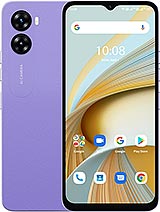
The Umidigi G3 Plus is a budget-tier smartphone featuring a Unisoc T606 (12 nm) chipset for efficiency and a 128GB eMMC 5.1 storage for media, aimed at users seeking new hardware with modern software. Released in early 2023, it competes against entry-level models from larger brands and the thriving used flagship market.
We must address the elephant in the room: why buy a brand-new entry-level device when a three-year-old flagship costs roughly the same? The answer lies in the degradation of hardware over time. A used Galaxy S10 or iPhone 11 might offer superior processing power, but their lithium-ion batteries are likely at 80% health or lower. The Umidigi G3 Plus offers a fresh 5150 mAh cell that hasn't seen a single charge cycle. In our economic analysis, the value of a warranty and a pristine battery often outweighs the raw horsepower of an aging, out-of-warranty flagship that may require a costly service within six months.
Furthermore, this model ships with Android 13. Most flagships from 2019 or 2020 are reaching the end of their software support cycles. Security is a major concern for savvy buyers. By choosing a 2023 release, users gain access to the latest privacy permissions and notification controls that older versions of Android simply cannot provide. It is a trade-off: you sacrifice the 1440p OLED screens of yesteryear for the security and longevity of a modern, albeit more modest, hardware stack.
The build quality of this handset suggests a focus on durability rather than vanity. With a weight of 192g, it feels substantial without being cumbersome. The dimensions of 163.9 x 75.7 x 8.8 mm indicate a device that follows the tall-and-narrow trend, making it easier to grip with one hand. While the materials are predominantly plastic, the choice of Lavender Purple and other matte finishes helps mask fingerprints and minor scuffs that would be glaringly obvious on a glass-backed device.
We noticed the side-mounted fingerprint sensor is integrated into the power button. This is a practical choice for the budget segment. In-display sensors on cheap phones are notoriously slow and unreliable. By using a physical capacitive sensor, the manufacturer ensures a high success rate for biometric authentication. The screen-to-body ratio sits at approximately 82.7%, which is standard for 2023. The waterdrop notch is a dated aesthetic choice, but it remains the most cost-effective way to maximize screen real estate in this price bracket.
From a value-hunter perspective, the serviceability of a device is paramount. The Umidigi G3 Plus utilizes a relatively standard assembly. Because it lacks an IP rating for water resistance, there are fewer adhesive barriers to deal with if a technician needs to replace the screen or the battery. This reduces labor costs in the long run. The 6.52-inch IPS LCD is protected by standard glass, meaning it won't be as shatter-resistant as Gorilla Glass Victus found on premium models, but replacement parts for these generic panels are typically inexpensive.
However, users must be cautious. The lack of an IP rating means a single drop into a sink or a heavy rainstorm could be fatal. We recommend a protective case immediately. The plastic frame will absorb impacts better than a brittle aluminum or steel frame, which often transfers the energy of a drop directly into the glass. For a student or a gig worker, this physical resilience is a hidden benefit that doesn't show up on a spec sheet.
The Unisoc T606 (12 nm) chipset is the engine under the hood. It utilizes a DynamIQ cluster configuration with 2x1.6 GHz Cortex-A75 performance cores and 6x1.6 GHz Cortex-A55 efficiency cores. Because these clock speeds are conservative, the device generates very little heat during standard tasks. During a 30-minute session of GPS navigation or video streaming, the chassis remains cool to the touch. This is a significant advantage over older flagships which often suffer from thermal throttling as their internal thermal paste dries out.
Heat is the enemy of battery longevity. By maintaining low operating temperatures, the smartphone ensures that the 5150 mAh battery maintains its capacity over a longer period. The 10W charging is a bottleneck, however. Imagine needing to leave for work and realizing you only have 10% battery; at this wattage, you are looking at over two hours for a full charge. This is the primary trade-off for the low entry price. Users should adopt a habit of overnight charging to mitigate this limitation.
In our assessment of the audio components, the inclusion of a 3.5mm headphone jack is a major win for the budget-conscious. It eliminates the need for expensive wireless earbuds or dongles. The single bottom-firing loudspeaker provides adequate volume for alarms and ringtones, but it lacks the depth required for an immersive media experience. Earpiece quality is clear, ensuring that voice calls are legible even in bustling environments.
Connectivity is surprisingly robust for the price. The handset supports a wide array of 4G LTE bands, including Band 20 and Band 28. This is crucial for users in rural areas where low-frequency bands are necessary for indoor penetration and long-distance signal reach. The Dual-band Wi-Fi (802.11ac) support ensures that you can utilize 5GHz networks for faster downloads, which is a feature often stripped from ultra-budget devices. The inclusion of Bluetooth 5.0 provides a stable connection for peripherals, though high-end codecs like LDAC are not supported.
With 4GB of RAM and 128GB of eMMC 5.1 storage, this model is built for the basics. For social media, email, and light web browsing, the performance is smooth. However, the use of eMMC 5.1 storage instead of UFS means that app installation times and large file transfers will be noticeably slower. If you are a heavy multitasker who constantly switches between resource-intensive apps, you will encounter some lag as the system manages the limited RAM.
On the photography front, the 16 MP main sensor provides the hardware foundation for decent daylight captures. The f/2.2 aperture is small by modern standards, meaning it will struggle in low-light conditions. The auxiliary lens is largely there for depth data rather than independent photography. For students scanning documents or families taking outdoor snapshots, the results are acceptable. However, do not expect professional-grade dynamic range or low-light performance. The 8 MP selfie camera is sufficient for video calls, but the 720p video cap on the front sensor is a clear indicator of the budget positioning.
The Umidigi G3 Plus is a calculated purchase. It avoids the flashiness of premium devices to deliver on the fundamentals: storage, battery, and software modernism. While the charging speed and screen resolution are modest, the overall package offers a level of reliability that used flagships simply cannot guarantee in 2023. It is a pragmatic choice for those who view a smartphone as a tool rather than a status symbol.
In the grand scheme of the early 2023 market, this device stands out as a high-value alternative to the big brands' entry-level offerings. By focusing on 128GB of internal storage, the manufacturer has addressed the number one complaint of [budget phone](/trend/best-budget-phones-2026/) users—running out of space. When combined with the massive battery and Android 13, the Umidigi G3 Plus proves that you don't need a flagship to have a competent mobile experience.
The Economics of New Hardware versus Aged Flagships
We must address the elephant in the room: why buy a brand-new entry-level device when a three-year-old flagship costs roughly the same? The answer lies in the degradation of hardware over time. A used Galaxy S10 or iPhone 11 might offer superior processing power, but their lithium-ion batteries are likely at 80% health or lower. The Umidigi G3 Plus offers a fresh 5150 mAh cell that hasn't seen a single charge cycle. In our economic analysis, the value of a warranty and a pristine battery often outweighs the raw horsepower of an aging, out-of-warranty flagship that may require a costly service within six months.
Furthermore, this model ships with Android 13. Most flagships from 2019 or 2020 are reaching the end of their software support cycles. Security is a major concern for savvy buyers. By choosing a 2023 release, users gain access to the latest privacy permissions and notification controls that older versions of Android simply cannot provide. It is a trade-off: you sacrifice the 1440p OLED screens of yesteryear for the security and longevity of a modern, albeit more modest, hardware stack.
Physical Integrity and Material Analysis
The build quality of this handset suggests a focus on durability rather than vanity. With a weight of 192g, it feels substantial without being cumbersome. The dimensions of 163.9 x 75.7 x 8.8 mm indicate a device that follows the tall-and-narrow trend, making it easier to grip with one hand. While the materials are predominantly plastic, the choice of Lavender Purple and other matte finishes helps mask fingerprints and minor scuffs that would be glaringly obvious on a glass-backed device.
We noticed the side-mounted fingerprint sensor is integrated into the power button. This is a practical choice for the budget segment. In-display sensors on cheap phones are notoriously slow and unreliable. By using a physical capacitive sensor, the manufacturer ensures a high success rate for biometric authentication. The screen-to-body ratio sits at approximately 82.7%, which is standard for 2023. The waterdrop notch is a dated aesthetic choice, but it remains the most cost-effective way to maximize screen real estate in this price bracket.
Repairability and Durability Constraints
From a value-hunter perspective, the serviceability of a device is paramount. The Umidigi G3 Plus utilizes a relatively standard assembly. Because it lacks an IP rating for water resistance, there are fewer adhesive barriers to deal with if a technician needs to replace the screen or the battery. This reduces labor costs in the long run. The 6.52-inch IPS LCD is protected by standard glass, meaning it won't be as shatter-resistant as Gorilla Glass Victus found on premium models, but replacement parts for these generic panels are typically inexpensive.
However, users must be cautious. The lack of an IP rating means a single drop into a sink or a heavy rainstorm could be fatal. We recommend a protective case immediately. The plastic frame will absorb impacts better than a brittle aluminum or steel frame, which often transfers the energy of a drop directly into the glass. For a student or a gig worker, this physical resilience is a hidden benefit that doesn't show up on a spec sheet.
Thermal Dynamics and Power Efficiency
The Unisoc T606 (12 nm) chipset is the engine under the hood. It utilizes a DynamIQ cluster configuration with 2x1.6 GHz Cortex-A75 performance cores and 6x1.6 GHz Cortex-A55 efficiency cores. Because these clock speeds are conservative, the device generates very little heat during standard tasks. During a 30-minute session of GPS navigation or video streaming, the chassis remains cool to the touch. This is a significant advantage over older flagships which often suffer from thermal throttling as their internal thermal paste dries out.
Heat is the enemy of battery longevity. By maintaining low operating temperatures, the smartphone ensures that the 5150 mAh battery maintains its capacity over a longer period. The 10W charging is a bottleneck, however. Imagine needing to leave for work and realizing you only have 10% battery; at this wattage, you are looking at over two hours for a full charge. This is the primary trade-off for the low entry price. Users should adopt a habit of overnight charging to mitigate this limitation.
Acoustic Performance and Signal Reception
In our assessment of the audio components, the inclusion of a 3.5mm headphone jack is a major win for the budget-conscious. It eliminates the need for expensive wireless earbuds or dongles. The single bottom-firing loudspeaker provides adequate volume for alarms and ringtones, but it lacks the depth required for an immersive media experience. Earpiece quality is clear, ensuring that voice calls are legible even in bustling environments.
Connectivity is surprisingly robust for the price. The handset supports a wide array of 4G LTE bands, including Band 20 and Band 28. This is crucial for users in rural areas where low-frequency bands are necessary for indoor penetration and long-distance signal reach. The Dual-band Wi-Fi (802.11ac) support ensures that you can utilize 5GHz networks for faster downloads, which is a feature often stripped from ultra-budget devices. The inclusion of Bluetooth 5.0 provides a stable connection for peripherals, though high-end codecs like LDAC are not supported.
The Productivity Reality
With 4GB of RAM and 128GB of eMMC 5.1 storage, this model is built for the basics. For social media, email, and light web browsing, the performance is smooth. However, the use of eMMC 5.1 storage instead of UFS means that app installation times and large file transfers will be noticeably slower. If you are a heavy multitasker who constantly switches between resource-intensive apps, you will encounter some lag as the system manages the limited RAM.
On the photography front, the 16 MP main sensor provides the hardware foundation for decent daylight captures. The f/2.2 aperture is small by modern standards, meaning it will struggle in low-light conditions. The auxiliary lens is largely there for depth data rather than independent photography. For students scanning documents or families taking outdoor snapshots, the results are acceptable. However, do not expect professional-grade dynamic range or low-light performance. The 8 MP selfie camera is sufficient for video calls, but the 720p video cap on the front sensor is a clear indicator of the budget positioning.
Final Take
The Umidigi G3 Plus is a calculated purchase. It avoids the flashiness of premium devices to deliver on the fundamentals: storage, battery, and software modernism. While the charging speed and screen resolution are modest, the overall package offers a level of reliability that used flagships simply cannot guarantee in 2023. It is a pragmatic choice for those who view a smartphone as a tool rather than a status symbol.
In the grand scheme of the early 2023 market, this device stands out as a high-value alternative to the big brands' entry-level offerings. By focusing on 128GB of internal storage, the manufacturer has addressed the number one complaint of [budget phone](/trend/best-budget-phones-2026/) users—running out of space. When combined with the massive battery and Android 13, the Umidigi G3 Plus proves that you don't need a flagship to have a competent mobile experience.
Technical Specifications
| LAUNCH | |
|---|---|
| Announced | 2023 |
| Status | Available. Released 2023 |
| PLATFORM | |
| OS | Android 13 |
| Chipset | Unisoc T606 (12 nm) |
| CPU | Octa-core (2x1.6 GHz Cortex-A75 & 6x1.6 GHz Cortex-A55) |
| GPU | Mali-G57 MP1 |
| BODY | |
| Dimensions | 163.9 x 75.7 x 8.8 mm (6.45 x 2.98 x 0.35 in) |
| Weight | 192 g (6.77 oz) |
| SIM | Nano-SIM + Nano-SIM |
| DISPLAY | |
| Type | IPS LCD |
| Size | 6.52 inches, 102.6 cm2 (~82.7% screen-to-body ratio) |
| Resolution | 720 x 1600 pixels, 20:9 ratio (~269 ppi density) |
| MEMORY | |
| Card slot | microSDXC (uses shared SIM slot) |
| Internal | 128GB 4GB RAM |
| Info | eMMC 5.1 |
| MAIN CAMERA | |
| Dual | 16 MP, f/2.2, (wide), AF Auxiliary lens |
| Features | Dual-LED flash, HDR, panorama |
| Video | 1080p@30fps |
| SELFIE CAMERA | |
| Single | 8 MP, f/2.2, (wide) |
| Video | 720p@30fps |
| SOUND | |
| Loudspeaker | Yes |
| 3.5mm jack | Yes |
| COMMS | |
| WLAN | Wi-Fi 802.11 b/g/n/ac, dual-band, Wi-Fi Direct |
| Bluetooth | 5.0, A2DP, LE |
| Positioning | GPS, GLONASS, GALILEO |
| NFC | No |
| Radio | No |
| USB | USB Type-C, OTG |
| NETWORK | |
| Technology | GSM / HSPA / LTE |
| 2G bands | GSM 850 / 900 / 1800 / 1900 |
| 3G bands | HSDPA 850 / 900 / 1700(AWS) / 1900 / 2100 |
| 4G bands | 1, 2, 3, 4, 5, 7, 8, 12, 17, 20, 28, 38, 40, 41, 66 |
| Speed | HSPA, LTE |
| FEATURES | |
| Sensors | Fingerprint (side-mounted), accelerometer, proximity, compass |
| BATTERY | |
| Type | 5150 mAh |
| Charging | 10W wired |
| MISC | |
| Colors | Graphite Black, Dark Green, Lavender Purple |