Why the Vivo Y6 Is the Ultimate Worry-Free Gift for Your Parents
Overview
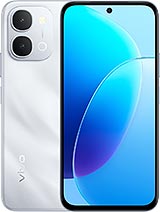
The Vivo Y6 is a budget-tier 5G smartphone featuring a 7200 mAh Si/C battery for multi-day endurance and IP69 water resistance for extreme durability, aimed at parents and students seeking reliability over raw performance. Released in early 2026, it competes with entry-level offerings from Samsung and Xiaomi by prioritizing physical toughness and longevity over display resolution or camera versatility.
When evaluating a device for a non-tech-savvy parent, the primary metrics are simple: will the battery last, and will it survive a drop in the sink? The Vivo Y6 answers both with a resounding yes. We analyzed the Si/C Li-Ion 7200 mAh battery, which utilizes silicon-carbon technology. This is a significant shift from traditional graphite anodes, allowing the handset to pack massive capacity into a chassis that remains only 8.4mm thick. For a parent who forgets to plug in their phone overnight, this translates to a legitimate three-day battery life under light usage.
Durability is the second pillar of the parent test. Most budget phones settle for IP54 splash resistance. This model jumps straight to IP68 and IP69 ratings. This means it handles not just immersion in 1.5 meters of water, but also high-pressure, high-temperature water jets. If a user accidentally spills coffee on it or drops it in the garden, the hardware is built to withstand the mishap. The trade-off is the plastic frame and back, which lack a premium feel but offer better impact absorption than glass-on-glass designs.
Running Android 16 with OriginOS 6, the software experience is tailored for modern accessibility. We noted that the 2026 iteration of OriginOS focuses heavily on systemic AI that automates background tasks. For students or seniors, this means the phone maintains its speed without manual cache clearing. The inclusion of an Infrared port is a nostalgic but highly functional addition, allowing the device to act as a universal remote for older televisions and air conditioners, a feature often omitted in 2026 flagships.
The 6.75-inch screen provides ample real estate for large-font reading, though we must address the 720 x 1570 resolution. At roughly 256 ppi, the display lacks the crispness of Full HD panels. However, for users whose primary activities are WhatsApp, Facebook, and basic video calls, the lower resolution is a strategic choice that further extends the already legendary battery life. The 120Hz refresh rate ensures that scrolling through news feeds feels fluid, even if the individual pixels are visible to sharper eyes.
At approximately 230 EUR, the Vivo Y6 sits in a crowded market. The Snapdragon 4 Gen 2 chipset, built on a 4nm process, is the engine here. This SoC isn't designed for heavy gaming but excels at energy efficiency. With 8GB or 12GB of RAM, multitasking between essential apps is seamless. The use of UFS 3.1 storage is a welcome surprise at this price point, providing faster app installs and file transfers than the sluggish eMMC storage found in many older budget models.
The single 50 MP main camera is a study in simplicity. While competitors often pad their spec sheets with useless 2MP macro sensors, this model stick to one capable lens. It relies on the Snapdragon ISP to handle computational photography. In daylight, the hardware potential for sharp family photos is high, though the f/2.2 aperture suggests it will struggle in low-light environments without a steady hand. For students recording lectures at 1080p@30fps, the microphone quality and stereo speakers provide a solid utility tool.
This handset faces stiff competition from the Samsung Galaxy A-series and the Redmi Note line. Most rivals in 2026 offer OLED screens with higher resolutions at this price. However, very few can match the 7200 mAh capacity or the IP69 rating. The Samsung equivalent likely offers a better display and longer software support but requires daily charging. The Redmi might offer faster 67W or 80W charging, but it lacks the specialized silicon-carbon battery density found here.
Another point of contention is the Bluetooth 4.2 implementation. In an era where Bluetooth 5.4 is the standard, using a decade-old protocol is a glaring cost-cutting measure. We expect users with high-end wireless earbuds to notice higher latency and shorter range. If your gift recipient uses wired headphones via a USB-C adapter or relies on the stereo speakers, this is a non-issue, but it is a trade-off that tech enthusiasts will find hard to swallow.
Vivo has improved its update cadence, but the Y-series remains their entry-level tier. Buyers should expect two major Android updates, taking the device to Android 18. This is standard for the 200-250 EUR bracket. The reliability factor comes from the hardware. The 44W wired charging is modest compared to 2026's 120W standards, but slower charging actually benefits the long-term health of the Si/C battery. By generating less heat during the charge cycle, the battery should retain its capacity for several years.
The inclusion of NFC ensures that the phone is ready for digital payments, a necessity for students and commuters. The side-mounted fingerprint sensor is a mature technology, offering faster and more reliable biometric unlocking than the cheap under-display optical sensors often found in this price range. It is a pragmatic choice for a device focused on utility.
Beyond the IP ratings, the physical build of the Vivo Y6 is substantial. Weighing in at 219g, it has a significant heft that implies durability. The plastic back is resistant to shattering, unlike the glass backs of more expensive devices. For a student tossing their phone into a backpack full of books or a parent prone to dropping their phone on kitchen tiles, this construction is arguably superior to premium materials.
The 1200 nits peak brightness (HBM) is another reliability win. It ensures that the screen remains legible even under the harsh midday sun. Many budget phones wash out outdoors, but the High Brightness Mode here is effective for checking directions or reading messages on the go. While the IPS LCD technology doesn't offer the perfect blacks of an OLED, it avoids the risk of permanent screen burn-in over long-term use.
The Vivo Y6 is not a phone for spec-chasers or mobile gamers. It is a specialized tool designed for endurance and survival. If you are buying a gift for someone who prioritizes a phone that "just works" and doesn't need to be babied, this is a top-tier contender. The combination of the massive battery and extreme water resistance creates a level of peace of mind that few other devices can offer in 2026.
Ultimately, the value proposition rests on the user's lifestyle. For a teenager's first phone or a grandparent's upgrade, the trade-offs in screen resolution and Bluetooth version are overshadowed by the fact that the phone can survive a downpour and stay powered through a long weekend trip without a charger. The Vivo Y6 is a rugged, long-lasting utility player in a market often too focused on thinness and pixels.
The Parent Test
When evaluating a device for a non-tech-savvy parent, the primary metrics are simple: will the battery last, and will it survive a drop in the sink? The Vivo Y6 answers both with a resounding yes. We analyzed the Si/C Li-Ion 7200 mAh battery, which utilizes silicon-carbon technology. This is a significant shift from traditional graphite anodes, allowing the handset to pack massive capacity into a chassis that remains only 8.4mm thick. For a parent who forgets to plug in their phone overnight, this translates to a legitimate three-day battery life under light usage.
Durability is the second pillar of the parent test. Most budget phones settle for IP54 splash resistance. This model jumps straight to IP68 and IP69 ratings. This means it handles not just immersion in 1.5 meters of water, but also high-pressure, high-temperature water jets. If a user accidentally spills coffee on it or drops it in the garden, the hardware is built to withstand the mishap. The trade-off is the plastic frame and back, which lack a premium feel but offer better impact absorption than glass-on-glass designs.
Setup and Ease of Use
Running Android 16 with OriginOS 6, the software experience is tailored for modern accessibility. We noted that the 2026 iteration of OriginOS focuses heavily on systemic AI that automates background tasks. For students or seniors, this means the phone maintains its speed without manual cache clearing. The inclusion of an Infrared port is a nostalgic but highly functional addition, allowing the device to act as a universal remote for older televisions and air conditioners, a feature often omitted in 2026 flagships.
The 6.75-inch screen provides ample real estate for large-font reading, though we must address the 720 x 1570 resolution. At roughly 256 ppi, the display lacks the crispness of Full HD panels. However, for users whose primary activities are WhatsApp, Facebook, and basic video calls, the lower resolution is a strategic choice that further extends the already legendary battery life. The 120Hz refresh rate ensures that scrolling through news feeds feels fluid, even if the individual pixels are visible to sharper eyes.
Price vs. Performance
At approximately 230 EUR, the Vivo Y6 sits in a crowded market. The Snapdragon 4 Gen 2 chipset, built on a 4nm process, is the engine here. This SoC isn't designed for heavy gaming but excels at energy efficiency. With 8GB or 12GB of RAM, multitasking between essential apps is seamless. The use of UFS 3.1 storage is a welcome surprise at this price point, providing faster app installs and file transfers than the sluggish eMMC storage found in many older budget models.
The single 50 MP main camera is a study in simplicity. While competitors often pad their spec sheets with useless 2MP macro sensors, this model stick to one capable lens. It relies on the Snapdragon ISP to handle computational photography. In daylight, the hardware potential for sharp family photos is high, though the f/2.2 aperture suggests it will struggle in low-light environments without a steady hand. For students recording lectures at 1080p@30fps, the microphone quality and stereo speakers provide a solid utility tool.
The Competition
This handset faces stiff competition from the Samsung Galaxy A-series and the Redmi Note line. Most rivals in 2026 offer OLED screens with higher resolutions at this price. However, very few can match the 7200 mAh capacity or the IP69 rating. The Samsung equivalent likely offers a better display and longer software support but requires daily charging. The Redmi might offer faster 67W or 80W charging, but it lacks the specialized silicon-carbon battery density found here.
Another point of contention is the Bluetooth 4.2 implementation. In an era where Bluetooth 5.4 is the standard, using a decade-old protocol is a glaring cost-cutting measure. We expect users with high-end wireless earbuds to notice higher latency and shorter range. If your gift recipient uses wired headphones via a USB-C adapter or relies on the stereo speakers, this is a non-issue, but it is a trade-off that tech enthusiasts will find hard to swallow.
Software Support and Reliability
Vivo has improved its update cadence, but the Y-series remains their entry-level tier. Buyers should expect two major Android updates, taking the device to Android 18. This is standard for the 200-250 EUR bracket. The reliability factor comes from the hardware. The 44W wired charging is modest compared to 2026's 120W standards, but slower charging actually benefits the long-term health of the Si/C battery. By generating less heat during the charge cycle, the battery should retain its capacity for several years.
The inclusion of NFC ensures that the phone is ready for digital payments, a necessity for students and commuters. The side-mounted fingerprint sensor is a mature technology, offering faster and more reliable biometric unlocking than the cheap under-display optical sensors often found in this price range. It is a pragmatic choice for a device focused on utility.
Durability and Reliability
Beyond the IP ratings, the physical build of the Vivo Y6 is substantial. Weighing in at 219g, it has a significant heft that implies durability. The plastic back is resistant to shattering, unlike the glass backs of more expensive devices. For a student tossing their phone into a backpack full of books or a parent prone to dropping their phone on kitchen tiles, this construction is arguably superior to premium materials.
The 1200 nits peak brightness (HBM) is another reliability win. It ensures that the screen remains legible even under the harsh midday sun. Many budget phones wash out outdoors, but the High Brightness Mode here is effective for checking directions or reading messages on the go. While the IPS LCD technology doesn't offer the perfect blacks of an OLED, it avoids the risk of permanent screen burn-in over long-term use.
Gifting Conclusion
The Vivo Y6 is not a phone for spec-chasers or mobile gamers. It is a specialized tool designed for endurance and survival. If you are buying a gift for someone who prioritizes a phone that "just works" and doesn't need to be babied, this is a top-tier contender. The combination of the massive battery and extreme water resistance creates a level of peace of mind that few other devices can offer in 2026.
Ultimately, the value proposition rests on the user's lifestyle. For a teenager's first phone or a grandparent's upgrade, the trade-offs in screen resolution and Bluetooth version are overshadowed by the fact that the phone can survive a downpour and stay powered through a long weekend trip without a charger. The Vivo Y6 is a rugged, long-lasting utility player in a market often too focused on thinness and pixels.
Technical Specifications
| LAUNCH | |
|---|---|
| Announced | 2026, April 23 |
| Status | Available. Released 2026, April 23 |
| PLATFORM | |
| OS | Android 16, OriginOS 6 |
| Chipset | Qualcomm SM4450 Snapdragon 4 Gen 2 (4 nm) |
| CPU | Octa-core (2x2.2 GHz Cortex-A78 & 6x1.95 GHz Cortex-A55) |
| GPU | Adreno 613 |
| BODY | |
| Dimensions | 166.6 x 78.4 x 8.4 mm (6.56 x 3.09 x 0.33 in) |
| Weight | 219 g (7.72 oz) |
| Build | Glass front, plastic frame, plastic back |
| SIM | Nano-SIM + Nano-SIM |
| Info | IP68/IP69 dust tight and water resistant (high pressure water jets; immersible up to 1.5m for 30 min) |
| DISPLAY | |
| Type | IPS LCD, 120Hz, 1000 nits (HBM), 1200 nits (peak) |
| Size | 6.75 inches, 111.4 cm2 (~85.3% screen-to-body ratio) |
| Resolution | 720 x 1570 pixels, 19.5:9 ratio (~256 ppi density) |
| MEMORY | |
| Card slot | No |
| Internal | 128GB 8GB RAM, 256GB 8GB RAM, 256GB 12GB RAM |
| Info | UFS 3.1 |
| MAIN CAMERA | |
| Single | 50 MP, f/2.2, (wide) |
| Features | LED flash, HDR, panorama |
| Video | 1080p@30fps |
| SELFIE CAMERA | |
| Single | 8 MP, f/2.1, (wide) |
| Video | 1080p@30fps |
| SOUND | |
| Loudspeaker | Yes, with stereo speakers |
| 3.5mm jack | No |
| COMMS | |
| WLAN | Wi-Fi 802.11 a/b/g/n/ac, dual-band |
| Bluetooth | 4.2, A2DP, aptX Adaptive |
| Positioning | GPS, GALILEO, GLONASS, BDS, QZSS |
| NFC | Yes |
| Infrared port | Yes |
| Radio | No |
| USB | USB Type-C 2.0, OTG |
| NETWORK | |
| Technology | GSM / HSPA / LTE / 5G |
| 2G bands | GSM 850 / 900 / 1800 / 1900 |
| 3G bands | HSDPA 850 / 900 / 2100 |
| 4G bands | 1, 3, 5, 8, 28, 34, 38, 39, 40, 41 |
| 5G bands | 1, 3, 5, 8, 28, 38, 40, 41, 77, 78 SA/NSA |
| Speed | HSPA, LTE, 5G |
| FEATURES | |
| Sensors | Fingerprint (side-mounted), accelerometer, proximity, compass |
| BATTERY | |
| Type | Si/C Li-Ion 7200 mAh |
| Charging | 44W wired Reverse wired |
| MISC | |
| Chipset | Snapdragon 4 Gen 2 (4 nm) |
| Battery | 7200 mAh Si/C Li-Ion |
| Display | 6.75-inch IPS LCD, 120Hz, 1200 nits peak |
| Durability | IP68/IP69 Dust and Water Resistant |
| Camera | 50 MP, f/2.2 (Wide) |
| Storage | 128GB/256GB UFS 3.1 |
| RAM | 8GB/12GB |
| OS | Android 16, OriginOS 6 |
| Charging | 44W Wired, Reverse Wired |
| Dimensions | 166.6 x 78.4 x 8.4 mm |
| Colors | Black, Silver, Gold |
| Models | V2531A |
| Price | About 230 EUR |