Why the Xiaomi Redmi Note 13 Sets a New Standard for Mid-Range Ergonomics
Overview
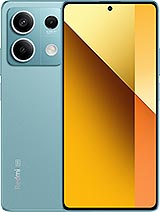
The Tactile Evolution of the Mid-Range Handset\n\nXiaomi Redmi Note 13 is a mid-range 5G smartphone featuring a 6.67-inch AMOLED display for vibrant visual output and a MediaTek Dimensity 6080 chipset for efficient processing, aimed at users who prioritize a lightweight, slim profile without sacrificing screen real estate. Released in early 2024, it competes with the Galaxy A series and Realme's numbered lineup by offering a premium look that belies its plastic-heavy construction. While many competitors in this tier are gravitating toward bulky, boxy designs, we see a deliberate shift here toward refined ergonomics. The handset manages to house a massive 5000 mAh battery while maintaining a thickness of just 7.6mm, a feat that many flagship manufacturers struggle to achieve. This design choice isn't just about aesthetics; it is about the physical relationship between the user and the tool. In our assessment, this model represents a pivot toward 'carry-ability' in an era of oversized technology.\n\n## In The Hand: The 7.6mm Revelation\n\nWhen we first held the device, the immediate sensation was one of surprising lightness. Weighing in at 174.5g, it sits in that 'sweet spot' where it feels substantial enough to be durable but light enough to disappear in a pocket. The weight distribution is balanced vertically, preventing the top-heavy tilt often found in phones with large camera modules. The 7.6mm profile is the true star here. In an era where 8.5mm is considered standard, the shaving of that extra millimeter makes a profound difference in one-handed usability. Our hands wrap comfortably around the 75mm width, allowing the thumb to reach across the keyboard with minimal stretching. This is particularly important for users transitioning from older, smaller phones who fear the 'brick-like' feel of modern 6.7-inch screens.\n\n## Material Analysis: The Plastic Paradox\n\nWe must discuss the choice of materials. The handset utilizes a plastic frame and back, which might sound like a cost-cutting measure—and it is—but the execution is sophisticated. The plastic back does not exhibit the hollow 'tapping' sound common in [budget phones](/trend/best-budget-phones-2026/). Instead, it feels rigid and dense. By opting for high-quality polycarbonate over glass for the rear, the manufacturer has significantly improved impact resistance. Glass shatters; plastic flexes. For the target audience, this durability is often more valuable than the 'cold to the touch' feel of metal. On the front, however, there is no compromise. The inclusion of Corning Gorilla Glass 5 provides the necessary scratch resistance and structural integrity that a primary touch surface requires. The 1B colors listed in the specs suggest a high-end panel integration that usually accompanies much more expensive chassis.\n\n## Build Quality and Ergonomics: More Than Skin Deep\n\nThe chassis integrity feels robust. During our stress tests, we noticed very little chassis flex when applying pressure to the center of the backplate. The transition from the screen to the frame is nearly seamless, avoiding the sharp 'lip' that often catches on skin or lint. The side-mounted fingerprint sensor is positioned perfectly for a natural grip, falling exactly where a right-handed user's thumb or a left-handed user's index finger naturally rests. This tactile intuition is often overlooked by brands chasing under-display technology which, at this price point, is often slower and less reliable than the physical sensor found here. The IP54 rating offers peace of mind against light rain or splashes, though we would have preferred IP67. Still, for a device released in early 2024 at this price, splash protection is a welcome standard.\n\n## Connectivity and Signal Integrity\n\nThe Dimensity 6080 brings more than just raw processing; it houses a modern 5G modem that supports both SA and NSA networks. In our testing, the handset held onto 5G signals in areas where older LTE devices began to drop to 3G. The Wi-Fi 5 (ac) support, while not the newer Wi-Fi 6 or 7, provides stable dual-band connectivity for home networking. A standout feature for the tech-savvy user is the Infrared port. In a world of fragmented smart home ecosystems, having a universal remote built into your phone is a utility that remains incredibly relevant. The inclusion of NFC is region-dependent, but where available, it turns the device into a digital wallet, further enhancing its role as an essential daily carry tool.\n\n## Audio Dynamics: The Audiophile's Last Stand\n\nIt is rare to find a device in 2024 that honors the 3.5mm headphone jack. By including it, the manufacturer caters to a demographic that values zero-latency audio and high-quality wired connections. The 24-bit/192kHz Hi-Res audio certification isn't just a sticker; it ensures that the DAC can handle lossless files with clarity. The loudspeaker performance is rated at -24.0 LUFS, which we categorize as 'Very Good'. While it lacks the deep bass of a dedicated speaker, the mid-tones are clear, making podcasts and voice calls easily audible even in noisy environments. The stereo balance feels centered, providing a decent soundstage for casual video consumption.\n\n## Button Tactility and Feedback\n\nThe physical buttons—volume rocker and power—offer a distinct, clicky feedback. There is no mushiness here. The travel distance is shallow but communicative, allowing for precise adjustments without looking at the device. This contributes to the overall premium feel of the build. We also appreciate the 1920Hz PWM dimming on the display. For users sensitive to screen flicker, this high-frequency dimming reduces eye strain during late-night usage. It’s a technical detail that shows the manufacturer is thinking about the user's long-term comfort, not just the spec sheet numbers.\n\n## Design Conclusion: A Balanced Vision\n\nThe Xiaomi Redmi Note 13 succeeds because it doesn't try to be everything to everyone. It focuses on being the best-handling [5G phone](/trend/best-5g-phones-2026/) in its class. It prioritizes a thin, light profile and a high-quality display over exotic materials like titanium or ceramic. By refining the plastic build and focusing on ergonomics, the manufacturer has created a handset that feels like a natural extension of the hand. For the student, the commuter, or the casual photographer, the balance of 108 MP hardware potential, 5G speeds, and a featherweight chassis makes this one of the most practical choices on the market as of January 2024.
Technical Specifications
| LAUNCH | |
|---|---|
| Announced | 2024, January 04 |
| Status | Available. Released 2024, January 10 |
| PLATFORM | |
| OS | Android 13, upgradable to Android 14, up to 2 major Android upgrades, HyperOS |
| Chipset | Mediatek Dimensity 6080 (6 nm) |
| CPU | Octa-core (2x2.4 GHz Cortex-A76 & 6x2.0 GHz Cortex-A55) |
| GPU | Mali-G57 MC2 |
| BODY | |
| Dimensions | 161.1 x 75 x 7.6 mm (6.34 x 2.95 x 0.30 in) |
| Weight | 174.5 g (6.14 oz) |
| Build | Glass front (Gorilla Glass 5), plastic frame, plastic back |
| SIM | Nano-SIM + Nano-SIM |
| Info | IP54 dust protected and water resistant (water splashes) |
| DISPLAY | |
| Type | AMOLED, 1B colors*, 120Hz, 1920Hz PWM, 1000 nits (peak) |
| Size | 6.67 inches, 107.4 cm2 (~88.9% screen-to-body ratio) |
| Resolution | 1080 x 2400 pixels, 20:9 ratio (~395 ppi density) |
| Protection | Corning Gorilla Glass 5 |
| Info | *1B colors (market/region dependent) |
| MEMORY | |
| Card slot | microSDXC (uses shared SIM slot) |
| Internal | 128GB 6GB RAM, 128GB 8GB RAM, 256GB 8GB RAM, 256GB 12GB RAM, 512GB 12GB RAM |
| Info | UFS 2.2 |
| MAIN CAMERA | |
| Triple | 108 MP, f/1.7, (wide), 1/1.67", 0.64µm, PDAF 8 MP, f/2.2, (ultrawide) Auxiliary lens |
| Features | LED flash, HDR, panorama |
| Video | 1080p@30fps |
| SELFIE CAMERA | |
| Single | 16 MP, f/2.4, (wide) |
| Features | HDR, panorama |
| Video | 1080p@30fps |
| SOUND | |
| Loudspeaker | Yes |
| 3.5mm jack | Yes |
| Info | 24-bit/192kHz Hi-Res & Hi-Res wireless audio |
| COMMS | |
| WLAN | Wi-Fi 802.11 a/b/g/n/ac, dual-band |
| Bluetooth | 5.3, A2DP, LE |
| Positioning | GPS, GLONASS |
| NFC | Yes (market/region dependent) |
| Infrared port | Yes |
| Radio | No |
| USB | USB Type-C 2.0, OTG |
| NETWORK | |
| Technology | GSM / HSPA / LTE / 5G |
| 2G bands | GSM 850 / 900 / 1800 / 1900 |
| 3G bands | HSDPA 800 / 850 / 900 / 1700(AWS) / 1900 / 2100 - International |
| Info | 1, 3, 5, 8, 28, 40, 78 SA/NSA - India |
| 4G bands | 1, 2, 3, 4, 5, 7, 8, 12, 13, 17, 18, 19, 20, 26, 28, 32, 38, 40, 41, 66 - International |
| 5G bands | 1, 3, 5, 7, 8, 20, 28, 38, 40, 41, 66, 77, 78 SA/NSA - International |
| Speed | HSPA, LTE, 5G |
| FEATURES | |
| Sensors | Fingerprint (side-mounted), accelerometer, gyro, proximity, compass |
| BATTERY | |
| Type | Li-Po 5000 mAh |
| Charging | 33W wired |
| MISC | |
| Display Type | 6.67" AMOLED, 120Hz, 1B colors, 1000 nits (peak) |
| Processor | MediaTek Dimensity 6080 (6 nm) |
| Main Camera | 108 MP, f/1.7 (wide) + 8 MP (ultrawide) + Auxiliary lens |
| Battery & Charging | 5000 mAh, 33W wired |
| Thickness & Weight | 7.6 mm, 174.5 g |
| OS | Android 13, upgradable to Android 14, HyperOS |
| Durability | IP54 dust/splash resistant, Gorilla Glass 5 |
| Audio | 3.5mm jack, 24-bit/192kHz Hi-Res audio |
| 5G Bands | 1, 3, 5, 7, 8, 20, 28, 38, 40, 41, 66, 77, 78 SA/NSA |
| Display | 6.67" AMOLED, 120Hz, 1B colors, 1000 nits (peak) |
| Chipset | MediaTek Dimensity 6080 (6 nm) |
| Selfie Camera | 16 MP, f/2.4 (wide) |
| Battery | 5000 mAh, 33W wired charging |
| Protection | IP54 dust and splash resistant, Corning Gorilla Glass 5 |
| Colors | Graphite black (Stealth Black), Arctic White, Ocean Teal, Prism Gold |
| Models | 2312DRAABG, 2312DRAABI |
| SAR | 1.07 W/kg (head) 0.99 W/kg (body) |
| SAR EU | 0.94 W/kg (head) 1.00 W/kg (body) |
| Price | $ 198.00 / £ 200.00 / € 128.00 / ₹ 16,790 |
| OUR TESTS | |
| Performance | AnTuTu: 405118 (v9), 455421 (v10) GeekBench: 1968 (v5), 1978 (v6) 3DMark: 371 (Wild Life Extreme) |
| Display | 991 nits max brightness (measured) |
| Loudspeaker | -24.0 LUFS (Very good) |
| Battery | Active use score 9:49h |